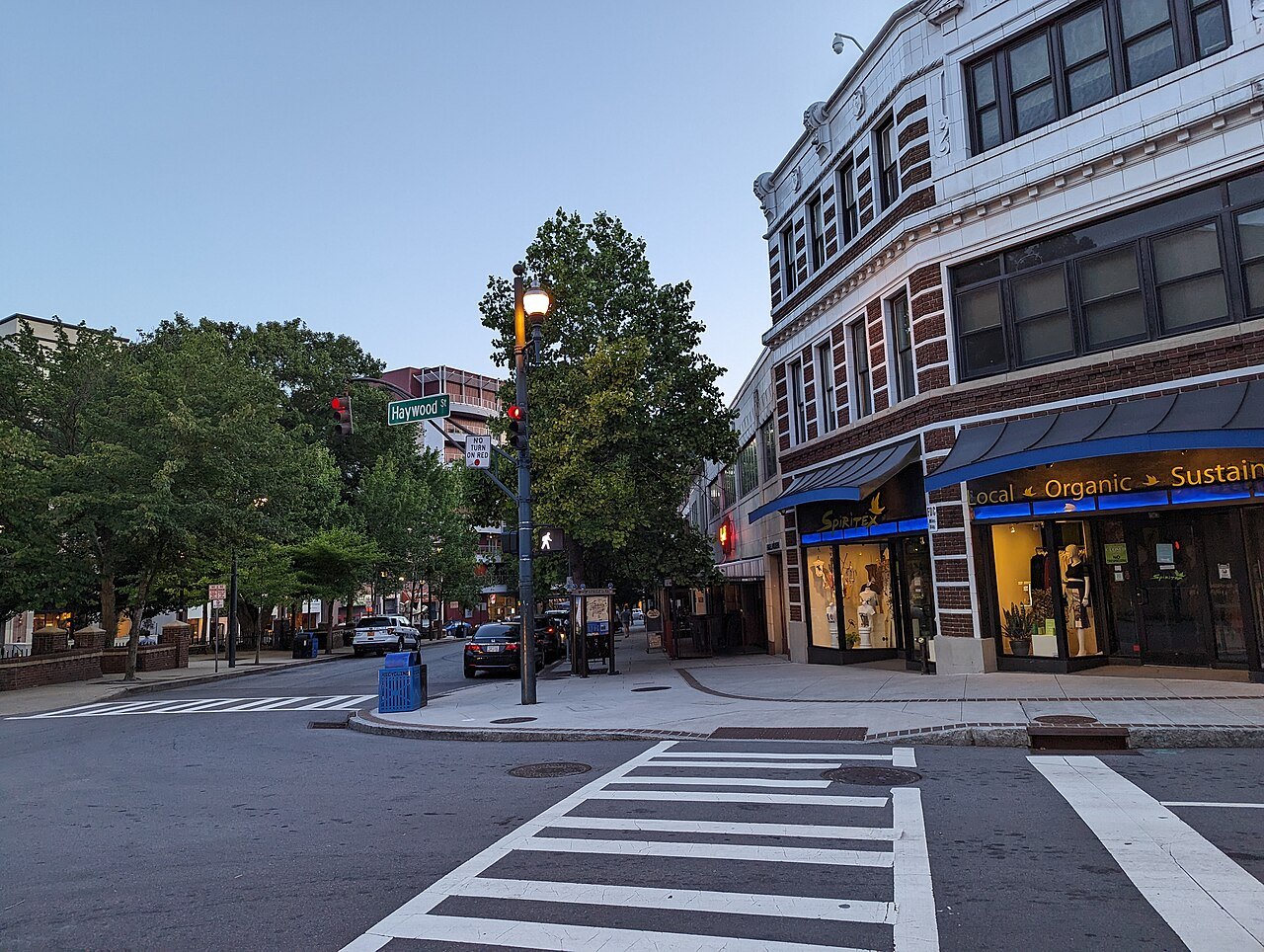
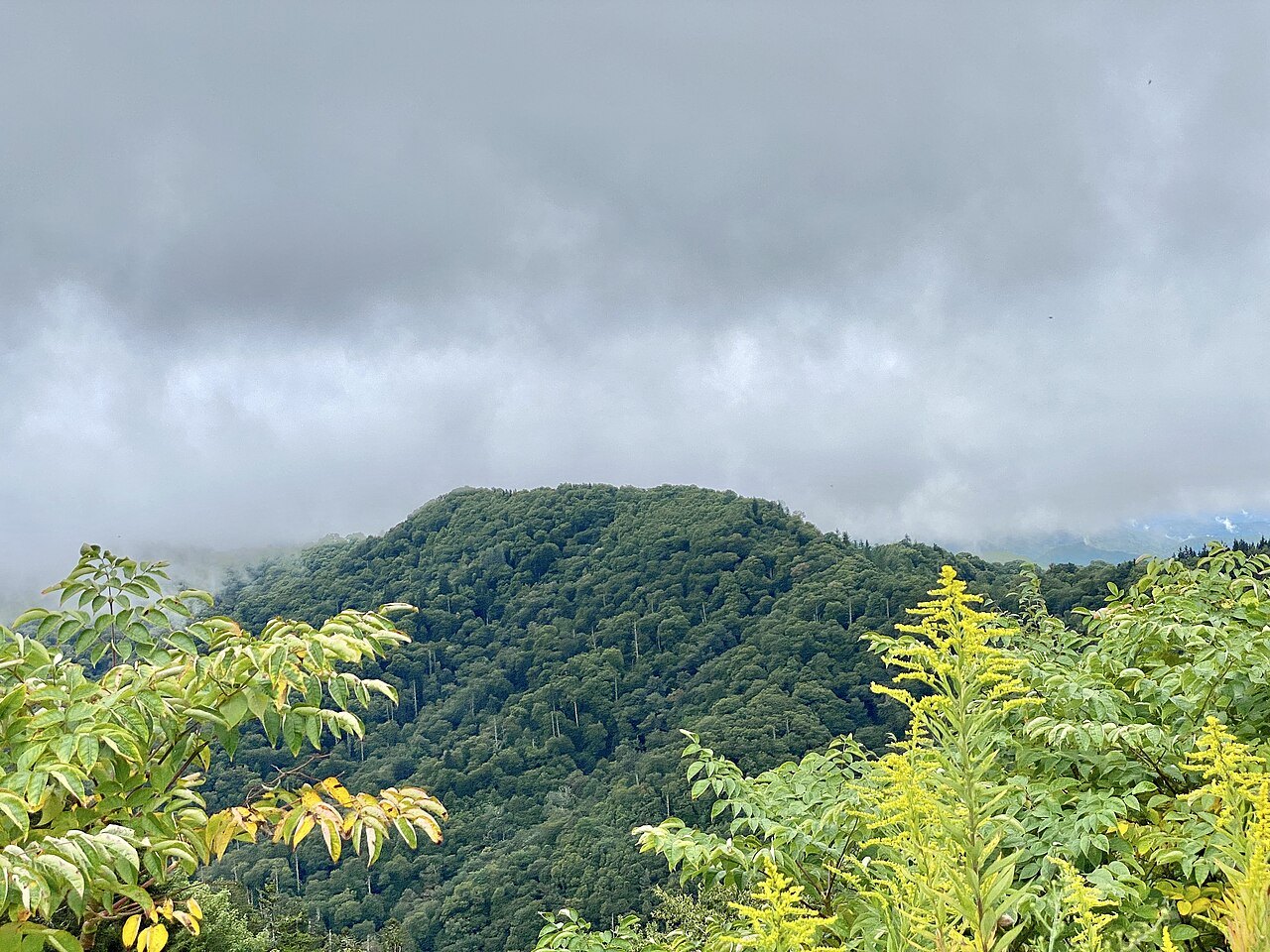
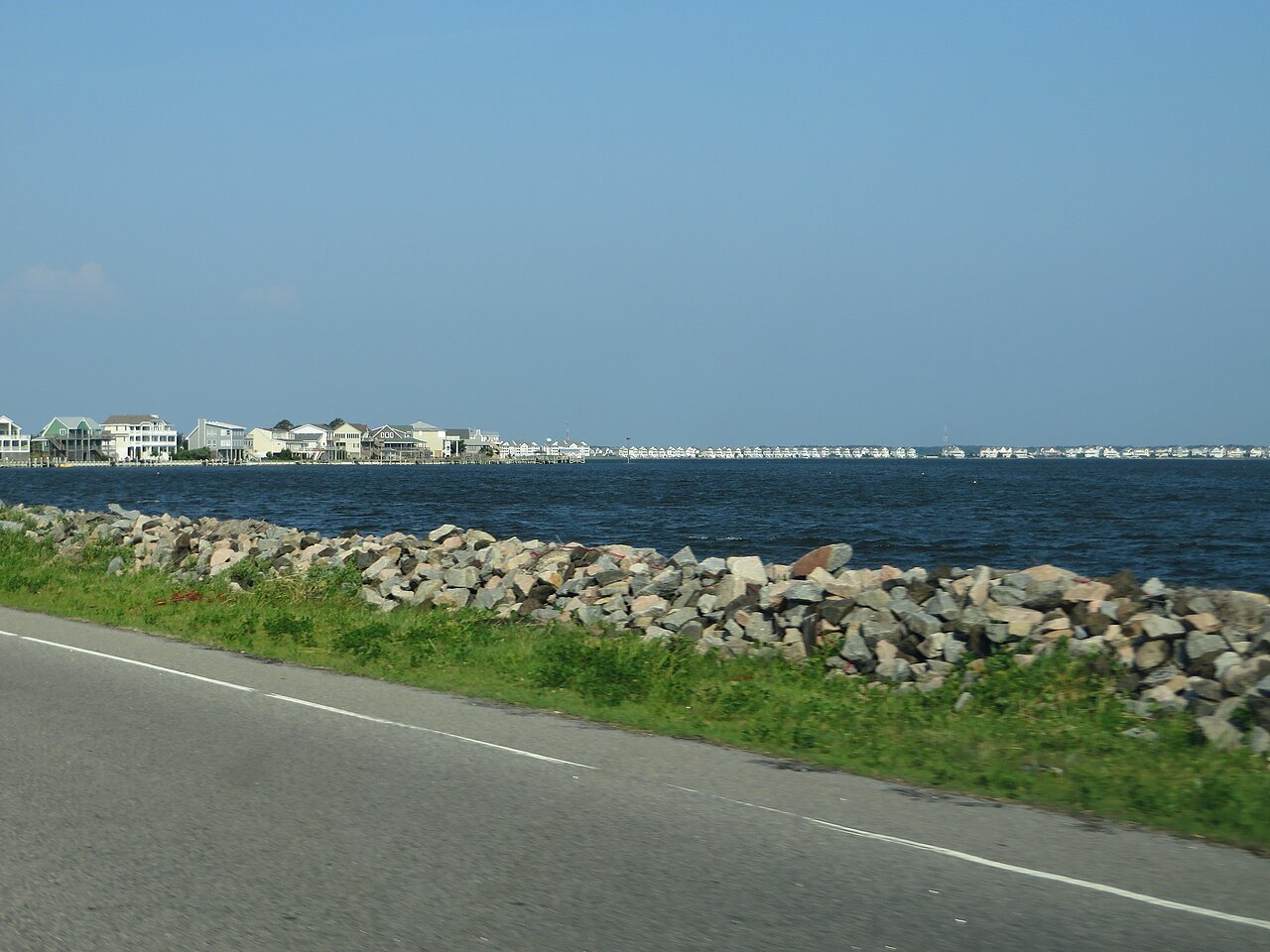
PLANNING · WHERE TO STAY
Where to stay in North Carolina
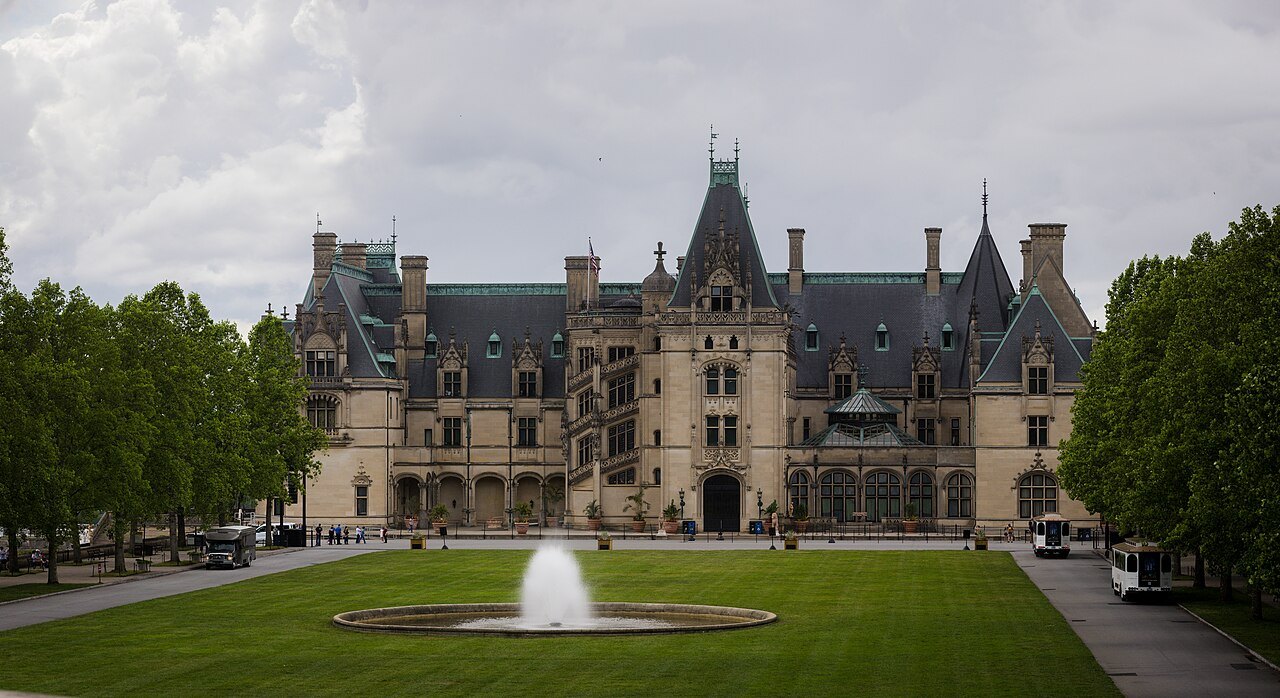
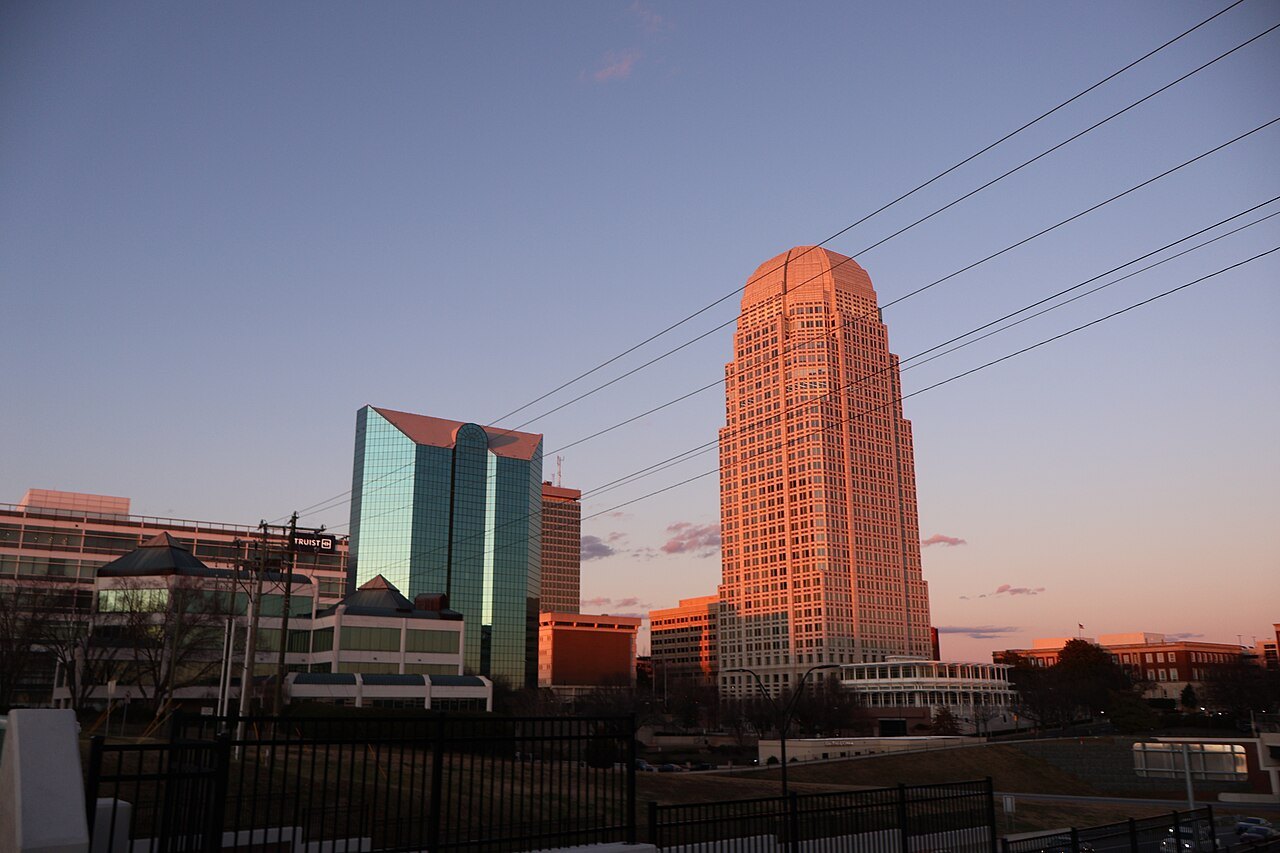
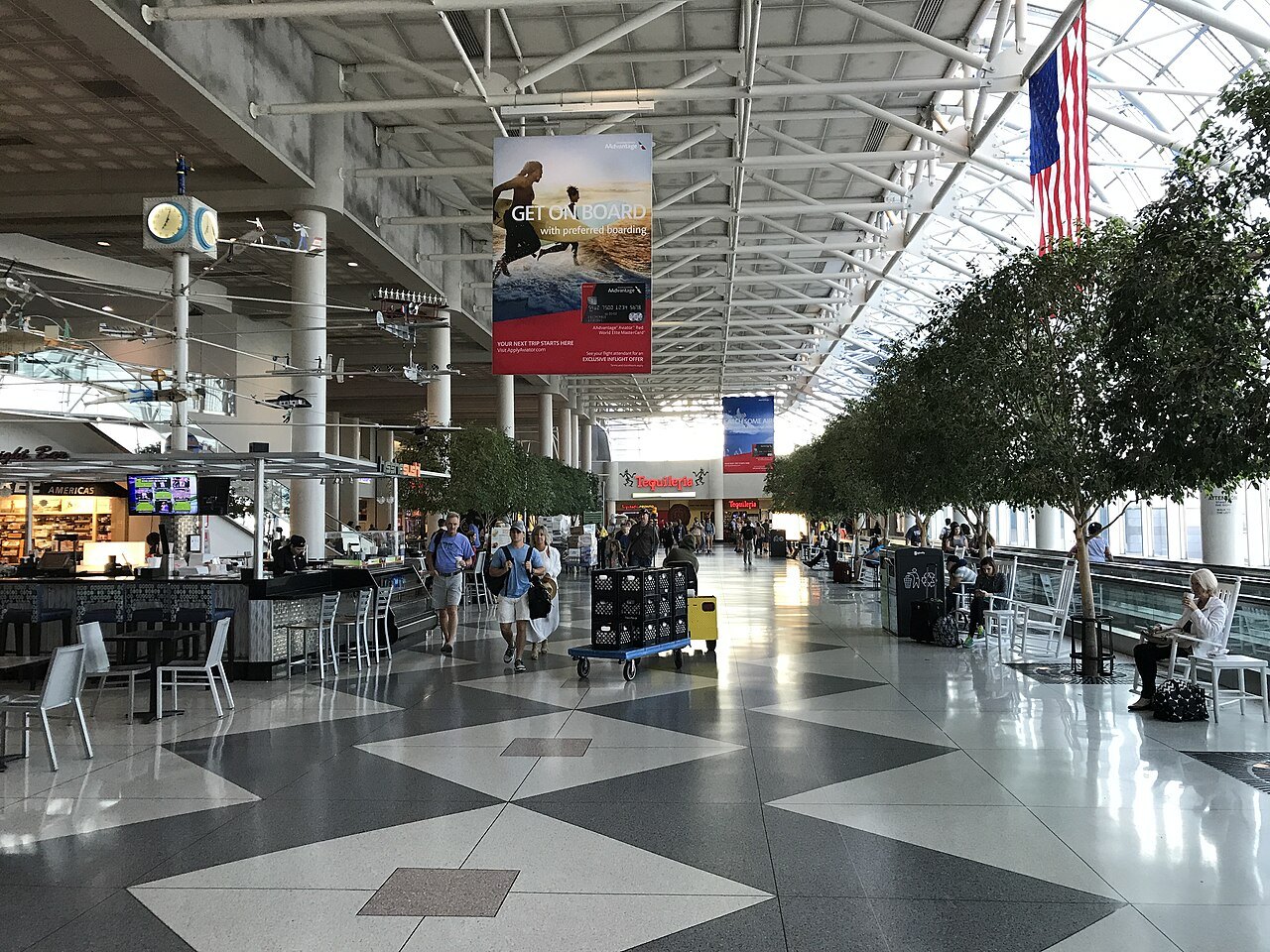
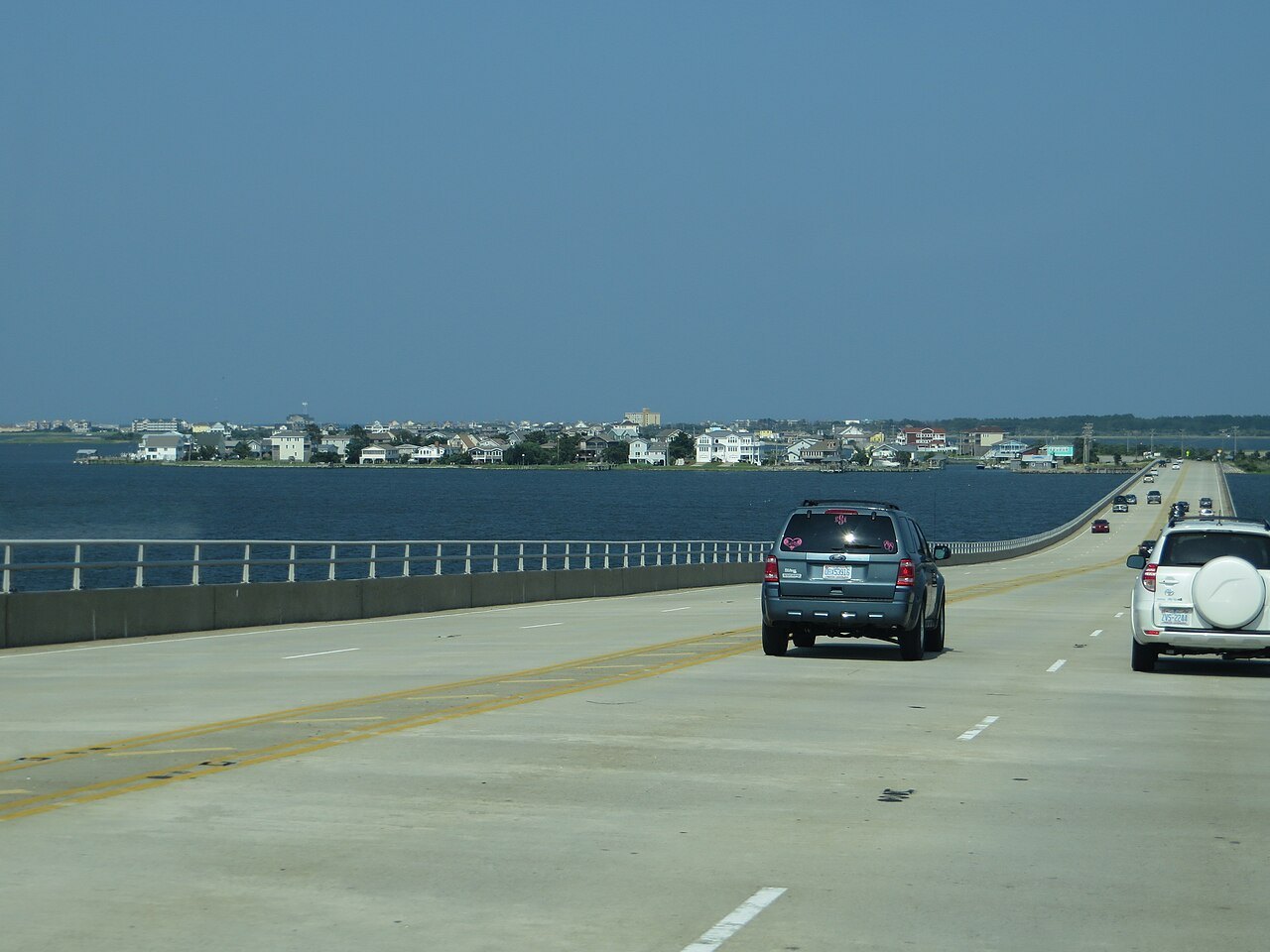
Photographs: Jeremy Thompson, Wikimedia Commons, CC BY 2.0 · w_lemay, Wikimedia Commons, CC BY-SA 2.0 · Ken Lund from Reno, Nevada, USA, Wikimedia Commons, CC BY-SA 2.0
Access North Carolina · Bases
Choose bases, not a single hotel: Asheville or the High Country for the Parkway, Cherokee or Brevard for the Smokies and the forests, a Triangle city or Winston-Salem for the Piedmont, and on the coast a town on the northern Outer Banks, Hatteras or Ocracoke, Beaufort, or Wilmington and its beaches.
The bases
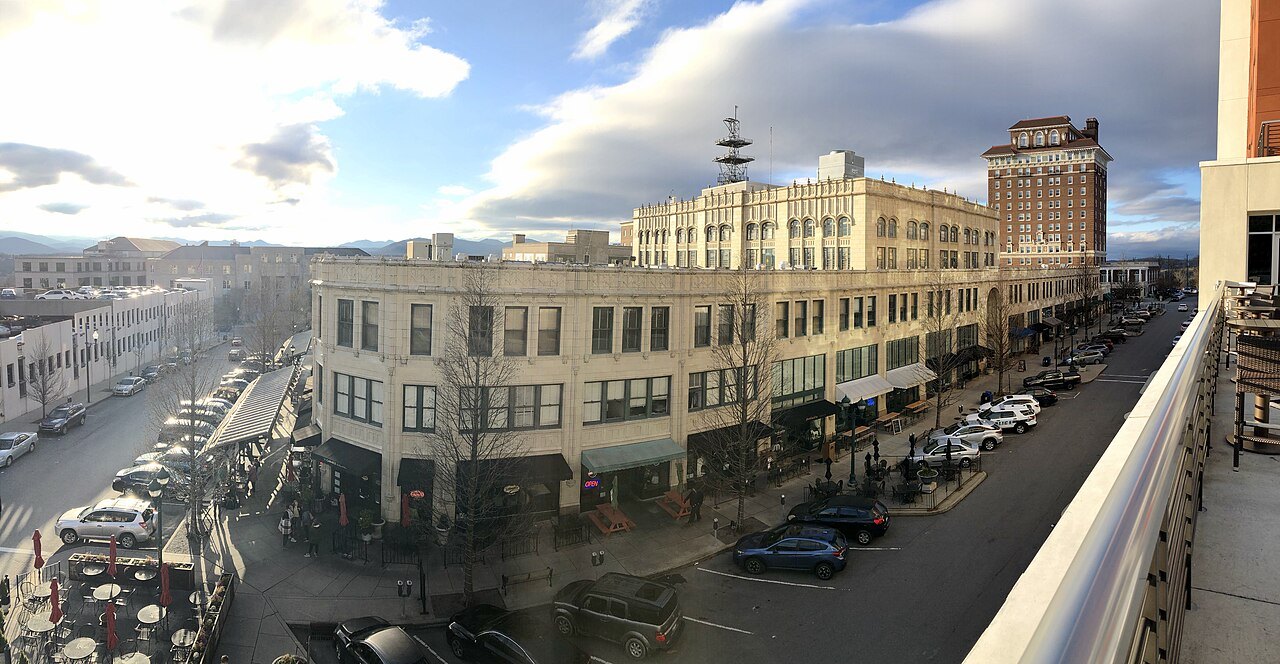
The Grove Arcade building and the Battery Park Hotel above a downtown Asheville street. Photo: chucka_nc, Wikimedia Commons, CC BY-SA 2.0 1Asheville
The largest mountain city, with the most hotels and restaurants and the Parkway at its edge; still rebuilding after Helene.
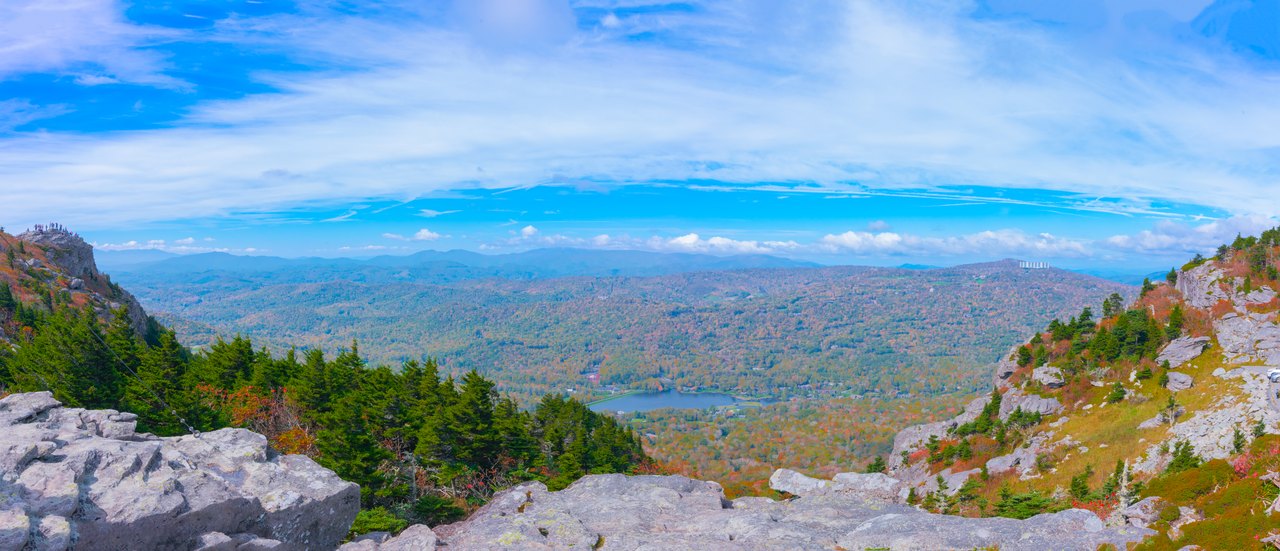
A wide view from the rocks of Grandfather Mountain across the valleys below. Photo: Marshallhash89, Wikimedia Commons, CC BY-SA 4.0 2Blowing Rock and Boone
Cool summer towns on the crest of the Blue Ridge, with Appalachian State University in Boone and the Parkway running between them.
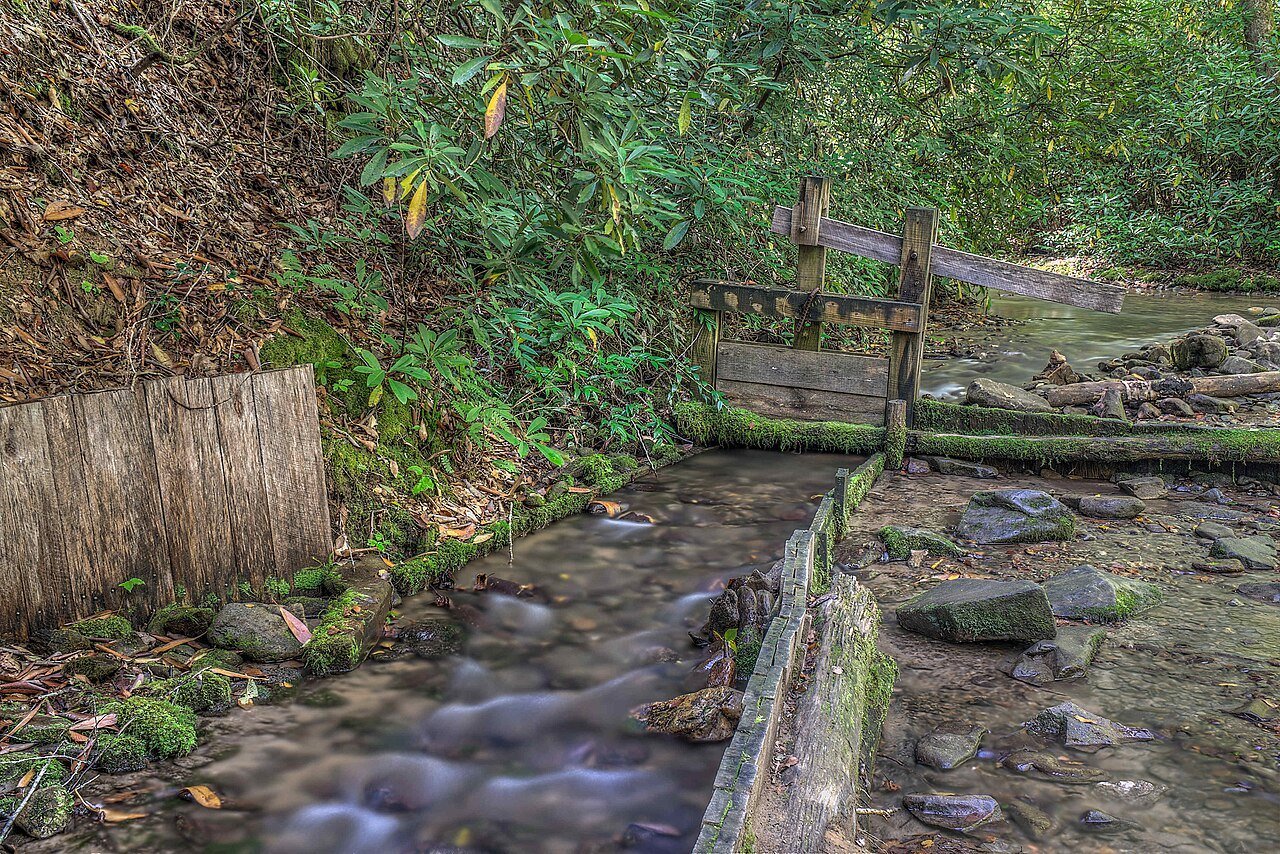
A mill race of wooden boards beside the Mingus Mill trail. Photo: Dsdugan, Wikimedia Commons, CC0 3Cherokee
The capital of the Eastern Band of Cherokee Indians, at a main entrance to the national park, with campgrounds, motels and hotels.
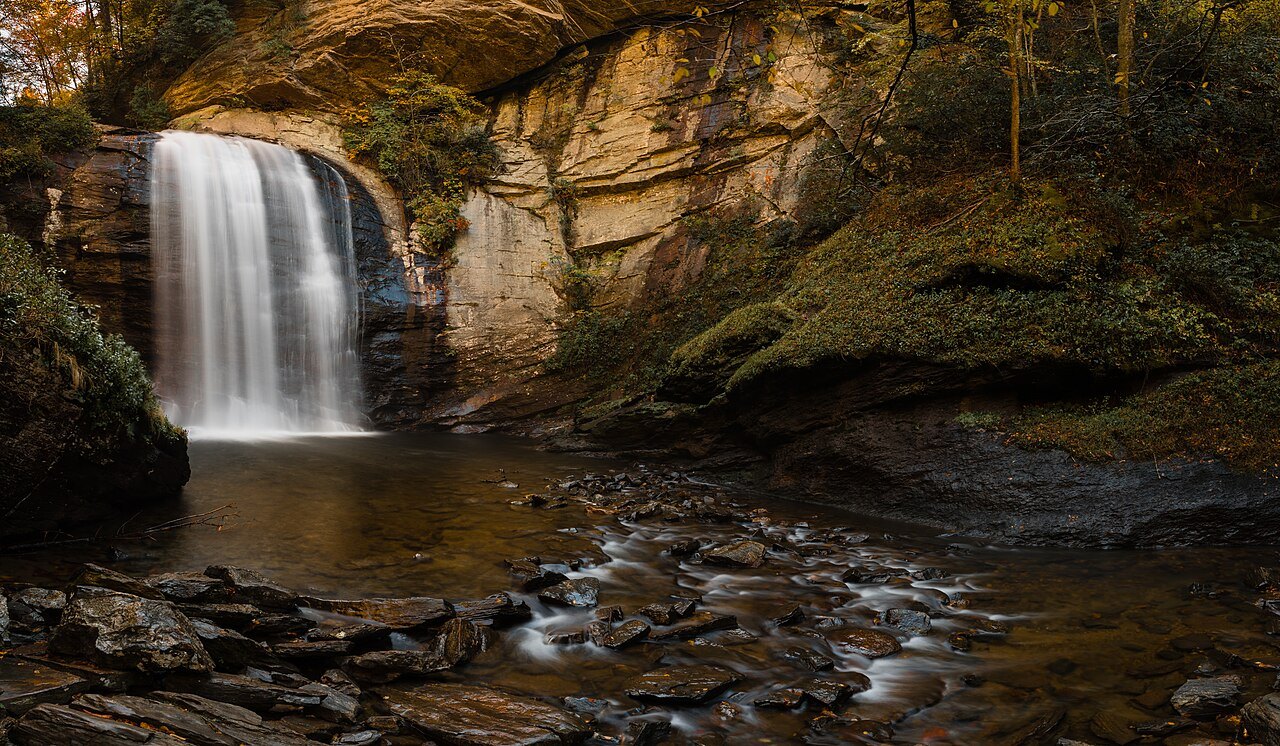
Looking Glass Falls pouring into its pool in autumn. Photo: LTreadwell, Wikimedia Commons, CC BY-SA 4.0 4Brevard and Hendersonville
Two small mountain towns south of Asheville, Brevard at the entrance to the Pisgah forest and Hendersonville on I-26.
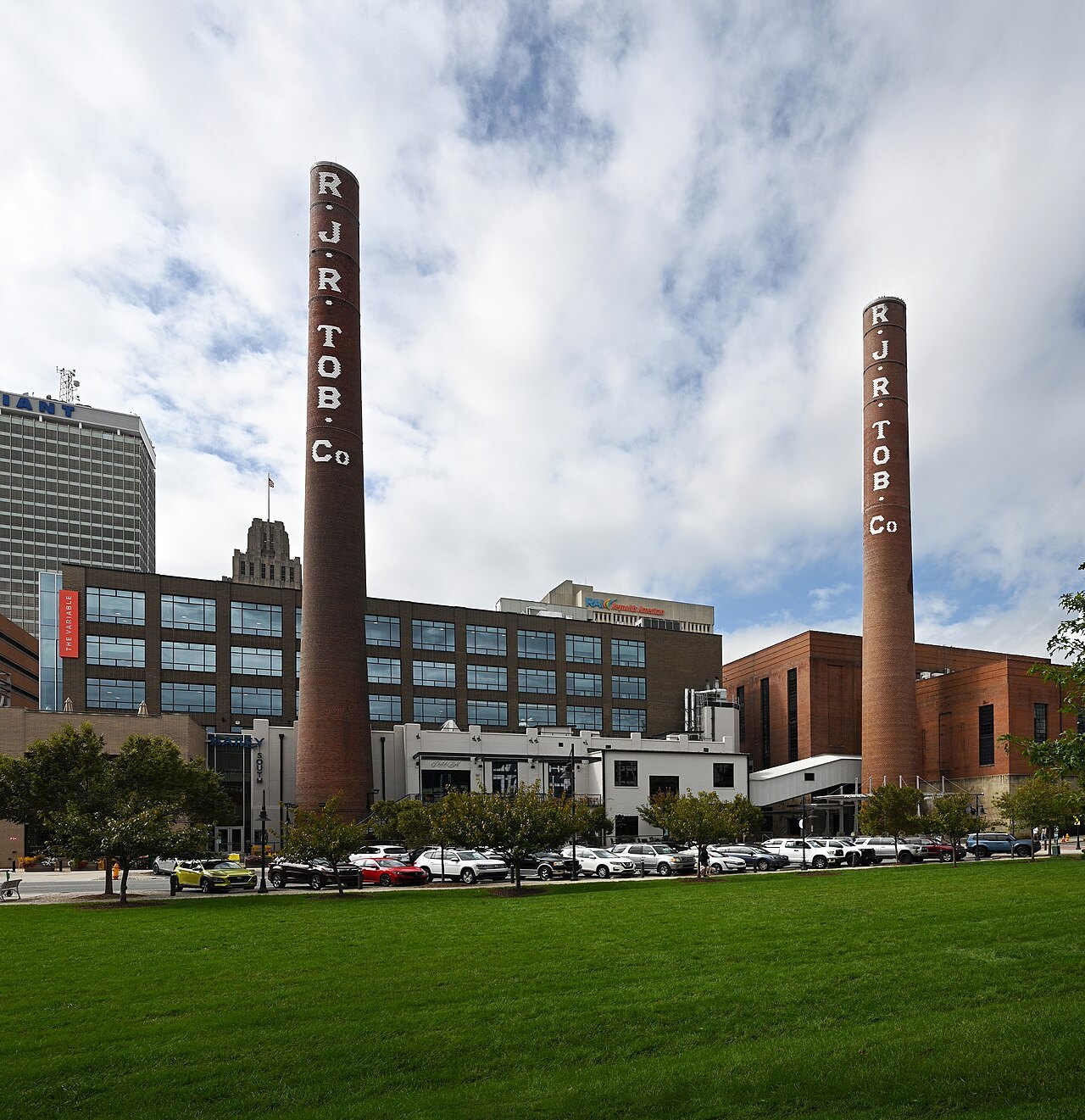
The two tall R. J. Reynolds Tobacco smokestacks in downtown Winston-Salem. Photo: P. Hughes, Wikimedia Commons, CC BY 4.0 5Winston-Salem
The historic Moravian town and tobacco city, a good stop between the mountains and the Triangle.
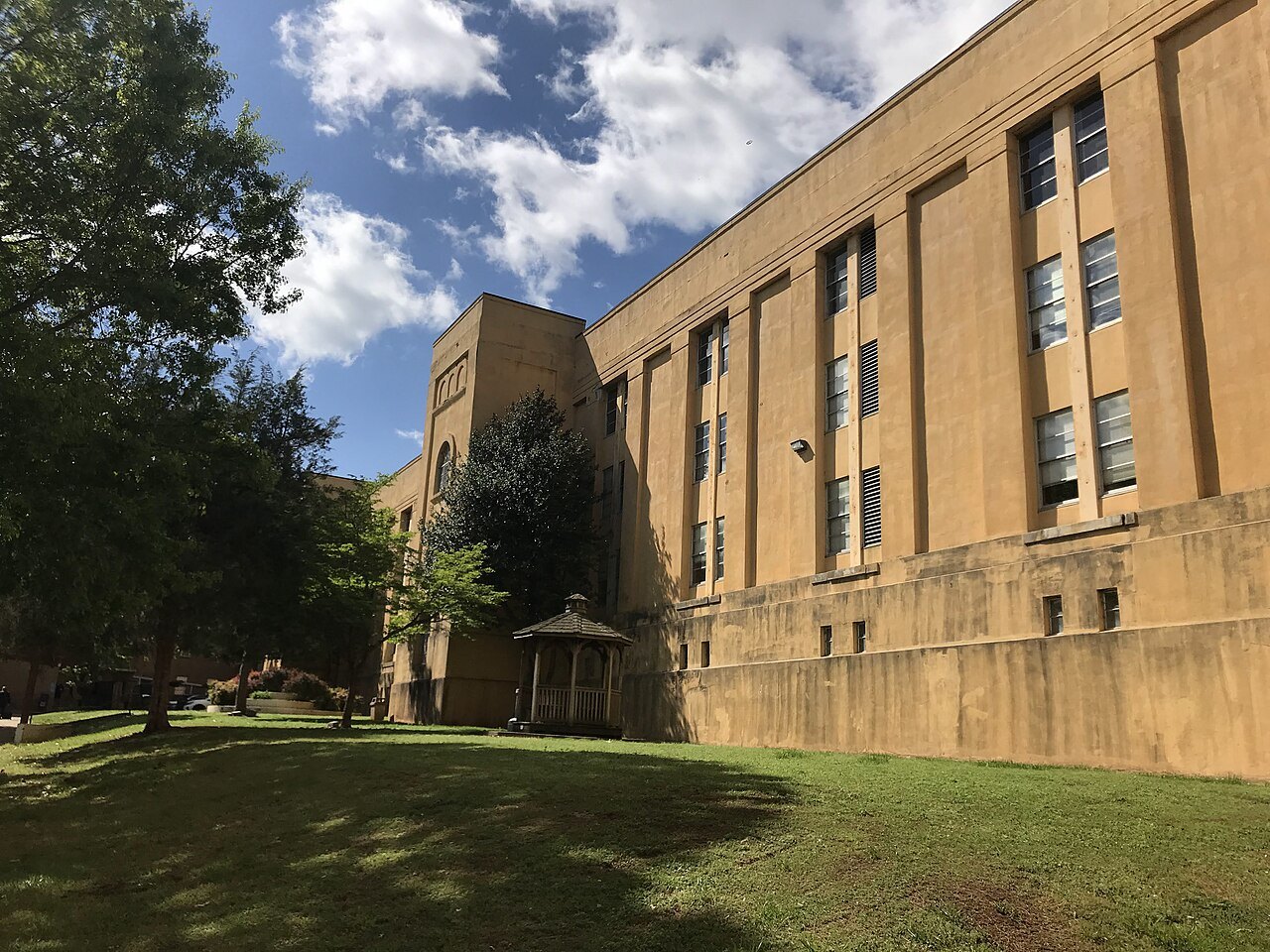
The long buff-brick hospital building on the Dorothea Dix campus in Raleigh. Photo: Pithon314, Wikimedia Commons, CC BY-SA 4.0 6Raleigh, Durham and Chapel Hill
Three cities around Research Triangle Park, with the state museums in Raleigh and the university towns of Durham and Chapel Hill.
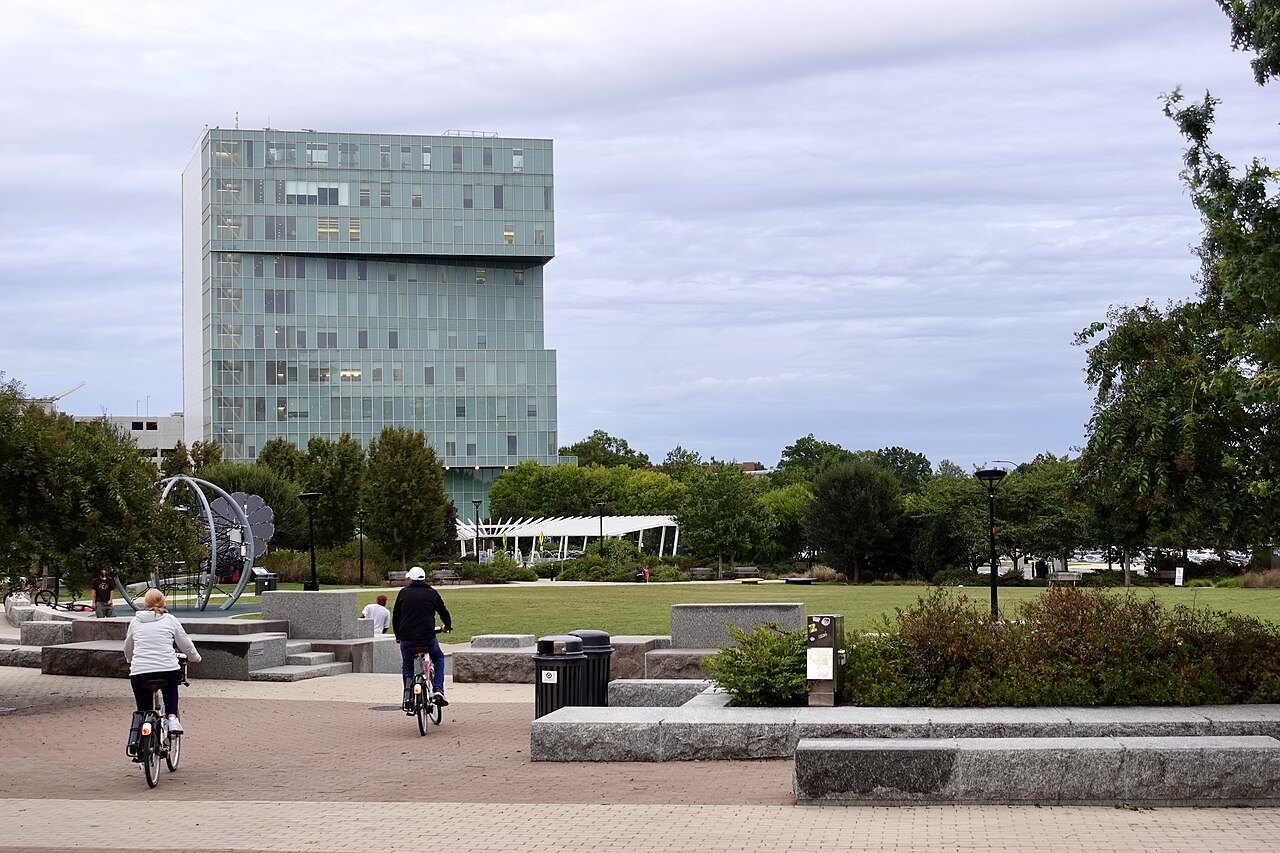
Cyclists crossing First Ward Park below a modern office tower. Photo: Algorhythms, Wikimedia Commons, CC BY-SA 4.0 7Charlotte
The largest city and the busiest airport, with Uptown's museums and the light rail.
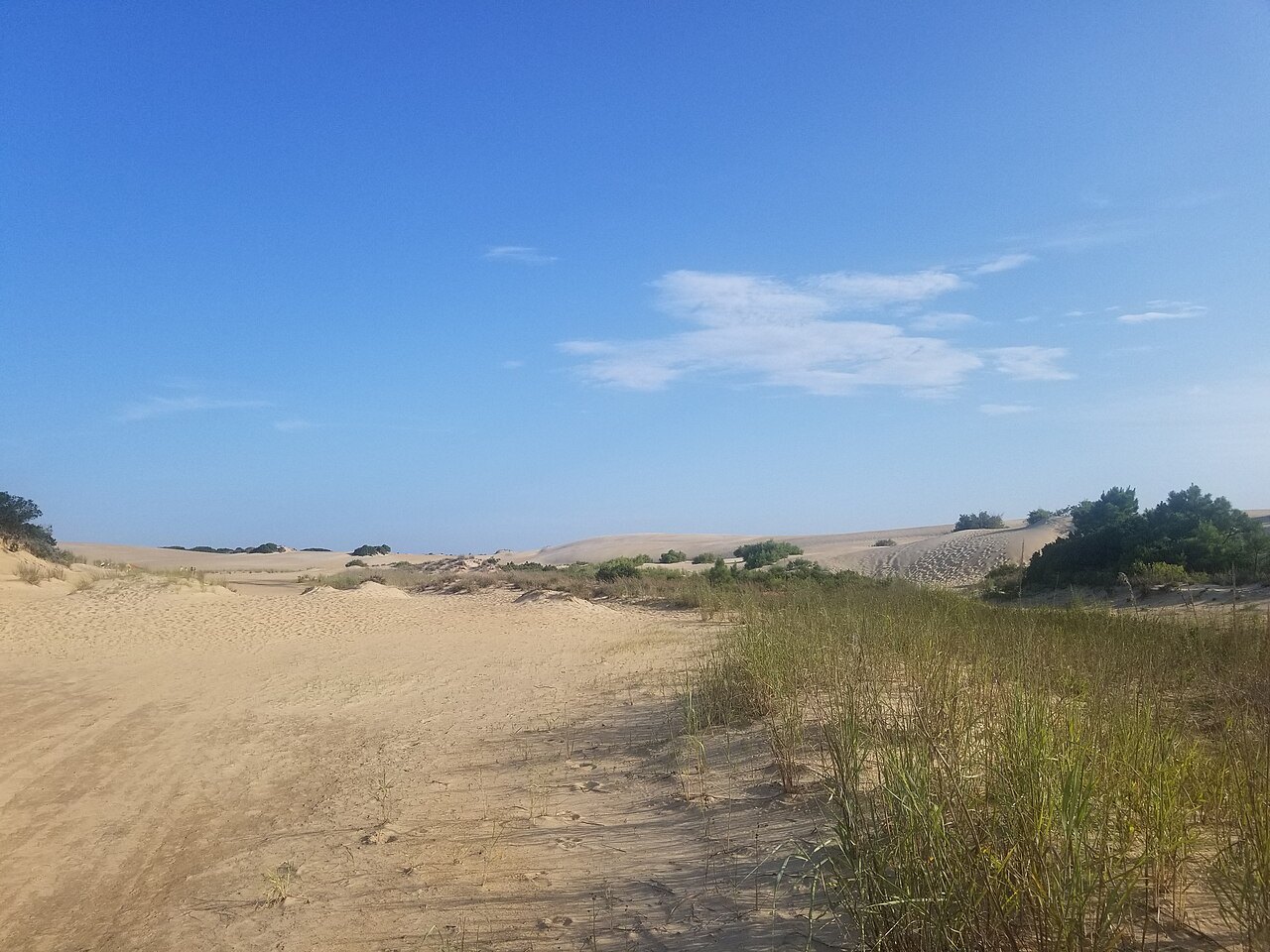
A sandy track beside beach grass at the foot of the dunes. Photo: Myoder006, Wikimedia Commons, CC BY-SA 4.0 8Nags Head, Kill Devil Hills and Manteo
The northern Outer Banks, with the most rooms on the islands and the sound towns across the causeway.
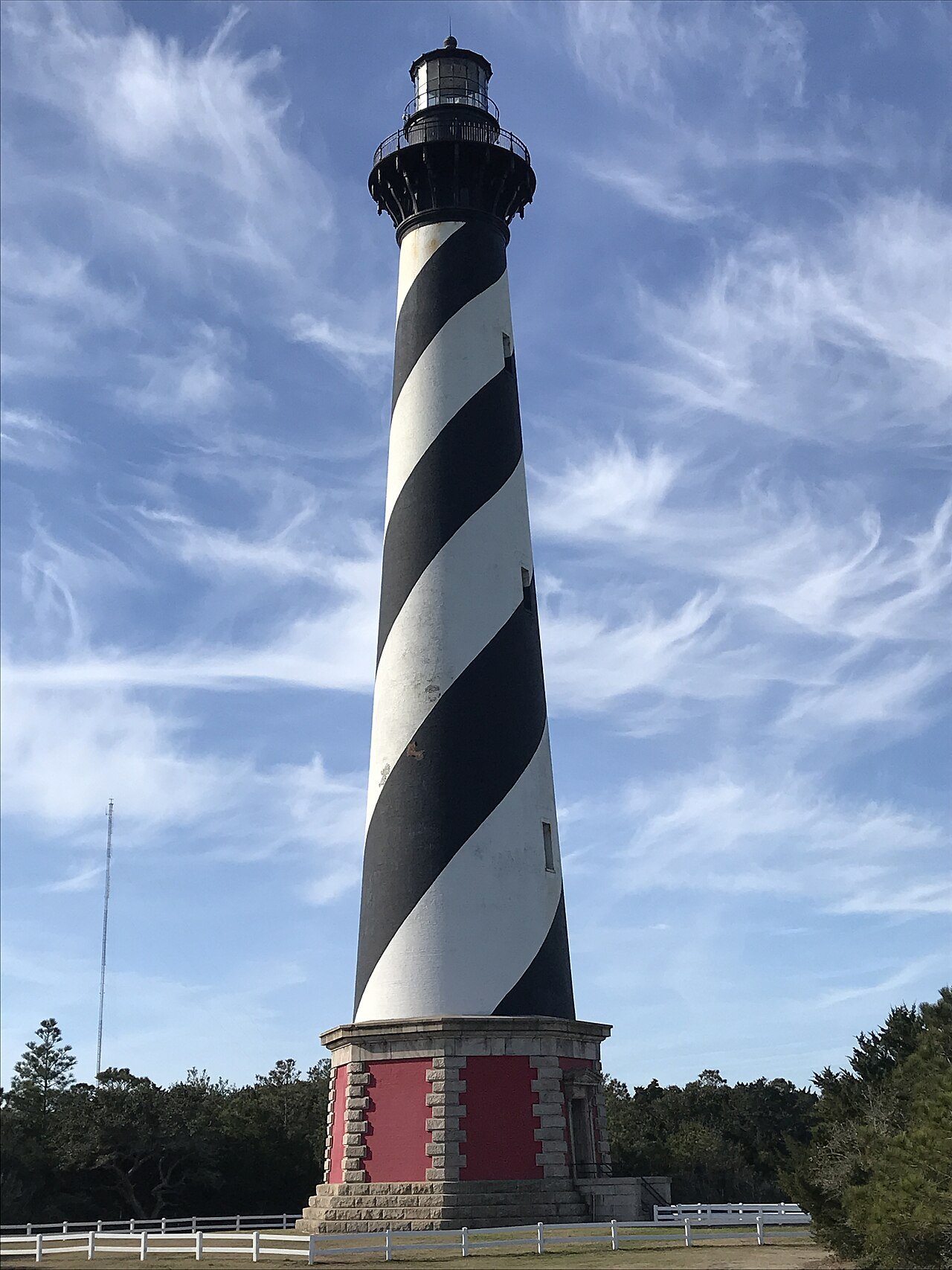
The black-and-white spiral of the Cape Hatteras Lighthouse. Photo: Jschildk, Wikimedia Commons, CC BY-SA 4.0 9Hatteras Island and Ocracoke
Villages strung along NC 12 inside the national seashore, and the island at the end of the ferry.
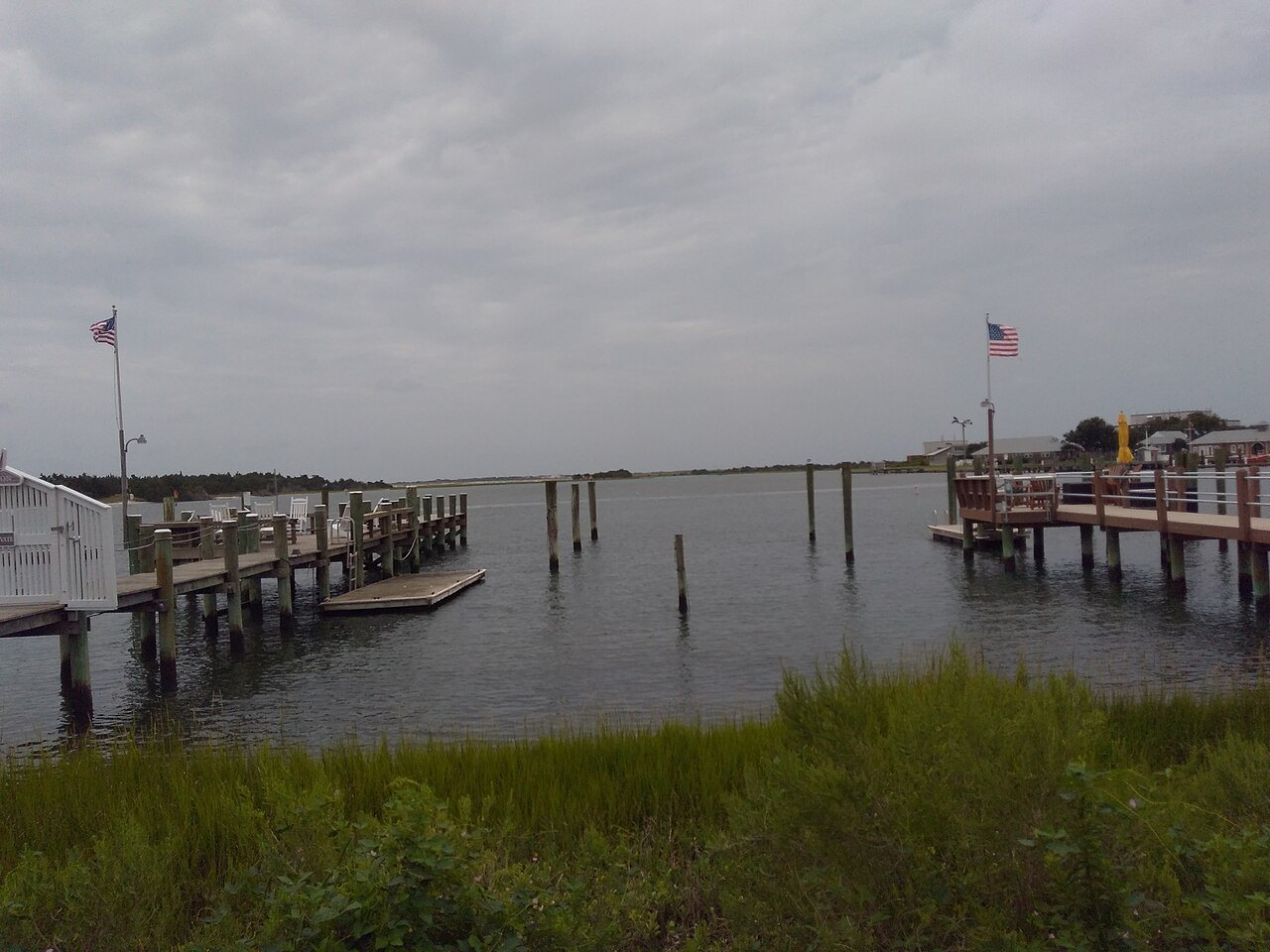
Docks on the water in the Beaufort historic district. Photo: Asylum7830, Wikimedia Commons, CC BY-SA 4.0 10Beaufort and Morehead City
The old port and its neighbor on the Crystal Coast, with the boats to the southern Outer Banks.
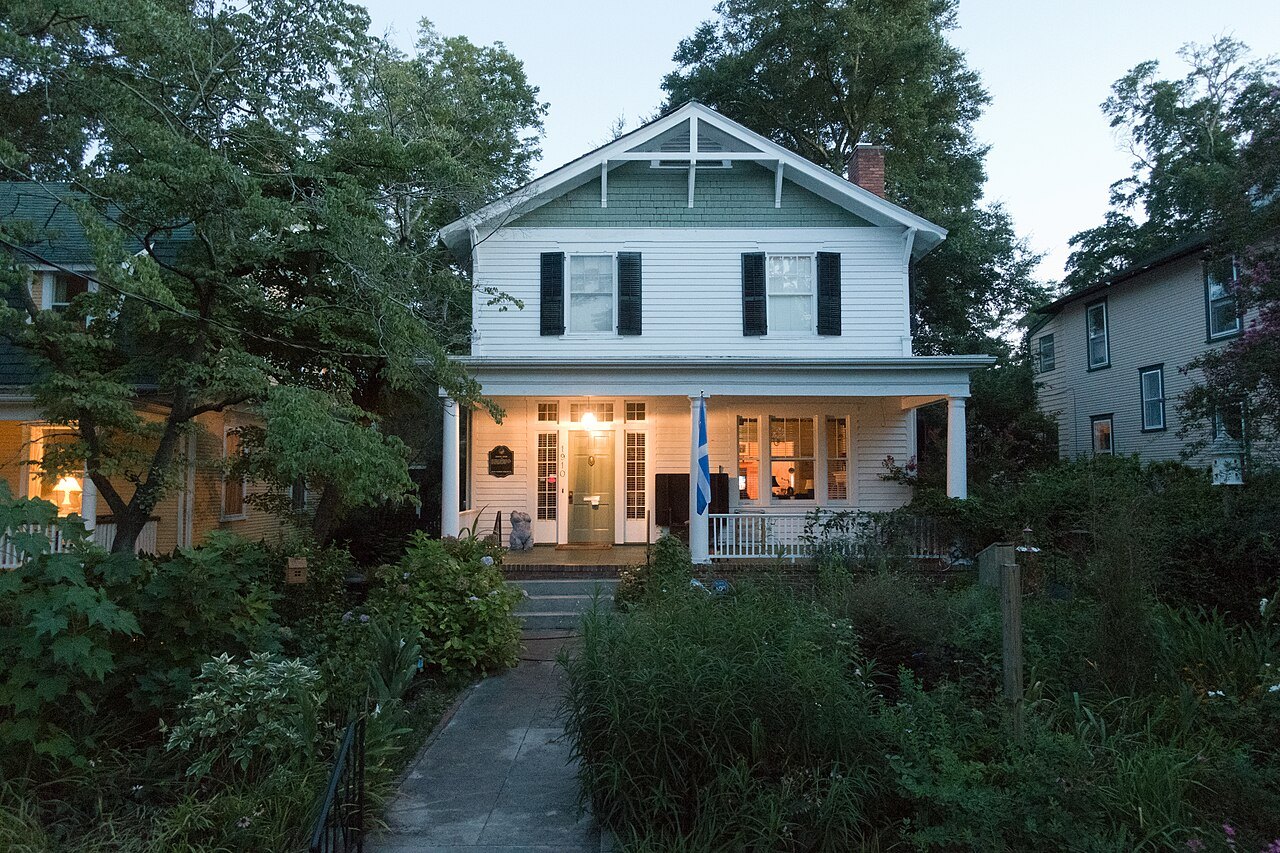
A white house glowing at dusk on Princess Street in Wilmington. Photo: Wm.fridrich, Wikimedia Commons, CC BY-SA 3.0 11Wilmington and its beaches
A historic port city on the Cape Fear with three beach towns within a short drive.
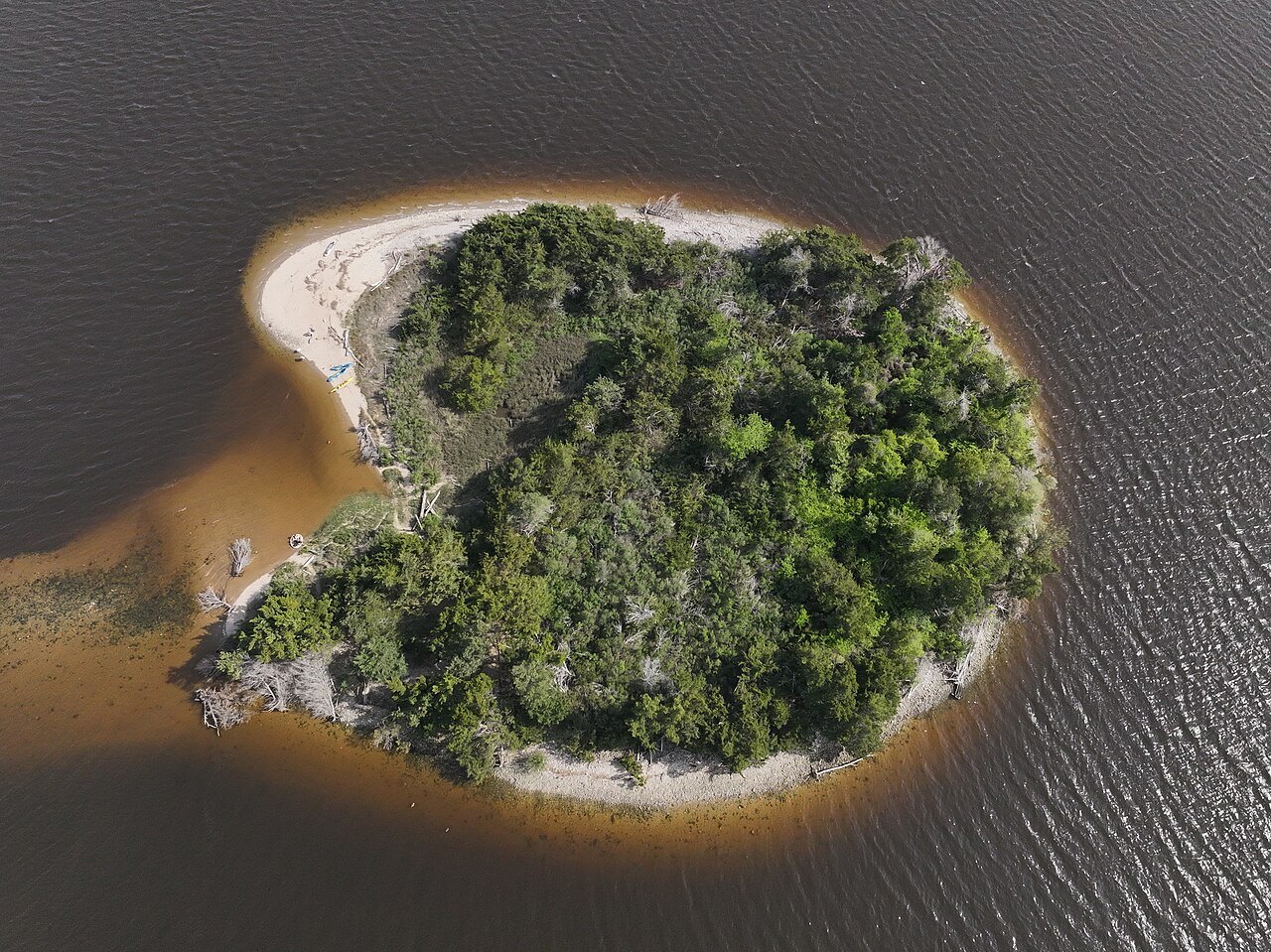
Bases, not a single hotel
North Carolina is too big to see from one hotel. The mountains, the Piedmont and the coast are each a long drive from one another, and the best way to see the state is to move between two or three bases, spending a few nights in each. The areas below are the ones this site's landmarks cluster around, and the road trips use them as overnight stops.
Whatever you choose, book early for October in the mountains, the Parkway's busiest month, and for summer on the coast, the busy season on the islands. Hurricane Helene damaged many businesses in the mountains in 2024, so confirm directly with any place you book there.
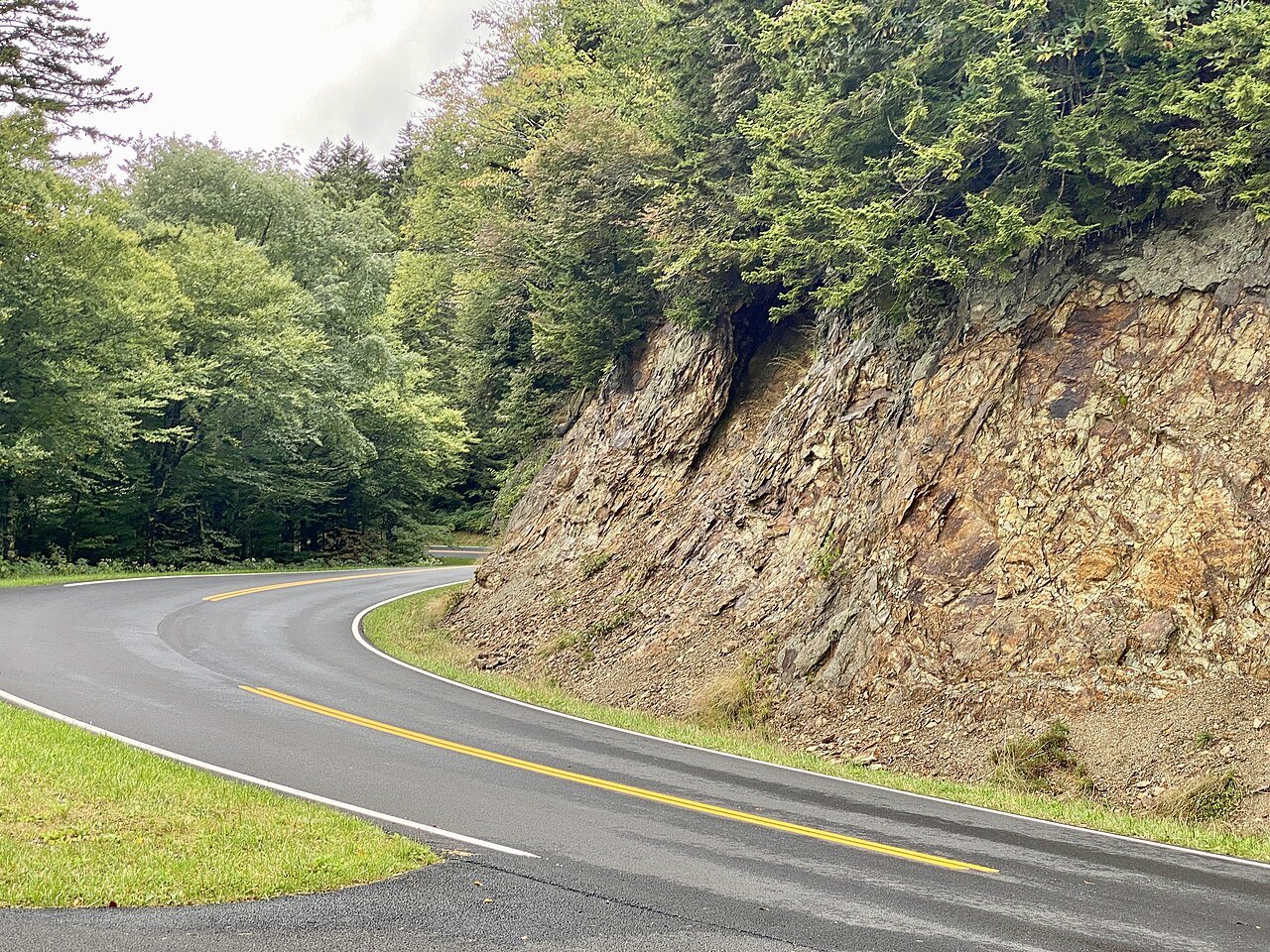
The mountains: Asheville
Asheville is the obvious base for the mountains. It has the most hotels, inns and restaurants in western North Carolina, from the Art Deco downtown to the grand Grove Park Inn of the Arts and Crafts movement, and the Blue Ridge Parkway runs past the city, with the Folk Art Center and the Parkway's main visitor center nearby. Biltmore is at its southern edge, and Mount Mitchell, Craggy Gardens and Chimney Rock are day trips.
Helene struck the city hard, and parts of it, especially along the rivers, are still recovering; the hotels and restaurants that reopened depend on visitors, and staying in the city is one way to help.
The mountains: the High Country and the Smokies
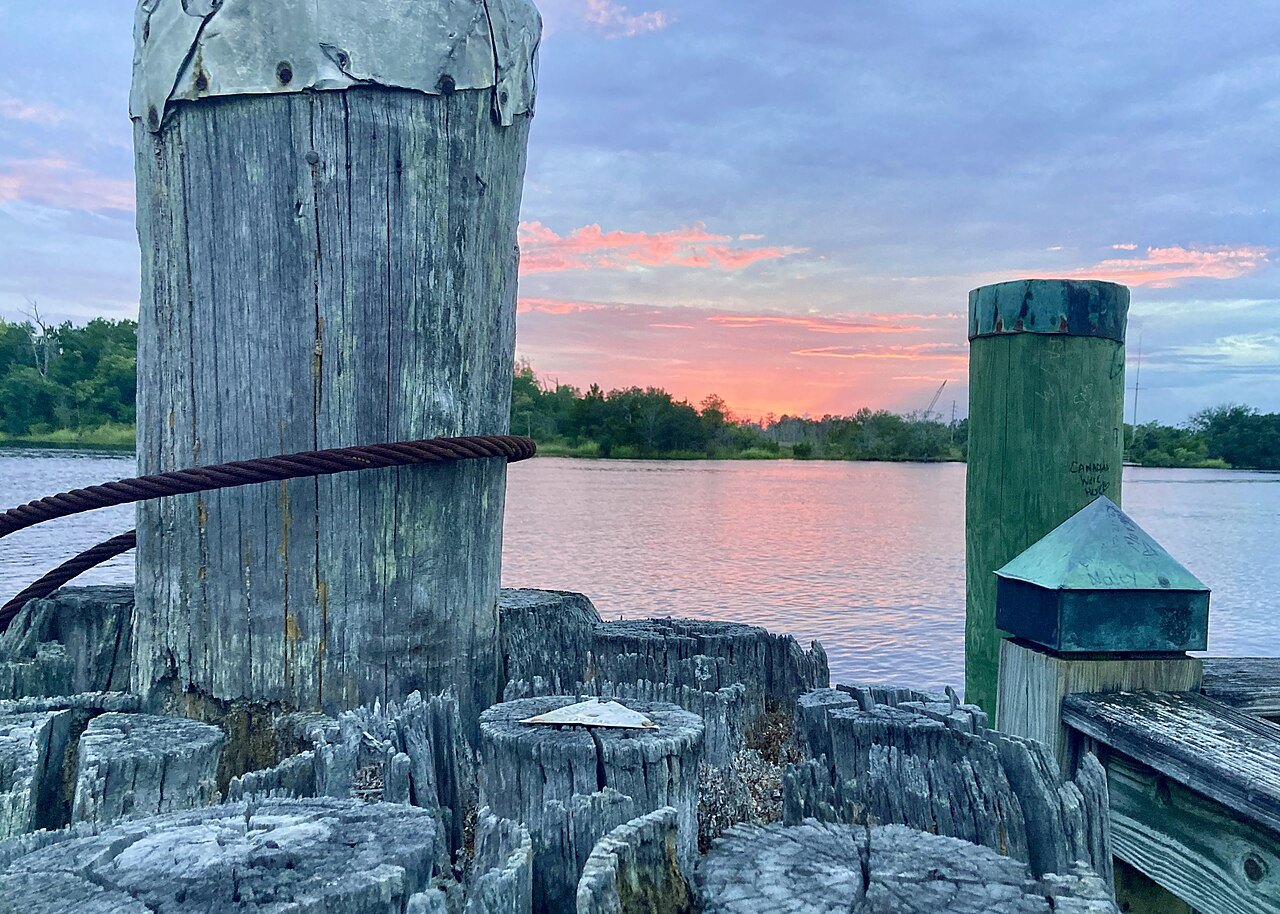
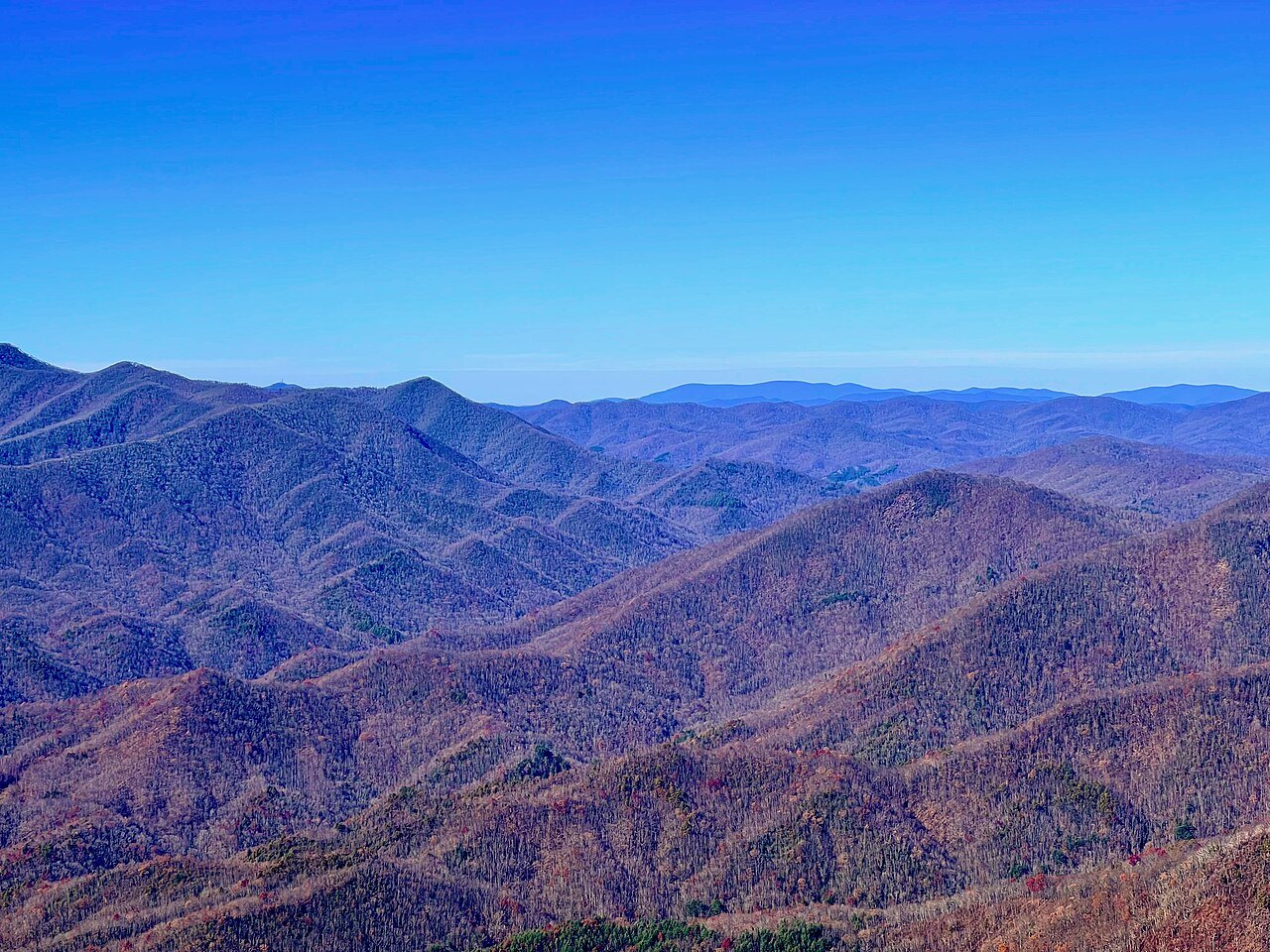
For the northern Parkway, stay in the High Country around Blowing Rock and Boone. Blowing Rock sits right on the crest of the Blue Ridge and is busiest in the fall leaf season, and Boone, the largest town of the High Country and home of Appalachian State University, has an outdoor drama, Horn in the West, every summer since 1952. From here Grandfather Mountain, the Linn Cove Viaduct and Linville Falls are close.
For the Great Smoky Mountains, the natural base is Cherokee, the capital of the Eastern Band of Cherokee Indians, at a main entrance to the park and at the southern end of the Parkway. It has campgrounds, motels and hotels, and it is a living community with its own institutions: the Museum of the Cherokee People, founded in 1948 by the Eastern Band, the Oconaluftee Indian Village, a living-history museum, and the outdoor drama Unto These Hills. Many street signs are written in both the Cherokee syllabary and English.
The mountains: Brevard and Hendersonville
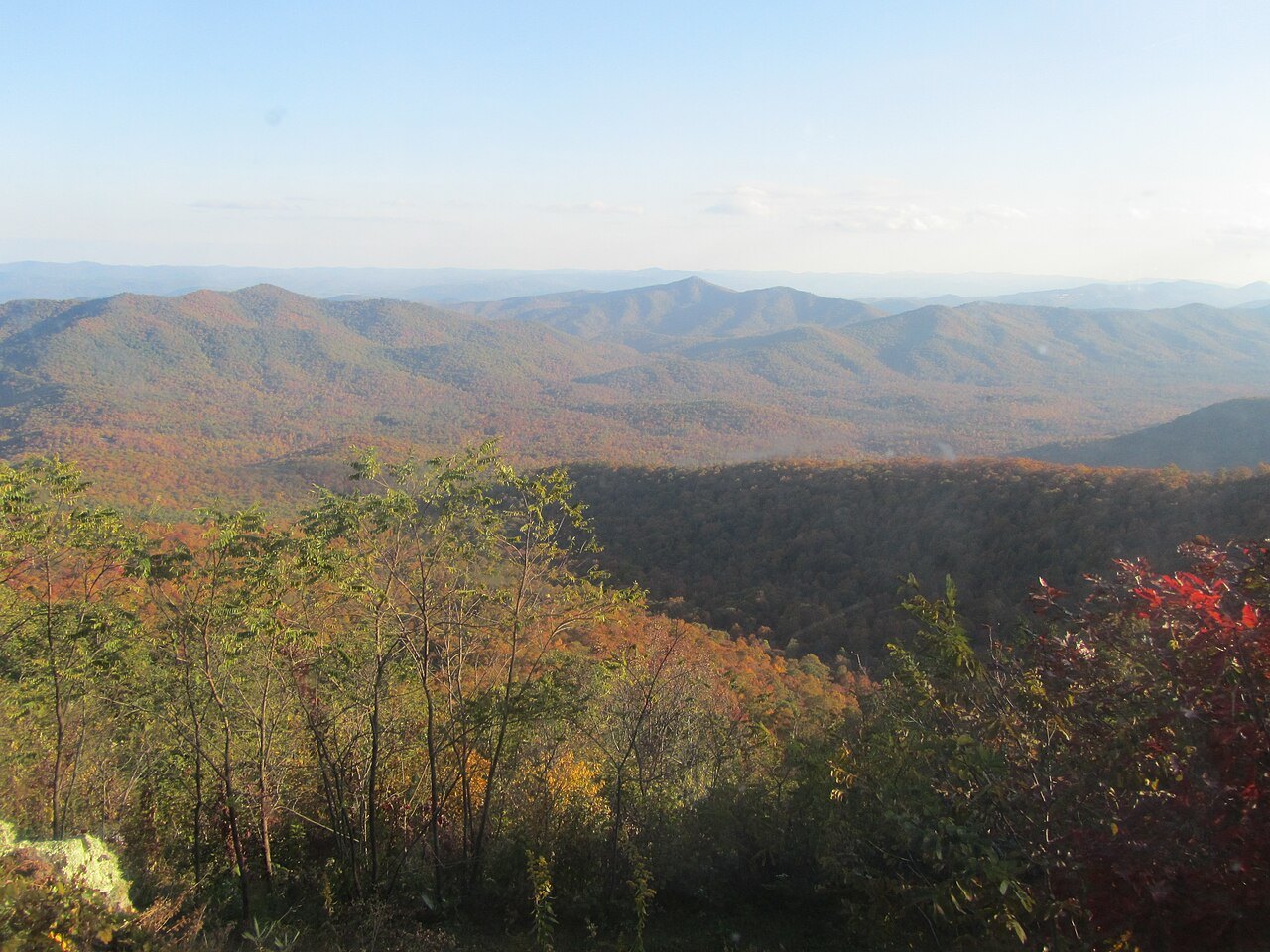
South of Asheville, Brevard lies at the entrance to Pisgah National Forest and makes a quieter base for waterfalls and the Forest Heritage Scenic Byway; it is known for its moderate climate and for its white squirrels. Hendersonville, 22 miles south of Asheville on I-26, grew as a summer retreat for low-country planters in the 1800s and is handy for Chimney Rock and Hickory Nut Gorge.
The Piedmont
In the Piedmont, Winston-Salem is a good halfway stop between the mountains and the Triangle, with Old Salem, Reynolda House and Pilot Mountain close by. In the Research Triangle, Raleigh has the state museums and the most hotels, Durham has the lively downtown of the American Tobacco Campus and Duke, and Chapel Hill, the university town founded in 1793 around Franklin Street, is the quietest of the three.
The Triangle makes a good base for day trips as well: Duke Chapel and the gardens, the Museum of Art and its park, and, with an early start, Old Salem to the west along I-40.
Charlotte, the largest city, is mostly a place to start or end a trip, near its busy airport, with a night in Uptown for the museums and the NASCAR Hall of Fame.
The northern Outer Banks
On the coast, the northern Outer Banks have the most beds on the islands: rental houses, motels and hotels along the beach in Nags Head, Kill Devil Hills and Kitty Hawk, where the population rises greatly in summer. From here the Wright Brothers memorial, Jockey's Ridge and the start of the Cape Hatteras seashore are all close.
Across the sound, Manteo, the county seat on Roanoke Island, is a small town handy for Fort Raleigh and The Lost Colony, and a little away from the beach crowds.
Camping and park lodges
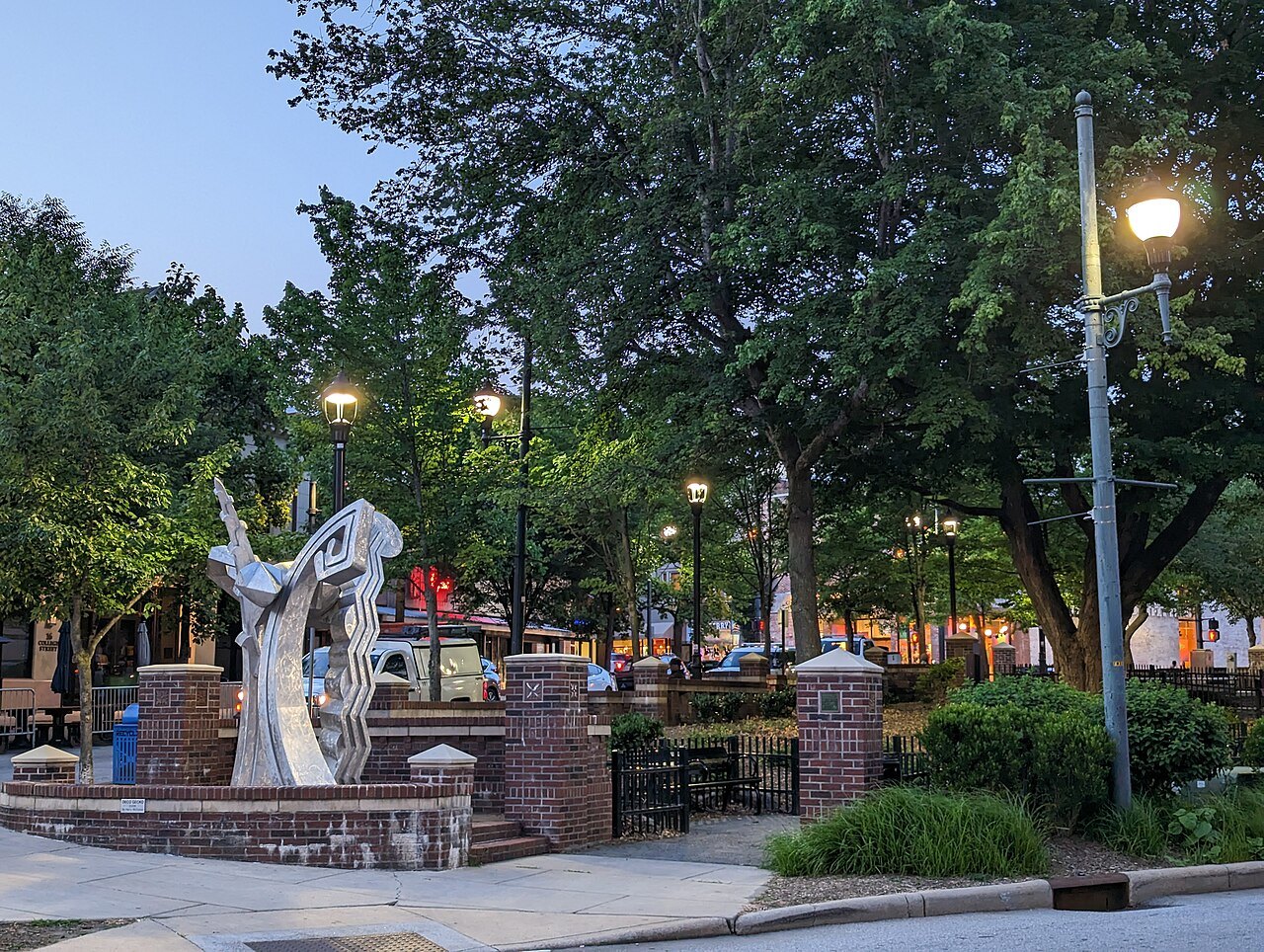
Many of the best places to stay in the mountains are in the parks themselves. The Blue Ridge Parkway has campgrounds at Doughton Park, which also has a lodge, at Julian Price Memorial Park beside Price Lake, at Linville Falls and at Crabtree Meadows, and the Pisgah Inn, a Park Service concession at Mount Pisgah, sits right on the Parkway. Cherokee and the Oconaluftee valley have campgrounds at the edge of the Smokies.
In the Piedmont, Pilot Mountain State Park has a family campground of 49 sites among hickory and oak, and Hanging Rock State Park has 73 campsites and ten vacation cabins. On the coast, camping is allowed on the beach at Portsmouth, though not in the village, and Jockey's Ridge is a day-use park with no campground. Check each park's own site for its season and reservations before you go.
Hatteras, Ocracoke and the south coast
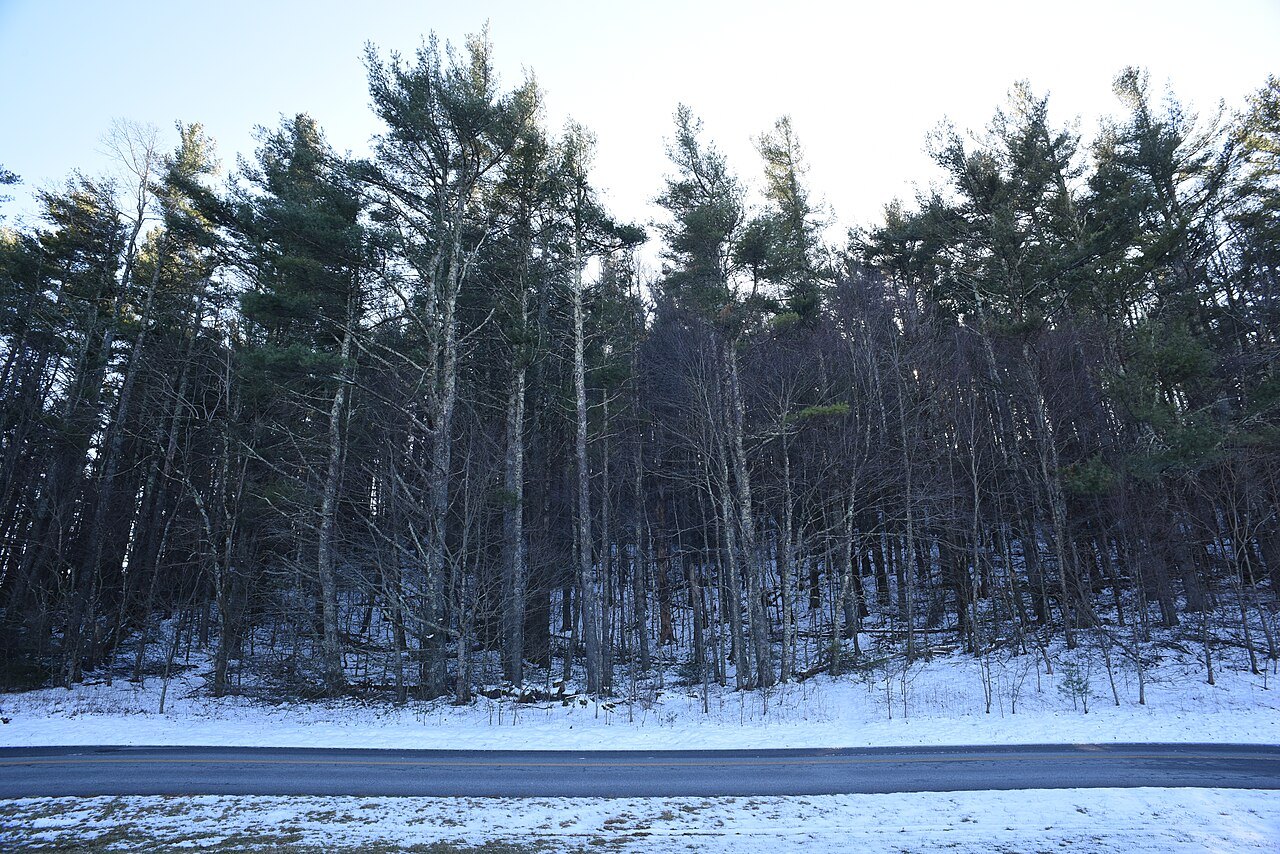
For the lighthouses and the empty beaches, stay on Hatteras Island in one of the villages along NC 12, Rodanthe, Avon, Buxton or Hatteras, or go on by ferry to Ocracoke, whose village of hotels, campgrounds and weekly rentals fills in the season and shrinks in winter. These are remote places; book early and keep hurricane season in mind.
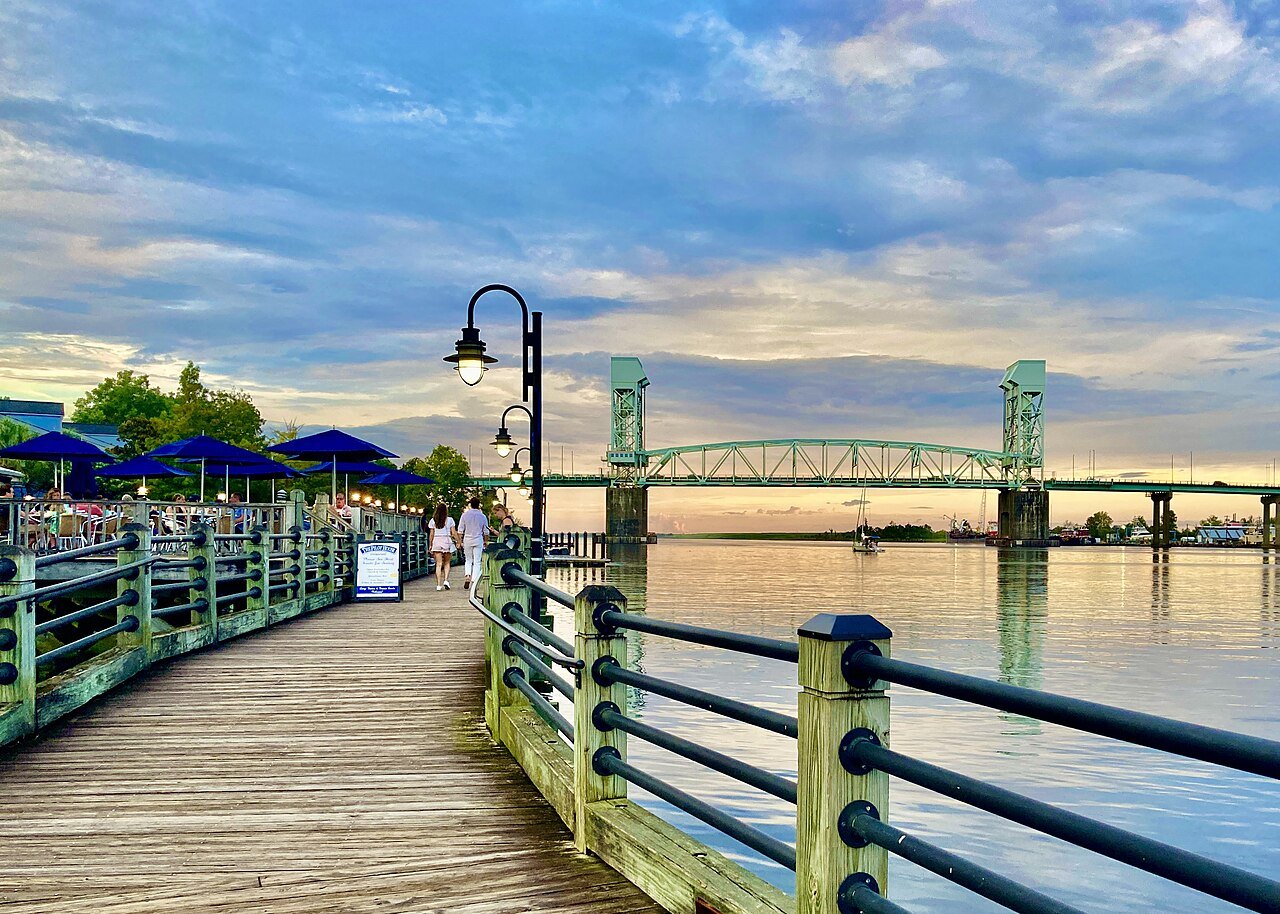
Farther south, Beaufort and Morehead City are the bases for Cape Lookout, the wild horses and Fort Macon, and Wilmington, with its historic downtown and riverwalk, is the base for the southern beaches, from Wrightsville Beach, just east of the city, to Carolina Beach and Kure Beach on Pleasure Island. New Bern, with its historic districts and bed and breakfasts, is a quieter base for the central coast.
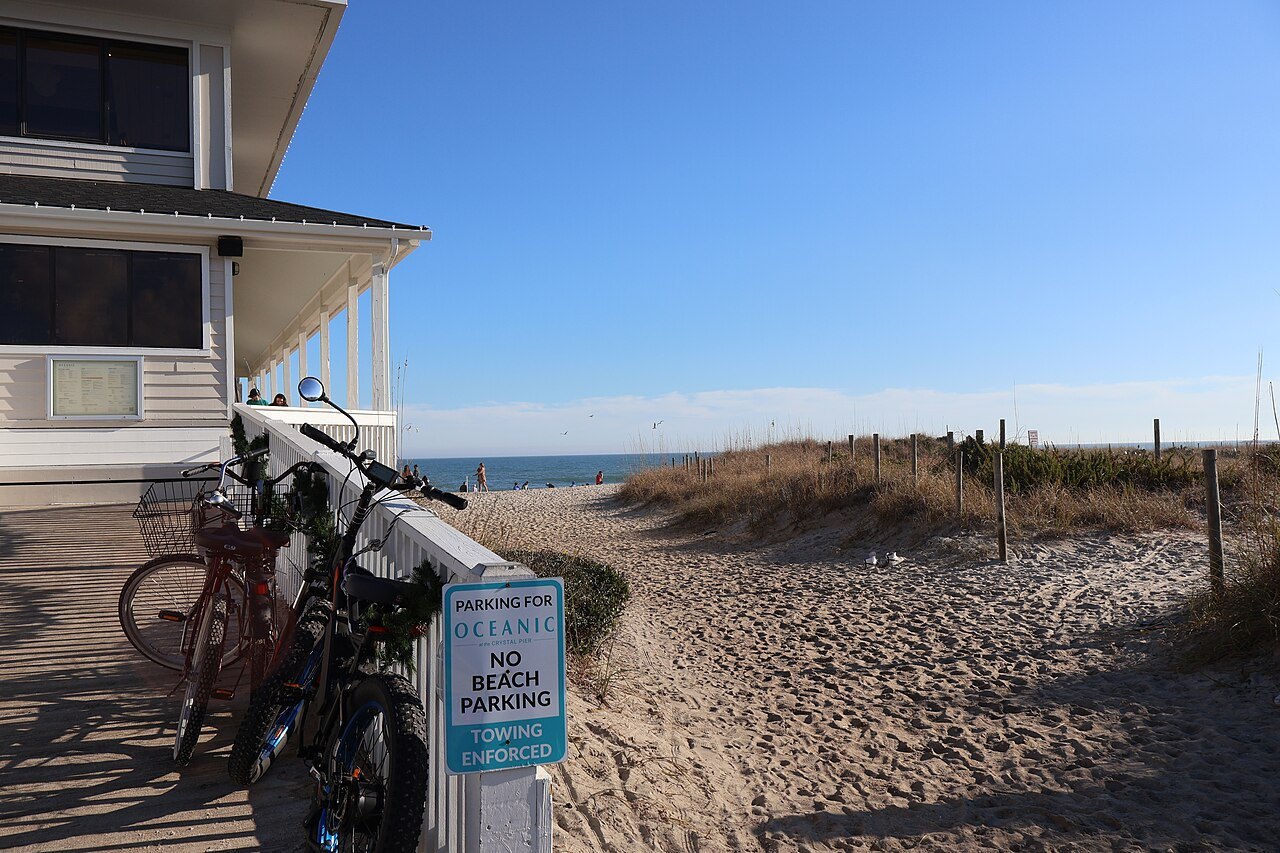
Wrightsville Beach, the closest to Wilmington, is a beach island of more than four miles with an inner island, Harbor Island, and a long history as the city's resort: its yacht club, founded in 1853, is one of the oldest in the country, and a railroad began carrying passengers from downtown to the beach in 1887. Carolina Beach and Kure Beach share Pleasure Island farther south.
More for planning
Sources read for this page
- en.wikipedia.org/wiki/Asheville,_North_Carolina
- en.wikipedia.org/wiki/Blowing_Rock,_North_Carolina
- en.wikipedia.org/wiki/Boone,_North_Carolina
- en.wikipedia.org/wiki/Cherokee,_North_Carolina
- en.wikipedia.org/wiki/Museum_of_the_Cherokee_People
- en.wikipedia.org/wiki/Brevard,_North_Carolina
- en.wikipedia.org/wiki/Hendersonville,_North_Carolina
- en.wikipedia.org/wiki/Chapel_Hill,_North_Carolina
- en.wikipedia.org/wiki/Kill_Devil_Hills,_North_Carolina
- en.wikipedia.org/wiki/Ocracoke,_North_Carolina
- en.wikipedia.org/wiki/Wrightsville_Beach,_North_Carolina
- en.wikipedia.org/wiki/Carolina_Beach,_North_Carolina
- en.wikipedia.org/wiki/New_Bern,_North_Carolina