THE COAST · ROANOKE ISLAND
Fort Raleigh and the Lost Colony on Roanoke Island
Photographs: DrStew82, Wikimedia Commons, CC BY-SA 4.0 · Fredlyfish4, Wikimedia Commons, CC BY-SA 4.0 · DrStew82, Wikimedia Commons, CC BY-SA 4.0
The Coast · landmark 15 of 21
The north end of Roanoke Island, where England first tried to settle North America in the 1580s and where John White came back in 1590 to find one word carved on a post, with an outdoor drama of the Lost Colony, Elizabethan gardens and the story of a freedpeople's colony of the Civil War.
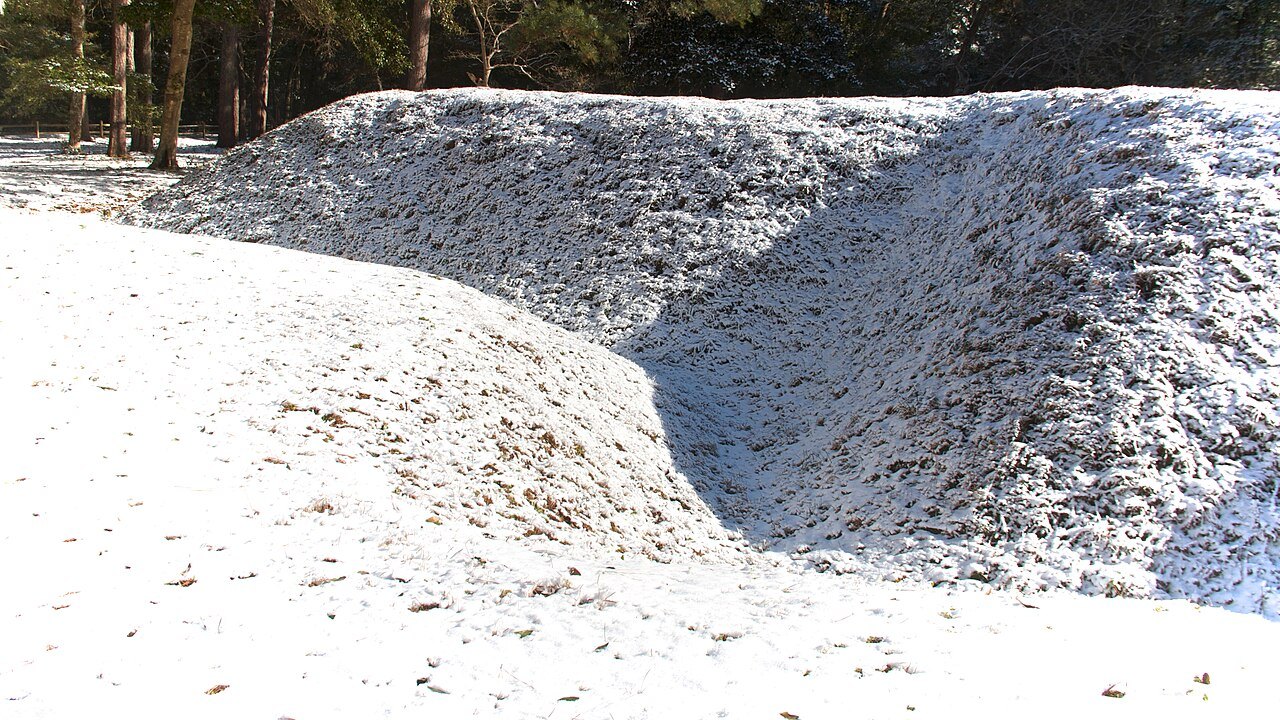
- The earthworkA small star-shaped earth fort of the 1580s, reconstructed in 1950 to its original size and shape.
- The visitor center museumThe English voyages, the Algonquian peoples of the sounds, and the island's Civil War history.
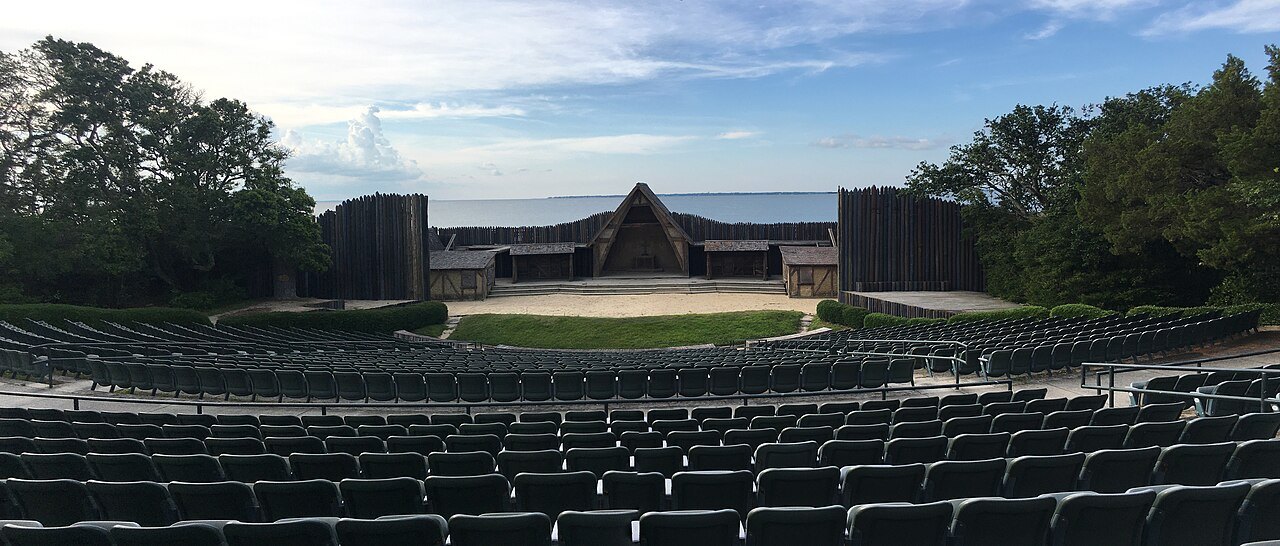
- The Waterside TheatreHome of Paul Green's The Lost Colony, played on summer evenings since 1937.
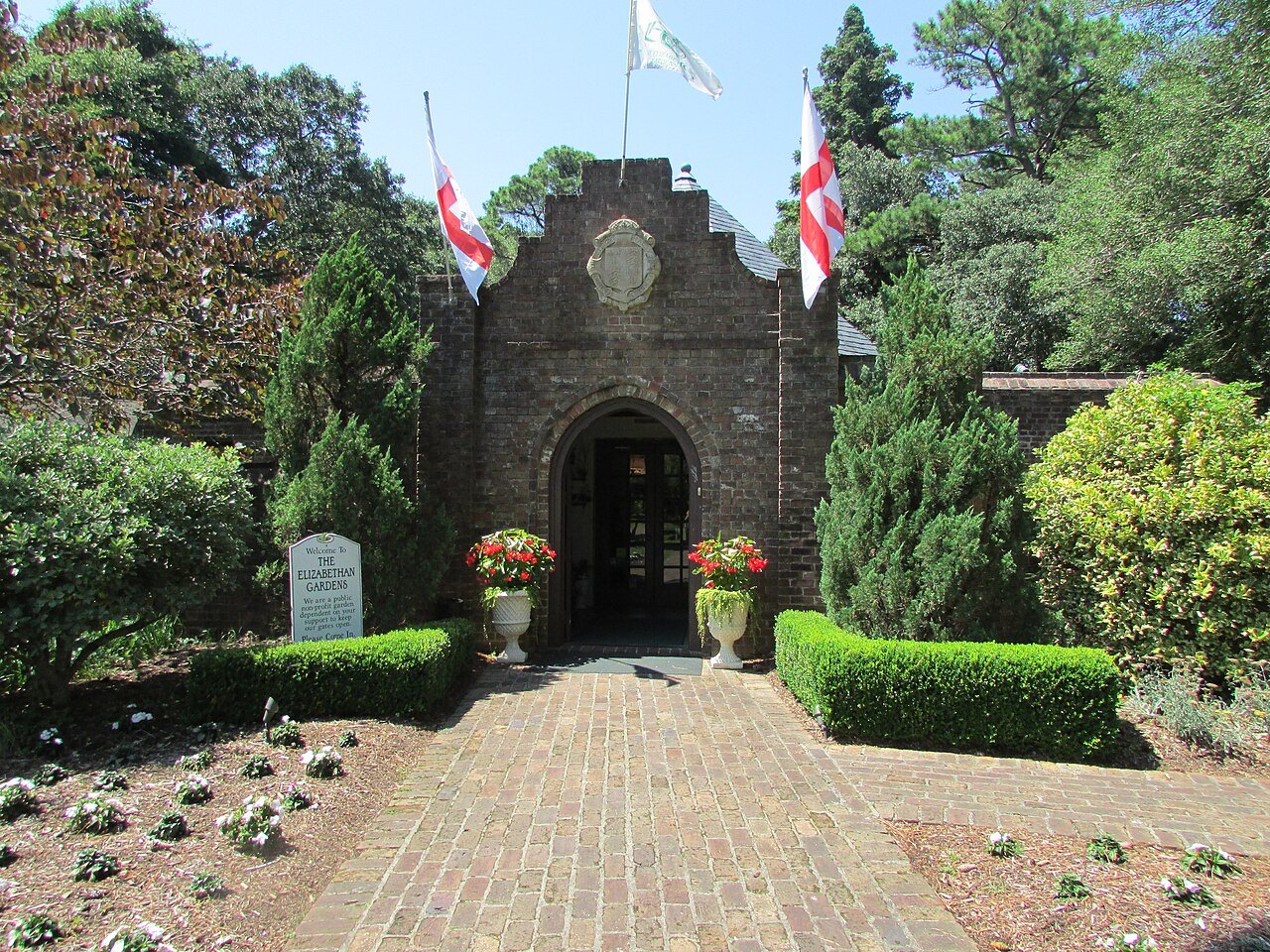
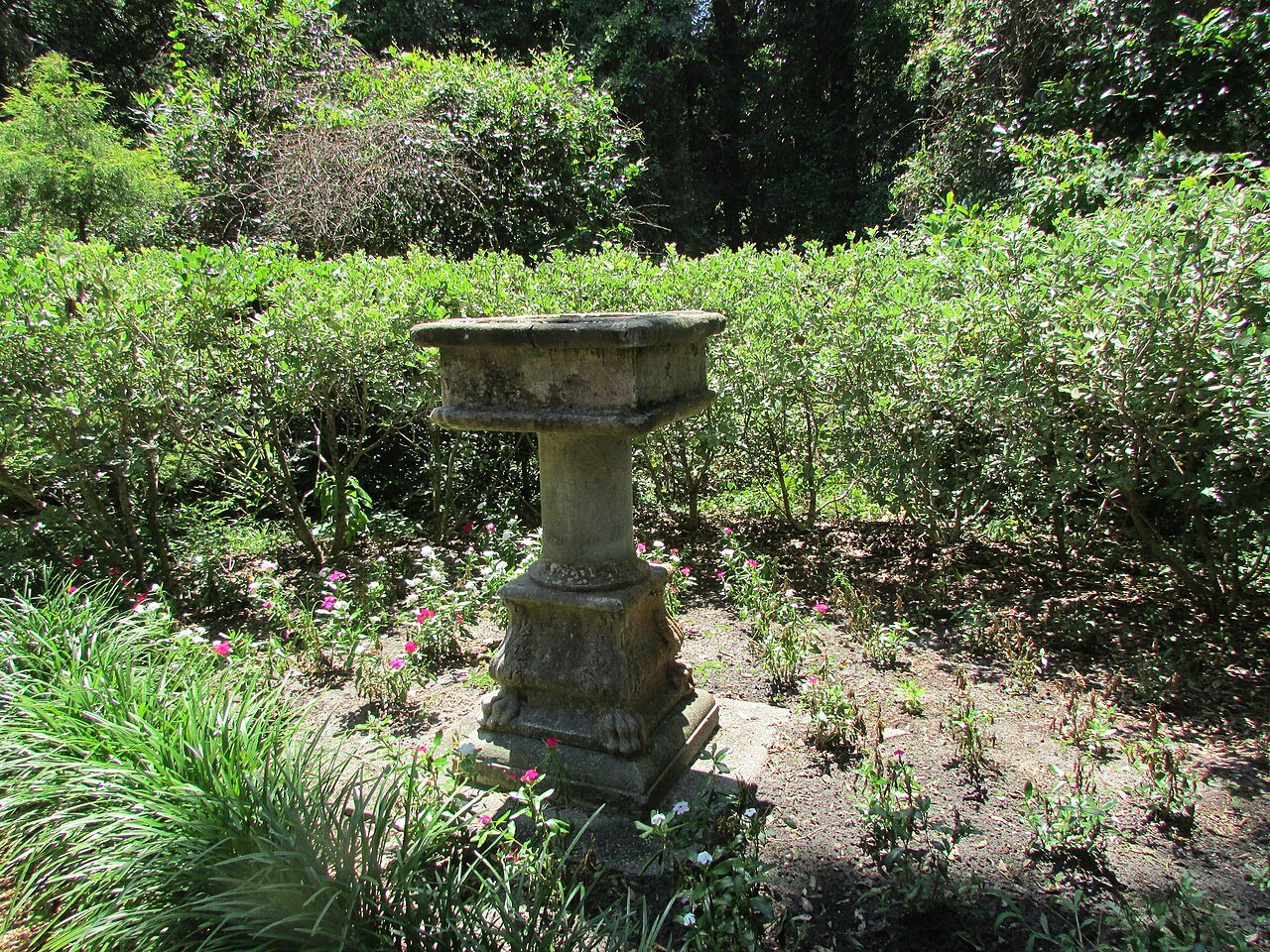
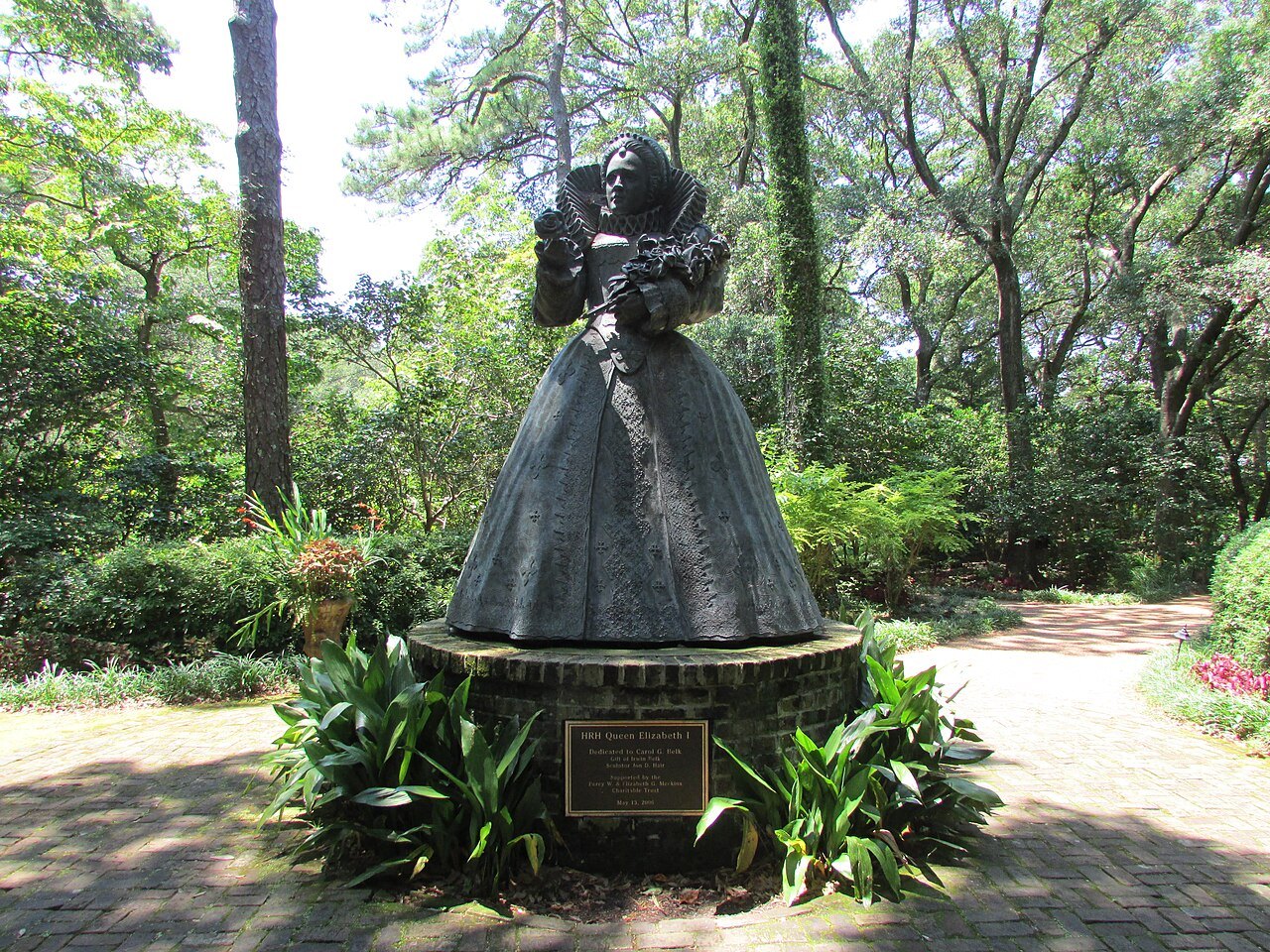
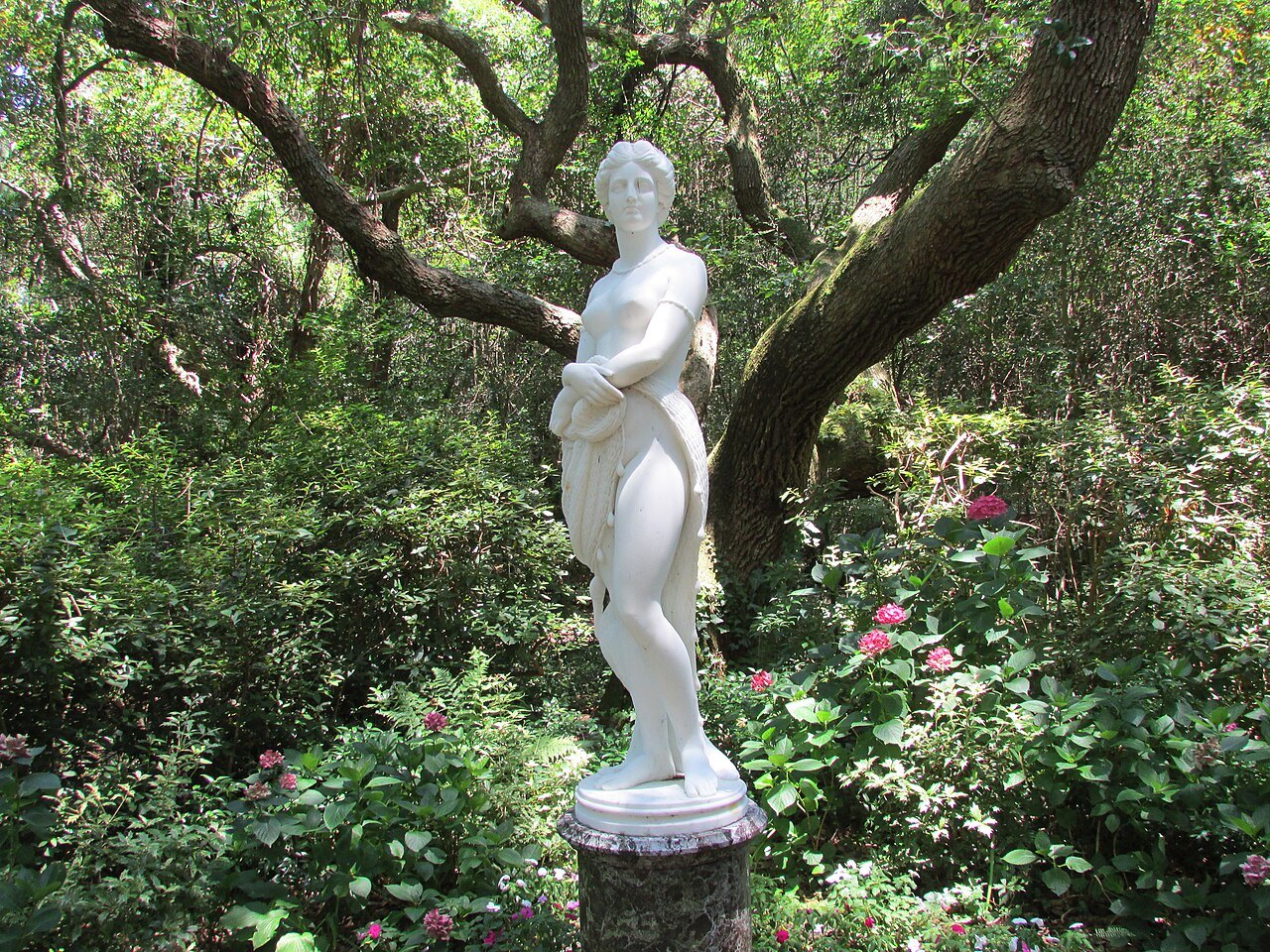
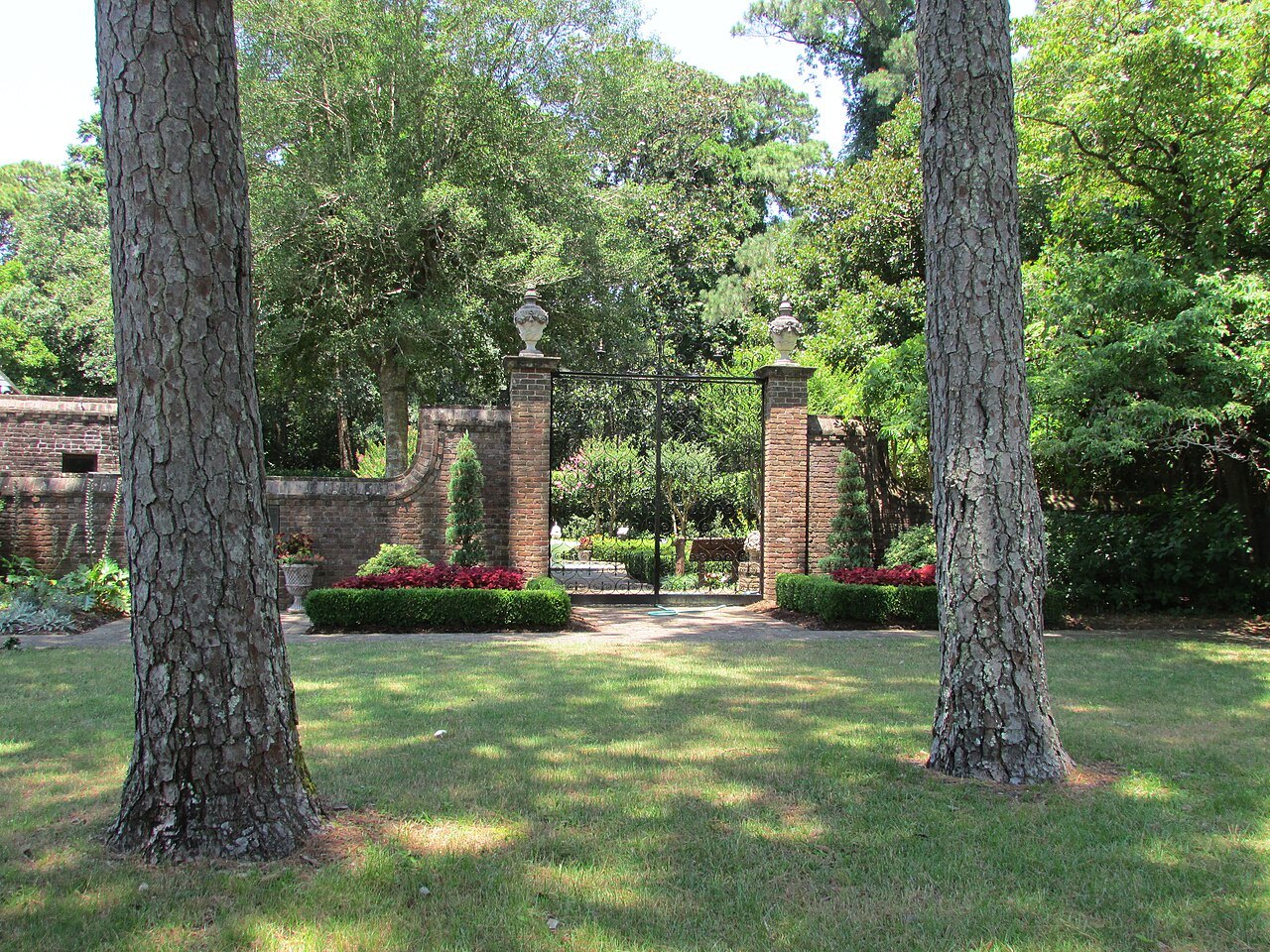
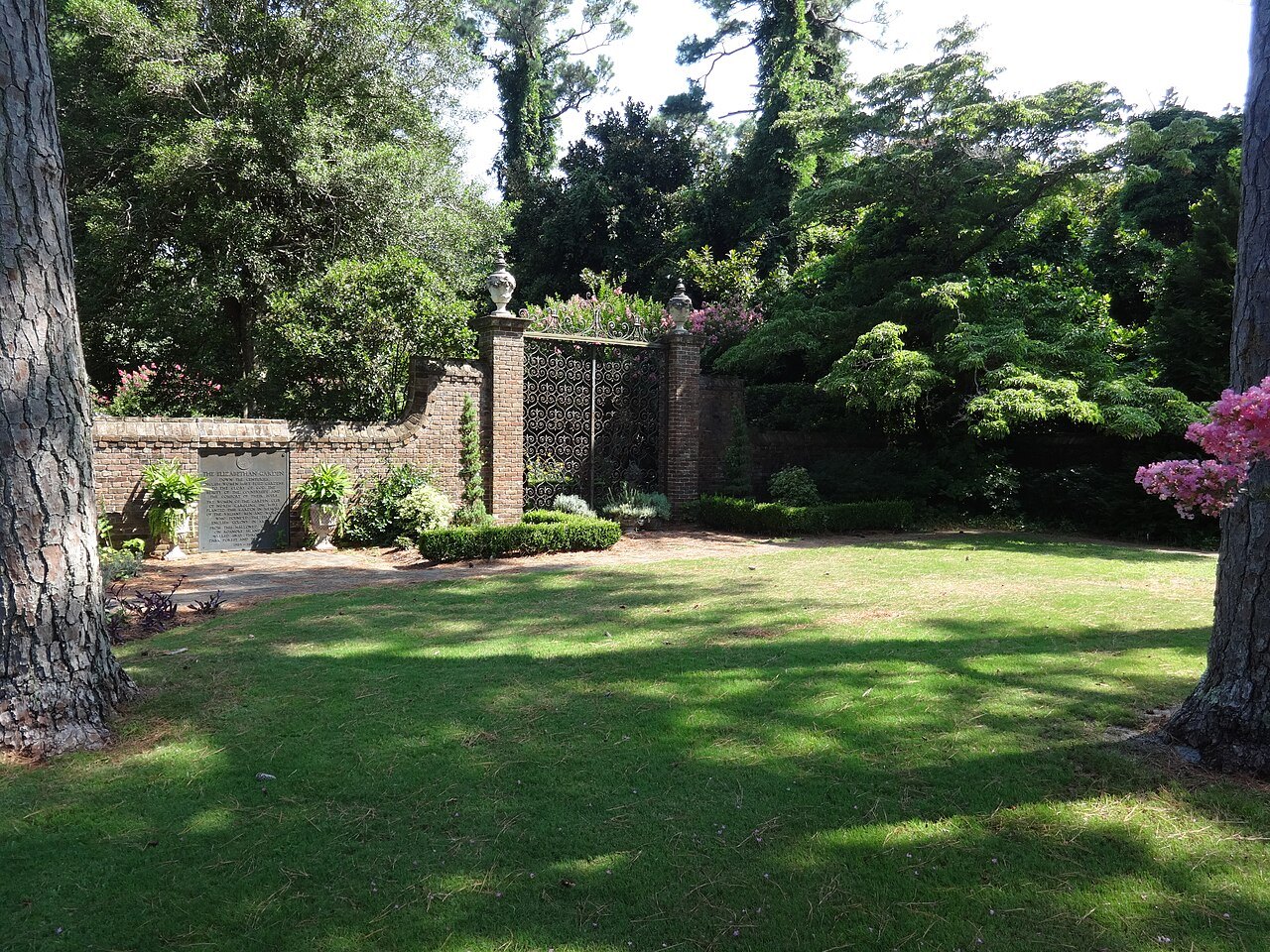
- The Elizabethan GardensMore than ten acres of period garden with a Tudor gatehouse, kept by the Garden Club of North Carolina.
- The Freedmen's Colony monumentA marble memorial to the colony of formerly enslaved people founded here in 1863.
- ManteoThe county seat three miles south, named for the Croatan man who crossed to England in 1584.
Why it matters
Fort Raleigh National Historic Site preserves the place of the Roanoke Colony, the first English attempt to settle what is now the United States. Two groups of settlers sent by Sir Walter Raleigh came here: a military outpost in 1585, evacuated in 1586, and a colony of men, women and children in 1587. When a ship returned in 1590, the second colony had vanished, and the Lost Colony has been one of the great American mysteries ever since.
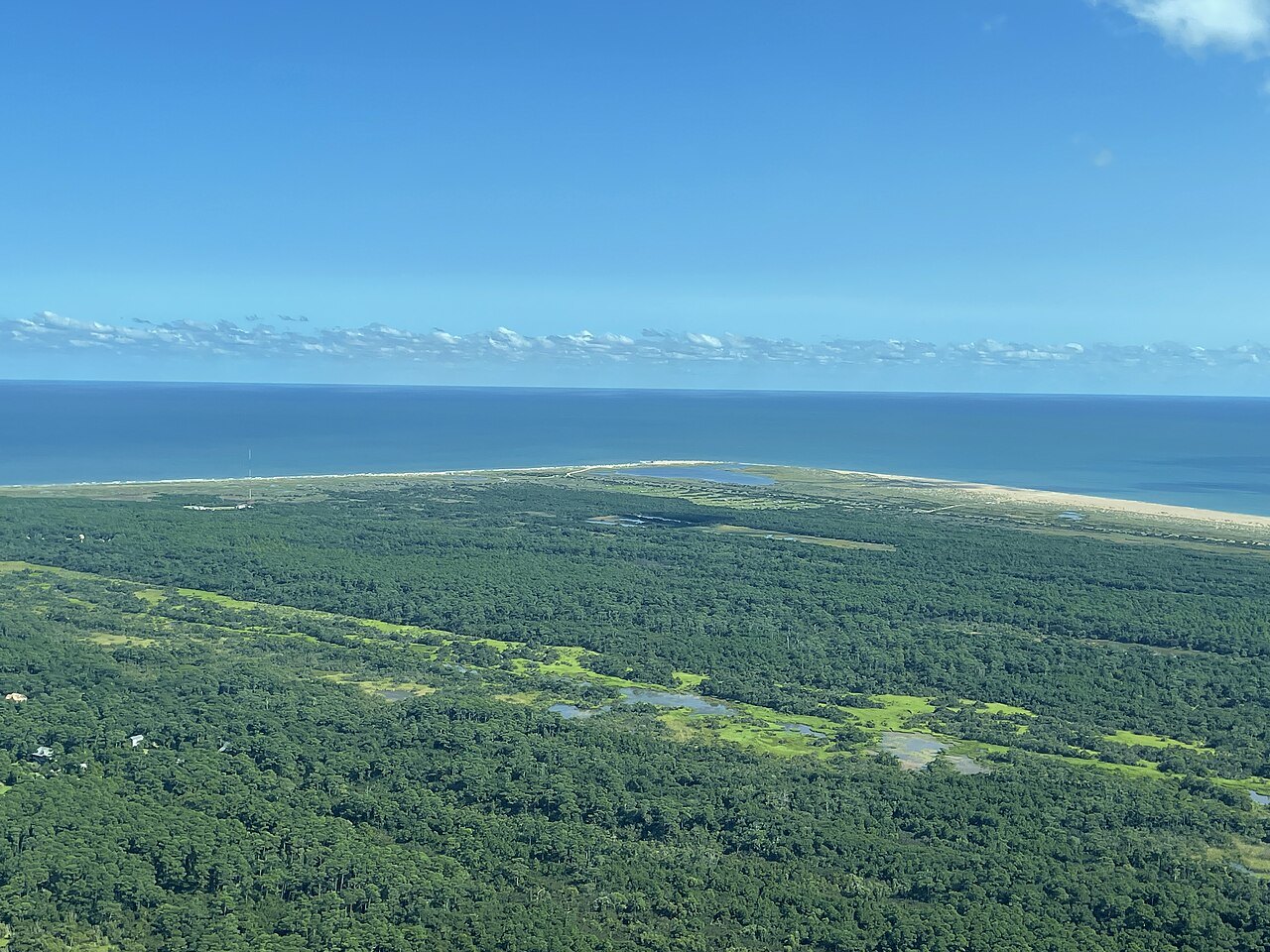
The site lies on the north end of Roanoke Island, about three miles north of the town of Manteo, and it holds more than the sixteenth century: the island's story as a refuge for people who escaped slavery during the Civil War, a long-running outdoor drama and a memorial garden.
The people who were here first
The sounds and islands were home to Algonquian-speaking peoples long before the English arrived. The Secotan controlled Roanoke Island and the mainland between Albemarle Sound and the Pamlico River; the Croatan lived on Croatoan Island to the south, part of today's Hatteras Island.
An English expedition of 1584 made contact with the Secotan and took two men back to England: Wanchese, a Secotan, and Manteo, a Croatan whose mother was the chief of Croatoan Island. Both returned with the next fleet to serve between the English and their neighbors. Manteo stayed allied with the English, and in 1587 he was baptized and named Lord of Roanoke; the county seat on Roanoke Island bears his name.
The first colony
In 1585 about a hundred men under Governor Ralph Lane stayed on the island to explore its resources, the scientist Thomas Harriot and the artist John White among them. They traveled to the Secotan villages around Pamlico Sound to study the people who lived there, and Harriot's survey of the region and its inhabitants was published in 1588, with White's illustrations added in the 1590 edition.
The colony depended on its neighbors for corn, and relations soured quickly. After a silver cup went missing, an English party burned the village of Aquascogoc and its crops, and an epidemic, perhaps influenza or smallpox, followed the English from town to town. When a supply fleet was late, Lane gave up and sailed home with Sir Francis Drake in 1586. Grenville arrived two weeks later, found the colony gone and left a small party to hold Raleigh's claim.
The Lost Colony
In 1587 a new group of settlers led by John White landed on the island, meant only to stop there on the way to the Chesapeake Bay; their pilot refused to take them farther. On August 18, 1587, White's daughter Eleanor, married to Ananias Dare, gave birth to Virginia Dare, the first English child born on what would become United States soil. White sailed home for supplies, and war with Spain kept him in England until 1590.
When he returned, he found the settlement fortified with a palisade but abandoned. The letters "CRO" were carved in a tree, and at the entrance of the palisade the word "CROATOAN" was carved on a post. The colonists had agreed to leave such a token to show where they had gone, and a cross if they had left under duress; there was no cross. Rough seas and a lost anchor forced White home before he could search Croatoan Island, and he never came back.
Tree rings studied in 1998 showed that the worst drought in centuries struck the region between 1587 and 1589. Most modern scholars think the settlers joined local Native peoples, and the idea appears in writing as early as 1605.
What you see
The visitor center museum tells the story of the English expeditions and colonies and of the island's later history. Nearby stands the earthwork, a small fort on the shape of a bastion. Visitors in the nineteenth century found it worn down and pocked with holes dug by relic hunters; after the National Park Service took over the site in 1941, the earthwork was reconstructed in 1950 to its original size and shape.
The Elizabethan Gardens, a memorial to the first colonists planted in the mid-twentieth century in honor of Elizabeth I, cover more than ten acres with over 500 kinds of plants and a replica Tudor gatehouse, run by the Garden Club of North Carolina.
The Freedmen's Colony
The Union Army took Roanoke Island in 1862, and people escaping slavery came to its camp. In 1863 the army founded the Roanoke Island Freedmen's Colony: households were given plots of land, paid for their work and taught by teachers from the North. By 1864 more than 2,200 freedpeople lived there, with a sawmill, fisheries and 600 cabins, and more than 150 men from the colony served in the United States Colored Troops. A marble monument placed by Dare County in 2001 remembers them.
How to visit
The site is off US 64 on the north end of Roanoke Island and is run by the Park Service together with the Wright Brothers National Memorial and Cape Hatteras National Seashore. Paul Green's outdoor drama The Lost Colony has been performed in the Waterside Theatre almost every summer since 1937, with a break during World War II; see the Roanoke Island Historical Association for its season, and the gardens' own site for theirs.
Walk the earthwork and the gardens, and pair the island with the dunes of Jockey's Ridge, across Roanoke Sound in Nags Head.
Nearby