THE COAST · NAGS HEAD
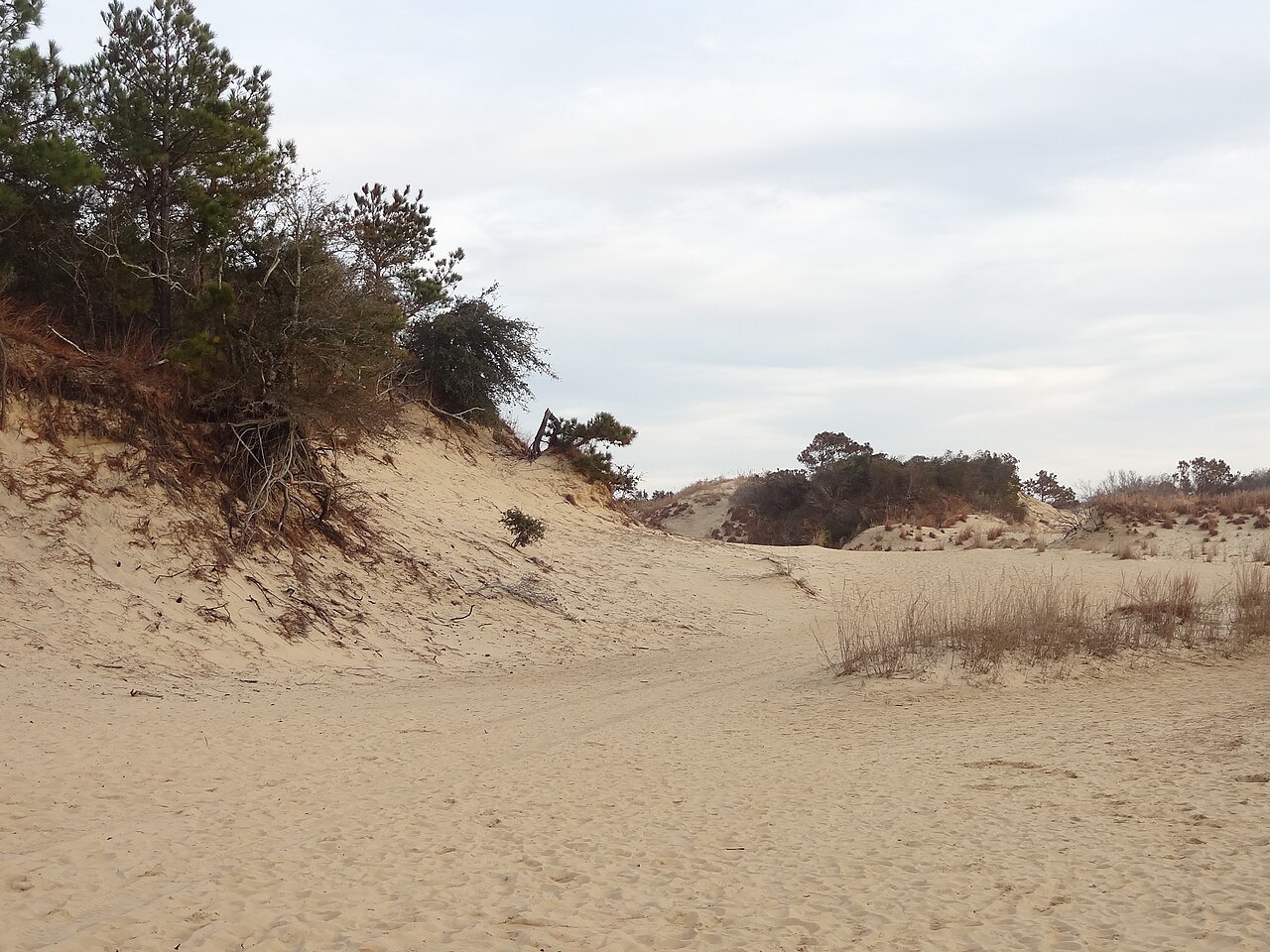
Jockey's Ridge, the tallest living dunes in the East
Photographs: Bohemian Baltimore, Wikimedia Commons, CC BY-SA 4.0 · Henrysz, Wikimedia Commons, CC BY-SA 4.0 · Aaronm86, Wikimedia Commons, Public domain
The Coast · landmark 14 of 21
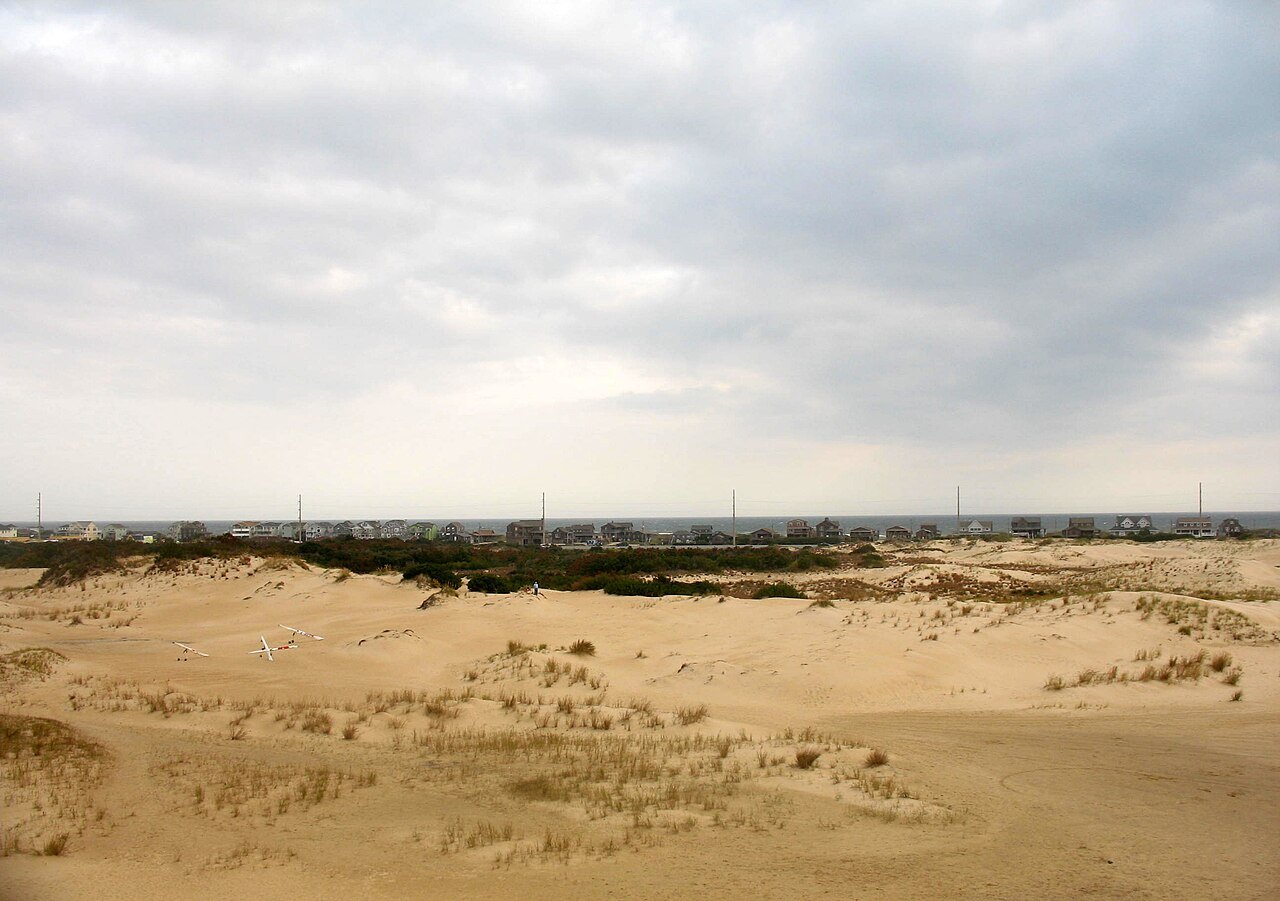
A state park of bare, moving sand in the middle of Nags Head, the tallest active dune system in the eastern United States, where people fly kites and learn to hang glide, and walk down the far side to watch the sun set over Roanoke Sound.
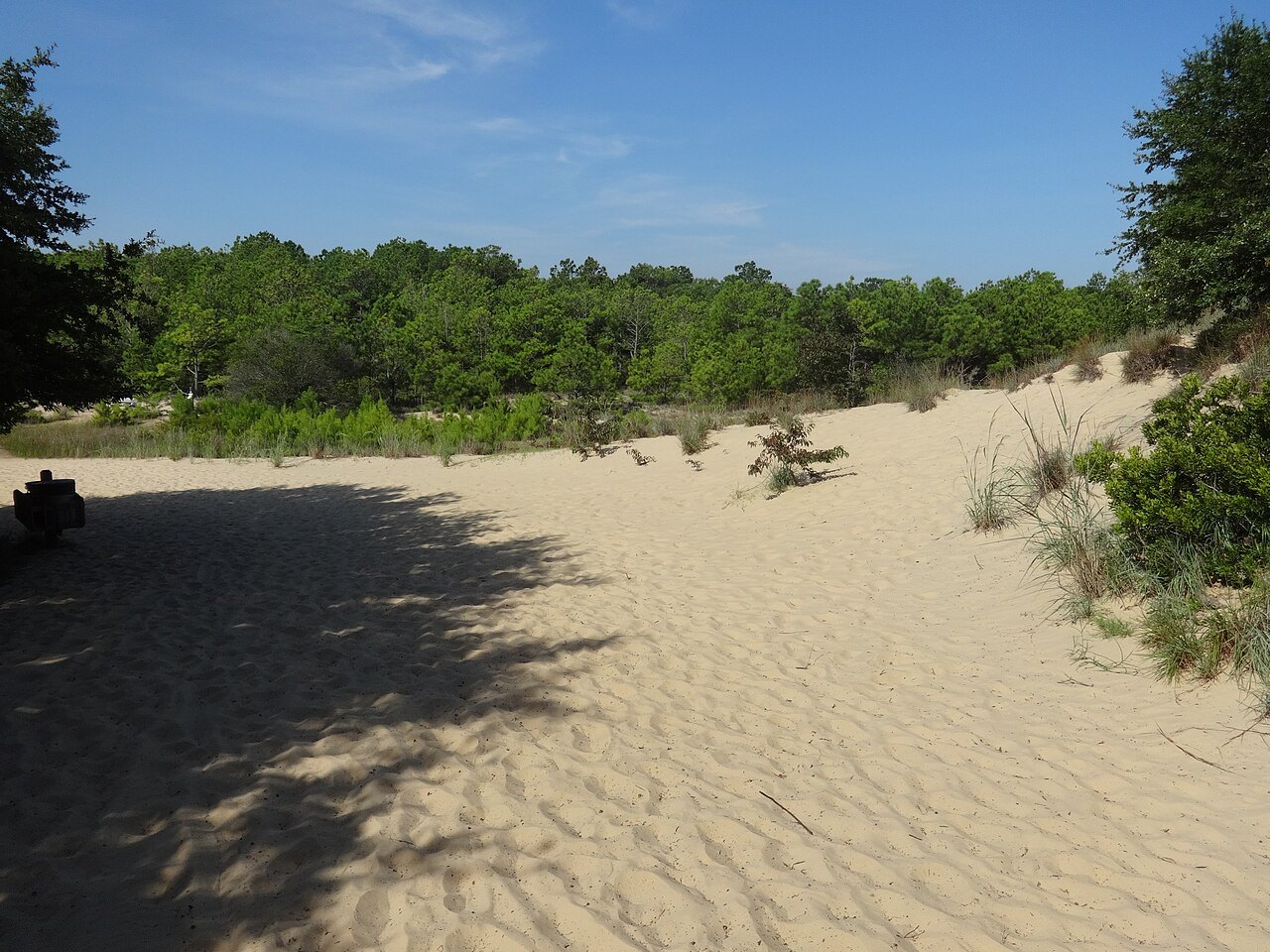
- The medanoA massive, shifting hill of sand without vegetation, moving southwest a few feet every year.
- The boardwalkA boardwalk of about 350 feet from the parking lot, or the visitor center deck, out to the ridge.
- Roanoke SoundShallow, calm, brackish water on the west side, a nursery for fish, crabs and seahorses.
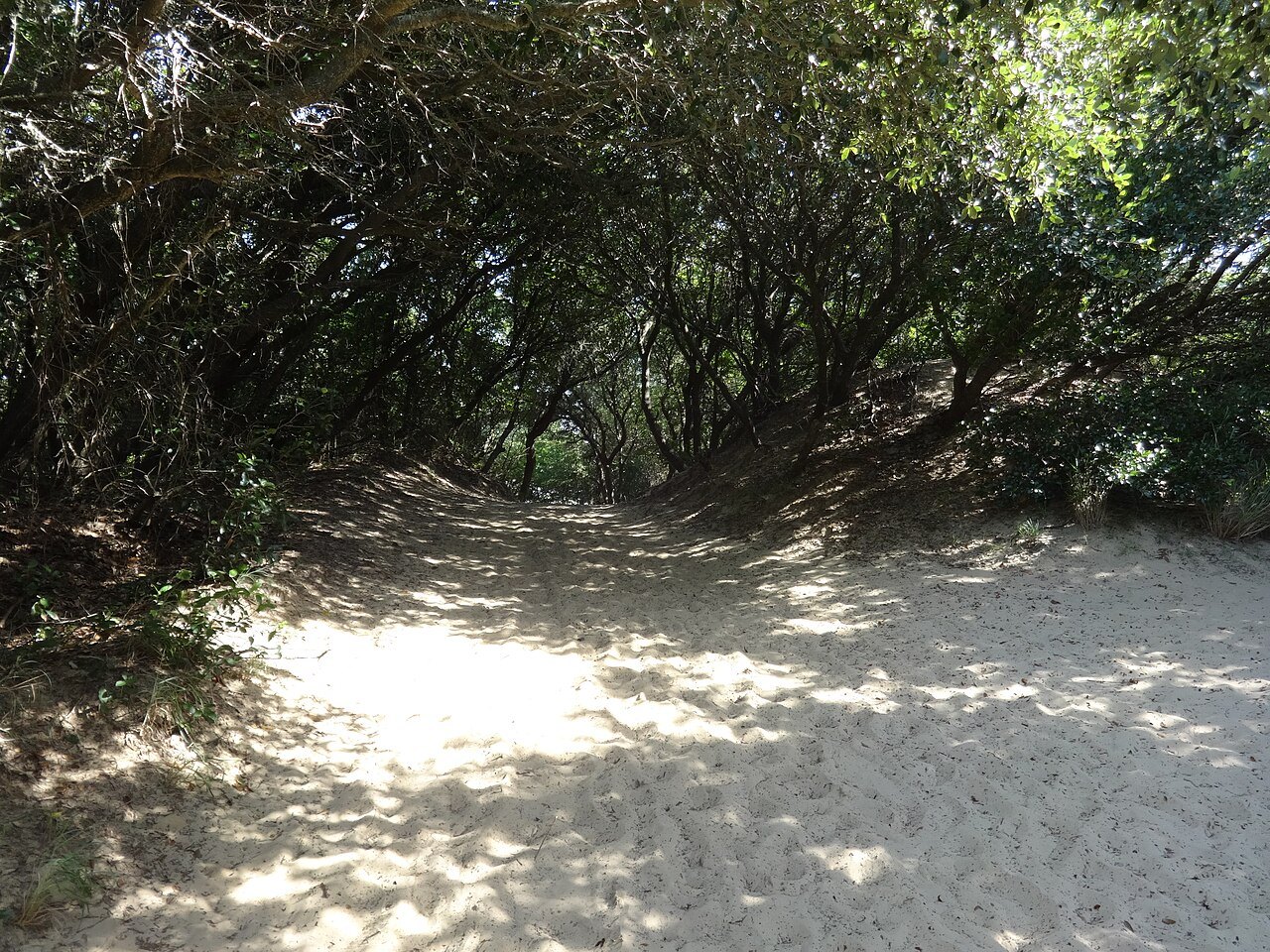
- The maritime forestLive oak, wax myrtle and red cedar that hold the dune and shelter most of the park's life.
- The visitor center museumExhibits on the dunes, the weather, the wildlife, pirates and the maritime history of the Banks.
- Hang glidingA concession school gives lessons on the dunes, a few miles from where the Wrights flew gliders.
Why it matters
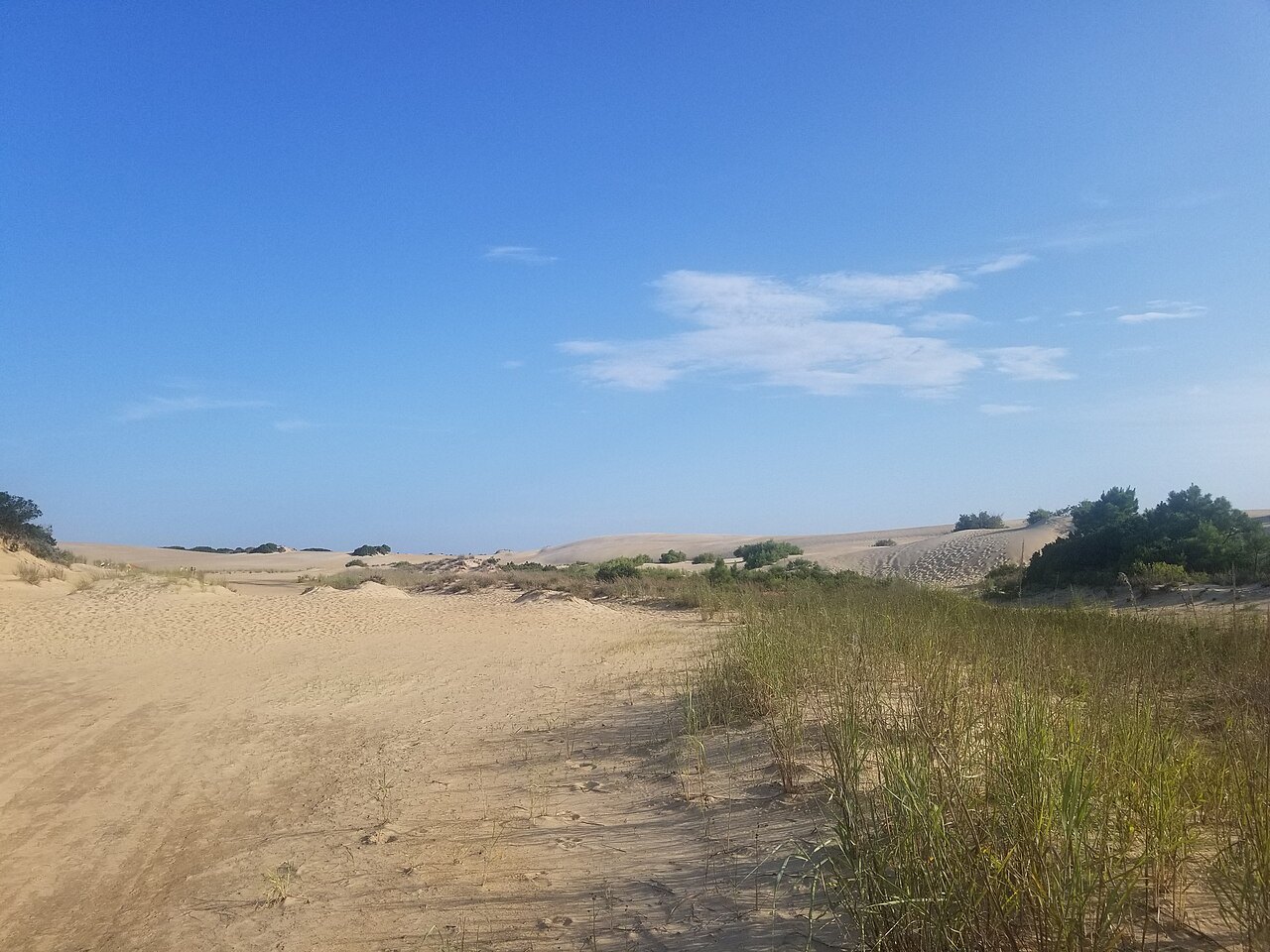
Jockey's Ridge State Park, in the town of Nags Head in Dare County, covers 427 acres and holds the tallest active sand dune system in the eastern United States. Everything around it on this part of the Outer Banks is houses, motels and shops; the ridge is the last of the great dunes the first European explorers saw, and it is still moving.
It is a place to do very simple things: climb a mountain of sand, fly a kite in the steady wind and watch the sun go down over Roanoke Sound. The state charges no admission, parking or program fee.
How the dune was made
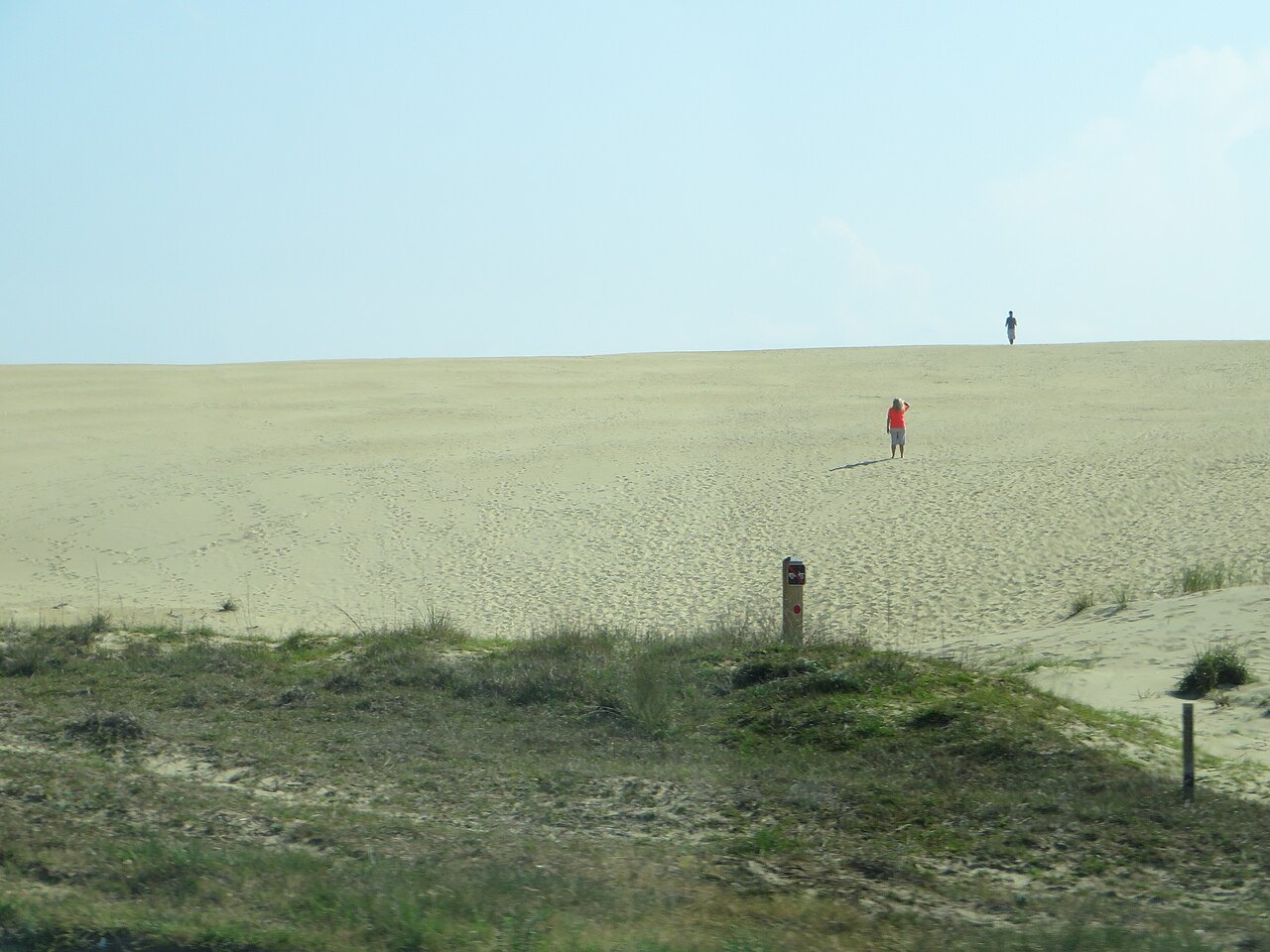
Scientists believe the barrier islands of the Outer Banks are remnants of the last ice age, which ended about 12,000 years ago, and that Jockey's Ridge itself formed about 7,000 years ago. The quartz in its sand is thought to have washed down from the mountains of the state to the ocean; storms and hurricanes pushed the sand onto the beaches, and the wind carried it, grain by bouncing grain, to this spot, where something made it begin to pile up.
Dunes like it once ran far up the Outer Banks to the north. Mariners used this ridge as a landmark when they explored the coast in the sixteenth century, and early maps show Nags Head as a promontory of high sand hills visible from miles out at sea.
A hill that walks
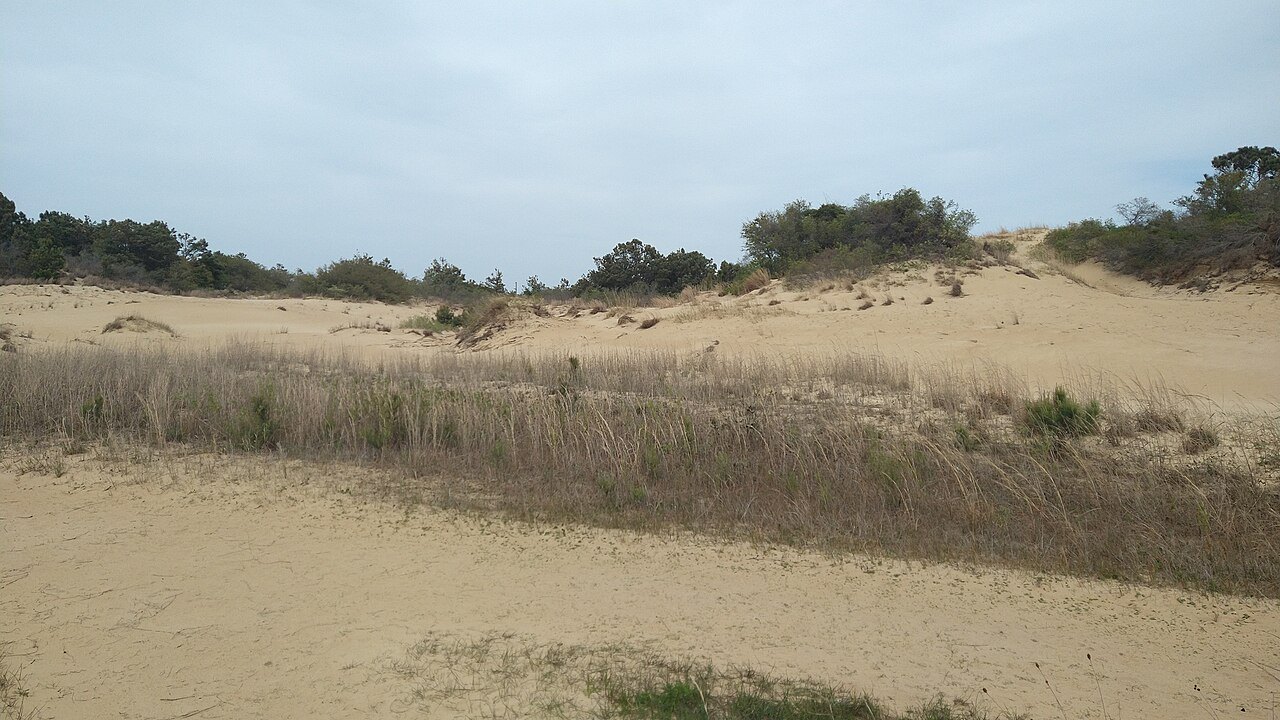
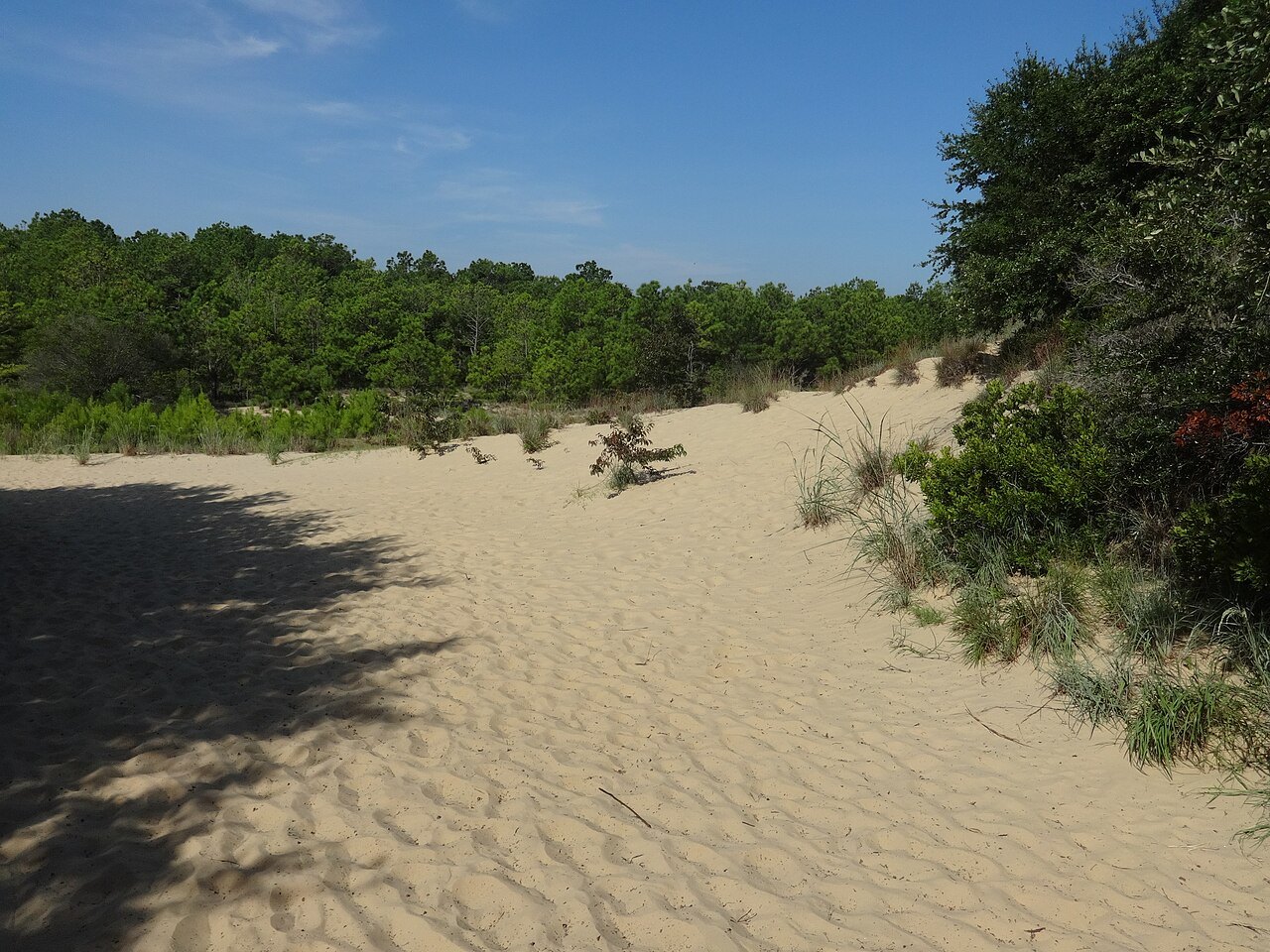
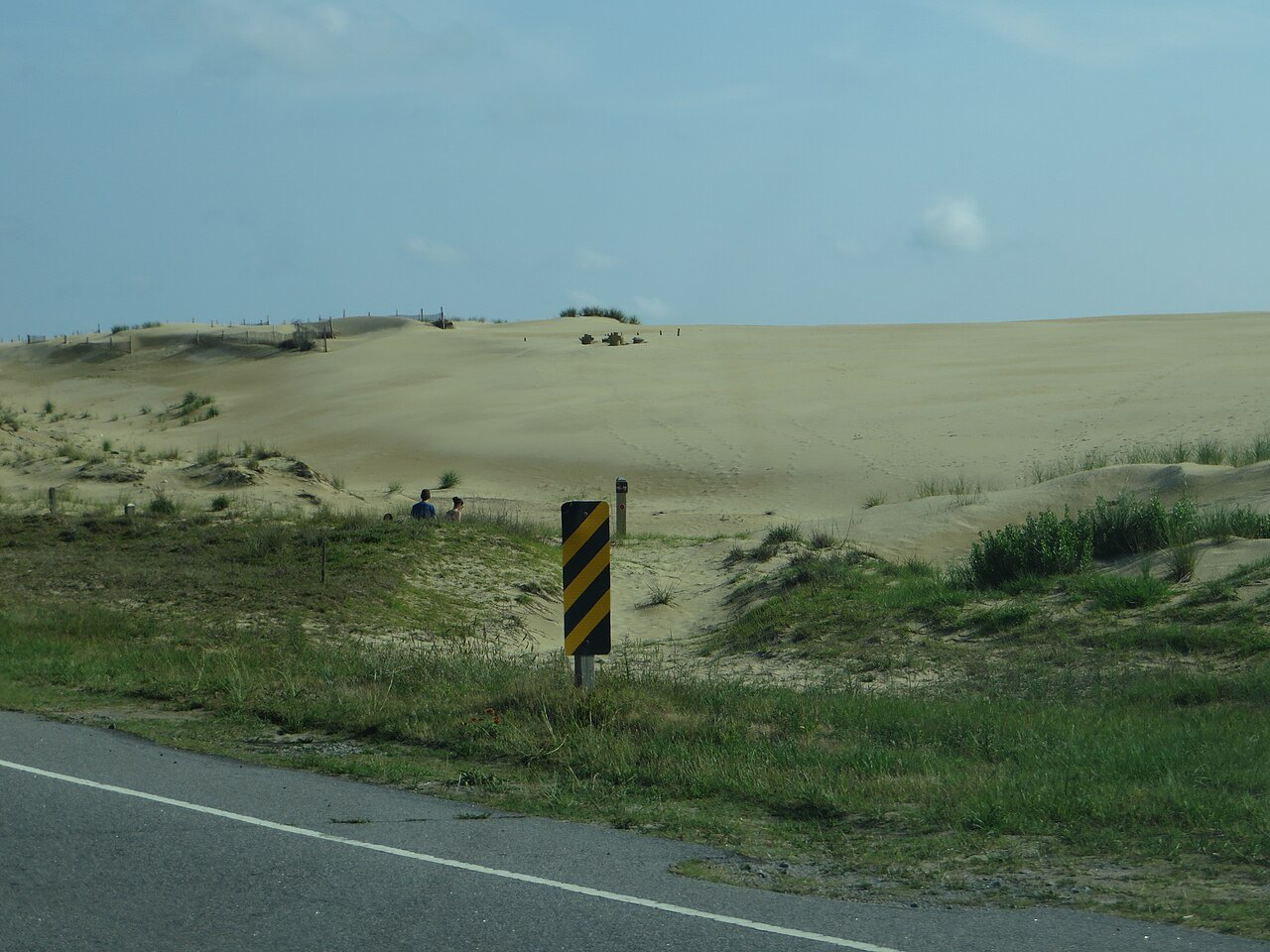
The tall dune is a medano, a massive, asymmetrical, shifting hill of sand with no vegetation on it. The winds of the Banks keep the sand moving, and because the northeasters of winter blow harder than the southwesterly winds of summer, the dunes creep between one and six feet to the southwest each year. The maritime forest around them slows the march, and scientists estimate the park holds 30 million tons of sand.
After rain, water collects at the foot of the dunes in temporary ponds called vernal pools. In summer the bare sand behaves like a desert: the air can reach extreme heat, the sand can be thirty degrees hotter than the air, and there is no fresh water in the park, so the park asks visitors to bring their own.
Three worlds in one park
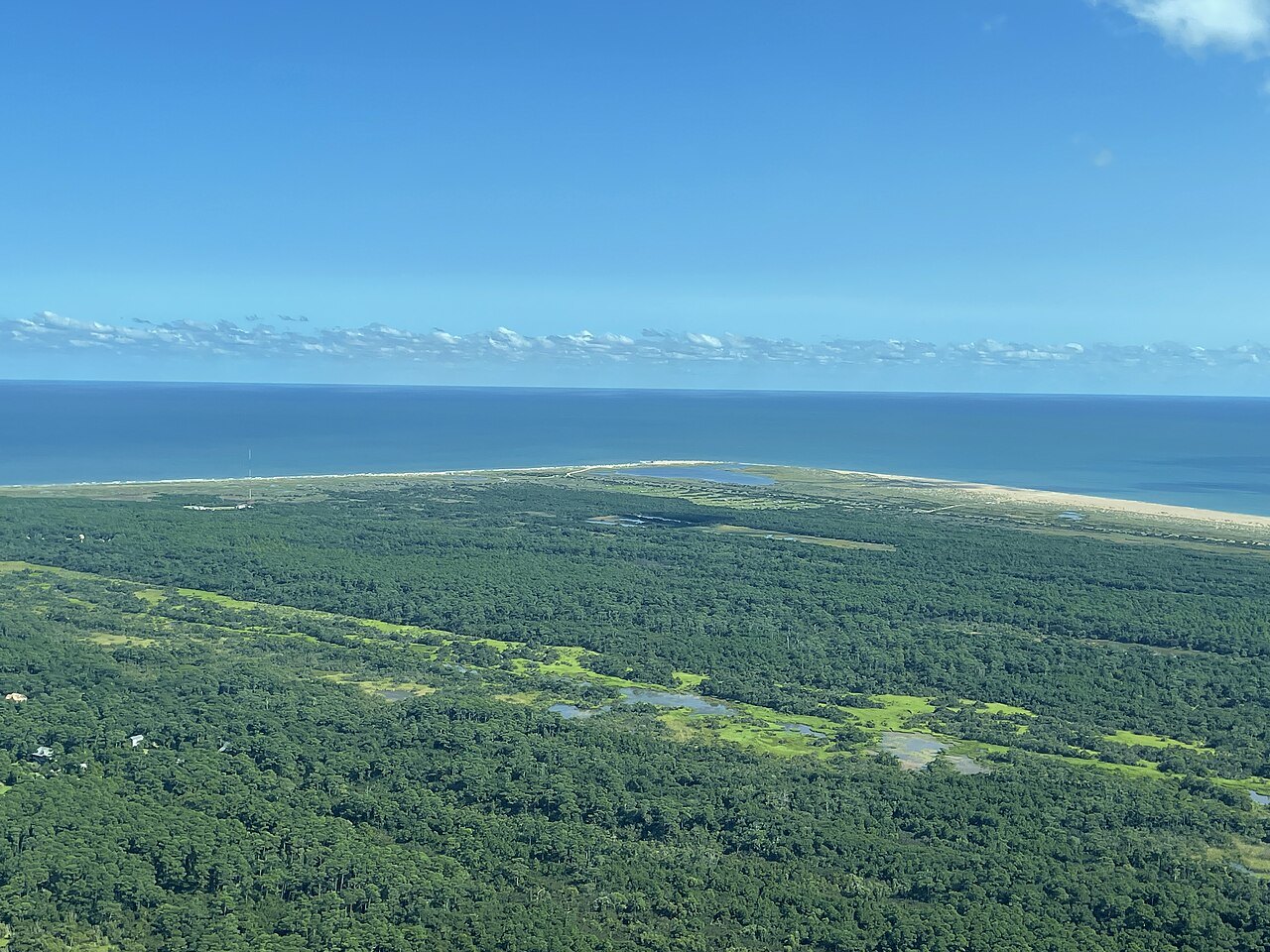
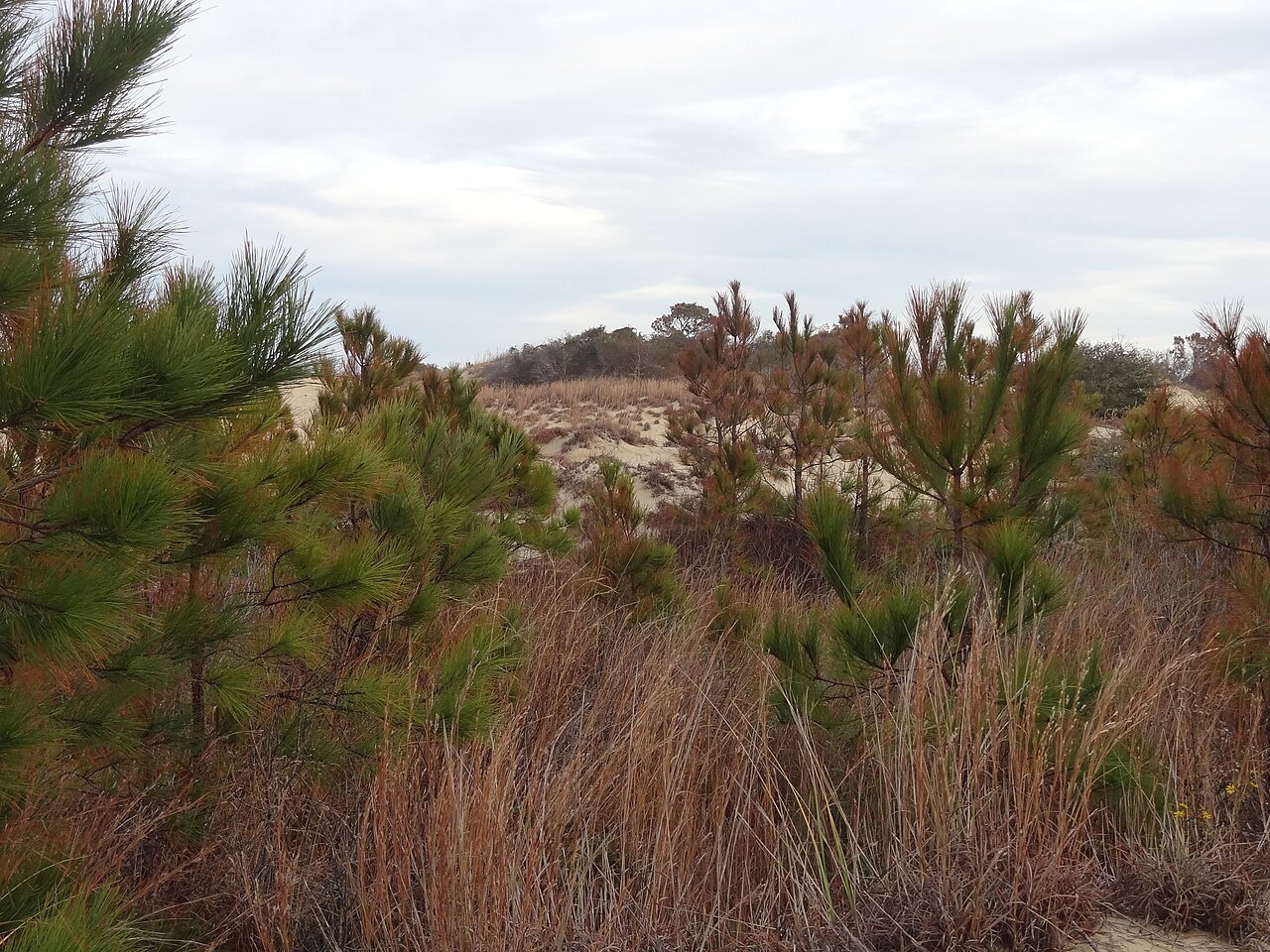
The park holds three ecosystems side by side: the dunes, the maritime forest and Roanoke Sound. The forest is where most of the plants and animals live. It steadies the dune, and the dune in turn shields the forest from wind and salt spray. Shrub thickets of wax myrtle, eastern red cedar, live oak and redbay grow in the sheltered pockets, and west of the dunes a forest of live and red oak, hickory, sweetgum and loblolly pine has dogwood and sassafras beneath it.
Most of the animals come out at night to avoid the heat, so what you see are their tracks in the sand: gray fox, opossum, six-lined racerunners, tiger beetles, spadefoot toads and antlions. The sound, shallow because the wind keeps blowing sand into it, is a nursery for croakers, shrimp, blue crabs, pipefish and even seahorses, and ospreys fish it in the warmer months.
Saving the sand
By the early twentieth century the Outer Banks had become a popular resort for visitors from the mainland; Nags Head was known as a resort from around 1830, and in 1855 a doctor bought fifty acres of oceanfront and sold it off in plots to friends. Development followed, and in the summer of 1973 bulldozers began work on the sound side of the ridge.
Carolista Baum, a local resident, heard about it from her children, who were playing there. She confronted the machine's operator and got it shut down, and petitions to Save Our Sand Dune followed, with a new group, People to Preserve Jockey's Ridge. In 1974 the ridge was designated a National Natural Landmark, and in 1975, with state and federal matching money, about 152 acres were bought to create the state park.
The park has kept innovating since: in 2008 it built a living oyster reef along its sound shore with nearly 4,000 bushels of recycled shells, and in 2010 it became the first state park in North Carolina to use a wind turbine.
The name
Nobody is sure where the name comes from. A land grant of 1753 mentions a "Jockey's Hill", and a 1953 survey map calls it Jackey's Ridge, perhaps after a family named Jackey or Jacock. The favorite story says the Bankers caught and raced the wild horses descended from the wrecks of explorers' ships, using the flats at the foot of the dune as a course and the steep slopes as a grandstand.
How to visit
The entrance is on the Croatan Highway, US 158, at Milepost 12 in Nags Head. Reach the ridge from the back deck of the visitor center or along the boardwalk from the parking lot; the park is for day use only and has no campground. Ranger programs run through the year, and there are nature trails, picnic areas and an access point on the sound.
Kites and the sunset over the sound are the favorite reasons to come; bird watchers come for the shore. A concession gives hang-gliding lessons on the dunes, and people also sandboard down them. In summer bring water, a hat and shoes for the hot sand, and look at the park's own site before you go.
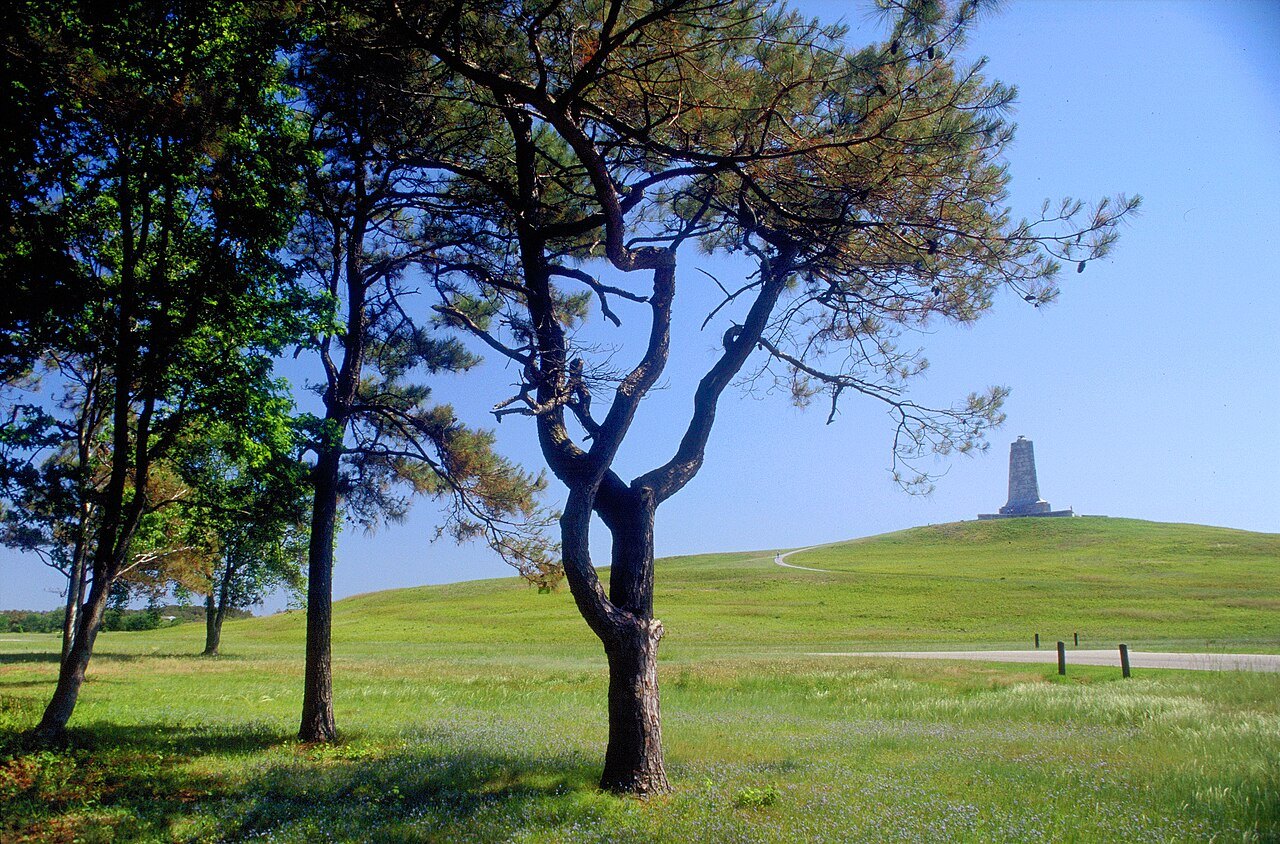
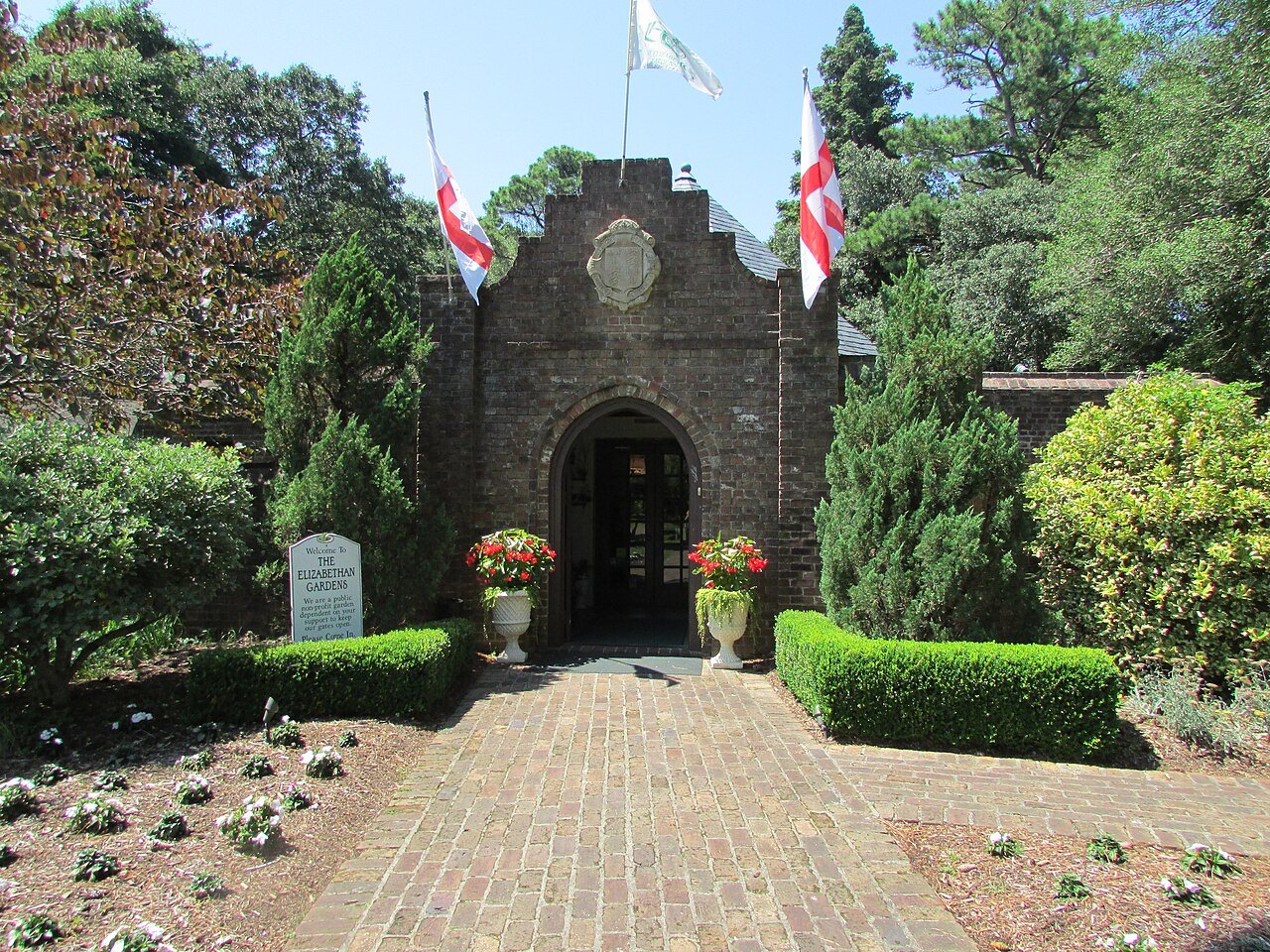
The Wright Brothers National Memorial, where the Wrights learned to glide on dunes very like these, is a few minutes north in Kill Devil Hills, and Fort Raleigh lies across the sound on Roanoke Island.
Nearby