THE PIEDMONT · MECKLENBURG COUNTY
Charlotte, the Queen City
Photographs: Bruce Emmerling, Wikimedia Commons, CC BY-SA 4.0 · Algorhythms, Wikimedia Commons, CC BY-SA 4.0 · City Dweller 2, Wikimedia Commons, CC BY-SA 4.0
The cities · The Piedmont
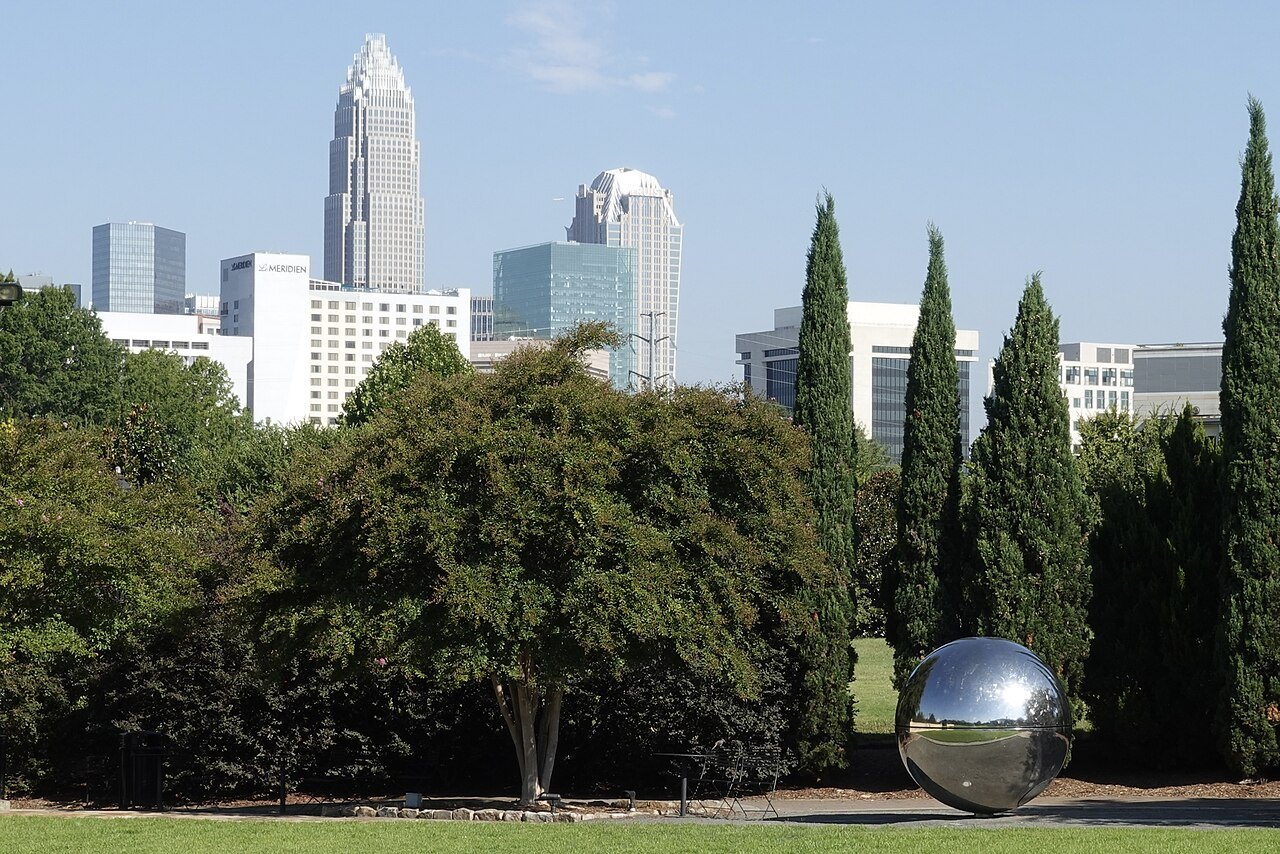
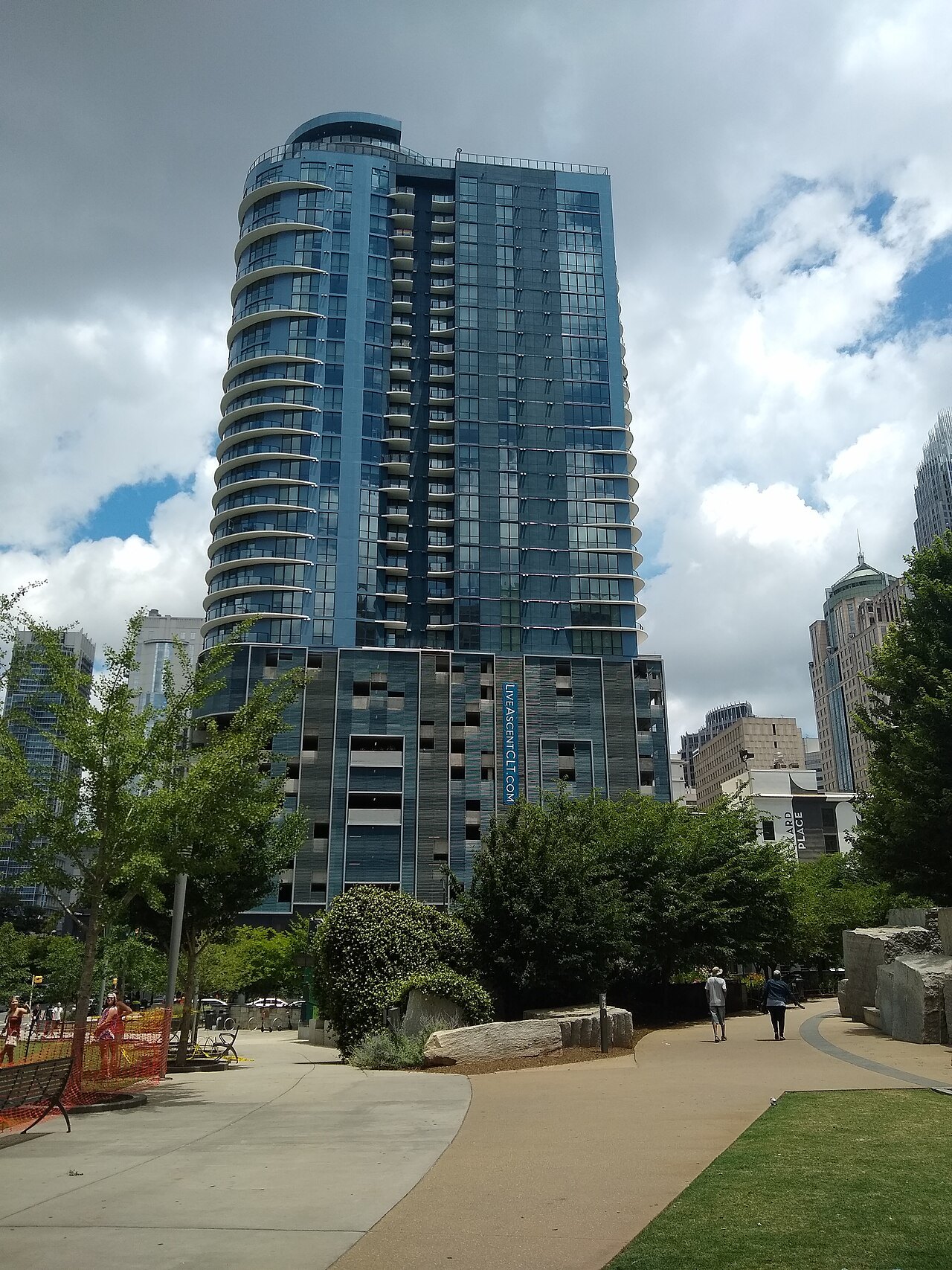
North Carolina's largest city and the second banking center of the nation, grown up where two Native American trading paths crossed: an Uptown of towers built over old gold mines, the NASCAR Hall of Fame, a ring of museums, a light rail line to its arts district, and one of the busiest airports in the country.
- Independence SquareThe crossing of Trade and Tryon, two old trading paths, with a bronze statue on each corner.
- The NASCAR Hall of FameThe racing museum in Uptown of a city at the center of American motorsport.
- The Mint MuseumAn art museum that began in the building of the old branch mint of the gold rush.
- The Harvey B. Gantt CenterA center for African American art and culture in Uptown's Second Ward.
- NoDaNorth Davidson, the arts and entertainment district on the light rail north of Uptown.
- The U.S. National Whitewater CenterMan-made rapids of every grade in the west of the county.
Why it matters
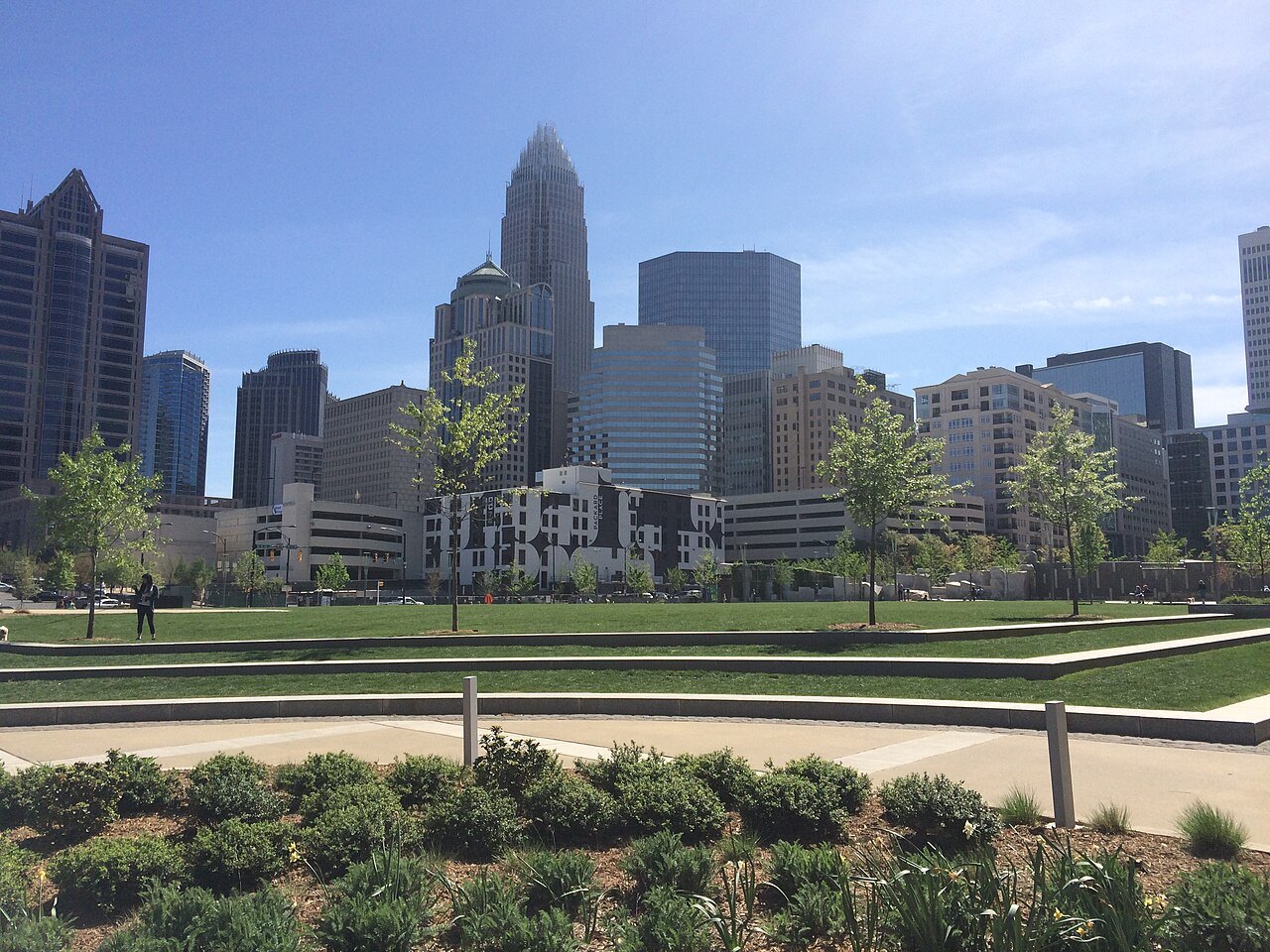
Charlotte is the most populous city in North Carolina, with nearly 875,000 people in the city and close to three million in its metropolitan area, and one of the fastest-growing big cities in the country. It is the headquarters of Bank of America and Truist and the East Coast base of Wells Fargo, which together make it the second-largest banking center in the nation.
For a visitor it is also the state's main gateway: its airport, a major hub of American Airlines, was the sixth busiest in the United States in 2021, and the city makes a first or last night on a trip that takes in the mountains to the west and the Triangle to the east. Charlotte sits in the Piedmont close to the South Carolina line, at 751 feet above the sea.
Crossroads and a hornet's nest
The Catawba people are the earliest known inhabitants of the area, first met here by the Spanish in 1567. By 1759 smallpox had killed half of the Catawba, and by 1826 a nation that had numbered 10,000 at its height had fallen to 110 people.
European settlers arrived around 1755. Thomas Polk, great-uncle of President James K. Polk, built his house where two Native American trading paths crossed between the Yadkin and Catawba rivers, one running north and south as part of the Great Wagon Road, the other east and west along today's Trade Street. The town grew around that crossing, now Independence Square, and was incorporated in 1768, named for Queen Charlotte of Mecklenburg-Strelitz; hence its nickname, the Queen City.
During the Revolution, Lord Cornwallis occupied the town and was driven out by its hostile people. He called it "a hornet's nest of rebellion", and the Hornet's Nest has been the city's other nickname ever since.
Gold, cotton and banks
Charlotte grew up in gold country. Uptown sits on a rise between two creeks, on top of the diggings of the St. Catherine's and Rudisill gold mines, and the Reed Gold Mine nearby worked until 1912. A branch of the United States Mint struck coins here until Confederate forces seized it in 1861; its building, moved to a different site, now houses the Mint Museum.
After the Civil War the city boomed as a cotton processing center and railroad hub on the main line between Atlanta and the national capital. It passed Wilmington as the largest city in the state in 1910, and after a brief race with Winston-Salem it has stayed the largest since 1930. Modern Charlotte was made by its banks in the 1970s and 1980s, when Hugh McColl built North Carolina National Bank into the institution that became Bank of America.
Uptown
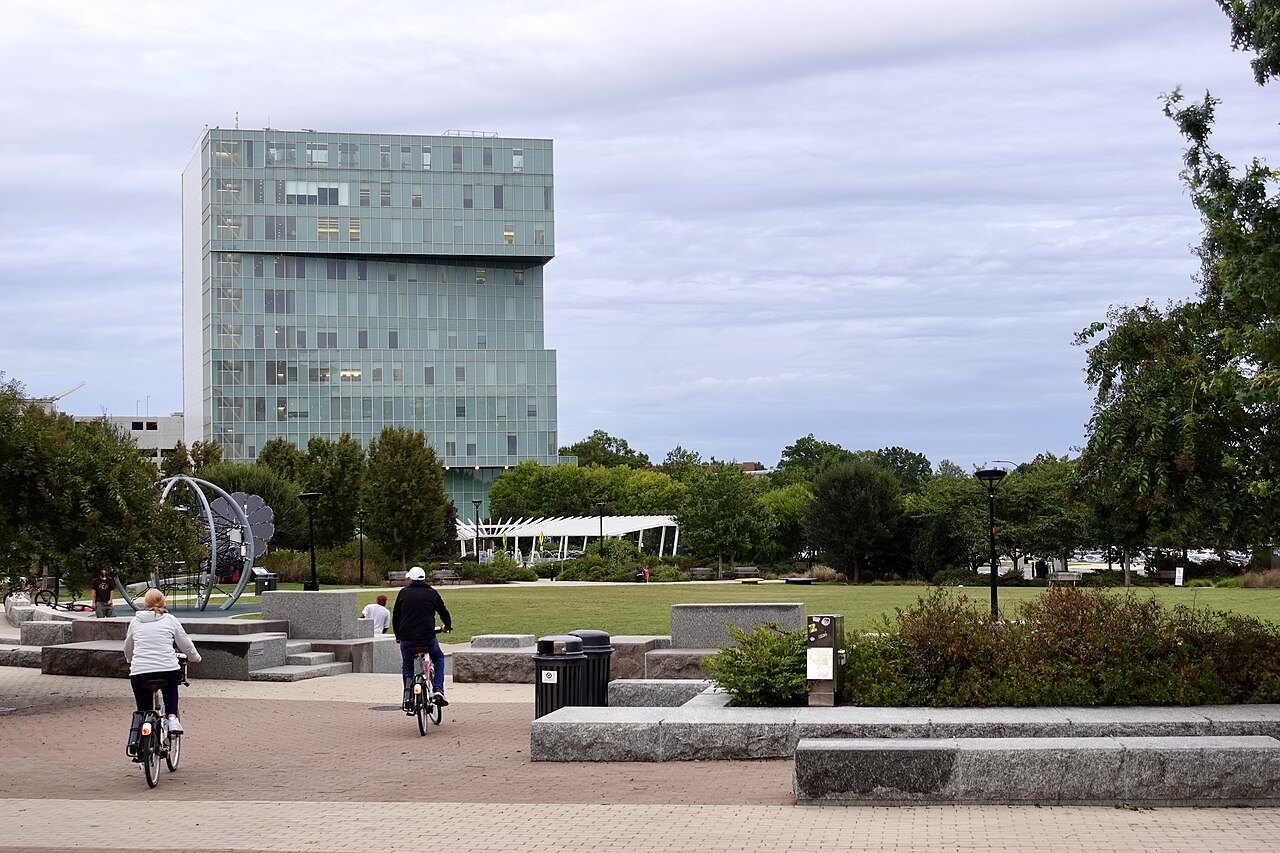
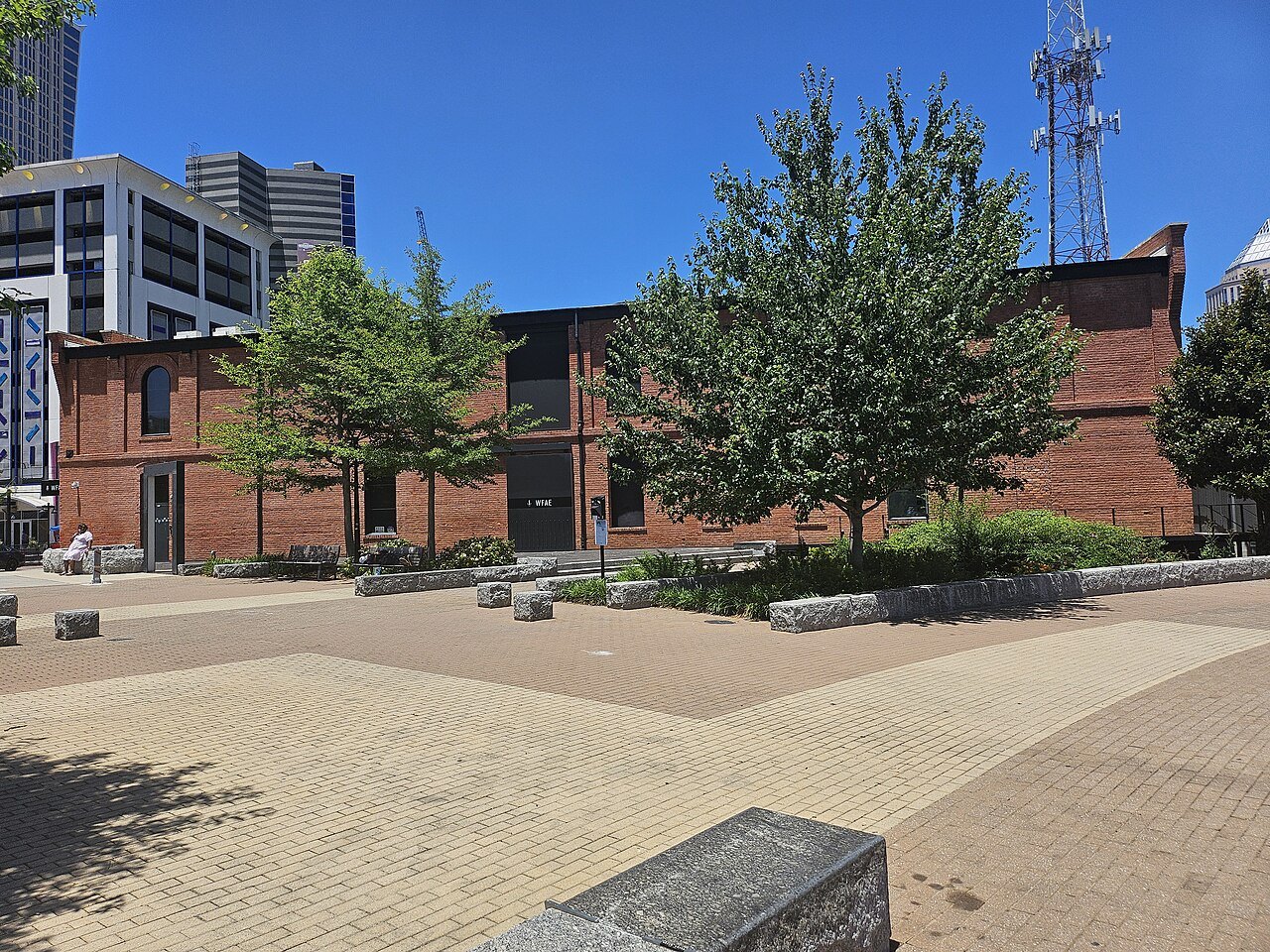
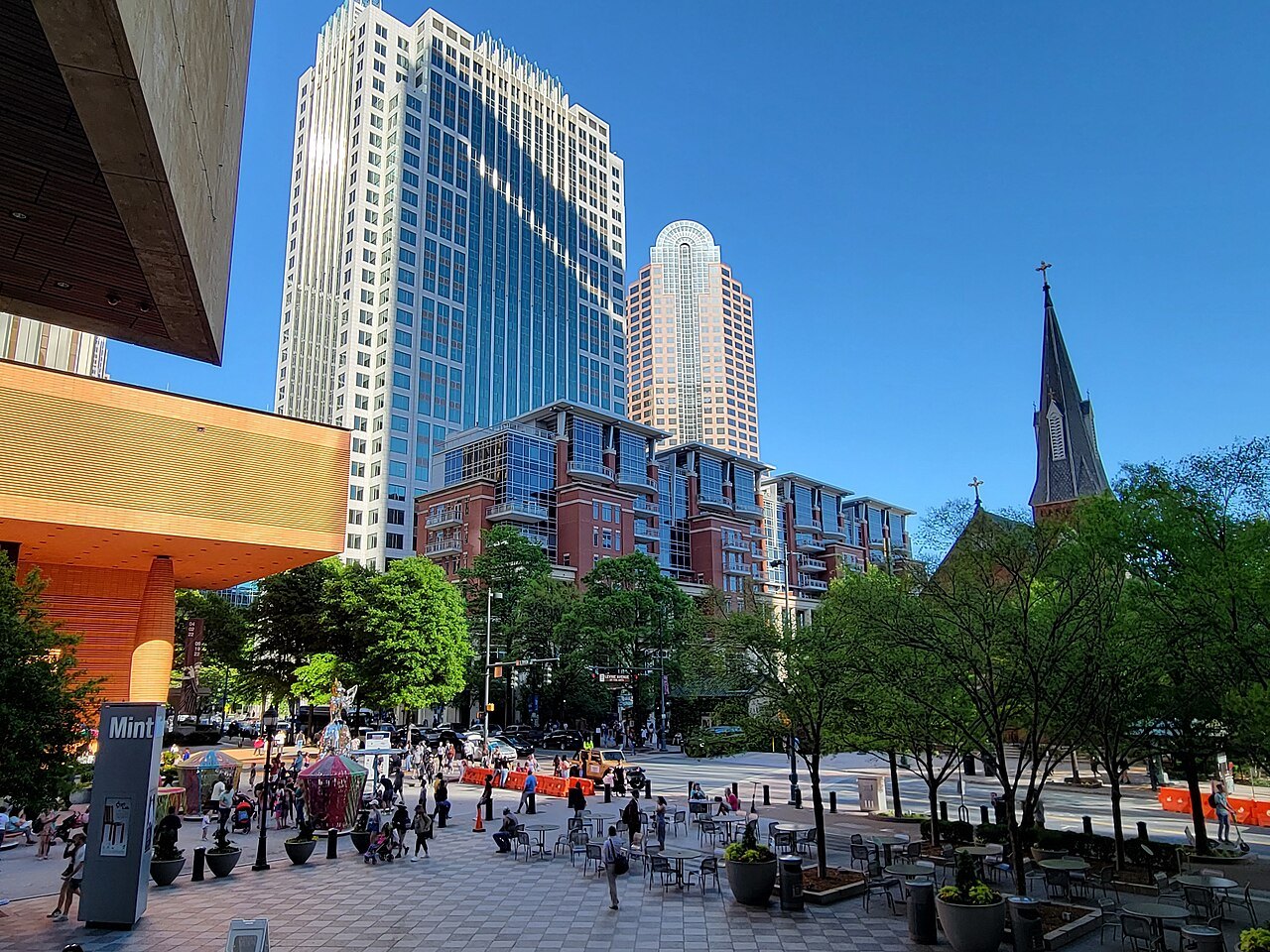
The locals call the center Uptown, a term first recorded in 1895 and brought back by a civic campaign in the 1970s; the city council declared in 1974 that the heart of Charlotte should be known as Uptown forevermore. Trade and Tryon streets divide it into four wards, and each corner of Independence Square has a bronze figure by Raymond Kaskey for Commerce, Industry, Transportation and the Future.
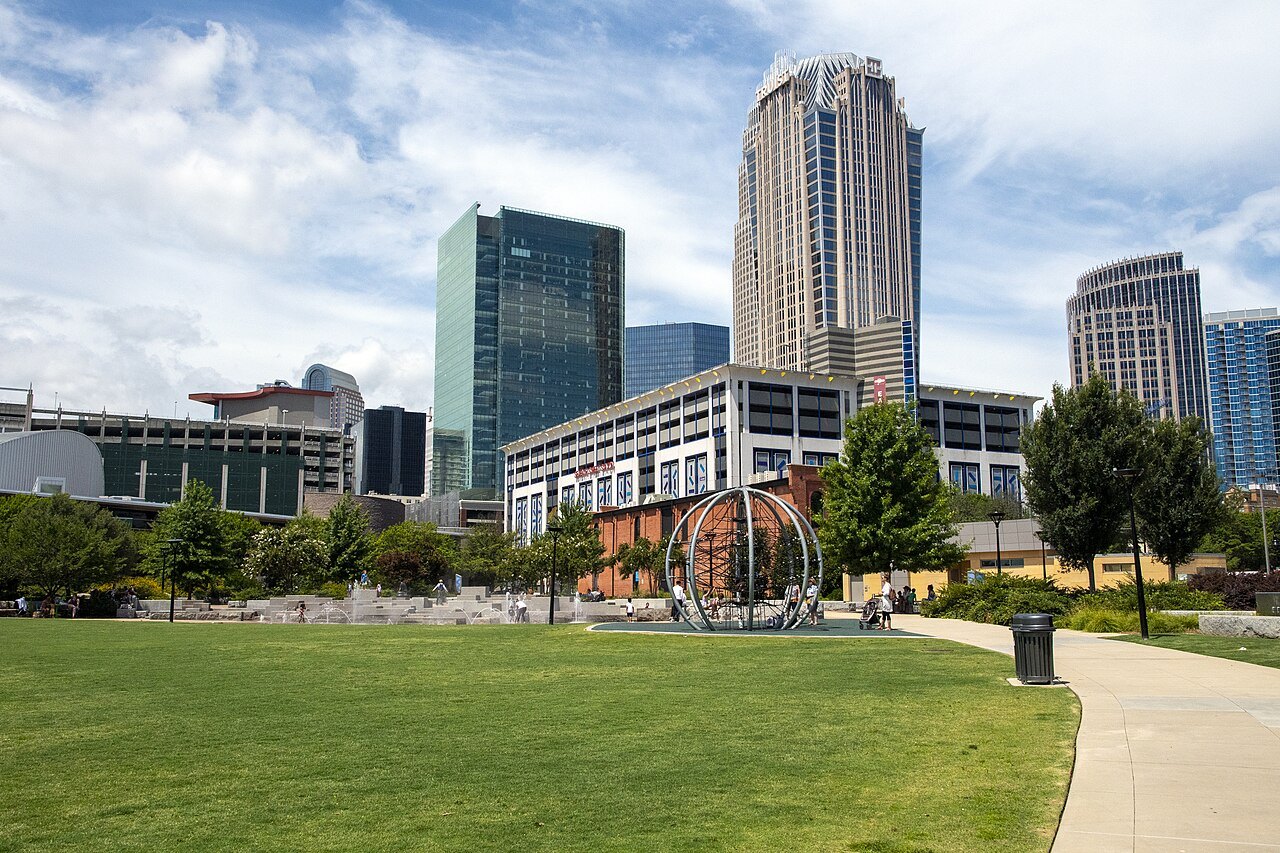
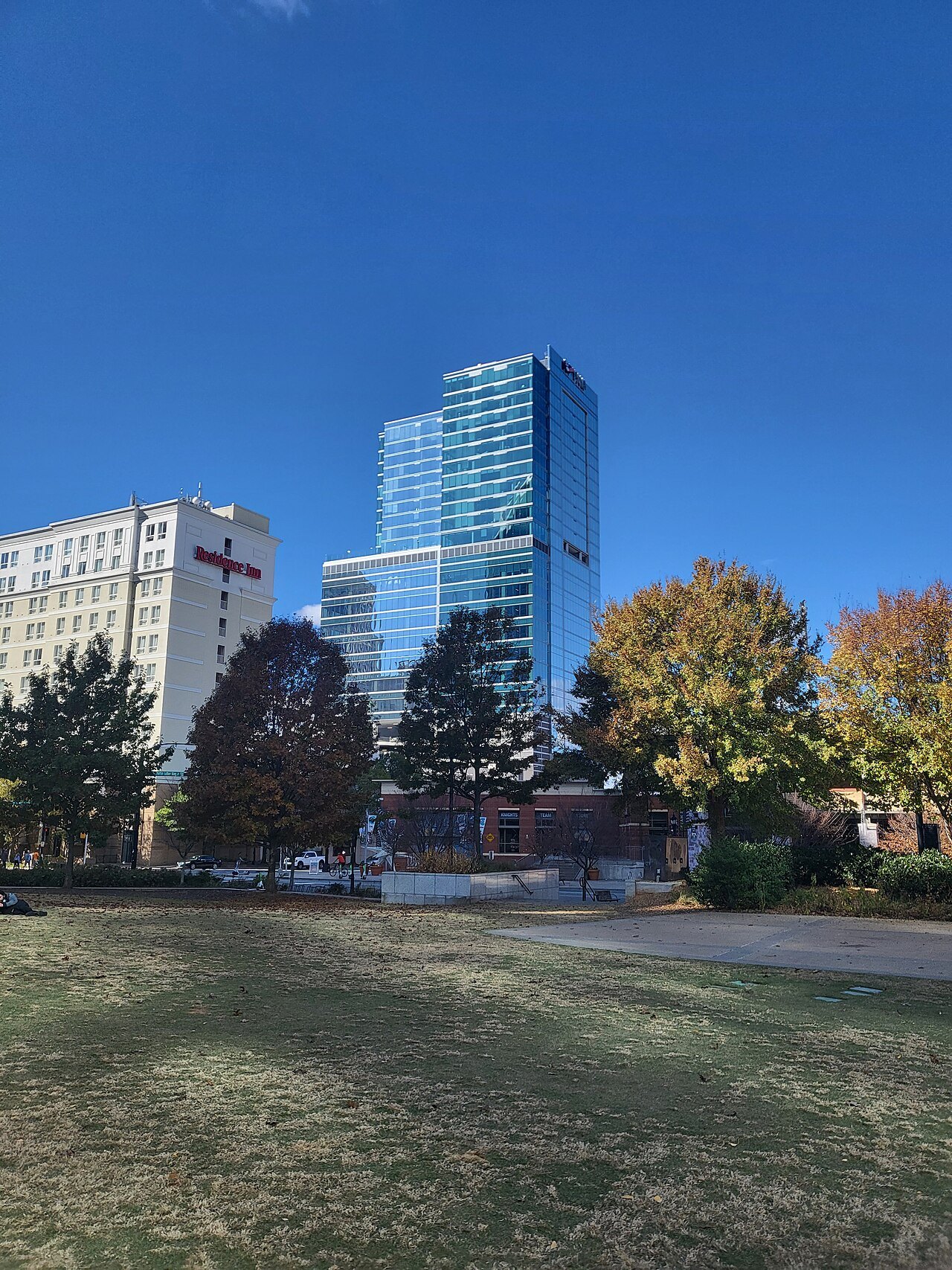
Most of the city's museums are here: the NASCAR Hall of Fame, in a city that is home to about three quarters of NASCAR's race teams, drivers and staff; the Mint Museum's Uptown building and the Knight Theatre; the Bechtler Museum of Modern Art; the Harvey B. Gantt Center for African-American Art and Culture; the Levine Museum of the New South; and ImaginOn, the children's center of the library and the Children's Theatre. The city is also home to Opera Carolina, the Charlotte Symphony and the Charlotte Ballet. Among Uptown's parks are Romare Bearden Park, opened in 2013, First Ward Park and The Green.
The neighborhoods
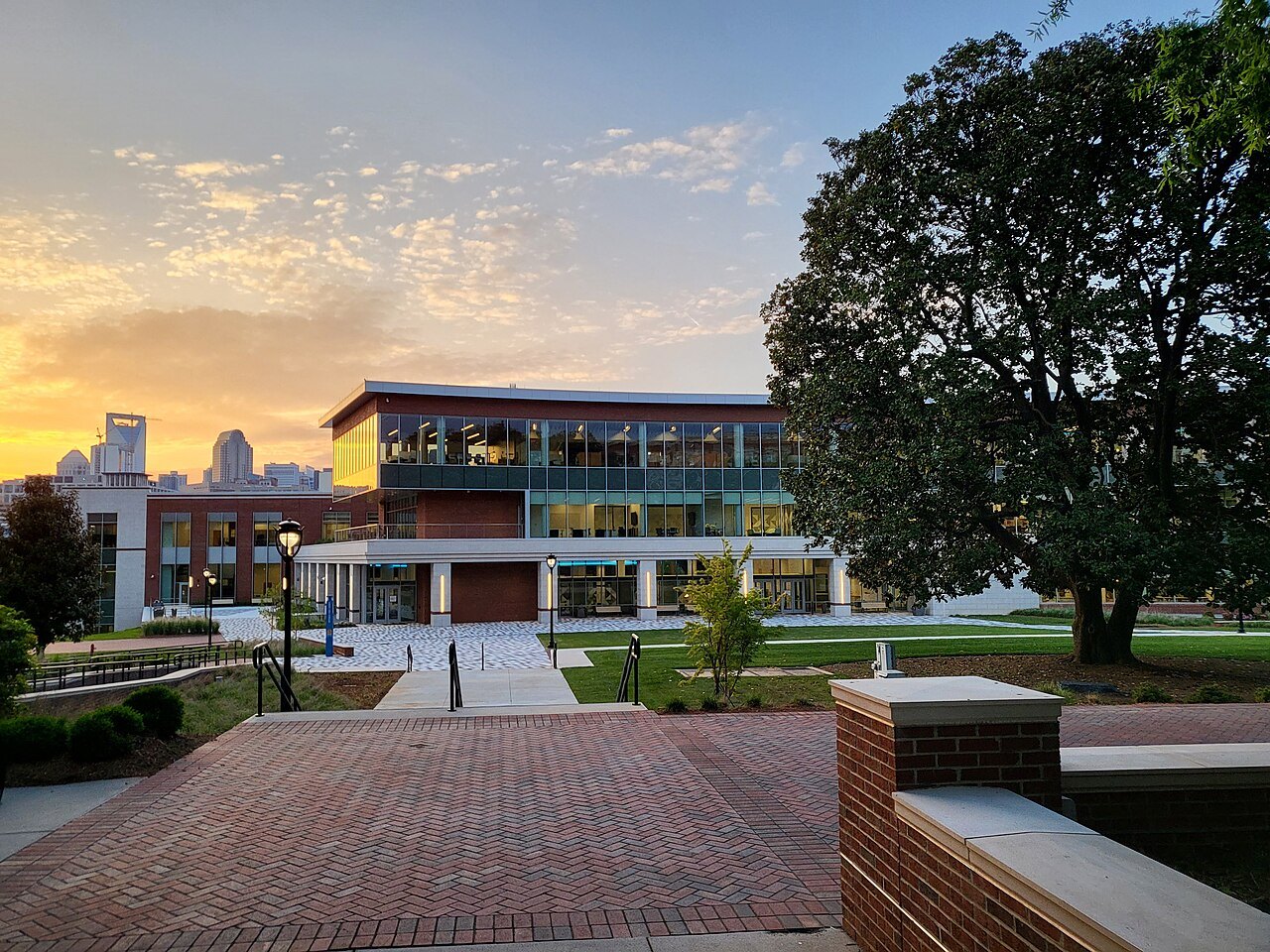
Charlotte has some 199 neighborhoods radiating out from Uptown. North of the center, NoDa, on North Davidson Street, is an arts and entertainment district. Myers Park, Dilworth and Eastover have some of the oldest and largest houses in the city on tree-lined boulevards, with Freedom Park nearby, and Plaza Midwood is known for its international population. West of Uptown, Biddleville, around Johnson C. Smith University, is the historic center of Charlotte's African American community.
The Little Sugar Creek Greenway, whose urban section was completed in 2012, is part of the city's large urban park system, a long walk along the creek inspired in part by the River Walk in San Antonio.
Sports, speed and water
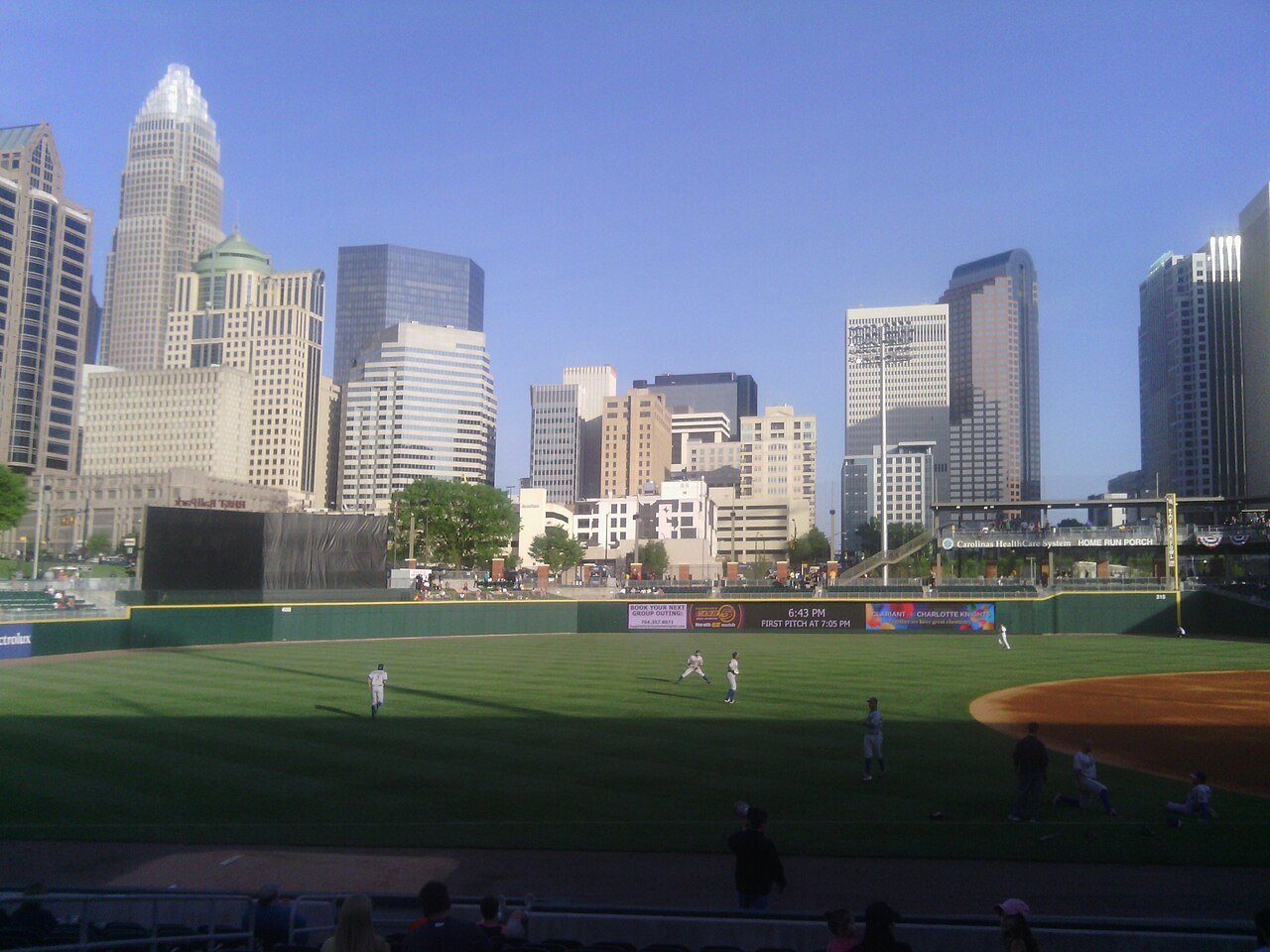
The city has three major league teams, the Carolina Panthers, the Charlotte Hornets and Charlotte FC, and it is the center of the American motorsport industry, with Charlotte Motor Speedway in neighboring Concord. In the west of the county, the U.S. National Whitewater Center has man-made rapids of every difficulty, and west of the city the Catawba River widens into lakes, among them Lake Norman, the largest man-made lake in the state.
Getting around
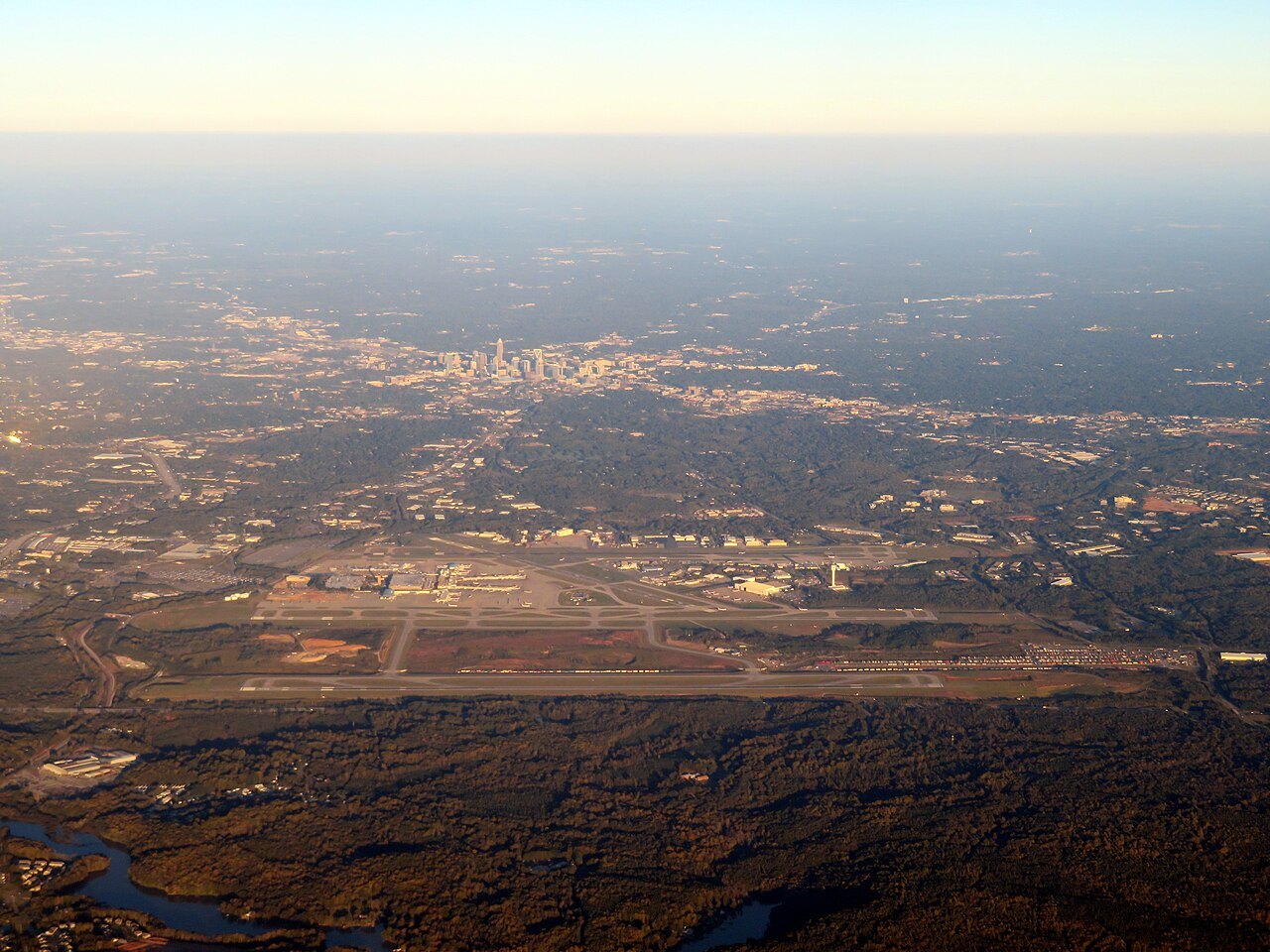
Charlotte Douglas International Airport lies about six miles west of Uptown. Amtrak trains stop at a station on North Tryon Street, just outside the center, and a new downtown station, Gateway Station, is under construction. In town, the LYNX Blue Line, a light rail line of nearly nineteen miles, runs north and south through South End, Uptown, NoDa and University City, and the Gold Line streetcar crosses the center.
Beyond the city you will want a car; Driving North Carolina covers the interstates and the scenic roads, and Asheville and the mountains are the classic next stop to the west.