THE PIEDMONT · FORSYTH COUNTY
Winston-Salem, the Moravian town and the tobacco town
Photographs: Indies1, Wikimedia Commons, CC BY 4.0 · P. Hughes, Wikimedia Commons, CC BY 4.0 · P. Hughes, Wikimedia Commons, CC BY 4.0
The cities · The Piedmont
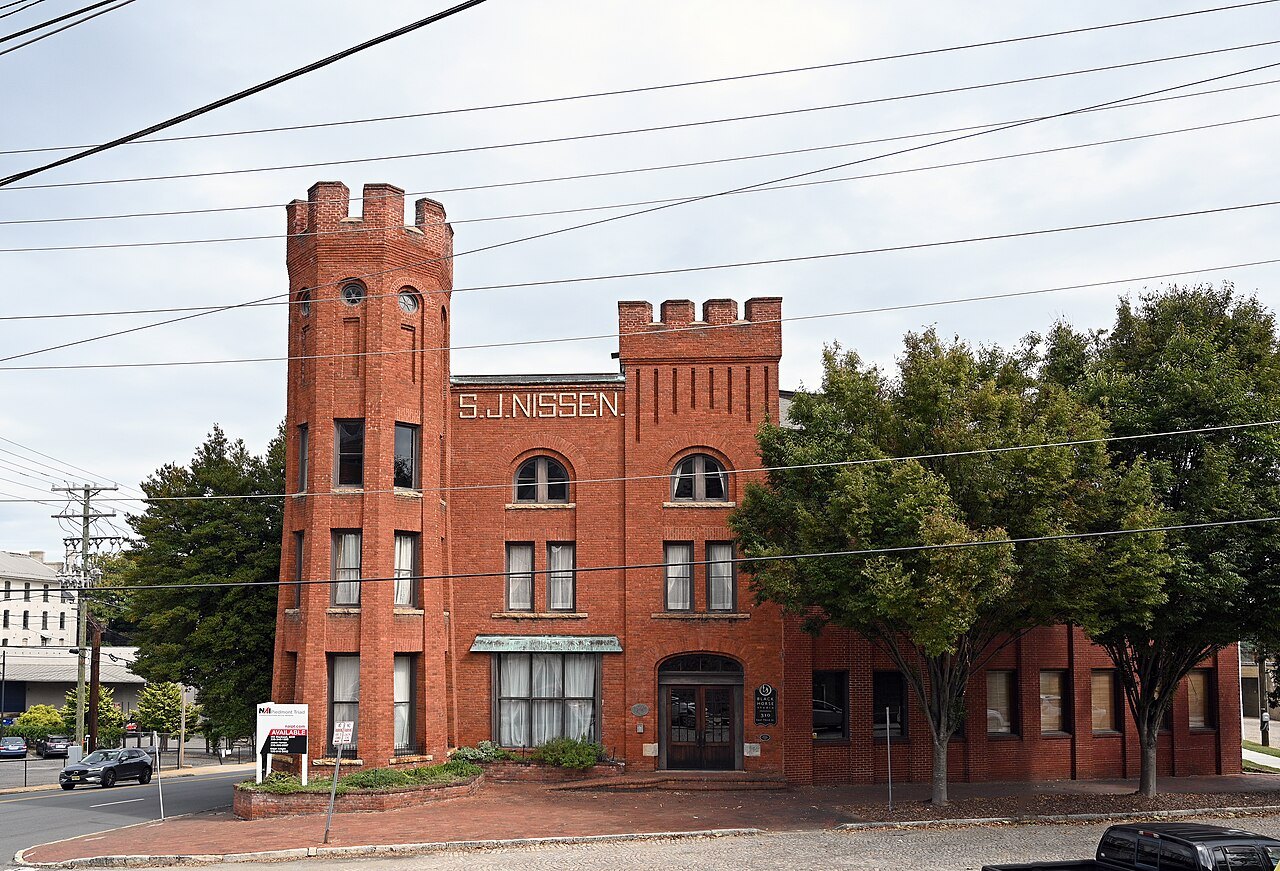
Two towns joined in 1913: Salem, laid out by the Moravians in 1766, and Winston, the county seat that grew rich on Camel cigarettes and Hanes socks, with a skyscraper that served as the model for the Empire State Building, the country's first arts council, and a Moravian village kept whole at its heart.
- Old SalemThe eighteenth-century Moravian town, restored as a living-history district at the edge of downtown.
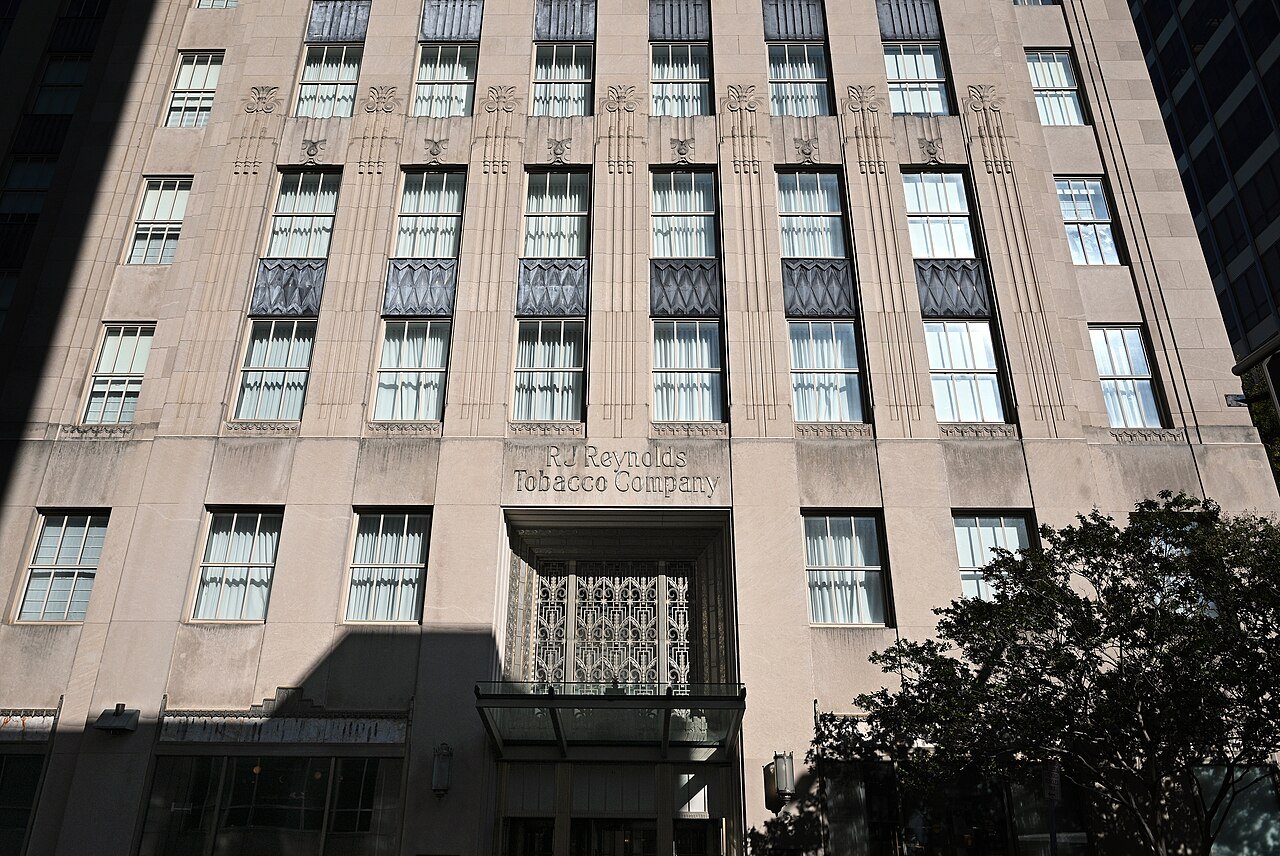
- The Reynolds BuildingThe 1929 tower of R. J. Reynolds Tobacco, the prototype for the Empire State Building.
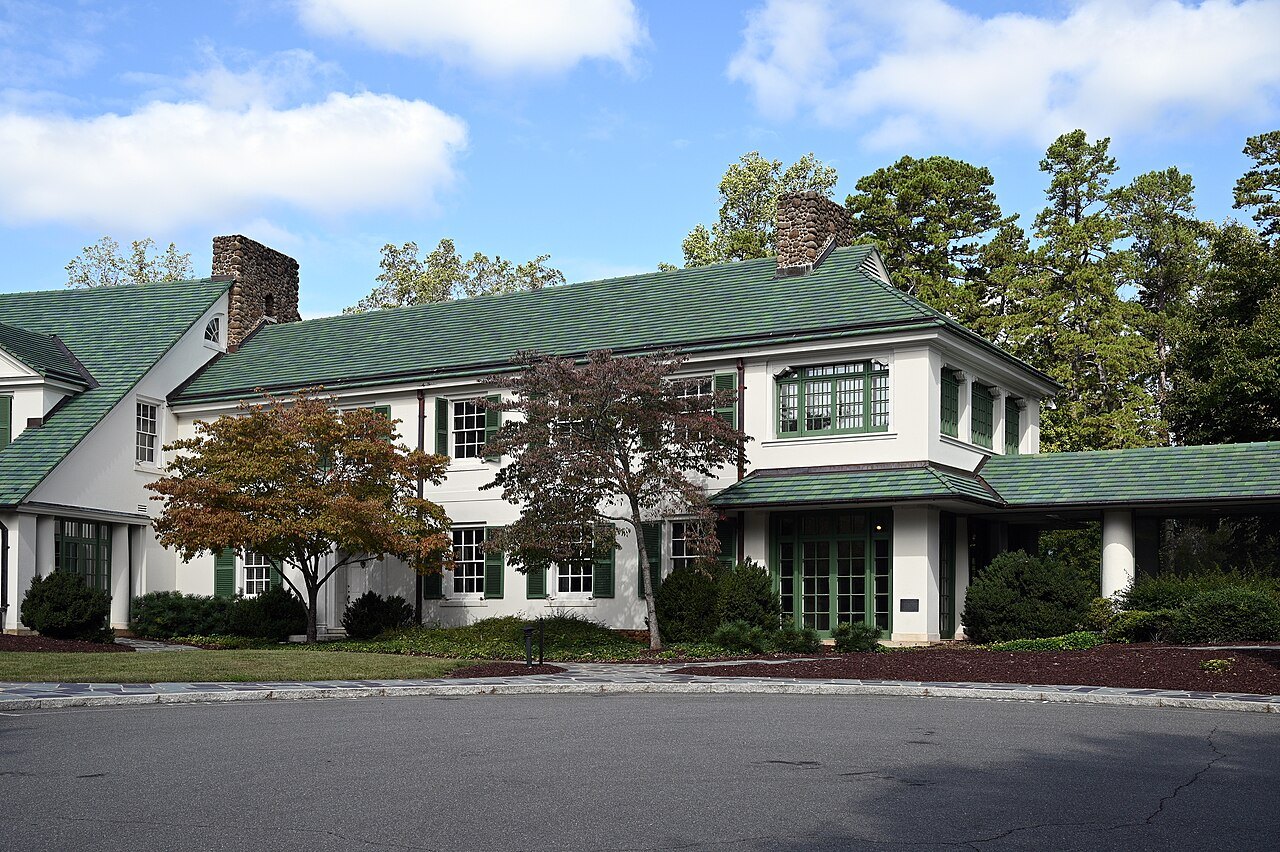
- Reynolda HouseThe Reynolds family's country house of 1917, now a museum of American art with its gardens.
- BethabaraThe site of the first Moravian settlement of 1753, with a museum, a church and trails.
- The Arts DistrictGalleries, workshops and restaurants around Sixth and Trade streets downtown.
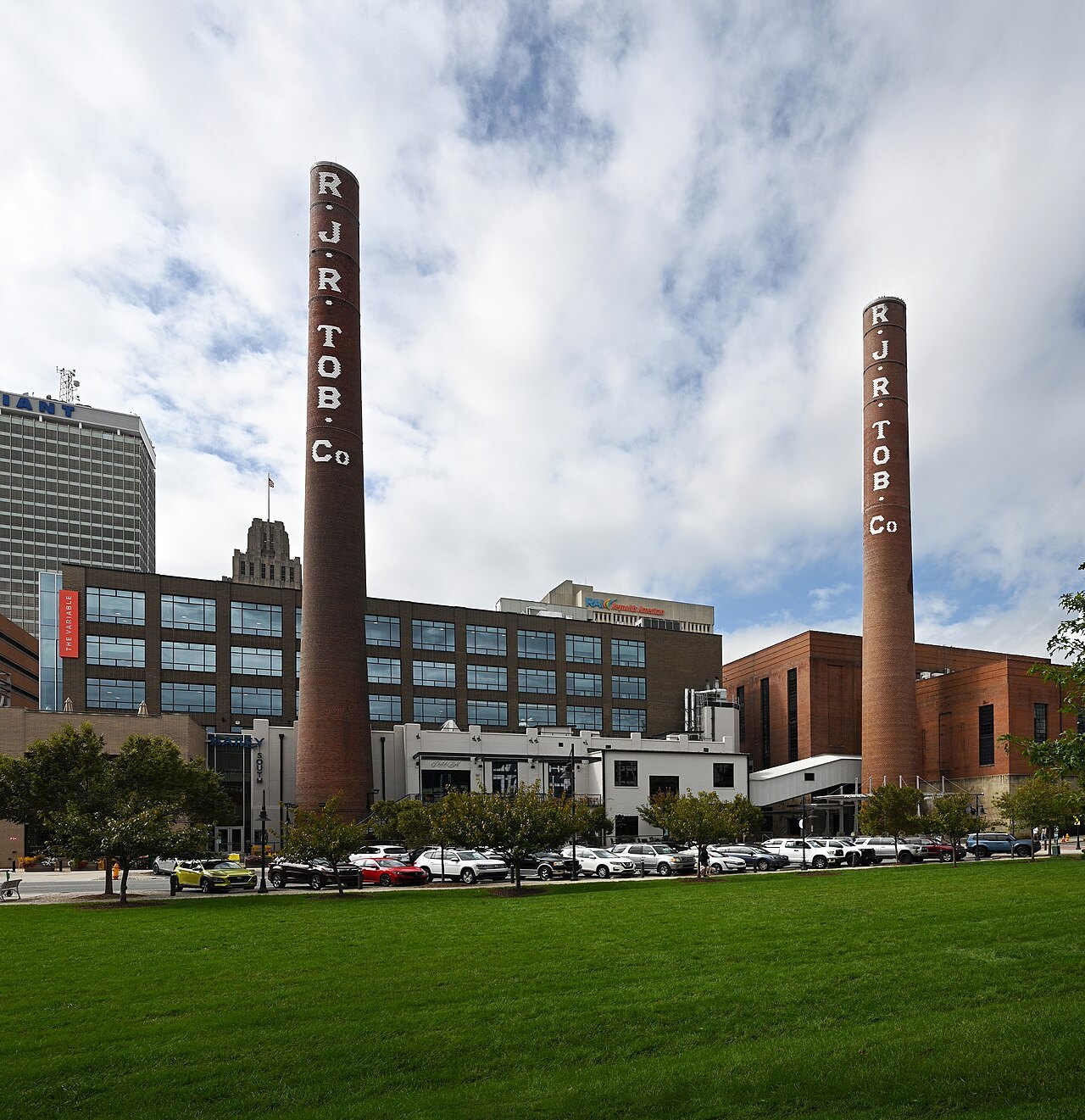
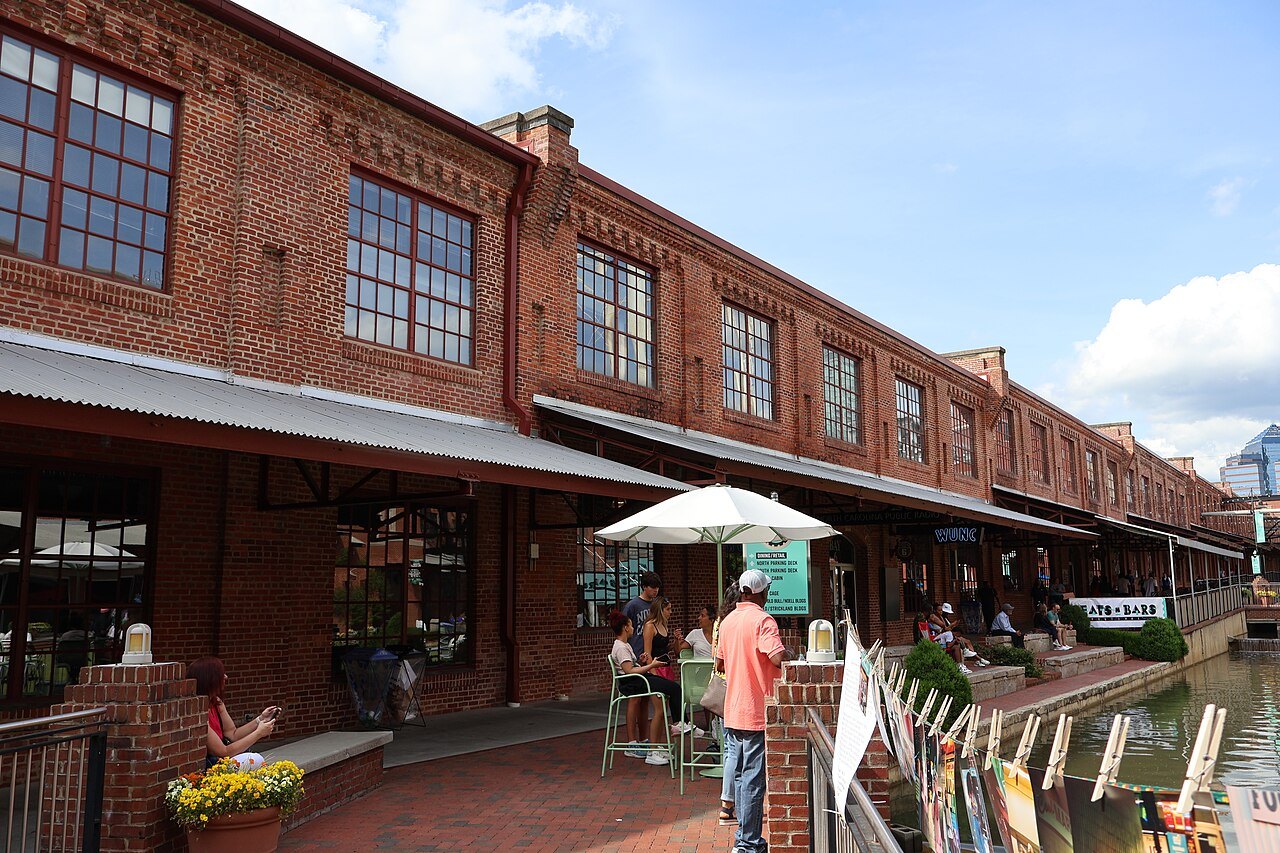
- Innovation QuarterOld tobacco buildings east of downtown turned into a district of research, housing and restaurants.
Why it matters
Winston-Salem is the fifth-largest city in North Carolina, with about 250,000 people in the northwest of the Piedmont Triad, and one of the most interesting to visit, because it is really two towns. Salem was the Moravian church town founded in 1766; Winston was the county seat founded beside it in 1849, which became a capital of tobacco and textiles. The Post Office was calling them Winston-Salem by the 1880s, and after a referendum they merged in 1913.
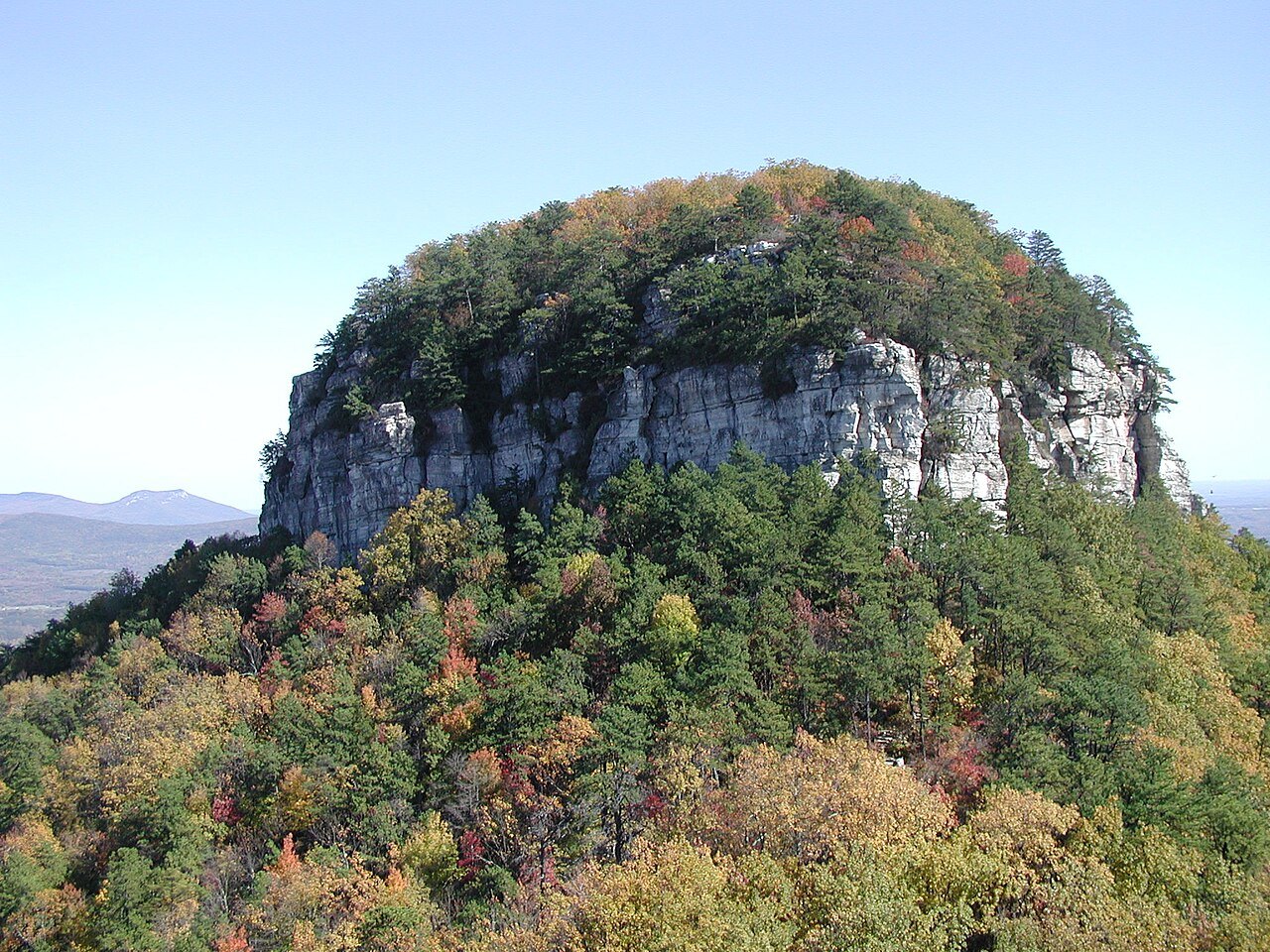
The city keeps both. At its heart, Old Salem preserves the Moravian town as a living-history museum, and around it stand the towers, mansions and factories that tobacco money built. The Sauratown Mountains rise less than thirty miles north.
The Moravians
The Cheraw and the Keyauwee lived in the area before European settlement, and the Saura, who gave their name to the mountains to the north, once lived across much of the Piedmont. In 1753 Bishop August Gottlieb Spangenberg chose, for the Moravian Church, a tract in the three forks of Muddy Creek, just short of 99,000 acres, and named it Wachovia after Count Zinzendorf's ancestral estate.
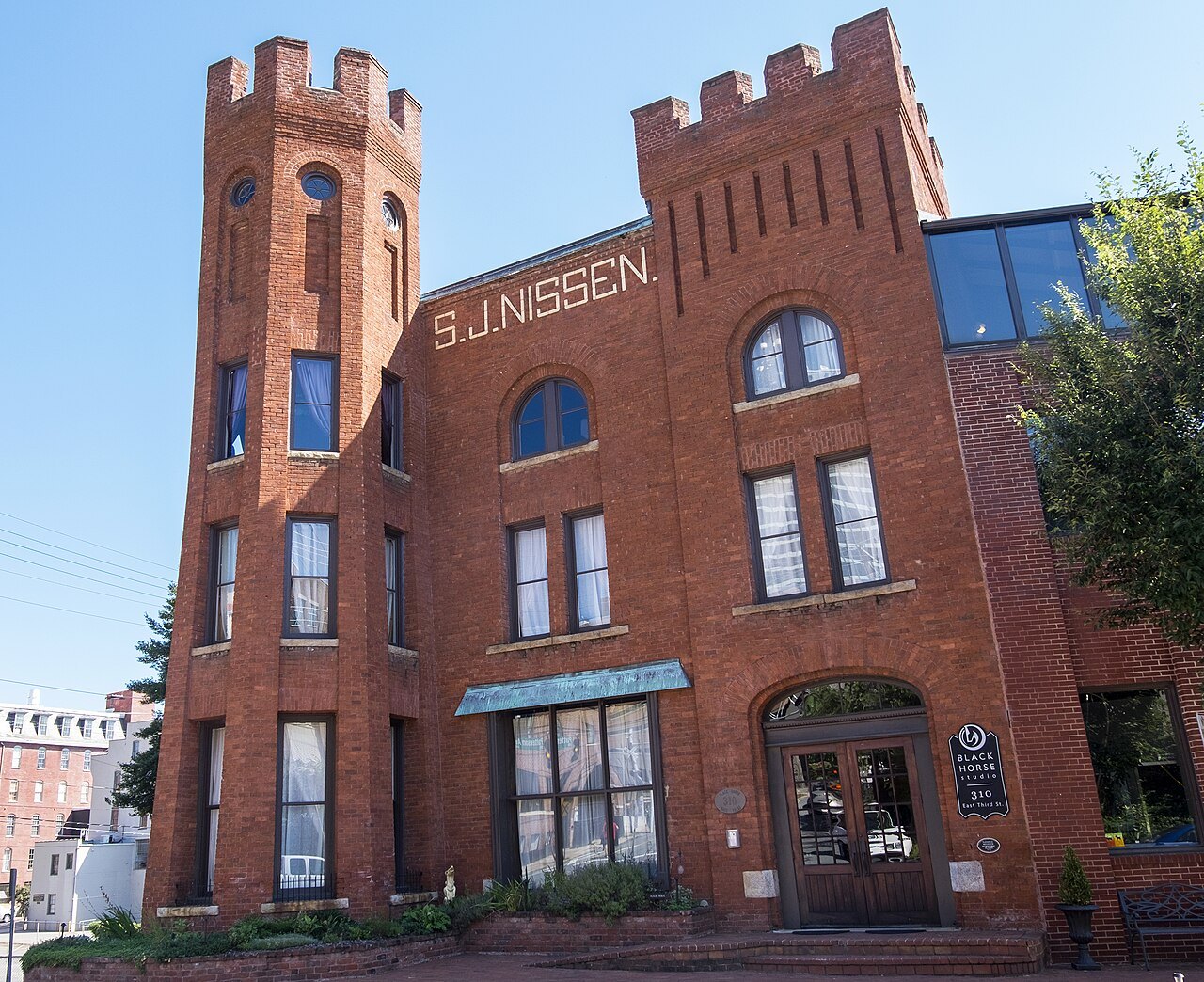
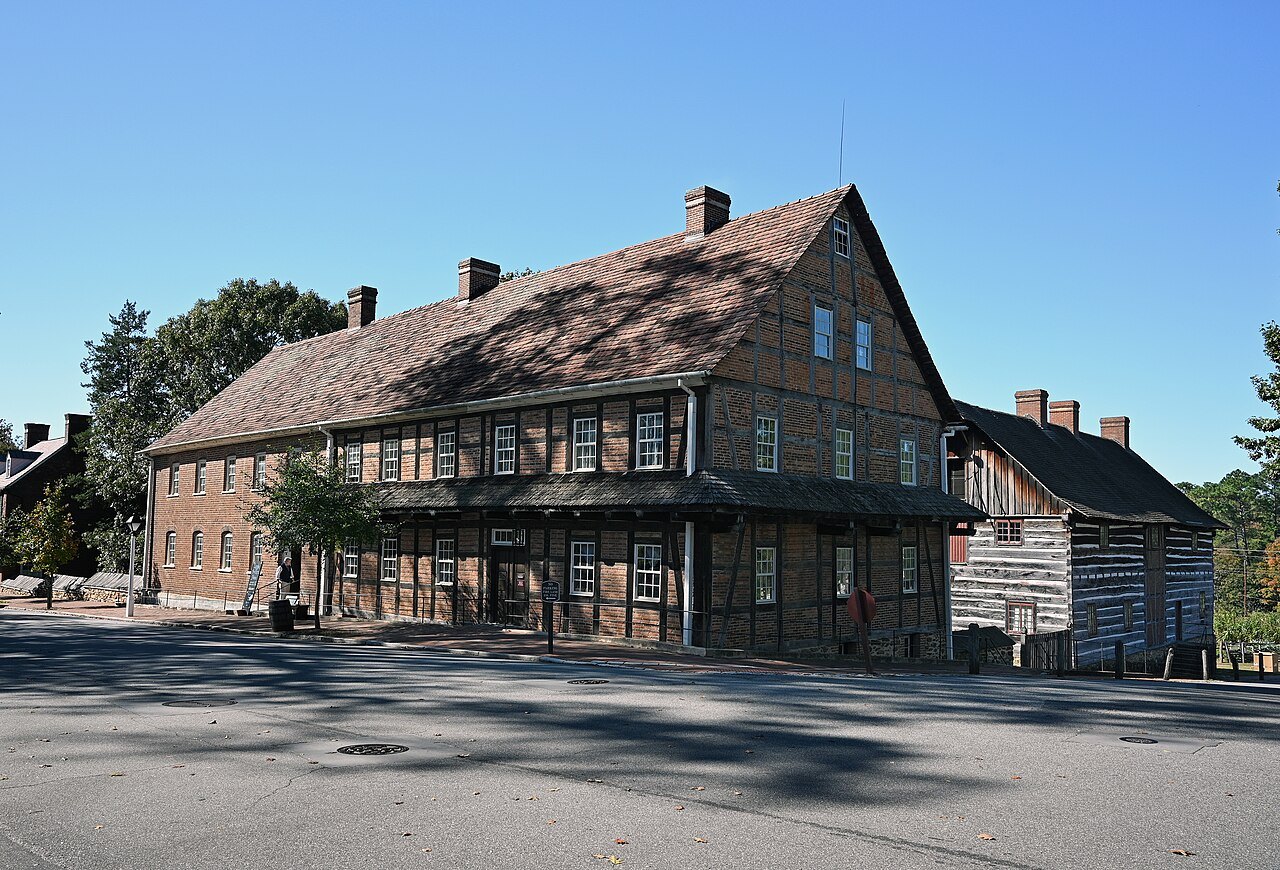
The first settlers arrived at Bethabara on November 17, 1753, and a second village, Bethania, followed in 1759. Salem, chosen by drawing lots and named from the Hebrew shalom, peace, was begun on January 6, 1766, as the central town, with its public buildings grouped around a square. The C. Winkler Bakery, known for its Moravian cookies, dates from 1799 and still bakes in Old Salem.
Camels and socks
In 1849 the Salem congregation sold land to the north for the seat of the new Forsyth County. The town was renamed Winston in 1851 for Joseph Winston, a hero of the Revolution, and stayed sleepy until a rail link arrived after 1868. By the 1880s it was full of tobacco factories. R. J. Reynolds founded his company in 1875 and made it famous with Prince Albert pipe tobacco in 1907 and Camel cigarettes in 1913; the Hanes brothers began making socks in 1901 and underwear soon after, the start of today's Hanesbrands.
By the 1940s six in ten of the city's workers worked for Reynolds or in the Hanes textile mills. Reynolds imported so much French cigarette paper and Turkish tobacco that the federal government made the city, two hundred miles inland, an official port of entry, and by 1916 it was the eighth-largest in the country. When R. J. Reynolds died in 1918 his company owned 121 buildings in the city, and it had built 180 houses for its workers on land it bought in 1917. In 1920, with 48,395 people, Winston-Salem was briefly the largest city in the state.
Other firsts followed: Wachovia Bank grew up here, McLean Trucking became the second-largest trucking company in the country, in 1937 Krispy Kreme opened its first doughnut shop on South Main Street, and in 1948 Piedmont Airlines grew out of a local flying service at the city's Smith Reynolds Airport.
The Reynolds Building and Reynolda
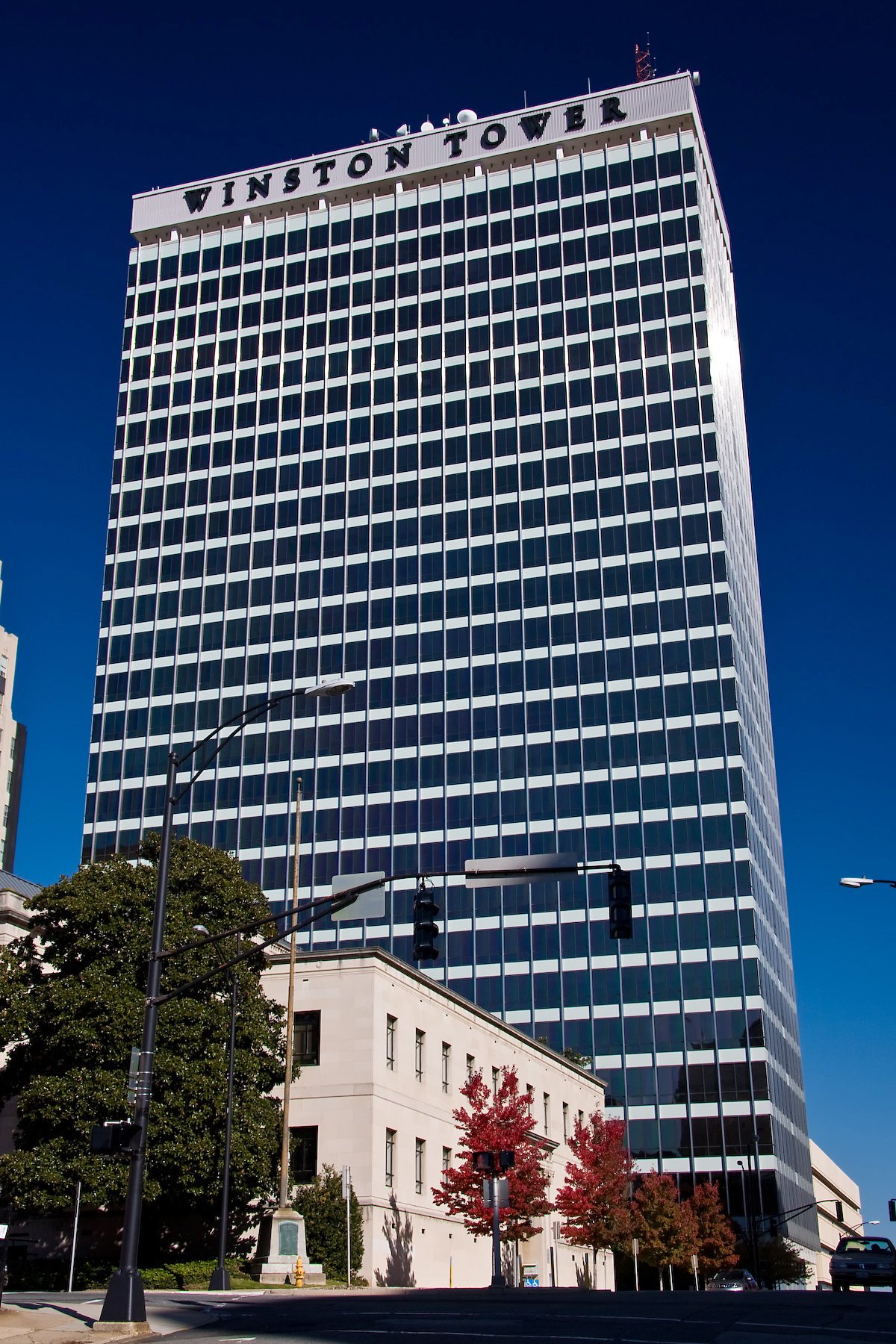
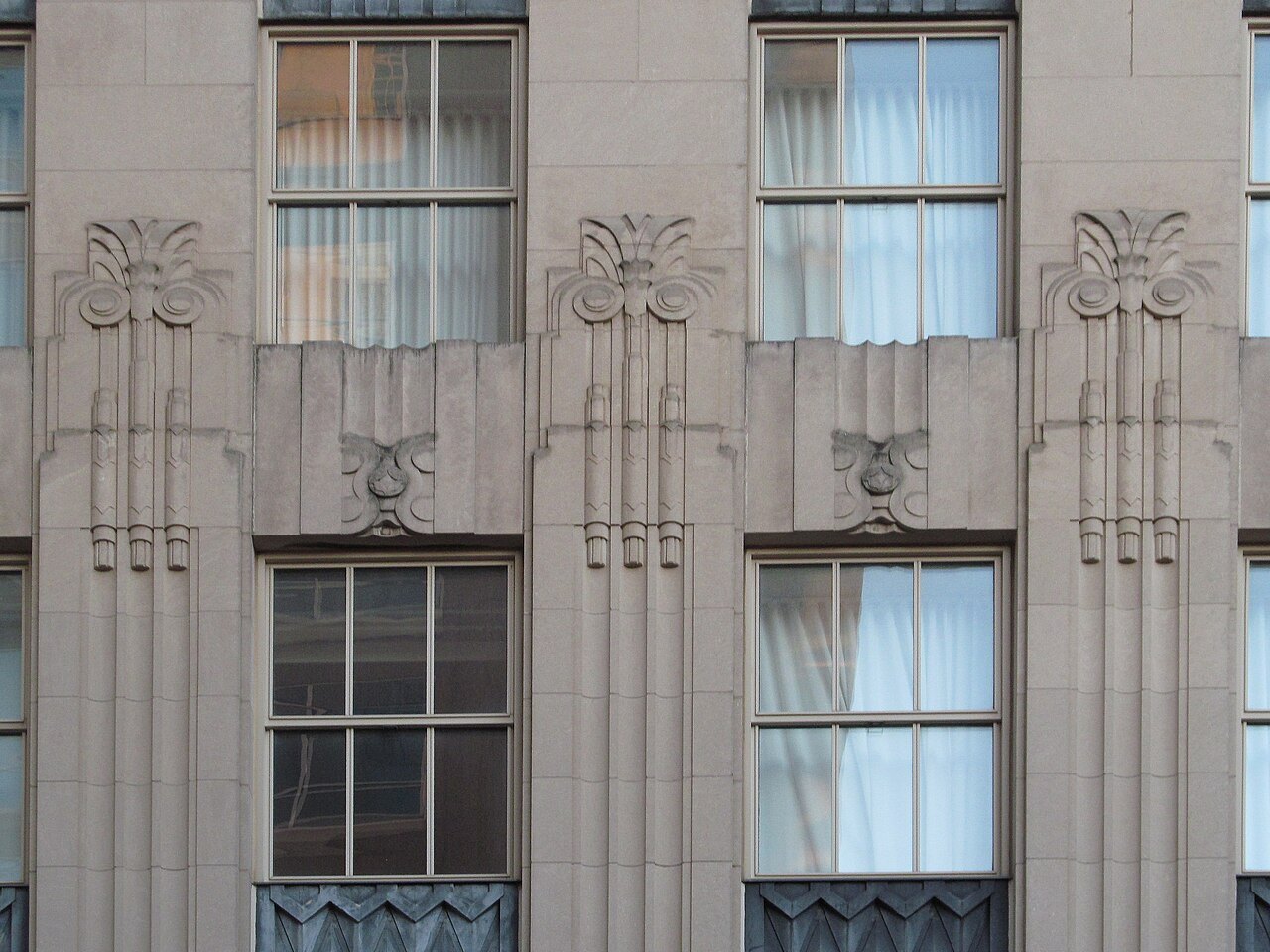
The Reynolds Building, finished in 1929 as the tobacco company's headquarters, is a 21-story tower designed by William F. Lamb of Shreve, Lamb and Harmon. When it opened it was the tallest building in the country south of Baltimore and was named the best building of the year by the American Institute of Architects. It is best known as the prototype for the much larger Empire State Building, built in 1931.
Northwest of downtown, Reynolda House, built in 1917 by Katherine Smith Reynolds and R. J. Reynolds, became a museum of American art in 1967, with collections from the colonial period to the present. Behind it, the lake called Lake Katherine has returned to wetland full of wildlife, and the estate's old buildings now hold shops and restaurants.
The City of Arts
Winston-Salem created the first arts council in the United States in 1949, and the University of North Carolina School of the Arts, the Winston-Salem Symphony, the Piedmont Opera, the Stevens Center and a string of theaters keep it busy. The Arts District around Sixth and Trade streets is full of galleries, restaurants and workshops, and the city hosts the National Black Theatre Festival and the RiverRun International Film Festival. In 2014 it took the official title of City of Arts and Innovation.
The universities add to it: Wake Forest University moved here in 1956, Winston-Salem State University began in 1892 as Slater Industrial Academy, and Salem College overlooks Salem Square.
Downtown and the neighborhoods
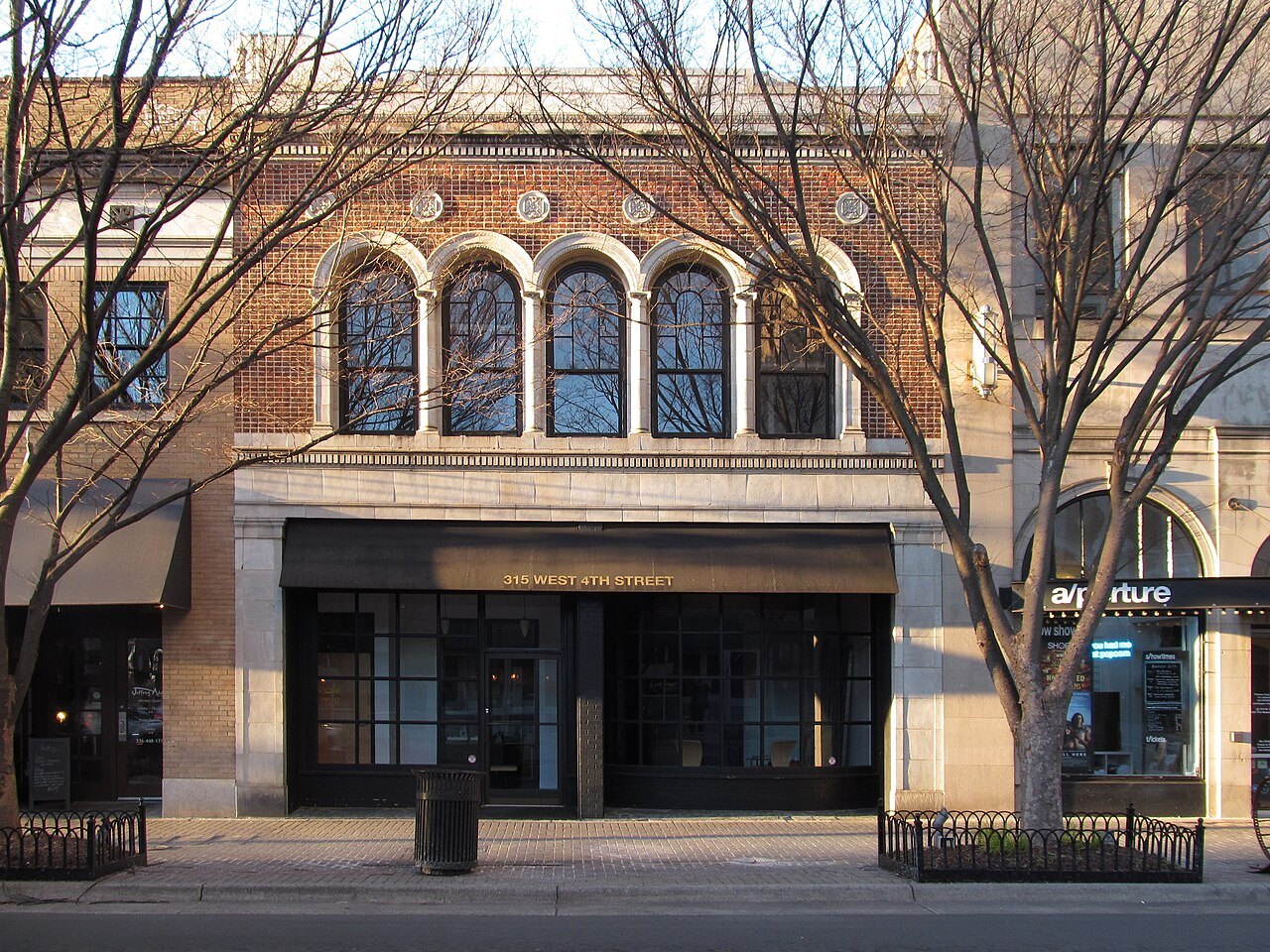
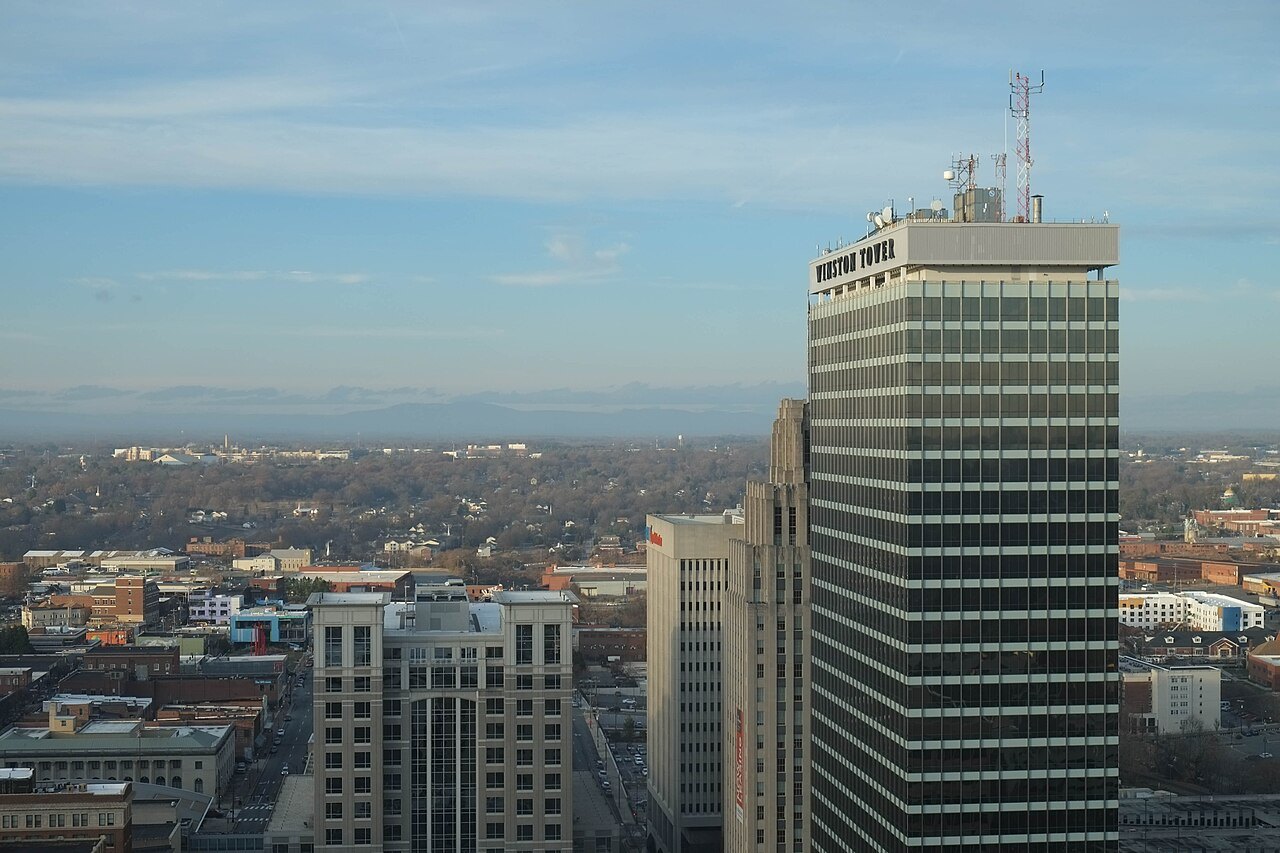
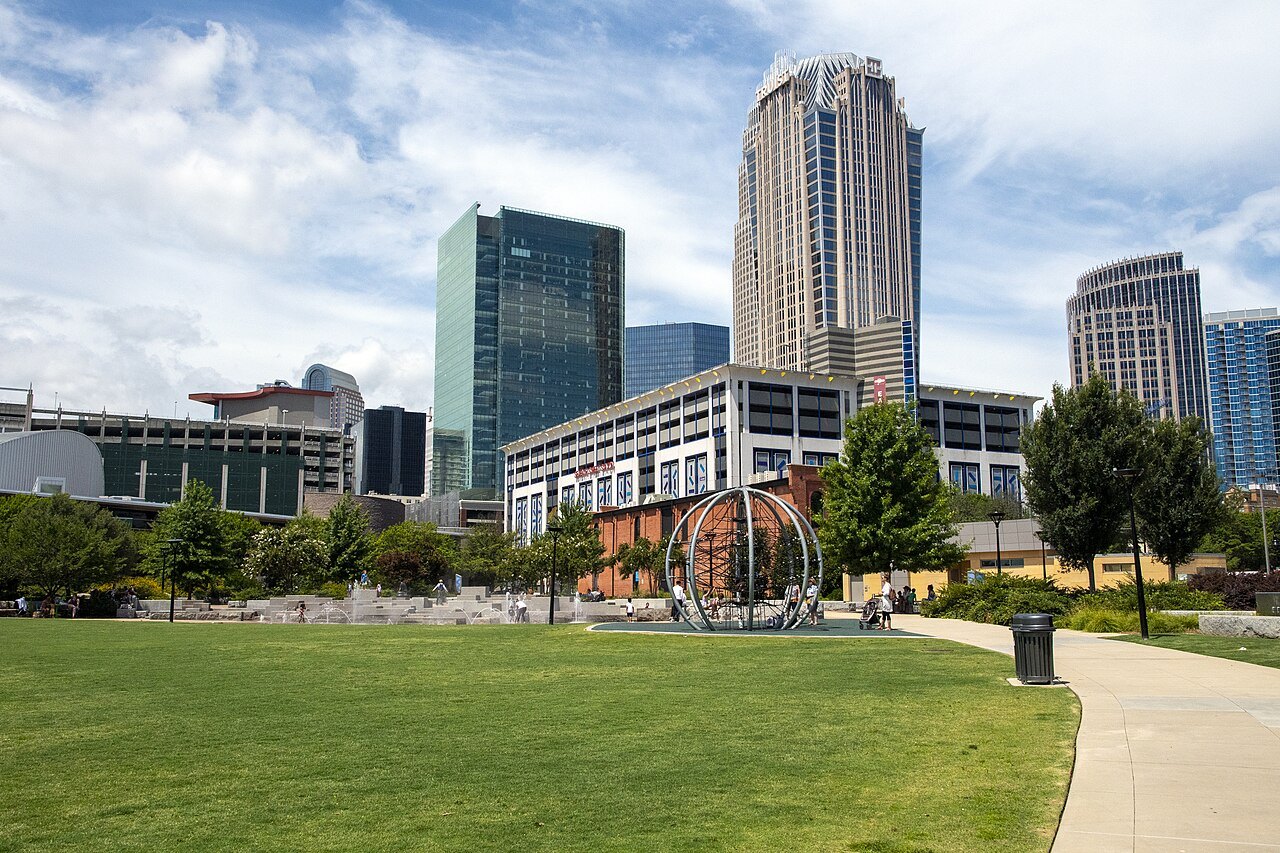
Downtown, the largest in the Triad, centers on Fourth Street, its main street of bars, restaurants and hotels, with Truist Stadium and the Innovation Quarter, a district of biomedical research, apartments and restaurants made from old tobacco buildings. The West End Historic District is mostly houses built between 1887 and 1930, and Ardmore, the largest neighborhood, is a historic district of more than 2,000 buildings. The Bethabara Historic District keeps 195 acres around the site of the first Moravian settlement, with a museum, a Moravian church and trails for walking and birdwatching among many kinds of trees and plants, and the Cobblestone Farmers Market in Old Salem sells local food through the growing season.
Getting around
Piedmont Triad International Airport, in Greensboro to the east, serves the city, and interstates 40, 74 and 285 cross it. Old Salem and downtown are walkable, and a car takes you out to Reynolda, Bethabara and the mountains. Durham and the Triangle are an easy drive east along I-40.
Nearby
Sources read for this page