THE PIEDMONT · THE SAURATOWN MOUNTAINS
Pilot Mountain and Hanging Rock, the mountains away from the mountains
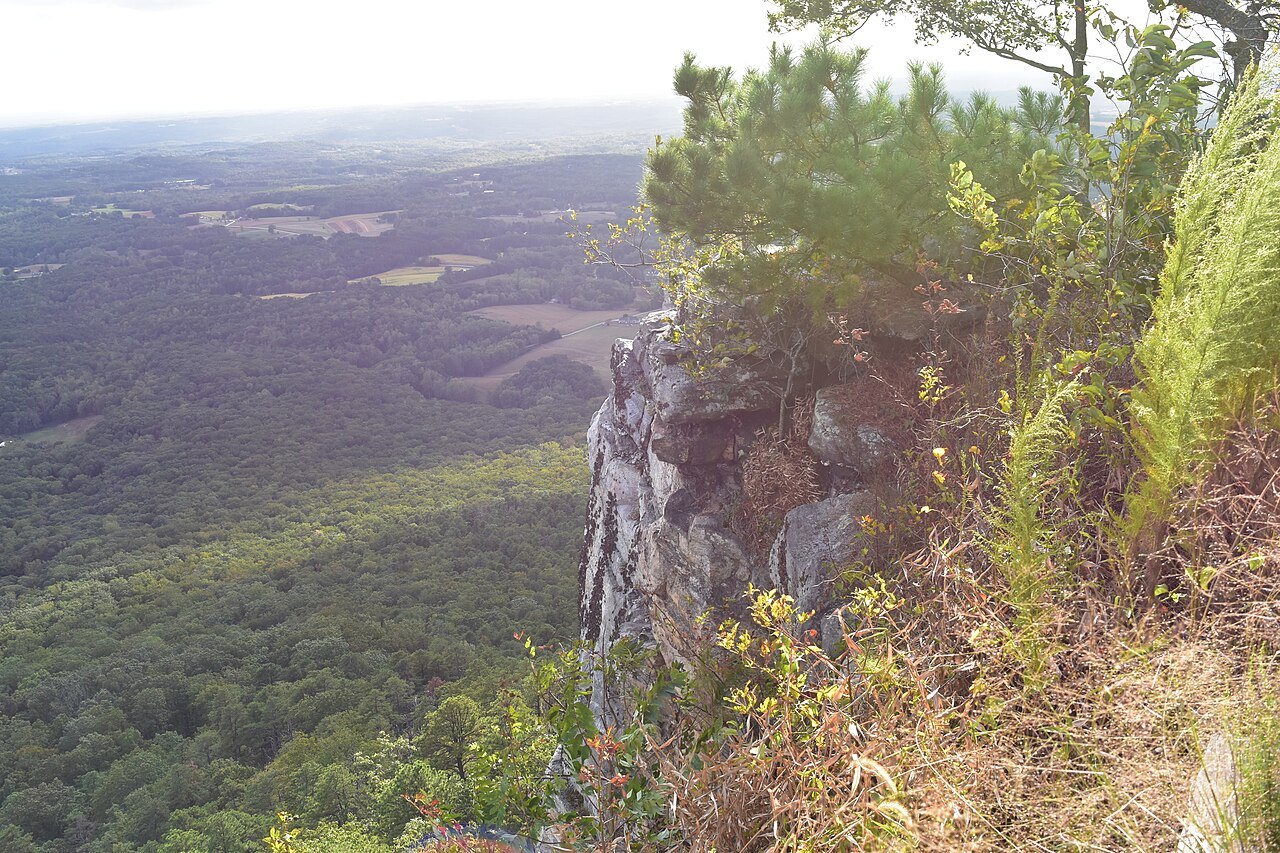
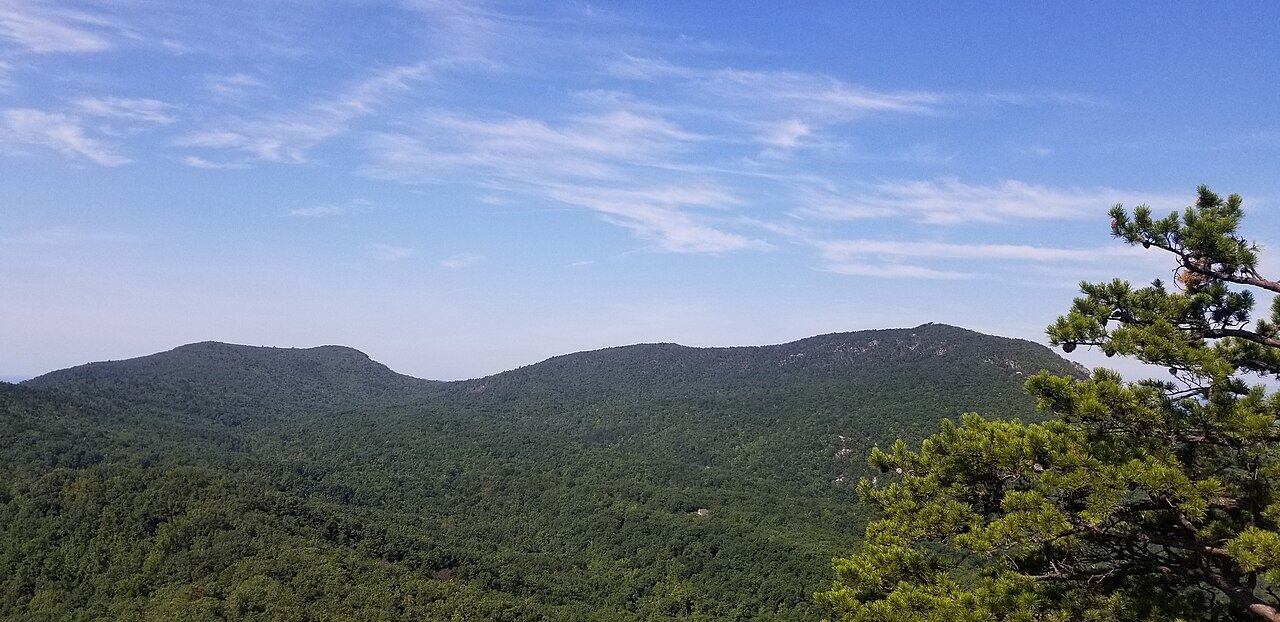
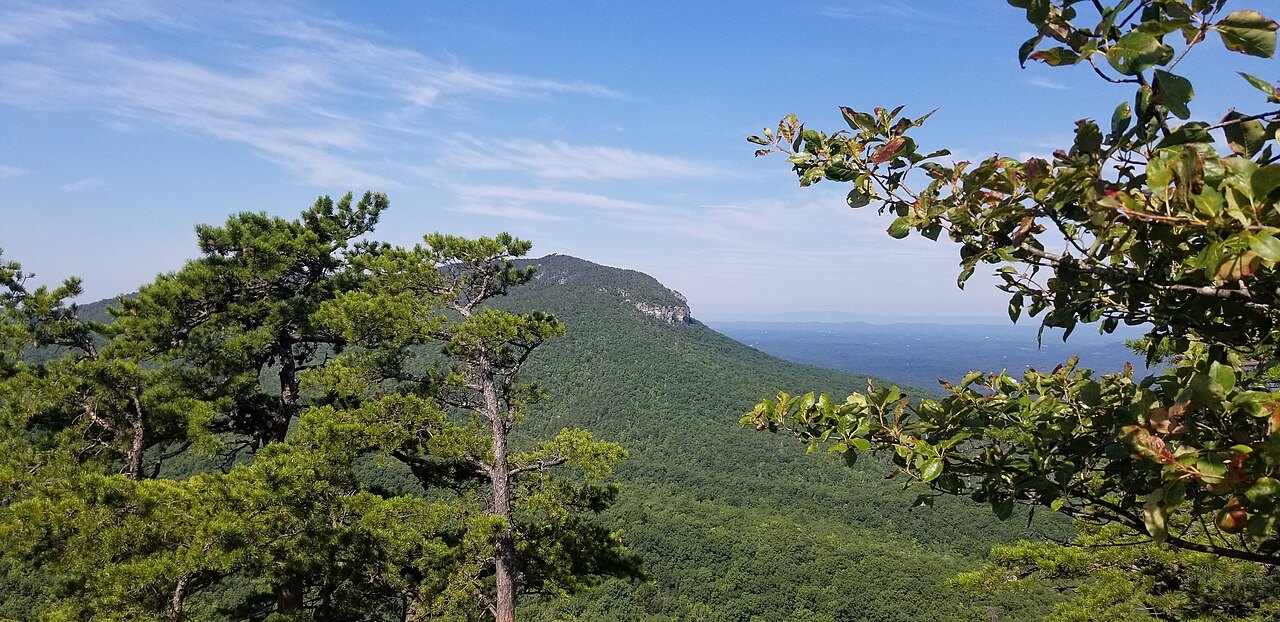
Photographs: Berean Hunter, Wikimedia Commons, CC BY-SA 2.5 · MaldingMax, Wikimedia Commons, CC BY-SA 4.0 · MaldingMax, Wikimedia Commons, CC BY-SA 4.0
The Piedmont · landmark 9 of 21
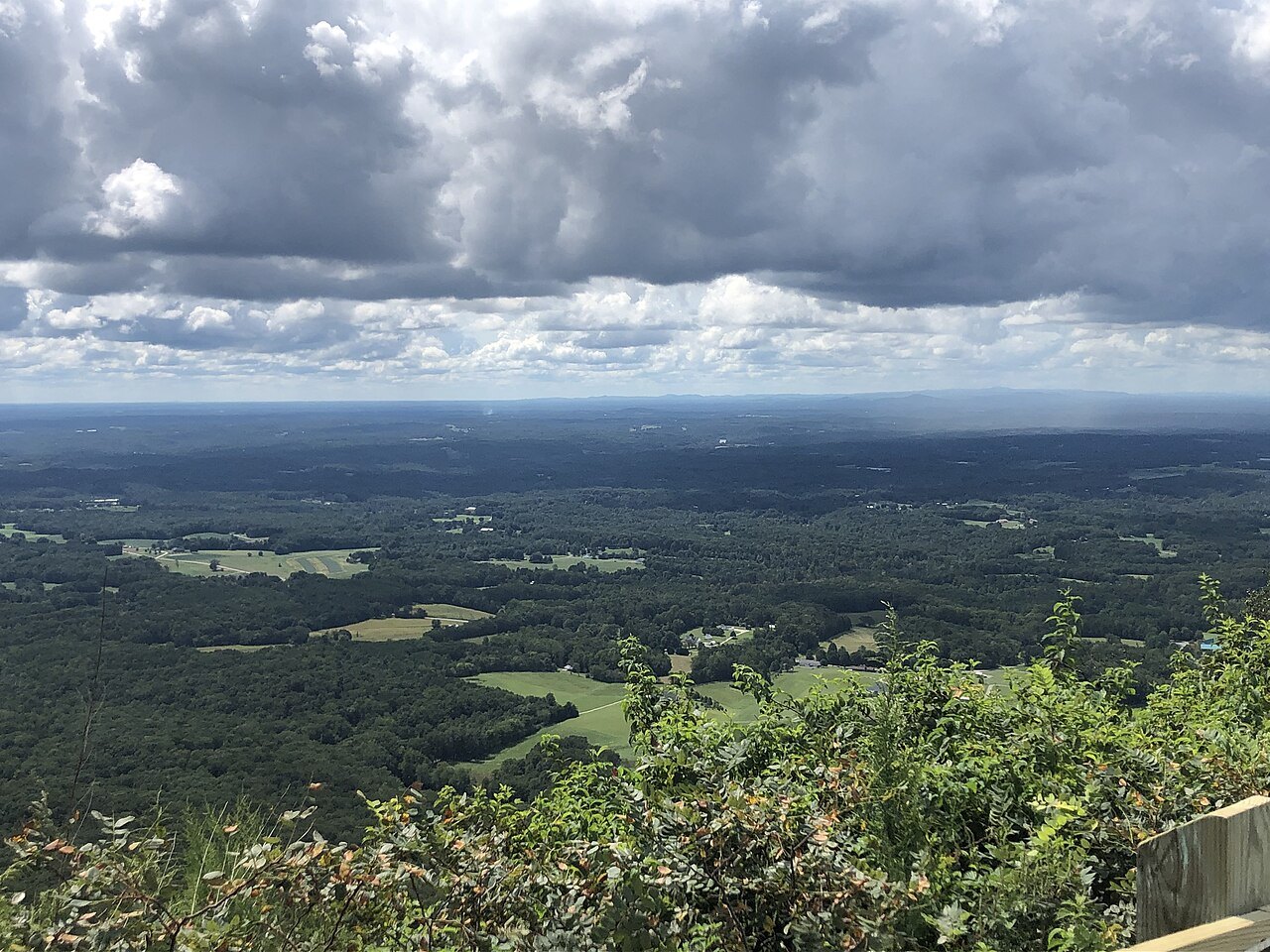
A lone knob of quartzite rising 1,400 feet out of the rolling Piedmont north of Winston-Salem, the landmark the Saura called the Great Guide, with the higher crags and waterfalls of Hanging Rock a few miles east.
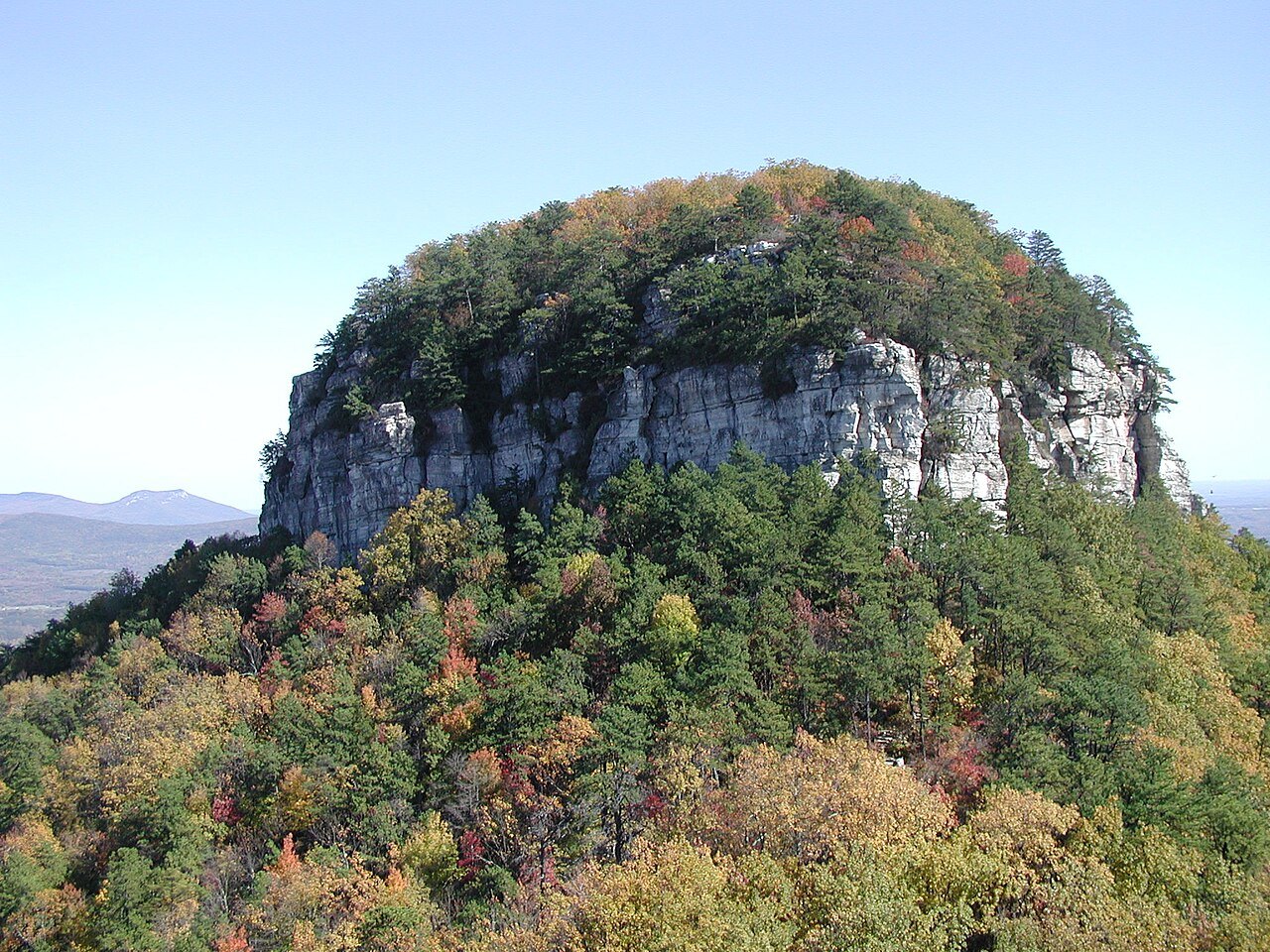
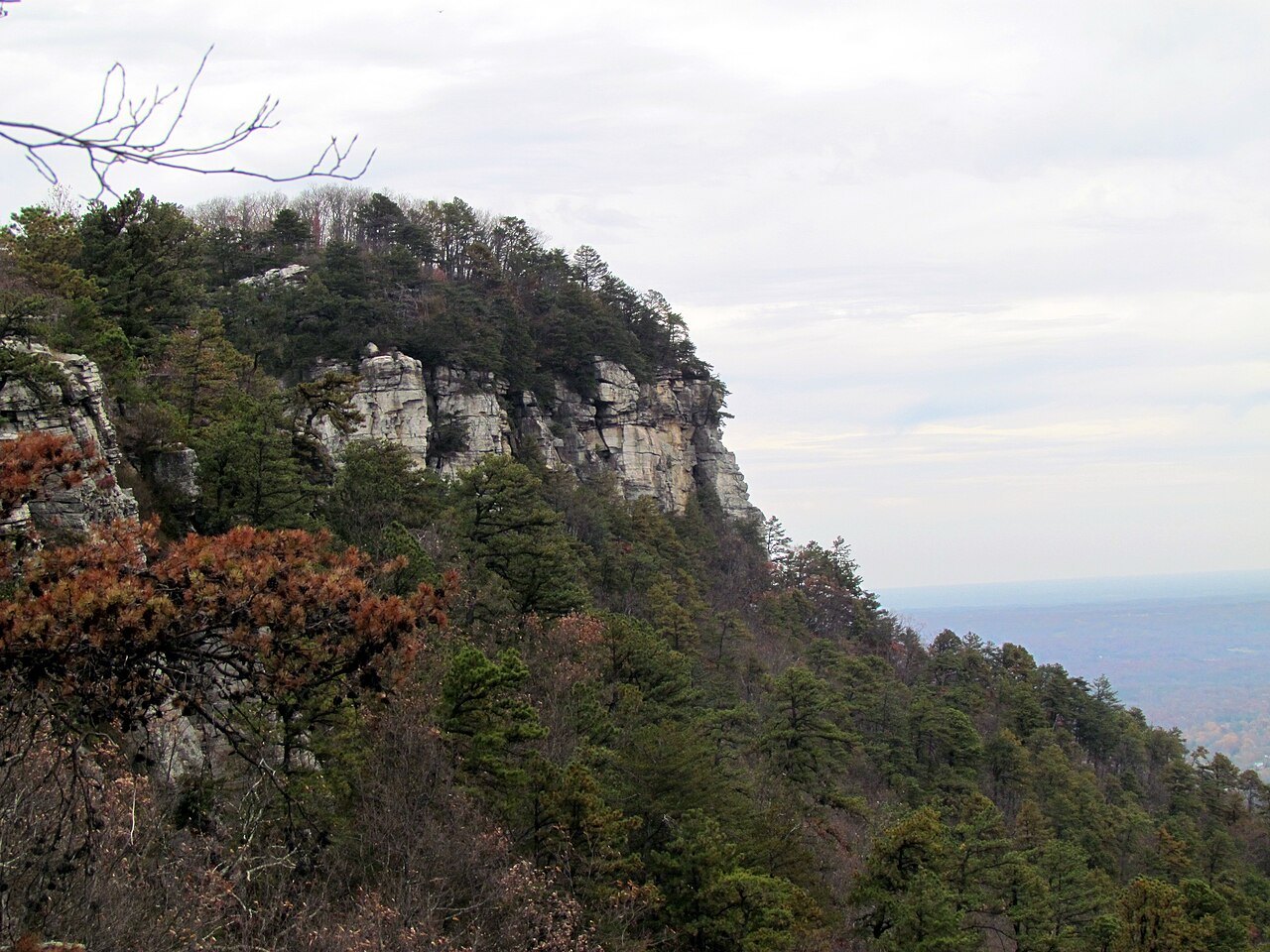
- Big PinnacleThe Knob: bare rock walls with a rounded wooded top, ringed by rhododendron that flowers pink in spring.
- Little Pinnacle OverlookThe main viewpoint, a short walk from the ridge-top parking lot, looking straight at the Knob.
- Jomeokee TrailThe path that circles the base of Big Pinnacle, named for the mountain's Saura name.
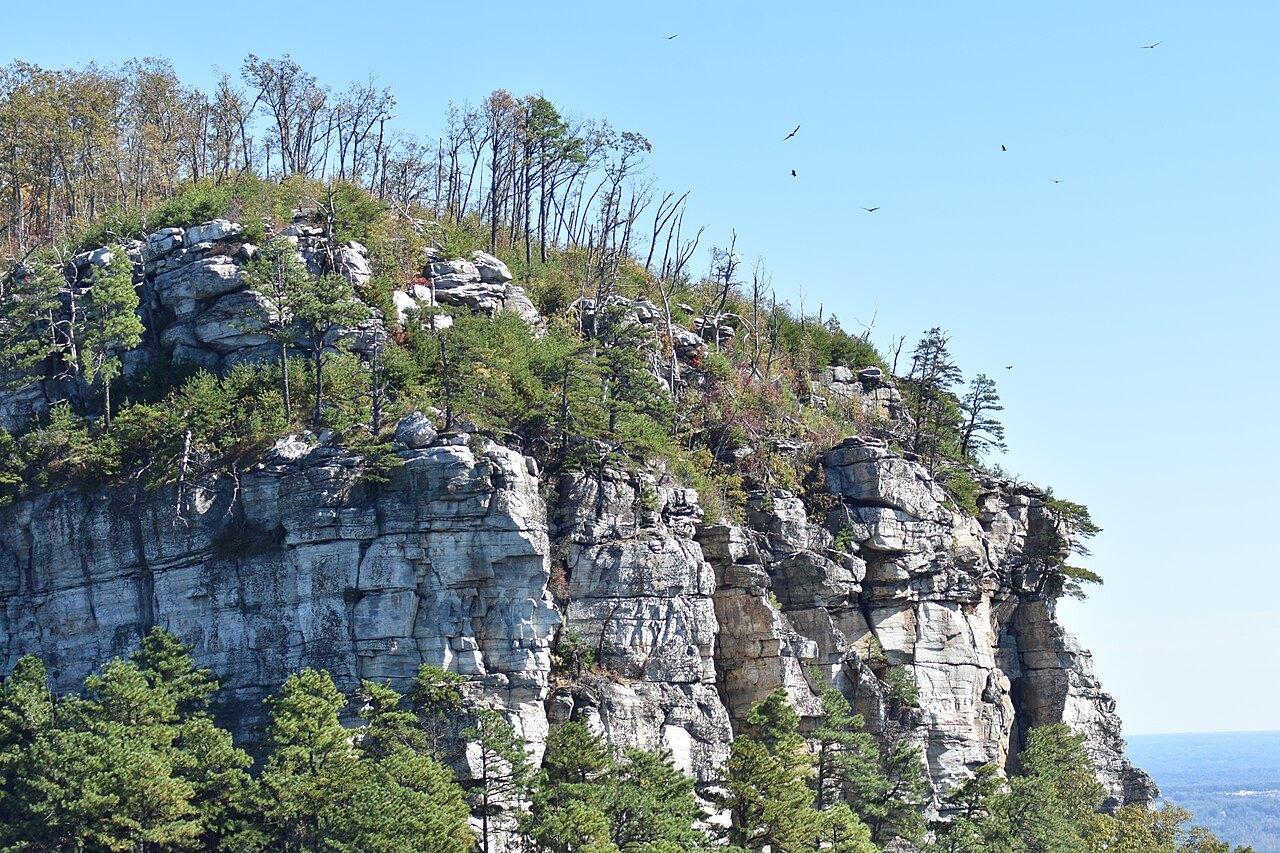
- Hanging RockThe rock summit of Hanging Rock State Park, with views across the Sauratown range.
- Moore's KnobAt 2,579 feet the highest point of the Sauratown Mountains, inside Hanging Rock State Park.
- The Yadkin River sectionTwo miles of broad, shallow river with islands, reached by a corridor from the mountain.
Why it matters
Pilot Mountain is one of the most recognizable natural features in North Carolina. It rises to 2,421 feet, and its Big Pinnacle stands about 1,400 feet above the surrounding country, a flat-topped knob of bare rock with sheer colorful walls, alone above the fields about 20 miles northwest of Winston-Salem. Travelers have steered by it for centuries.
It belongs to the Sauratown Mountains, a small range of isolated peaks separated from the Blue Ridge, which people here call "the mountains away from the mountains". The range rises from country that averages only about 800 feet, which is why its peaks look so abrupt. Hanging Rock State Park, a few miles east, holds the range's highest summits and waterfalls.
The Great Guide
The Saura, a Native American people of the Piedmont, called the mountain Jomeokee, the Great Guide. European settlers used it as a guidepost too and gave it the same meaning in English: Pilot. The Saura left the area around 1700, after European diseases and attacks by northern nations, particularly the Seneca; the first European settlers arrived from Pennsylvania in the late 1740s.
Settlement was slow in this isolated country. The records of the Moravians at Salem mention bands of highwaymen who used the mountains as a hideout in the 1750s and 1760s.
How a knob of quartzite was made
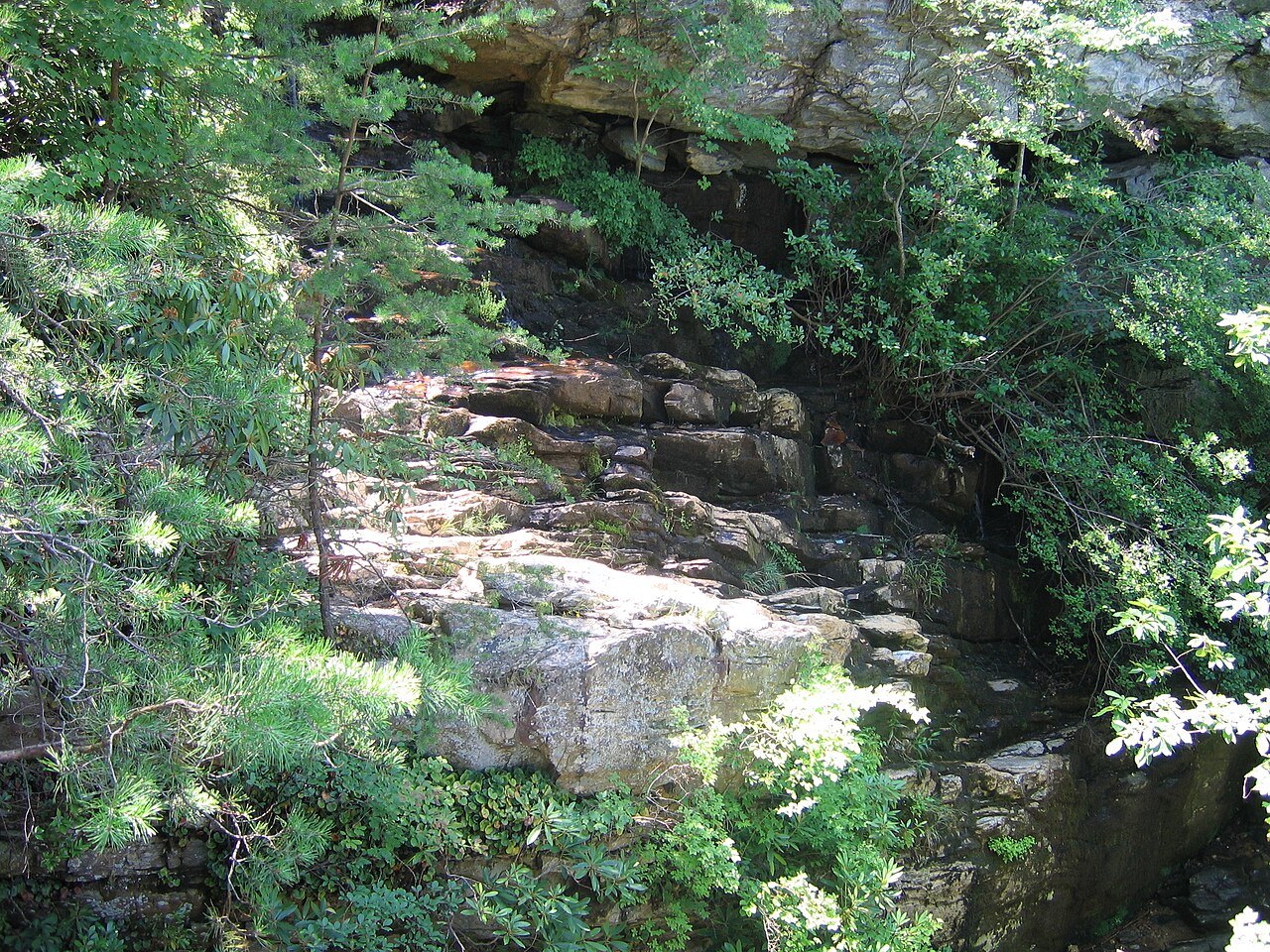
Pilot Mountain is a monadnock, a hill of hard rock left standing after the land around it wore away. Its core began as beach sand on the edge of an ancient continent and was pressed into quartzite, 98 percent pure, when the continents collided to raise the Appalachians. The quartzite resisted erosion and stayed as the dome of Big Pinnacle. Little Pinnacle, the ridge beside it, is biotite gneiss layered with schist.
The same quartzite caps the rest of the Sauratown range: Moore's Knob, Moore's Wall, Cook's Wall, Devil's Chimney, Wolf Rock and Hanging Rock itself are remnants of a broad layer of rock that once covered the region.
What you see at Pilot Mountain
A paved road climbs past the visitor center and campground to a parking lot on the ridge. From there trails lead to the Little Pinnacle Overlook, the main view straight across a curved notch to the Knob. The Jomeokee Trail circles the base of Big Pinnacle; the Ledge Spring Trail runs along the ridge crest and back past a long cliff popular with climbers. Climbing on Big Pinnacle itself is not allowed.
In spring the Knob wears a ring of Catawba rhododendron in pink, which people call its pink crown, and mountain laurel and wild blueberry grow through the woods of chestnut oak and pine. Vultures ride the updrafts off the Knob, joined now and then by ravens, which are rare this far east of the Blue Ridge.
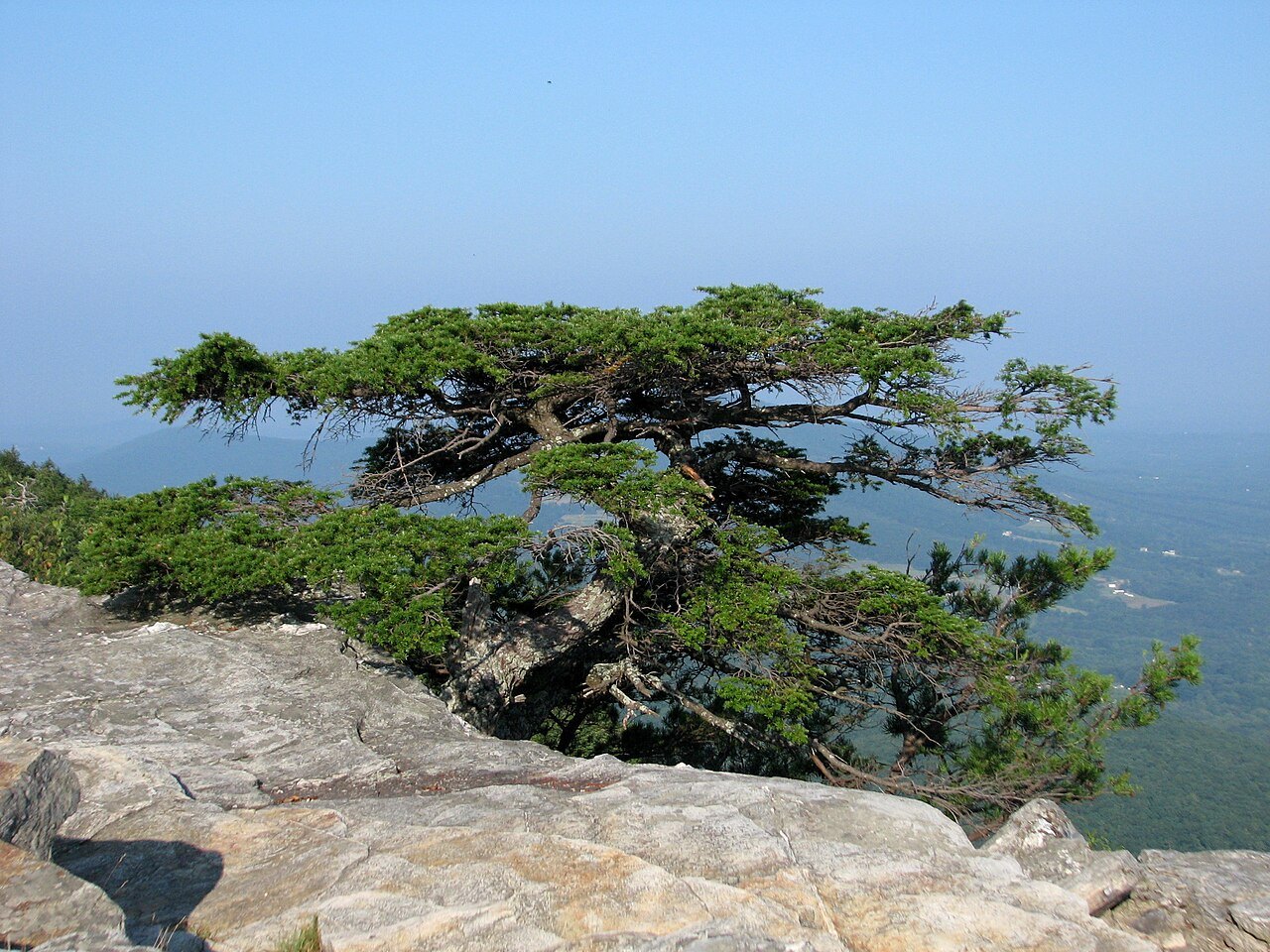
The park became a state park in 1968, after years as a commercial attraction, to keep the mountain from being overdeveloped. A corridor of land links it to two miles of the Yadkin River, broad and shallow, with islands reached by canoe or by wading when the water is low. In November 2021 a wildfire burned across about 1,050 acres of the park.
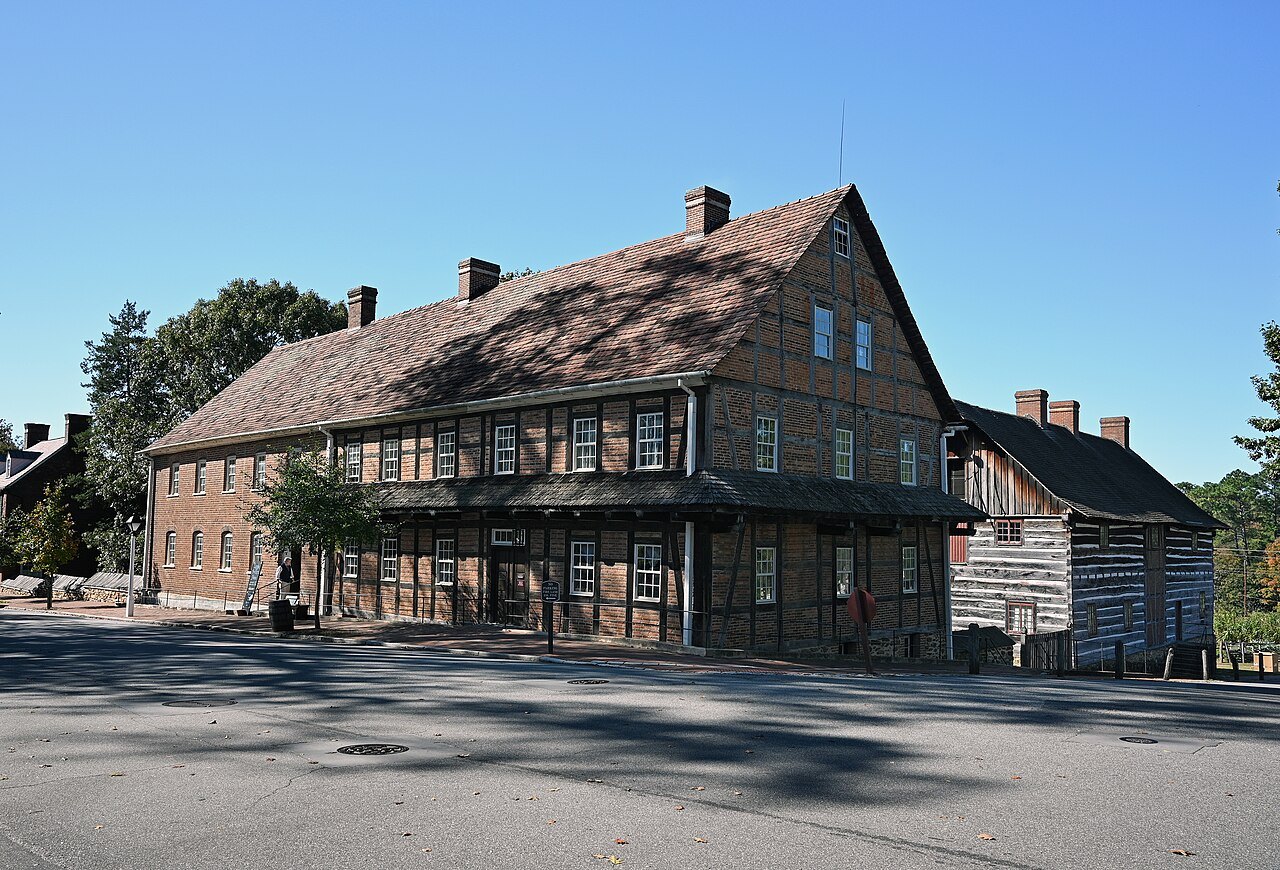
The park is also associated with Horne Creek Living Historical Farm, nearby.
Hanging Rock State Park
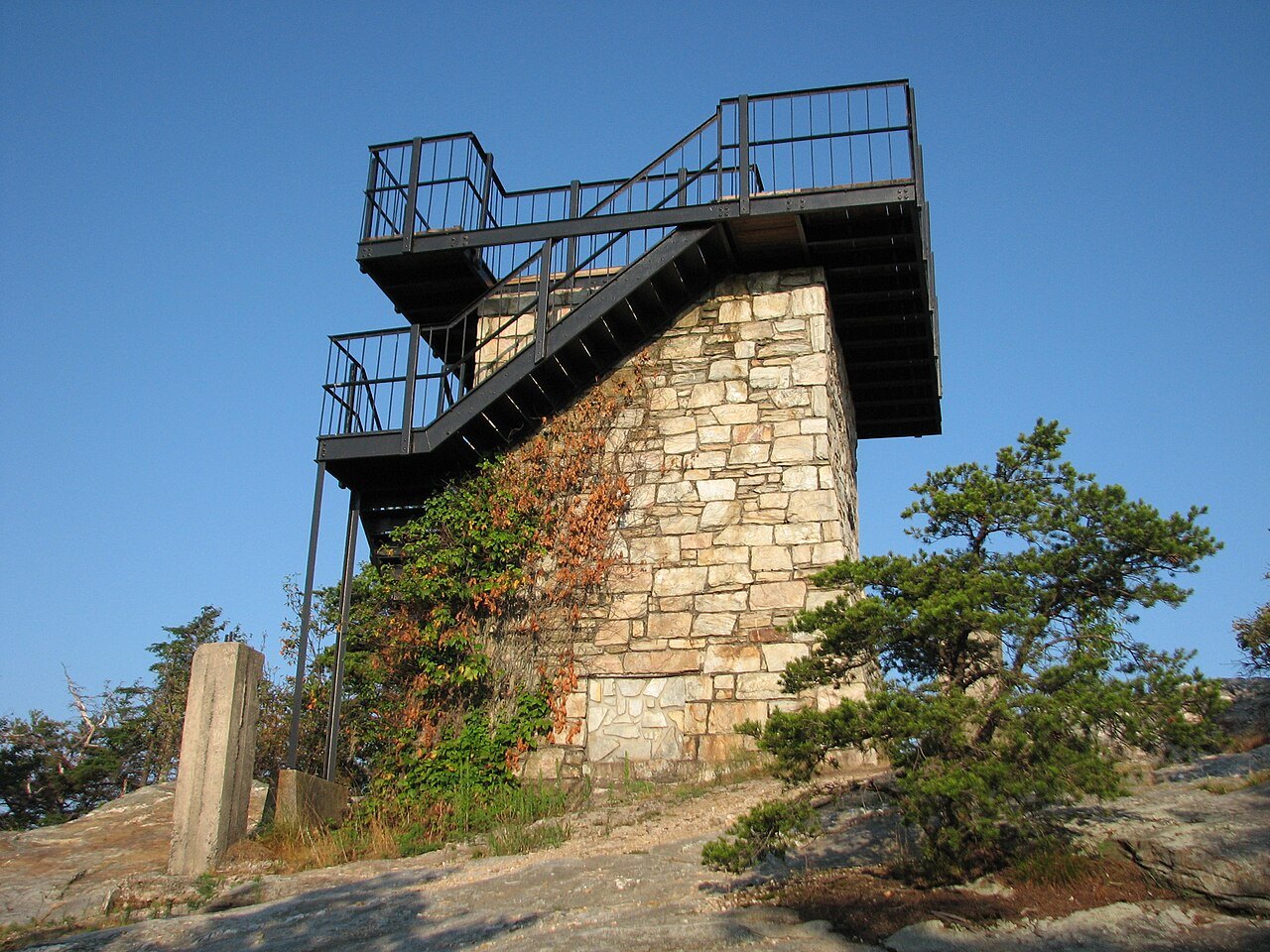
Hanging Rock State Park covers 9,011 acres in Stokes County, about 30 miles north of Winston-Salem near Danbury. In 1936 the Winston-Salem Foundation and a county committee gave the first 3,096 acres to the state, land where a mountain resort had been planned until its developers went bankrupt. The Civilian Conservation Corps built the first facilities between 1935 and 1942, including a 12-acre lake and a bathhouse now on the National Register of Historic Places.
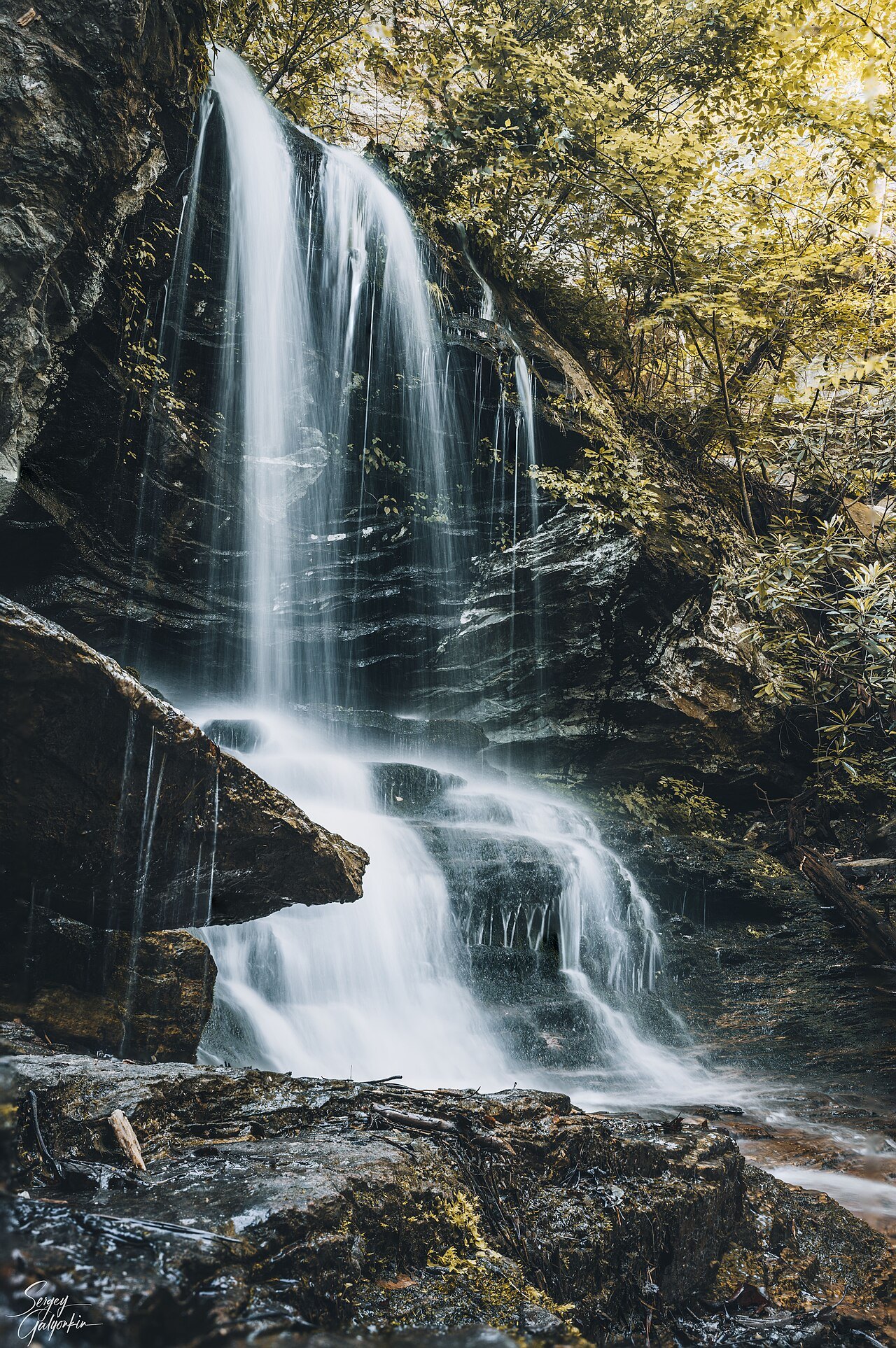
The park has more than 48 miles of trail to its peaks and at least five waterfalls, among them Tory's Falls, the Upper and Lower Cascades, Window Falls and Hidden Falls. Tory's Den is a rock outcrop said to have hidden Loyalists during the Revolution. Moore's Knob, at 2,579 feet, is the highest point of the Sauratown range, and climbing is allowed on Moore's Wall and Cook's Wall but not on Hanging Rock. There is no admission fee.
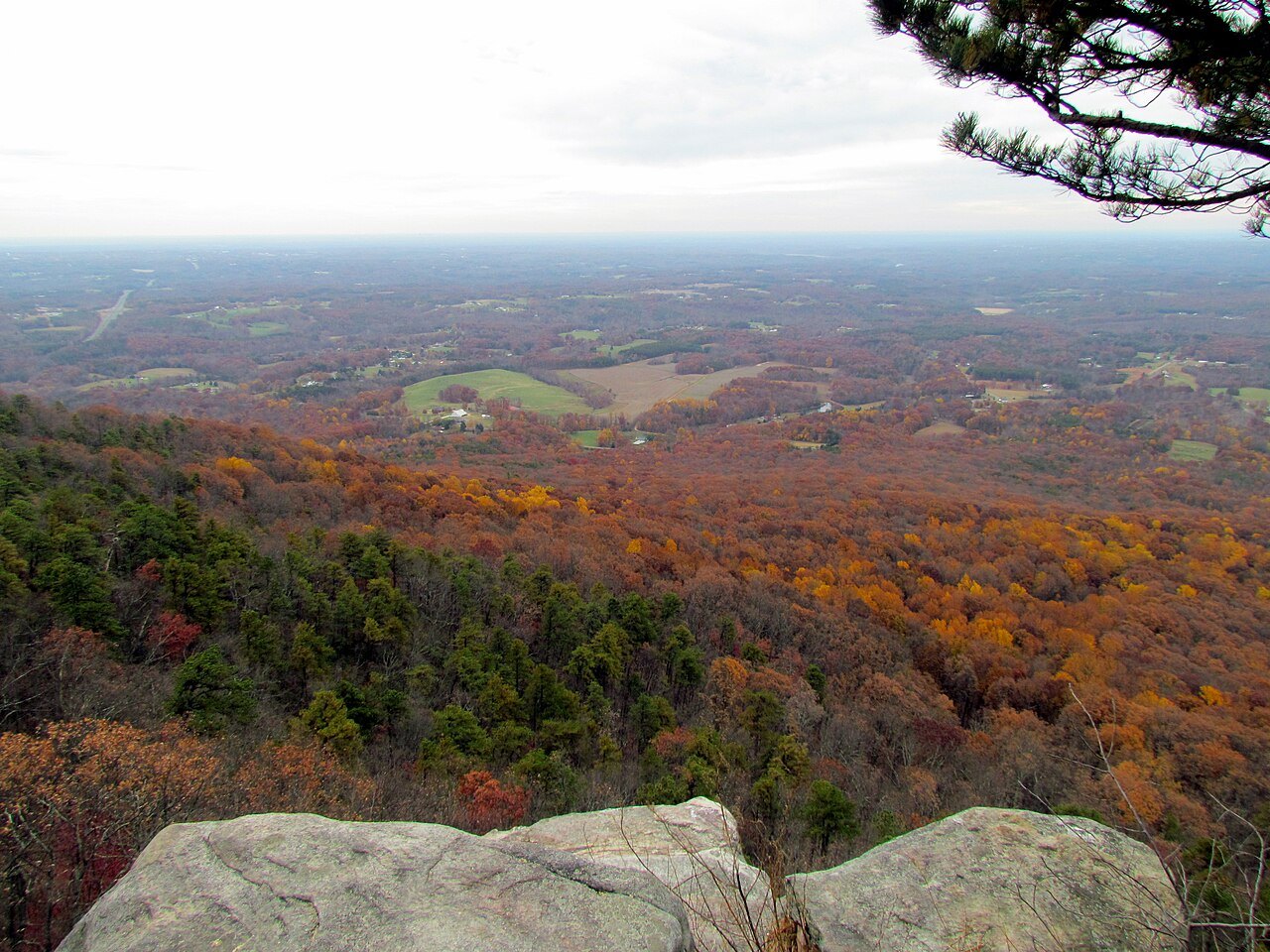
Its setting brings plants of the far west of the state into the Piedmont: Carolina and Canadian hemlock grow side by side, rhododendron, mountain laurel and pinxter azalea flower in spring, and the rare Wehrle's salamander lives here. Peregrine falcons have nested in the crags of the high peaks, and ravens and vultures circle overhead.
How to visit
Pilot Mountain State Park lies on US 52 near the village of Pinnacle, between Winston-Salem and Mount Airy, which is 14 miles farther north. Drive up to the ridge-top lot for the overlook, then walk the Jomeokee Trail around the Knob. The Grassy Ridge Trail links to the Mountains-to-Sea and Sauratown Trails, which run east to Hanging Rock for long-distance walkers.
Both parks have places to stay the night. Pilot Mountain has a family campground of 49 sites among hickory and oak on the lower slopes, and a youth group camp by the river; Hanging Rock has a campground of 73 sites and ten vacation cabins. The Yadkin River Canoe Trail runs 165 miles downstream from the park's river section, and fishing on it needs a state license.
Do both parks in a day from Winston-Salem, or pair Pilot Mountain with Old Salem. Swimming in the lake at Hanging Rock runs from Memorial Day to Labor Day, and the rhododendron is best in spring.
Nearby