HICKORY NUT GORGE AFTER HELENE
What did Hurricane Helene do to Chimney Rock and Lake Lure?
Photographs: DysonsSphere, Wikimedia Commons, CC BY-SA 4.0 · David Dugan, Wikimedia Commons, CC BY-SA 3.0 · Michaelakg, Wikimedia Commons, CC BY-SA 4.0
What the 2024 flood did to Chimney Rock village, Lake Lure and the state park, and what to check before visiting.
A storm beyond the ordinary
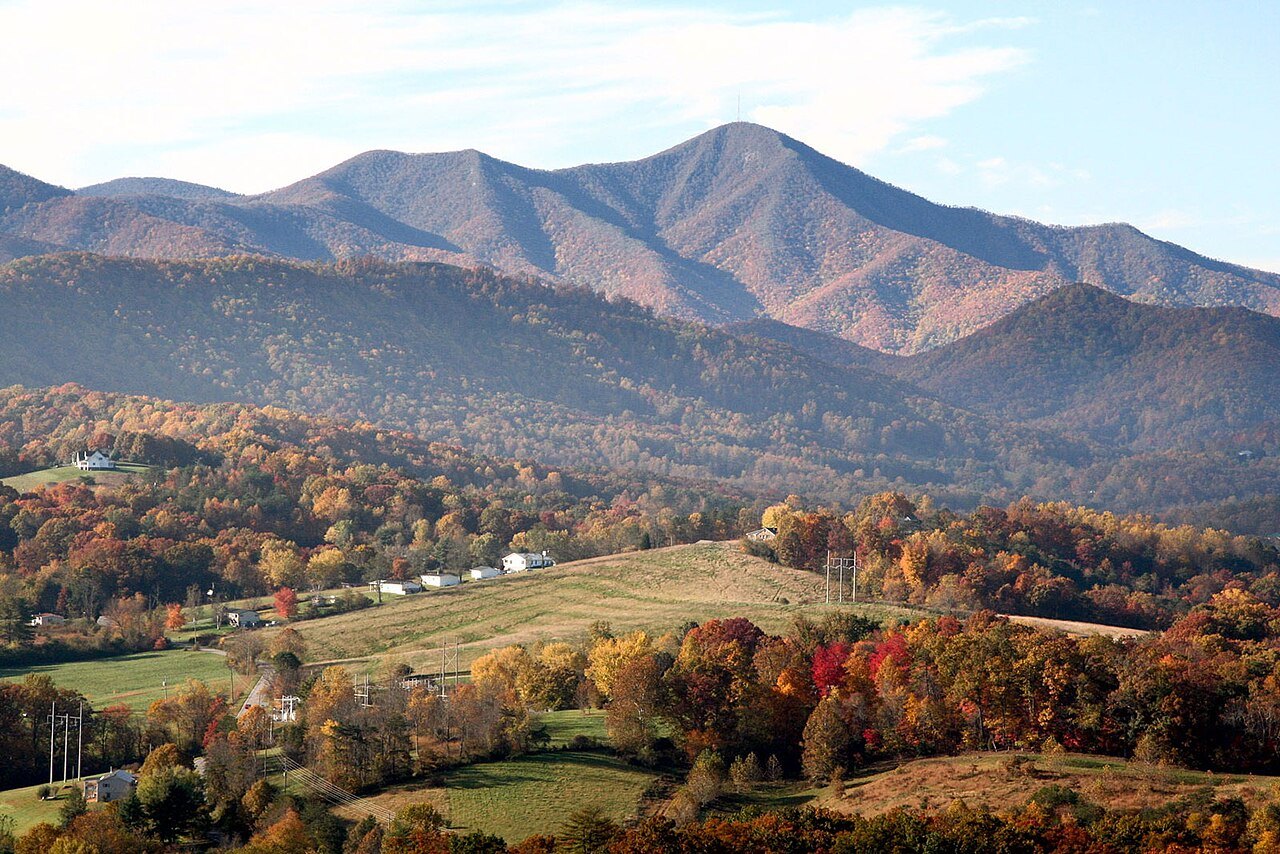
In late September 2024 the remnants of Hurricane Helene crossed into western North Carolina and dropped record rainfall on the mountains above Hickory Nut Gorge. More than 19 inches fell upstream of Chimney Rock, swelling the Rocky Broad River far beyond its banks. The river flows down through the gorge on its way to Lake Lure, and that narrow course turned a mountain storm into a valley-wide flood.
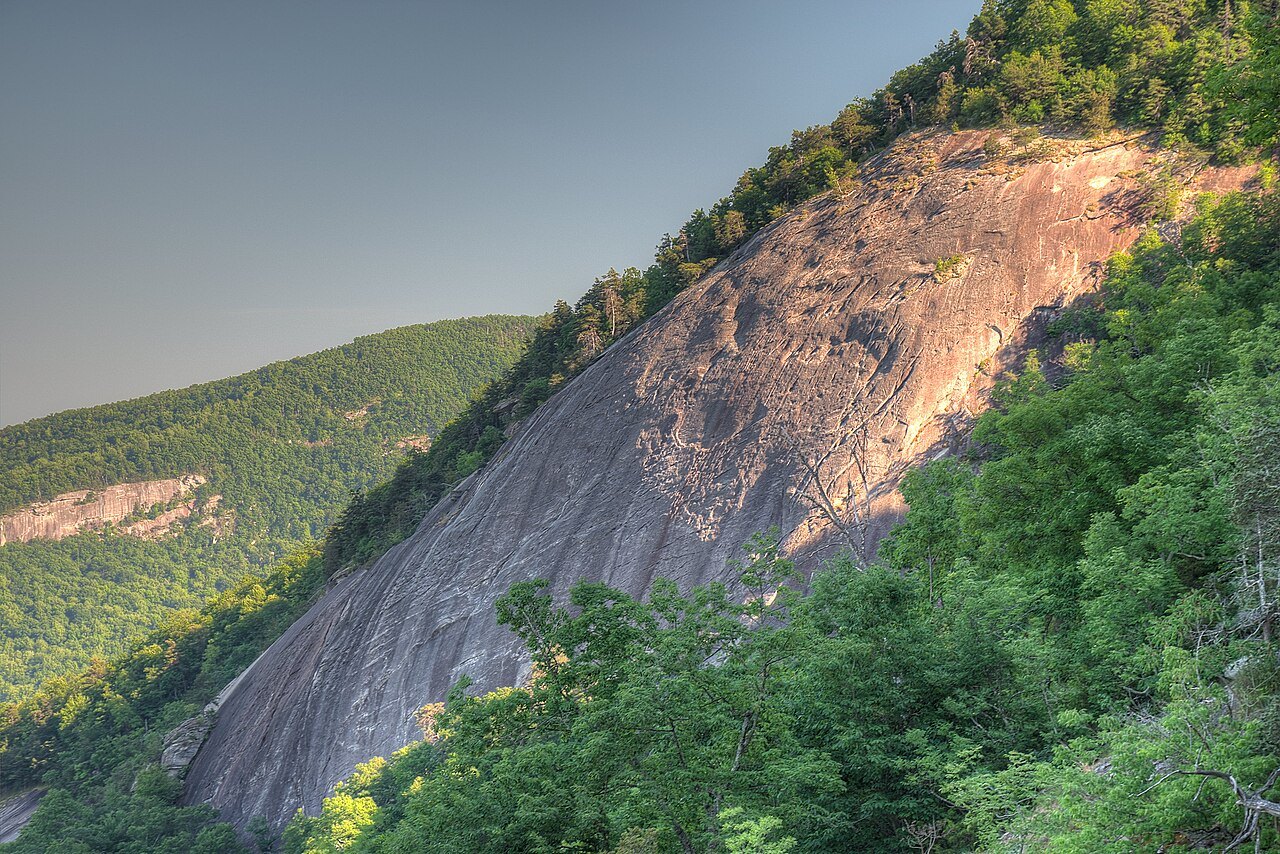
The same geology that makes the gorge dramatic, a narrow cut through solid Henderson Gneiss, left the floodwater nowhere to spread. It moved fast and carried debris, docks and boats down the valley and into Lake Lure itself. Communities built along the river's edge, including the village of Chimney Rock near the park's entrance, took the brunt of the damage.
Chimney Rock was counted among the most severely damaged towns in North Carolina after the storm. Rescue crews estimated that the flood destroyed about half of the village, a cluster of shops and buildings that sits at the head of the gorge, close to the state park's gate.
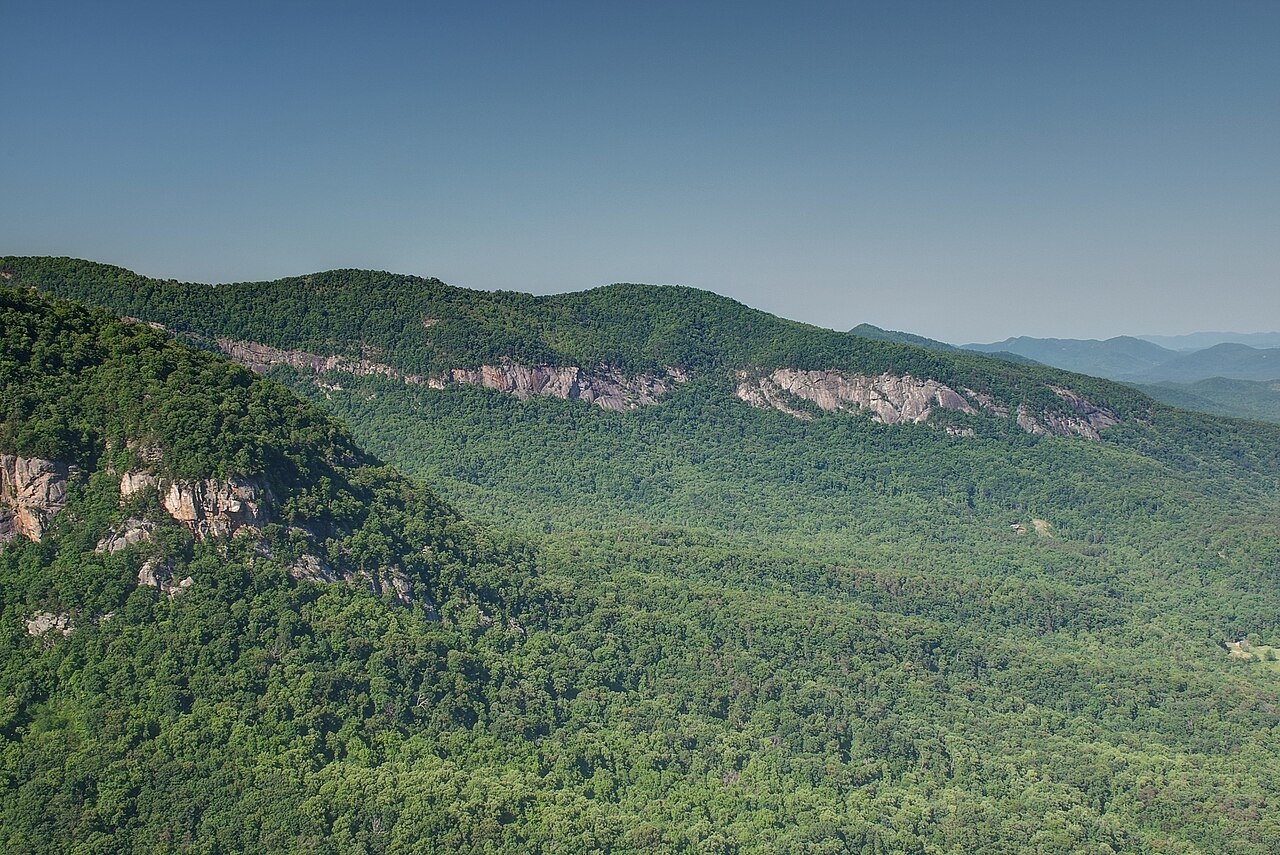
The village of Chimney Rock
The hamlet of Chimney Rock grew up at the mouth of the gorge, where US 64 meets the Rocky Broad River on its way between Hendersonville and Forest City. It had long depended on visitors headed into the park and on toward Lake Lure, and the flood struck that narrow commercial strip directly.
Because recovery has continued in stages since the storm, visitors should check current conditions with the town and with the state transportation department's travel information service before planning a stop in the village. Road work on US 64 into the gorge has been part of the recovery, so allow extra time on the drive in from either Hendersonville or Forest City.
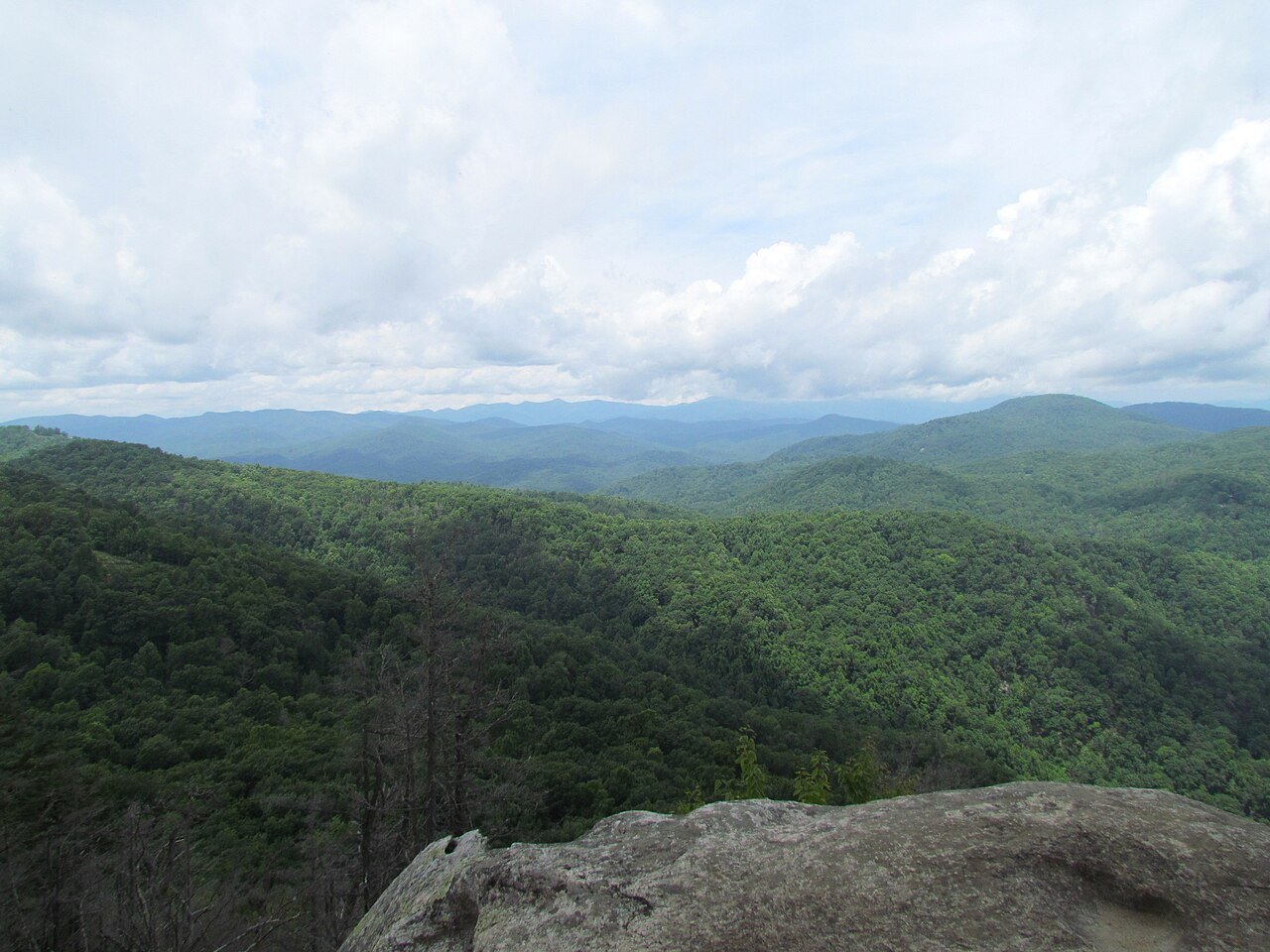
Many visitors combine a stop at the village with the state park itself or with time at Lake Lure down the valley. The relationship runs both ways: the park and the lake draw the travelers the village's shops and restaurants depend on, which is why tourism has been part of the valley's recovery effort.
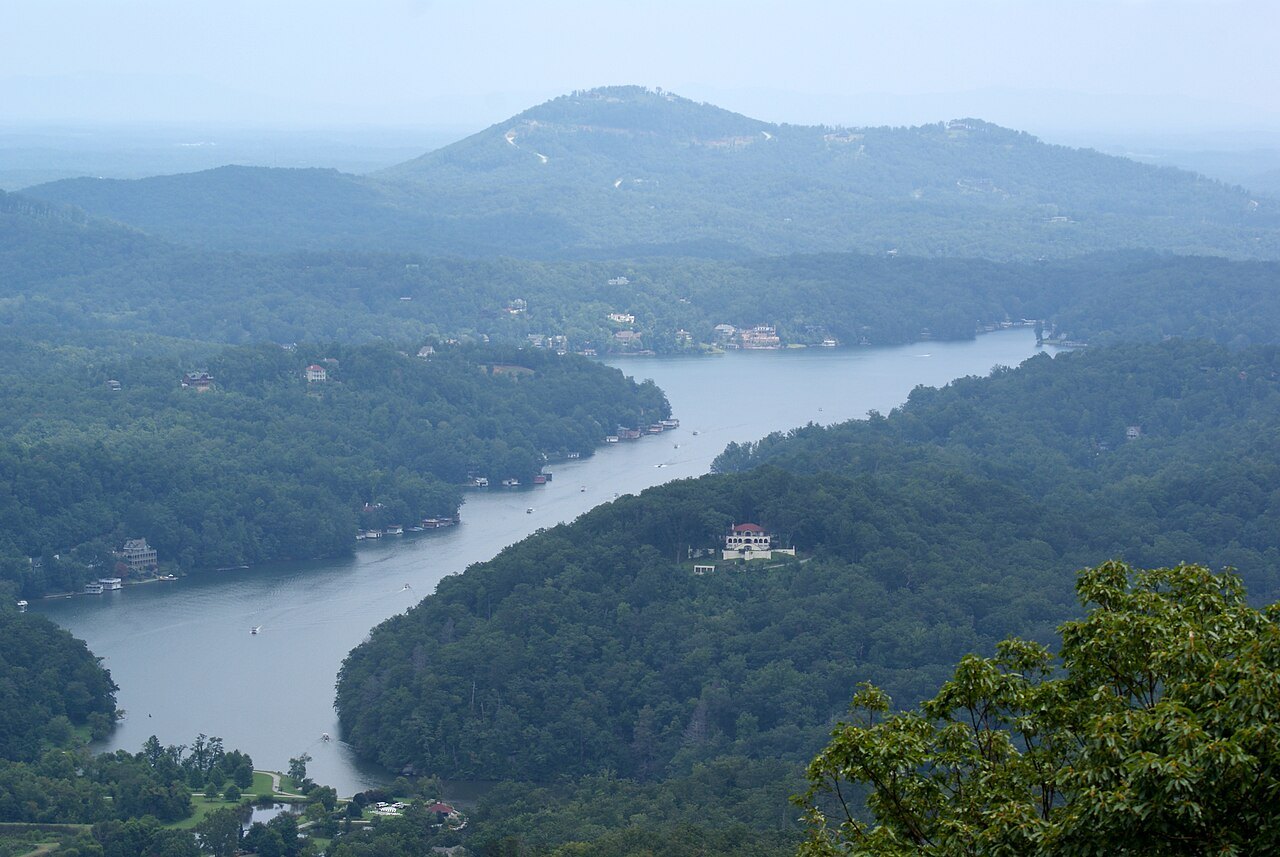
Lake Lure
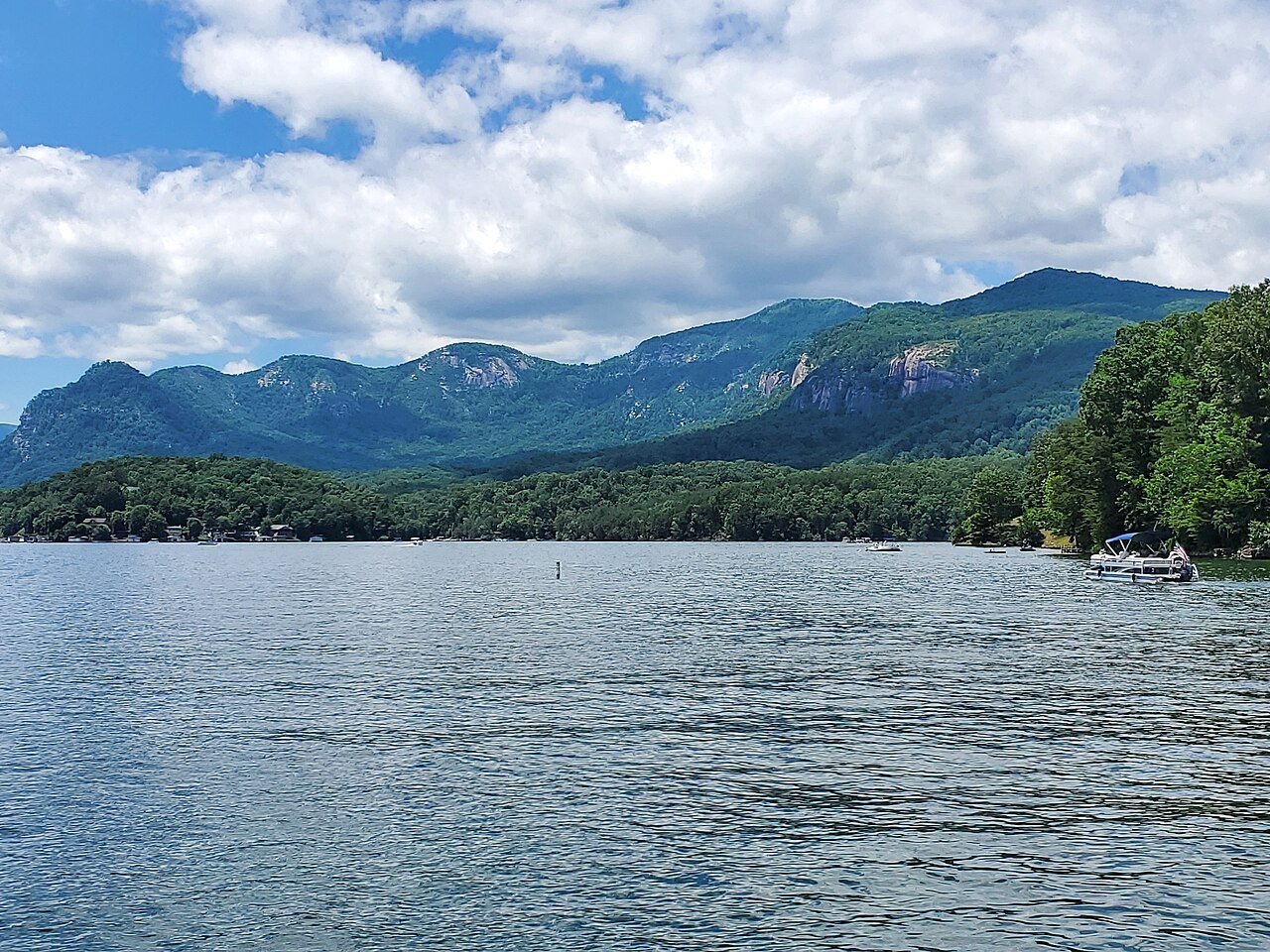
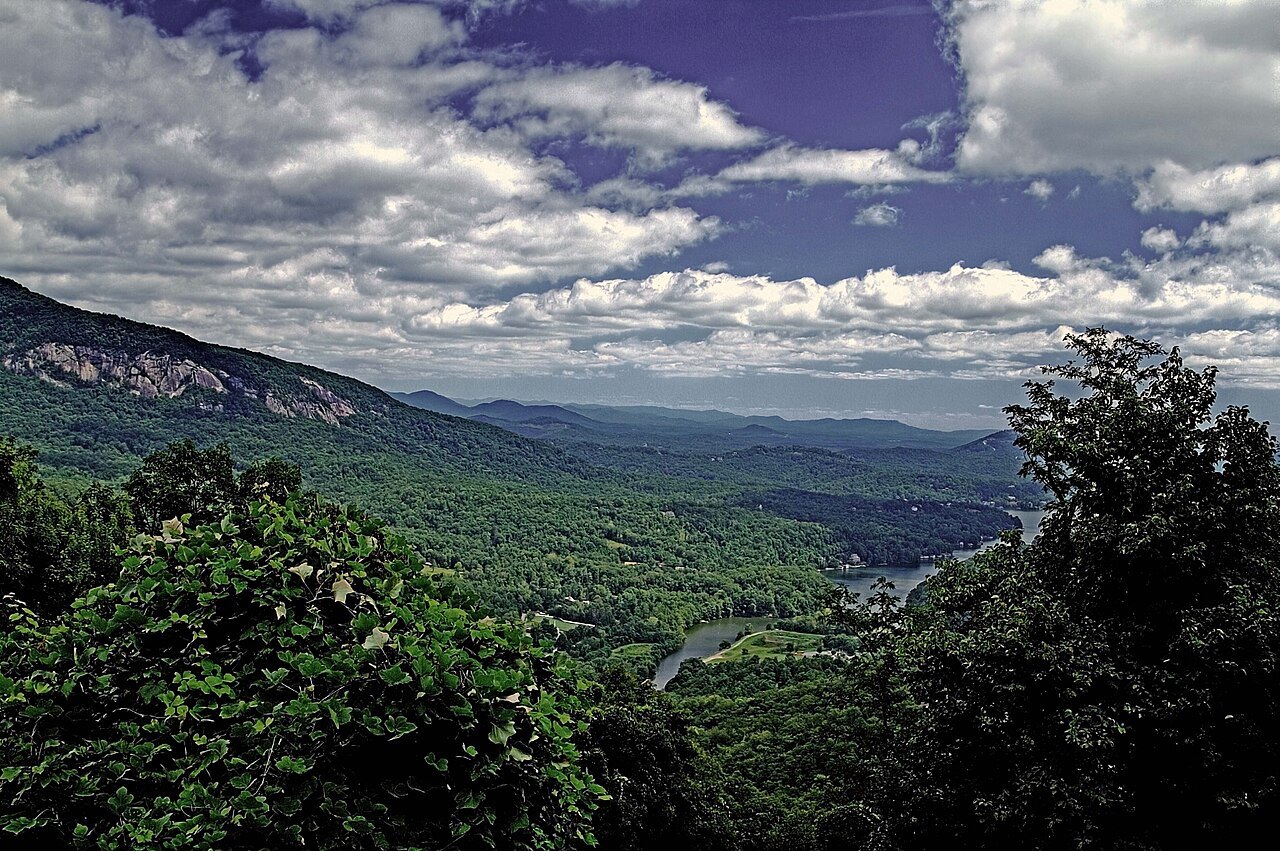
Lake Lure sits downstream from Chimney Rock, a roughly 720-acre lake impounded in 1927 behind a dam the Morse family's power company built on the Broad River in 1925. The town of Lake Lure, incorporated that same year, took its name from the lake and bought it outright in 1965.
Floodwater and debris carried down from upstream, including material from the Chimney Rock flood, moved into the lake during Helene, adding to the cleanup facing the town. About 1400 people live in Lake Lure year round, and its economy depends on the same visitor traffic that supports the village upstream.
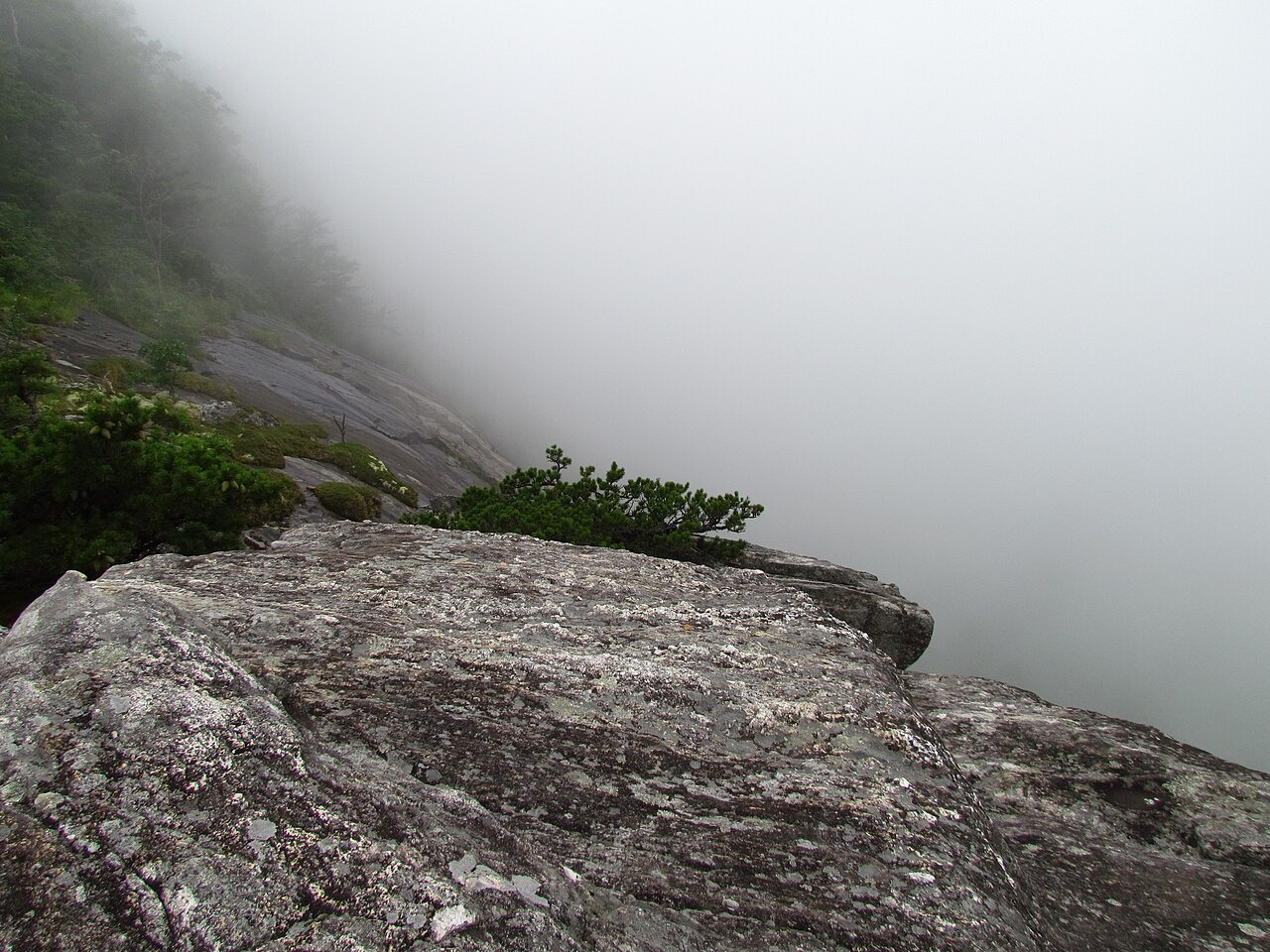
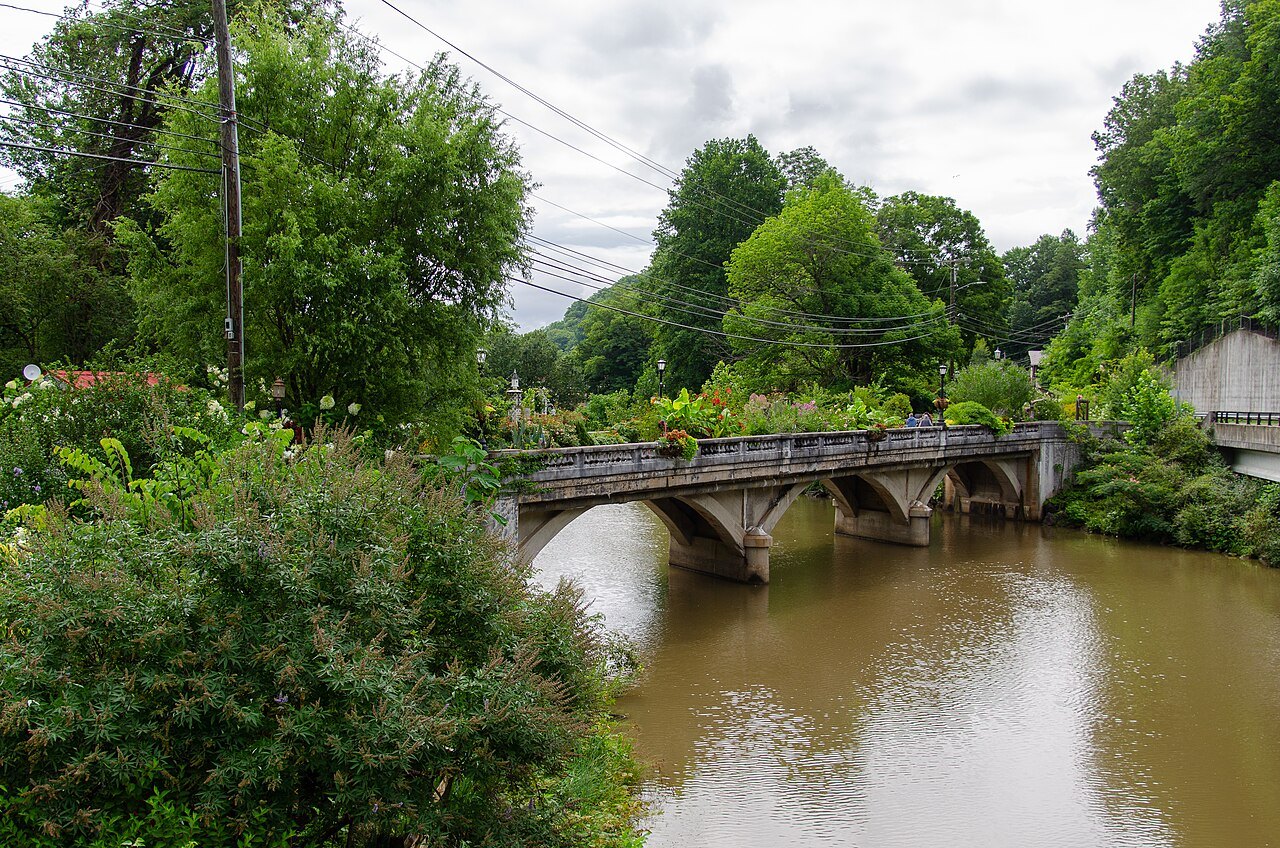
The Lake Lure Flowering Bridge, the 1925 span over the Rocky Broad River that was replanted as a garden bridge in 2013, sits in the same stretch of valley. Visitors should check with the town of Lake Lure or the bridge's own organization for current conditions before planning to walk it.
Helene was not the valley's first test in recent years. Lake Lure's tourism, on which the town depends, had already come through the Party Rock wildfire and the pandemic before the 2024 flood arrived, and the recovery since has drawn on patterns the town already knew from those earlier disruptions.
The state park's own damage
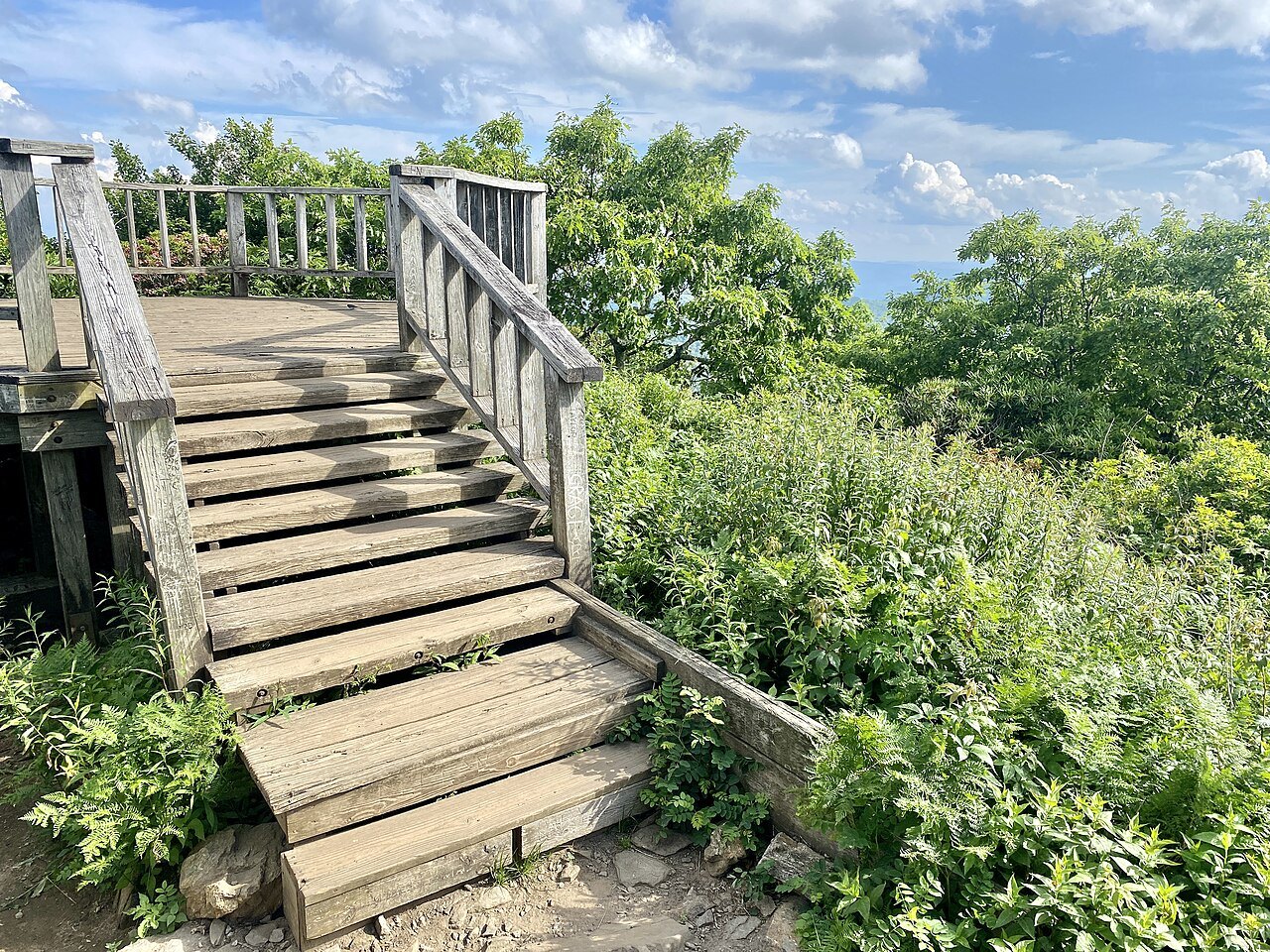
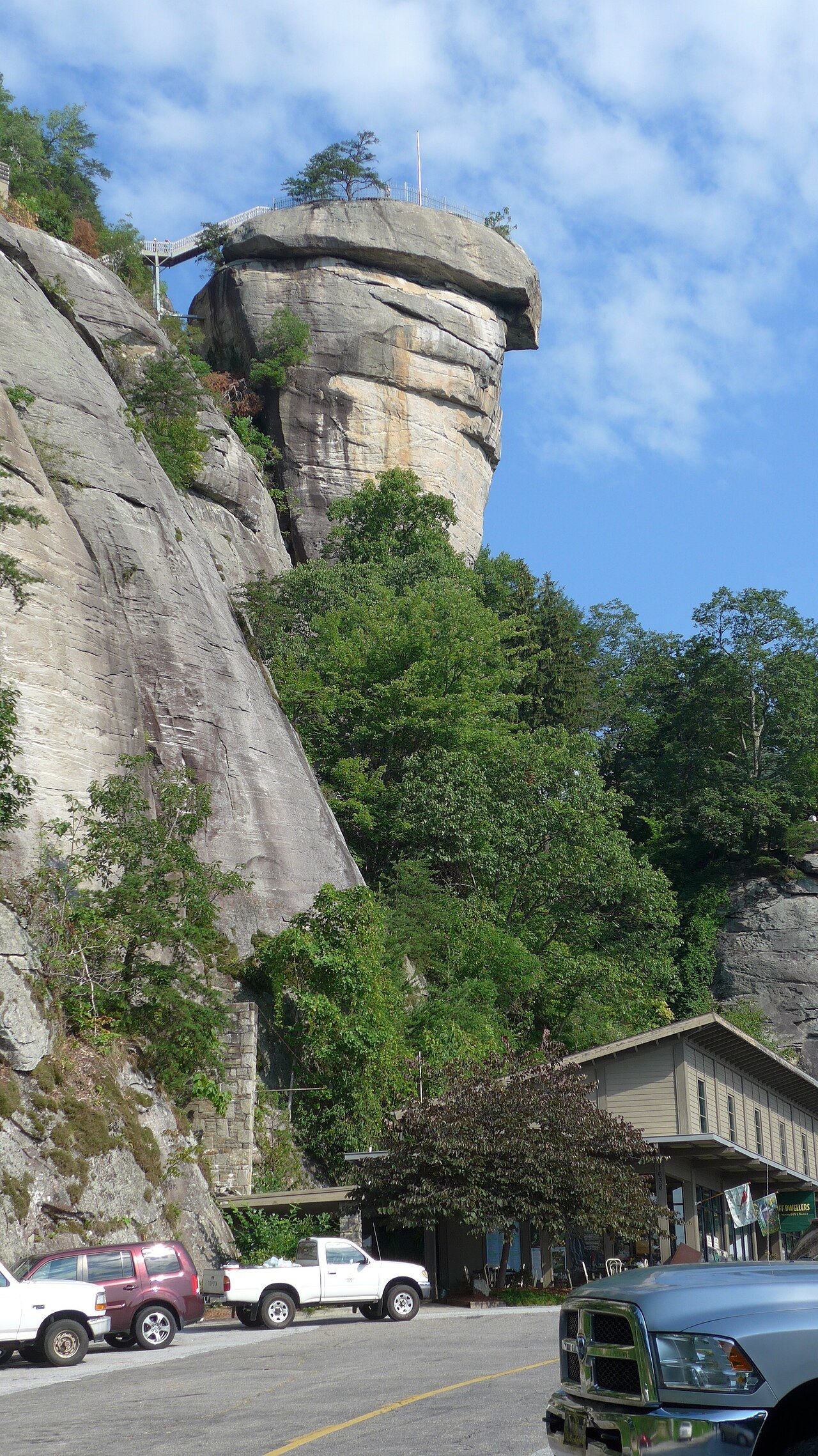
Chimney Rock State Park, a park of more than eight thousand acres that holds the Chimney, Hickory Nut Falls and the rugged World's Edge tract, lost its entire access bridge in the flood. The bridge had carried visitors from the park entrance across the Rocky Broad River to the base of the mountain and the elevator up toward the Chimney.
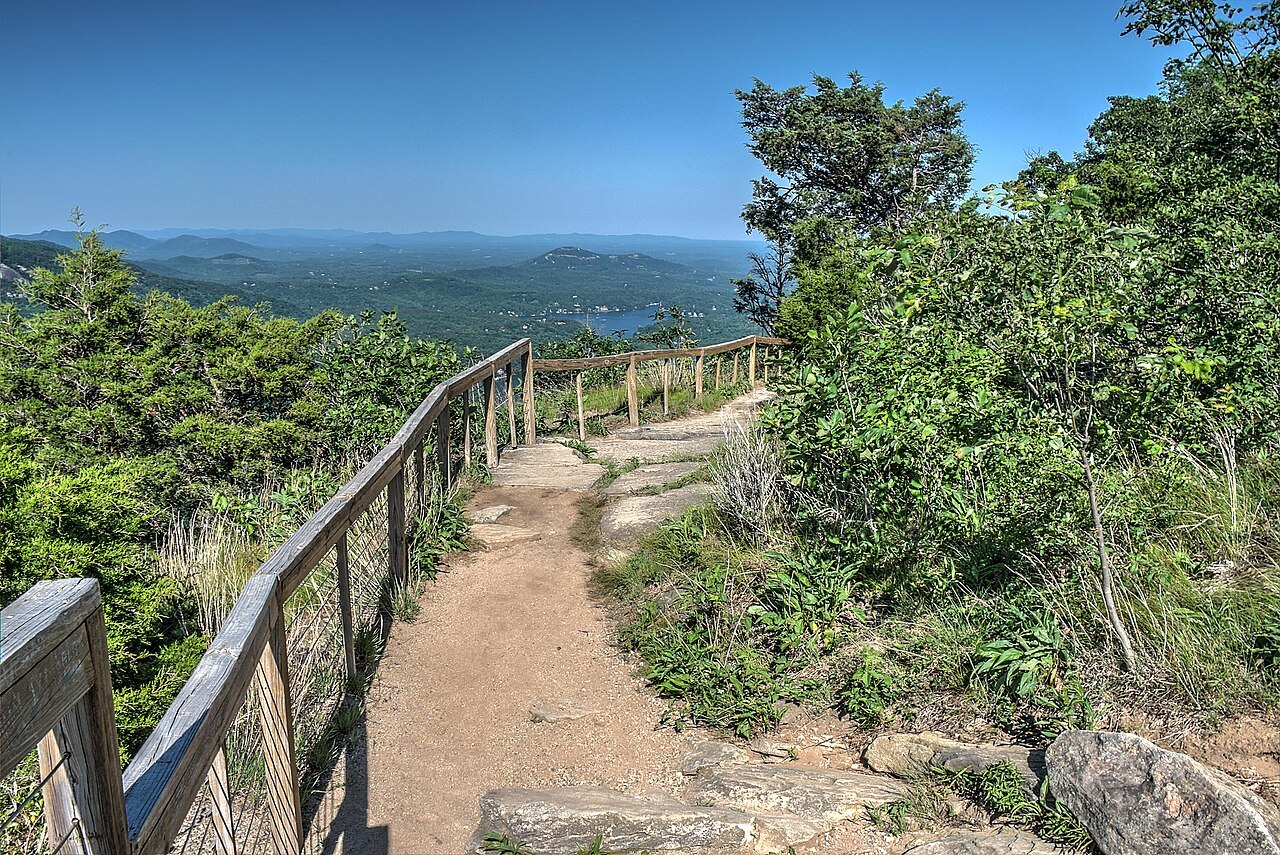
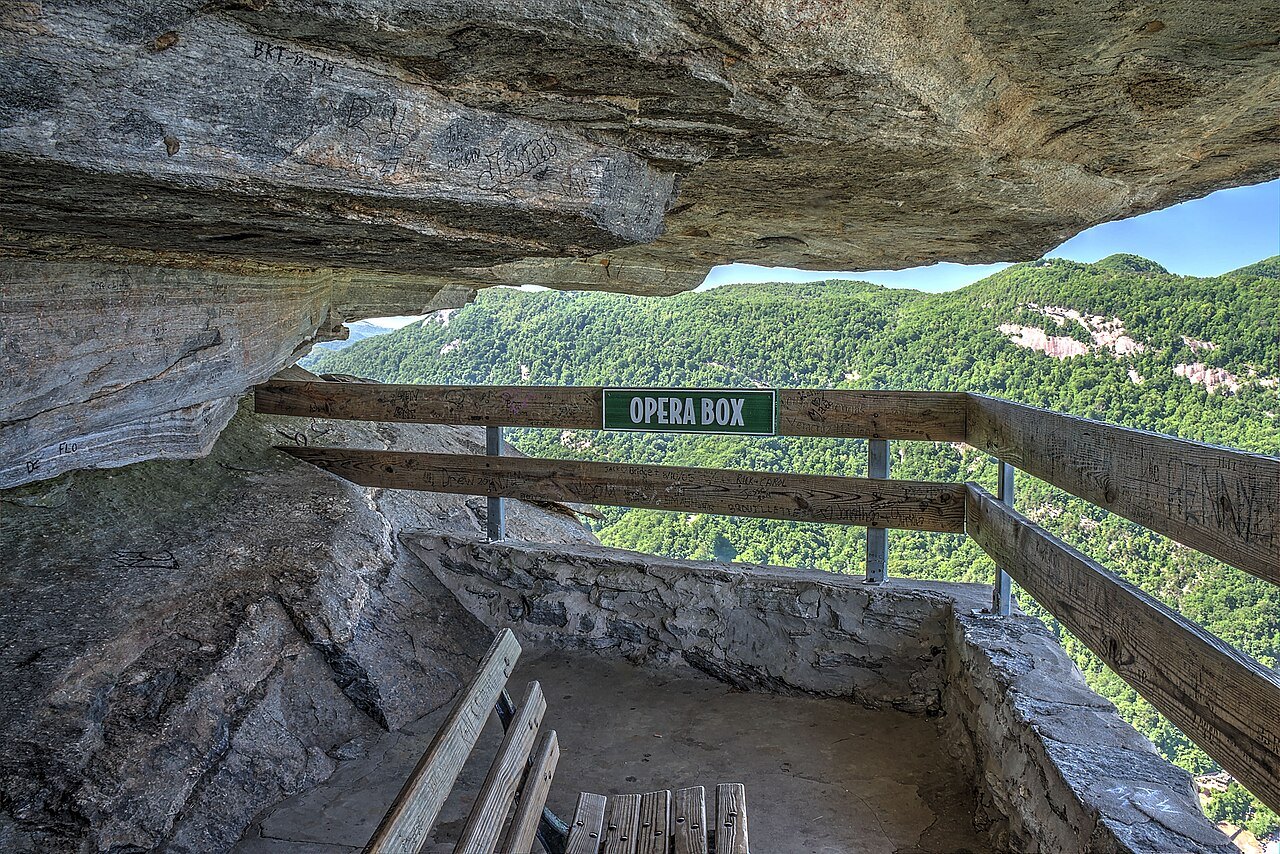
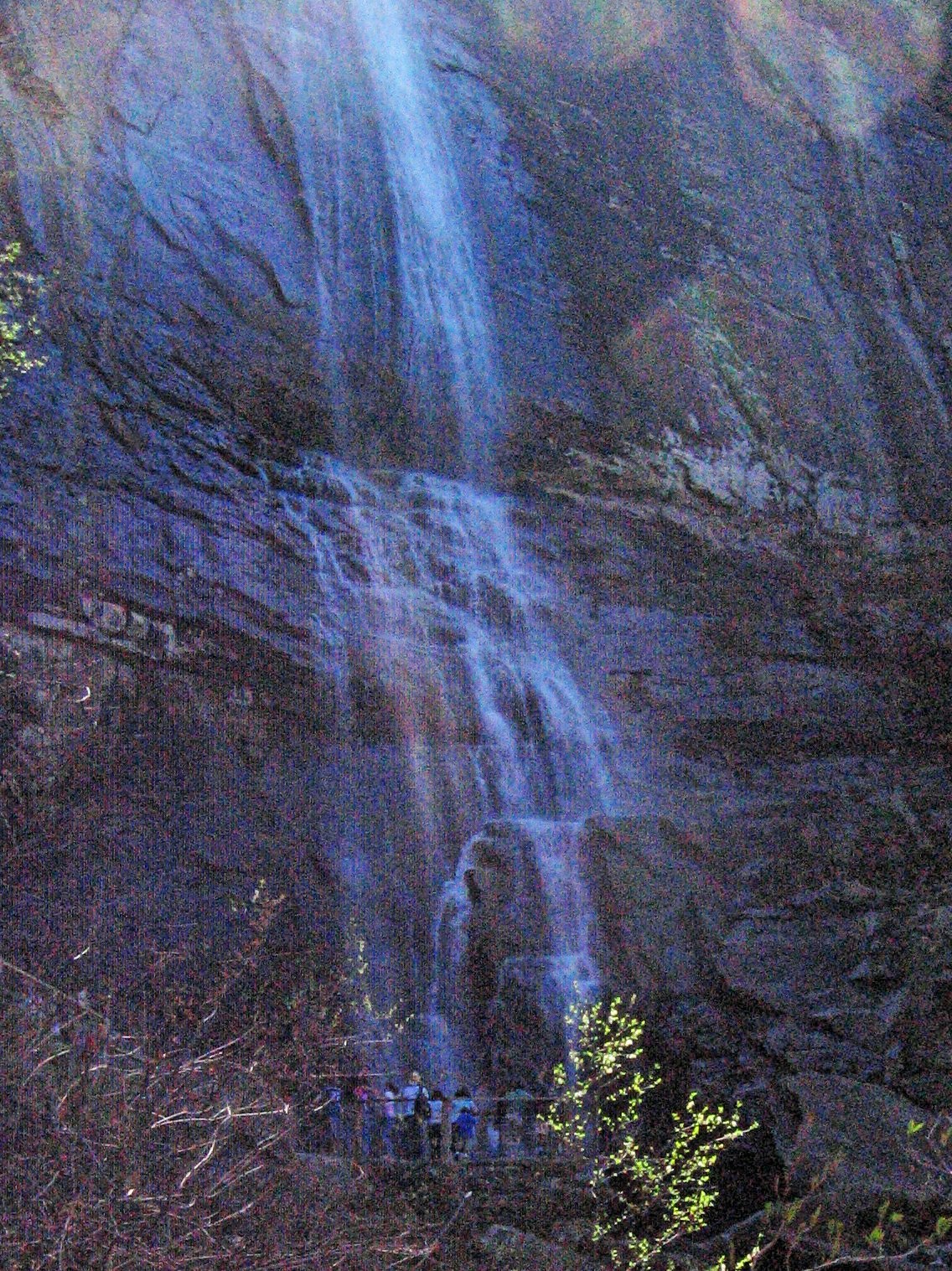
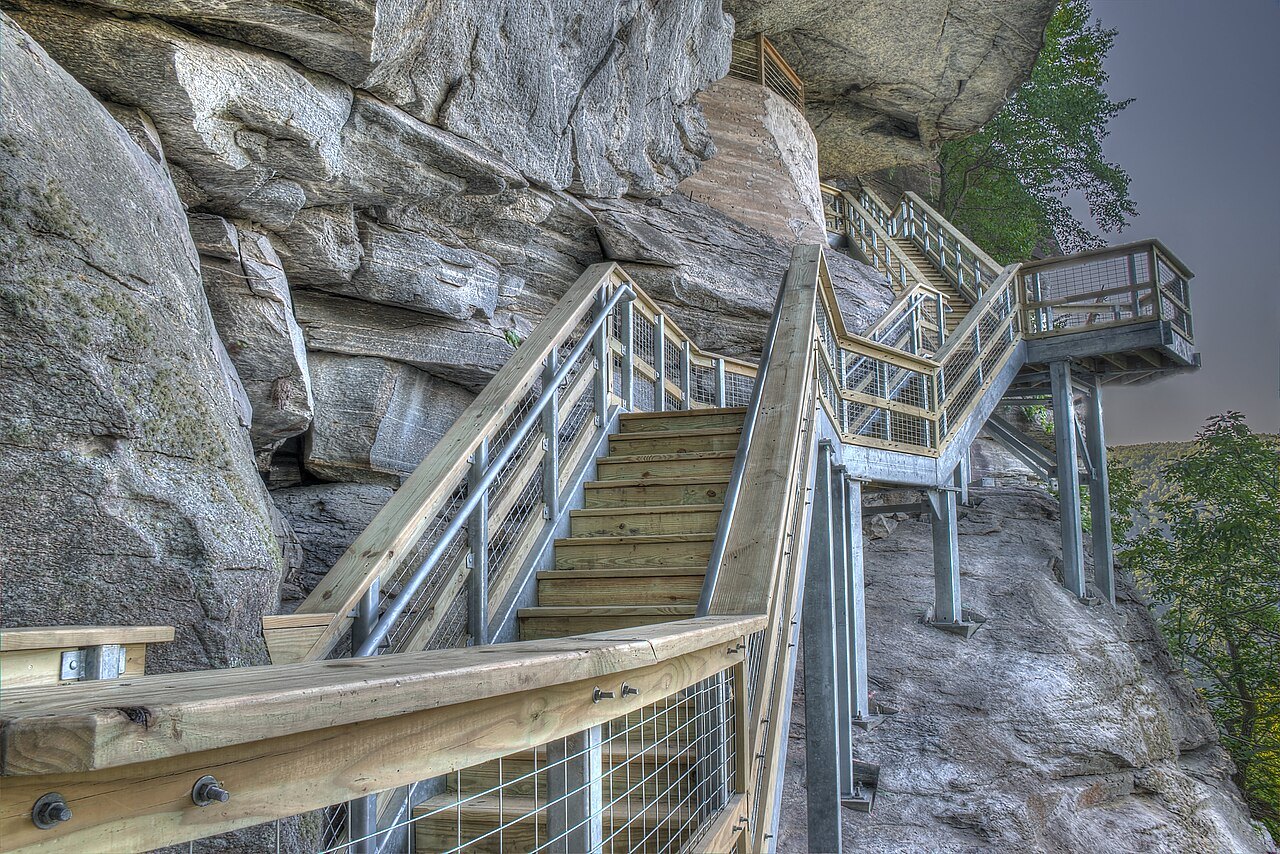
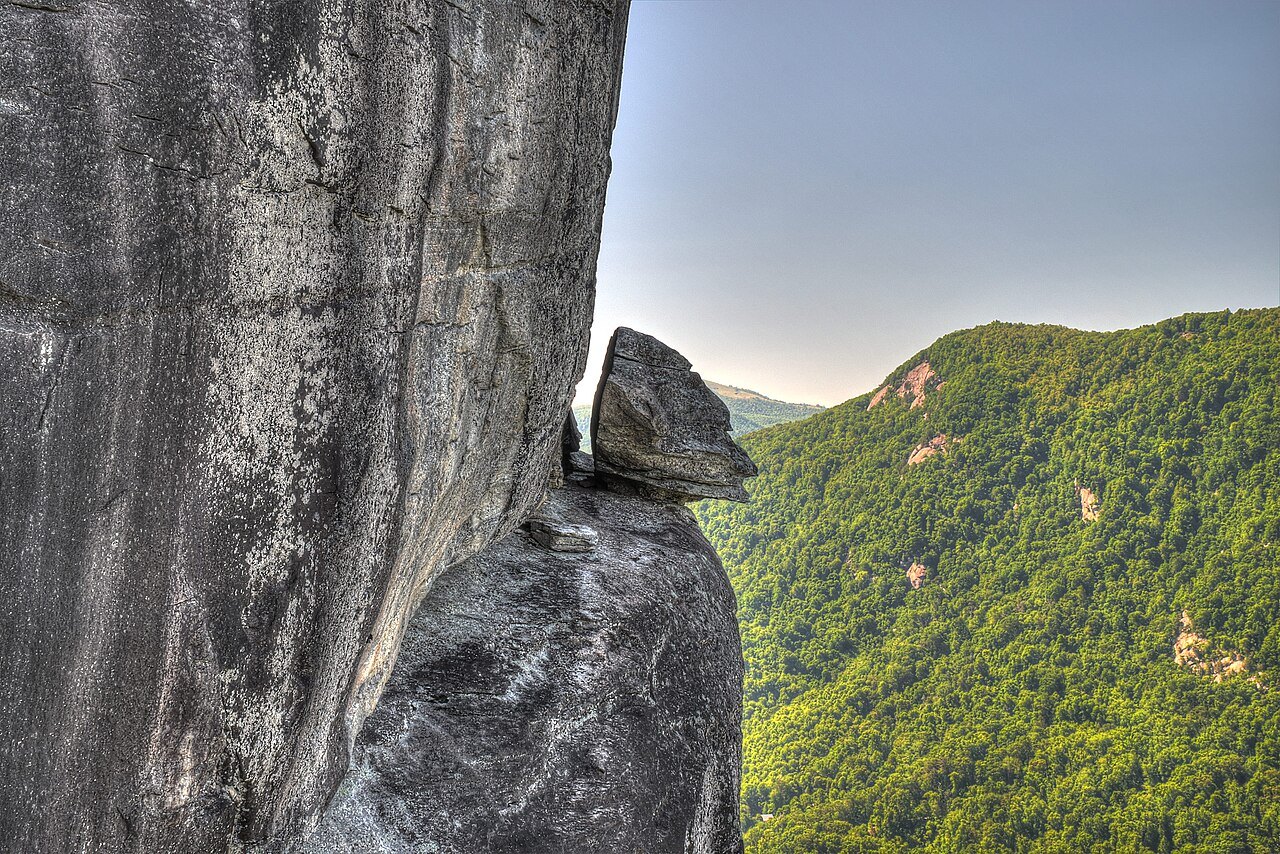
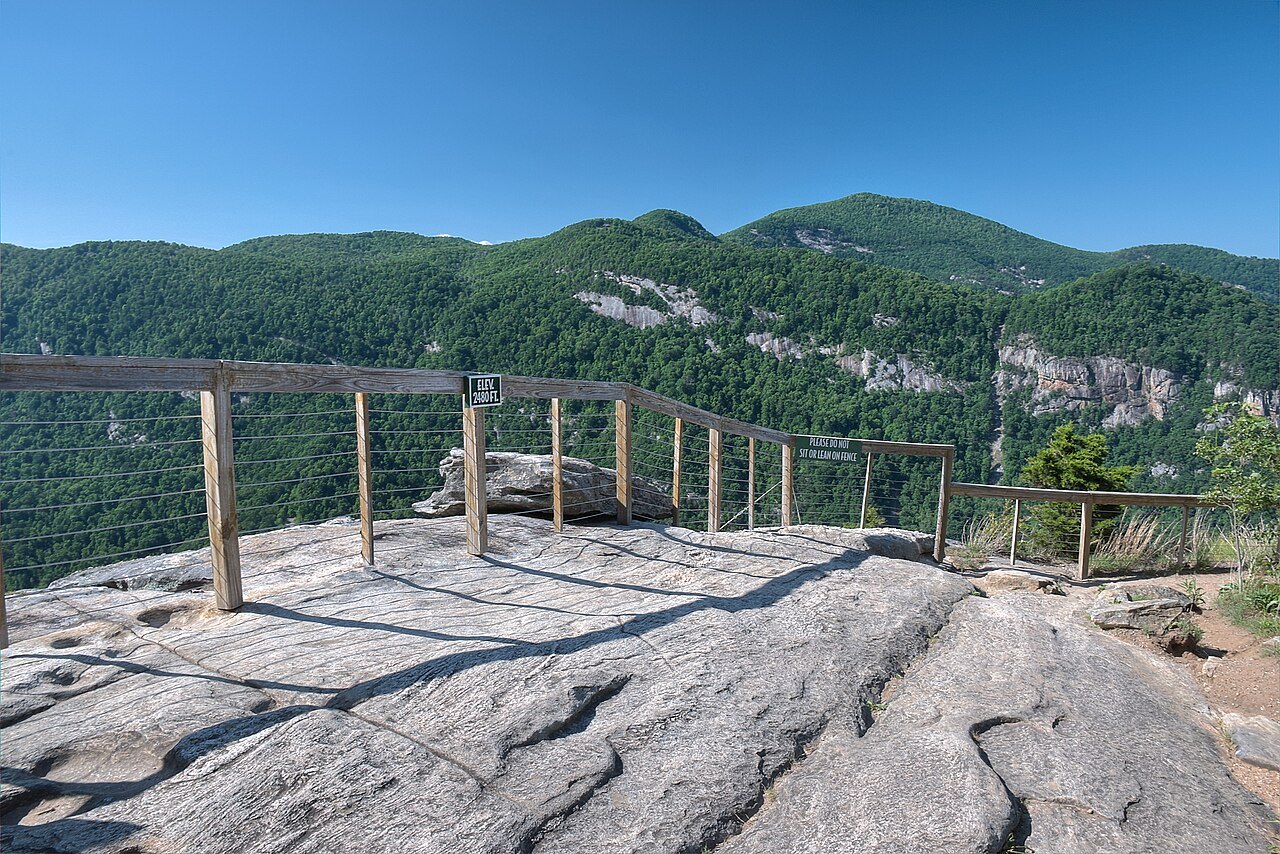
Facilities inside the park, including the elevator that carries visitors up toward the Chimney, the overlooks along the cliffs, and trails to the Devil's Head balancing rock, were affected to different degrees by the storm. Repair and recovery work inside the park has proceeded in stages rather than all at once, following the scale of the damage.
World's Edge, the mile-long tract on the eastern edge of the Blue Ridge Escarpment with its streams, waterfalls and overlook toward the Piedmont, lies south of the lake and away from the main river corridor, though its trails and access also depend on the park's broader recovery work.
A valley known before the storm
Chimney Rock Park began as a private venture in 1902, when Lucius B. Morse bought 64 acres on Chimney Rock Mountain, the Chimney and its cliffs included, from a state legislator and land speculator. The Morse family ran it as a private park for more than a century, until the state and the family agreed a purchase in 2007 and the legislature renamed it Chimney Rock State Park.
The gorge is cut into Henderson Gneiss, a hard, coarse-grained rock that breaks along a few joints into the smooth domed balds and large blocks that rim the valley. That same jointing left the Chimney standing apart from the cliff face and opened the fissure caves of the gorge, among them Bat Cave, which gave its name to the hamlet at the head of the valley.
The gorge also has a film history that predates the storm. Lake Lure was a main location for Dirty Dancing, and the final scenes of The Last of the Mohicans were filmed at Chimney Rock and across Hickory Nut Gorge. Rumbling Bald, the resort and climbing area across the gorge above the lake, is part of the same stretch of valley.
That history helps explain why recovery has mattered so much to the valley: a century of private stewardship, then two decades as a state park, built a visitor economy that the village, the lake and the park all depend on, and that Helene disrupted in a single storm.
How to visit
US 64 runs past the park between Hendersonville and Forest City, and the stretch centered on Bat Cave is a designated scenic byway, the Black Mountain Rag. Because Helene reshaped the valley, drivers should check the state transportation department's travel information service before setting out, for any ongoing road work on the approach to Chimney Rock.
For the state park itself, check North Carolina State Parks' own page for Chimney Rock before a visit, to see which trails, overlooks and facilities, including the elevator and the paths to the Devil's Head and Hickory Nut Falls, are available on the day planned. Repair work has proceeded in stages, so a plan built around an older guide may not match conditions on the ground.
For the village of Chimney Rock and for the town of Lake Lure, check directly with the town offices or with individual businesses for current hours and services, since recovery has continued unevenly across the valley in the time since the storm, and conditions can differ from one block to the next.
Many visitors combine the park and the lake with a wider loop, pairing Hickory Nut Gorge with Asheville and Biltmore to the west; Where to Stay covers lodging options near the gorge and along the routes in. Planning a flexible day, with a backup if a trail or overlook is unavailable, suits a valley still working through repairs.