THE COAST · NEW BERN
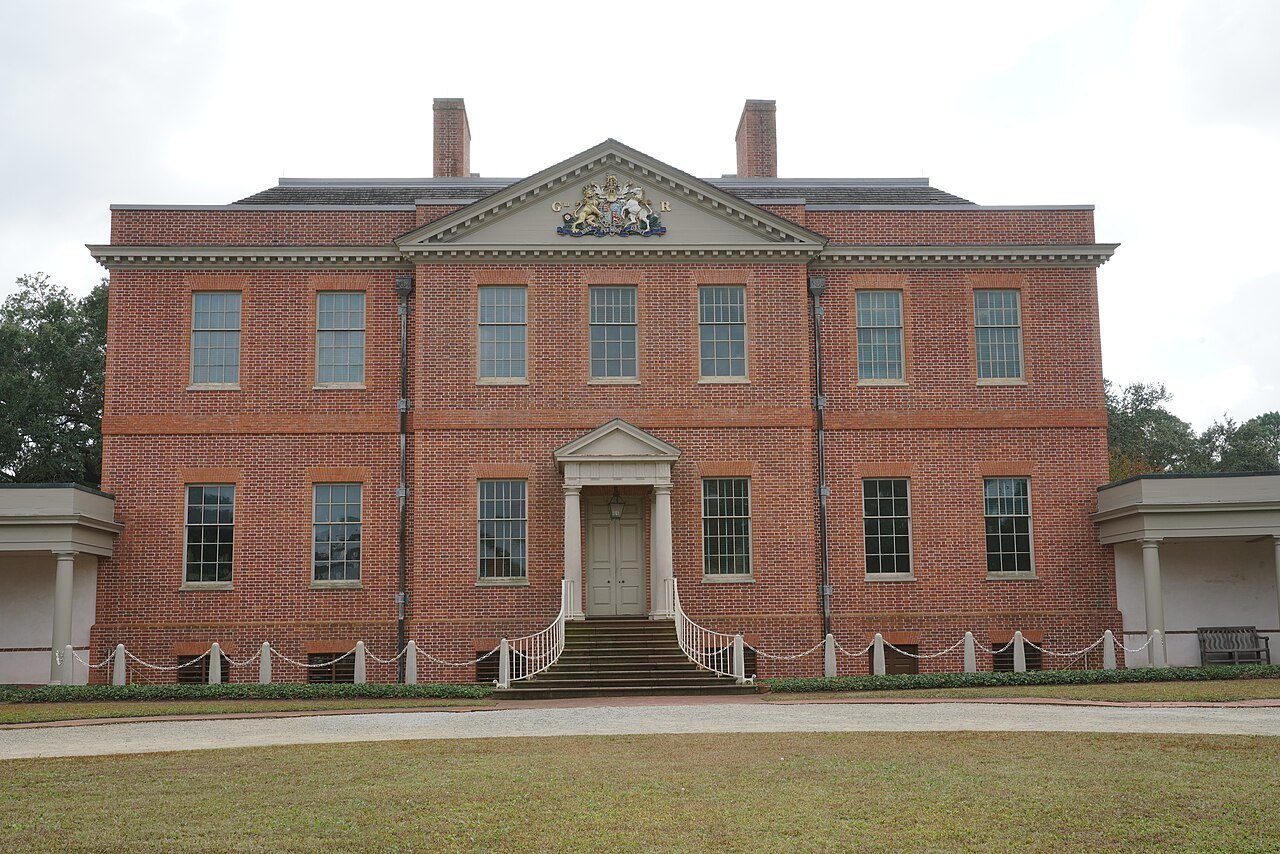
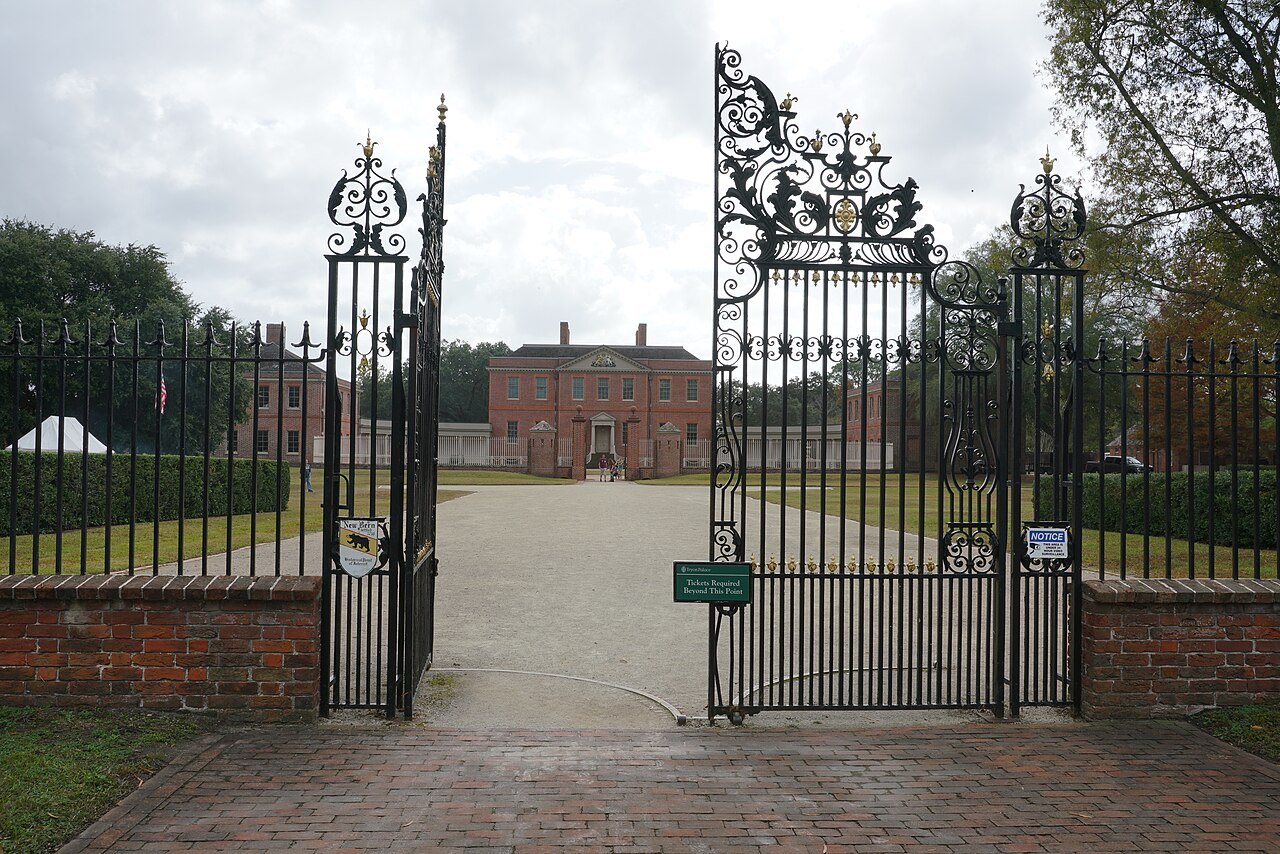
Tryon Palace, the governor's house at New Bern
Photographs: jjmusgrove, Wikimedia Commons, CC BY 2.0 · jjmusgrove, Wikimedia Commons, CC BY 2.0 · jjmusgrove, Wikimedia Commons, CC BY 2.0
The Coast · landmark 20 of 21
The brick mansion of the British governors of North Carolina, finished in 1770, burned in 1798 and rebuilt on its own foundations from the architect's plans in the 1950s, with sixteen acres of gardens on the Trent River and a history center beside it.
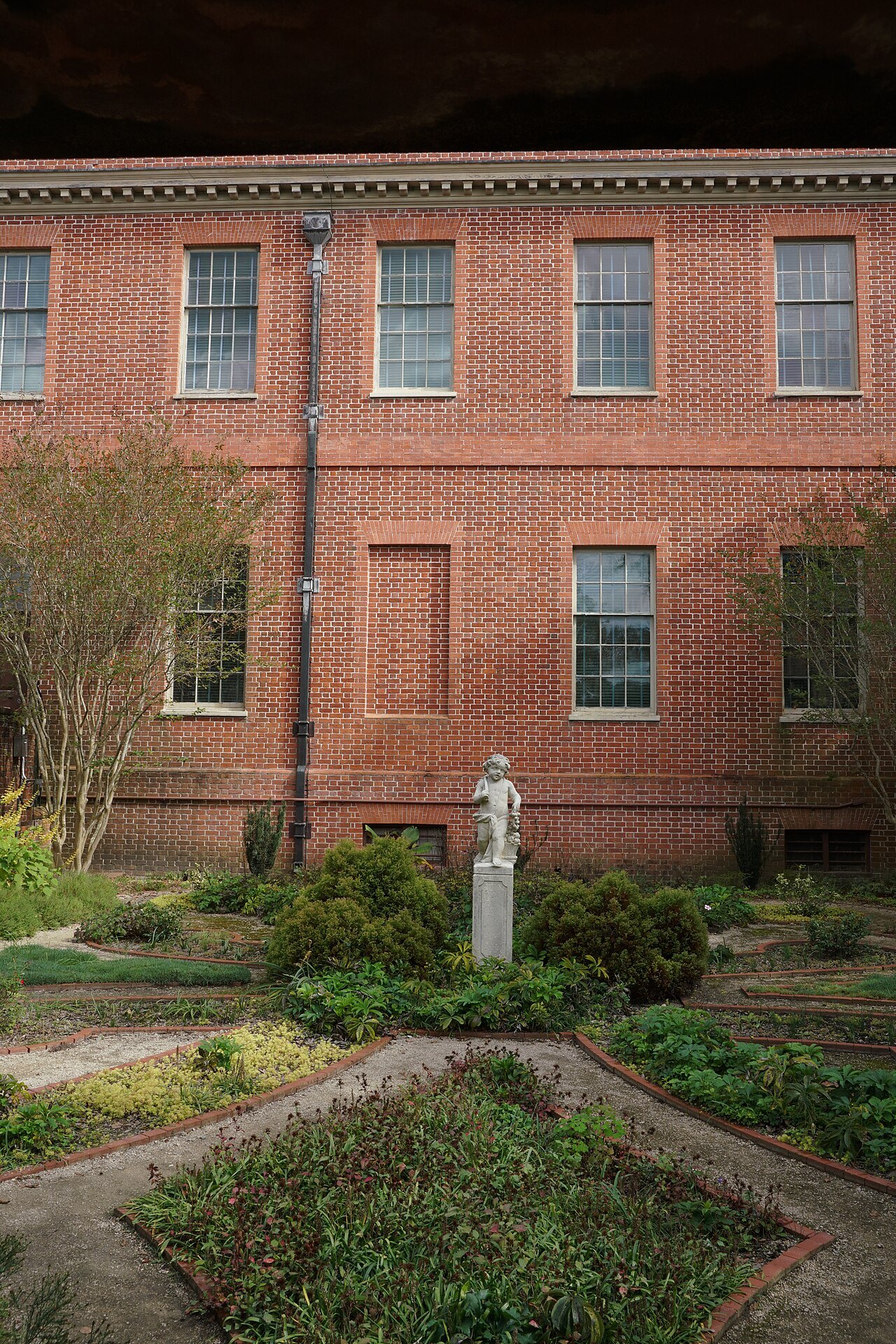
- The PalaceThe two-story brick governor's house of John Hawks, rebuilt from his original plans and opened in 1959.
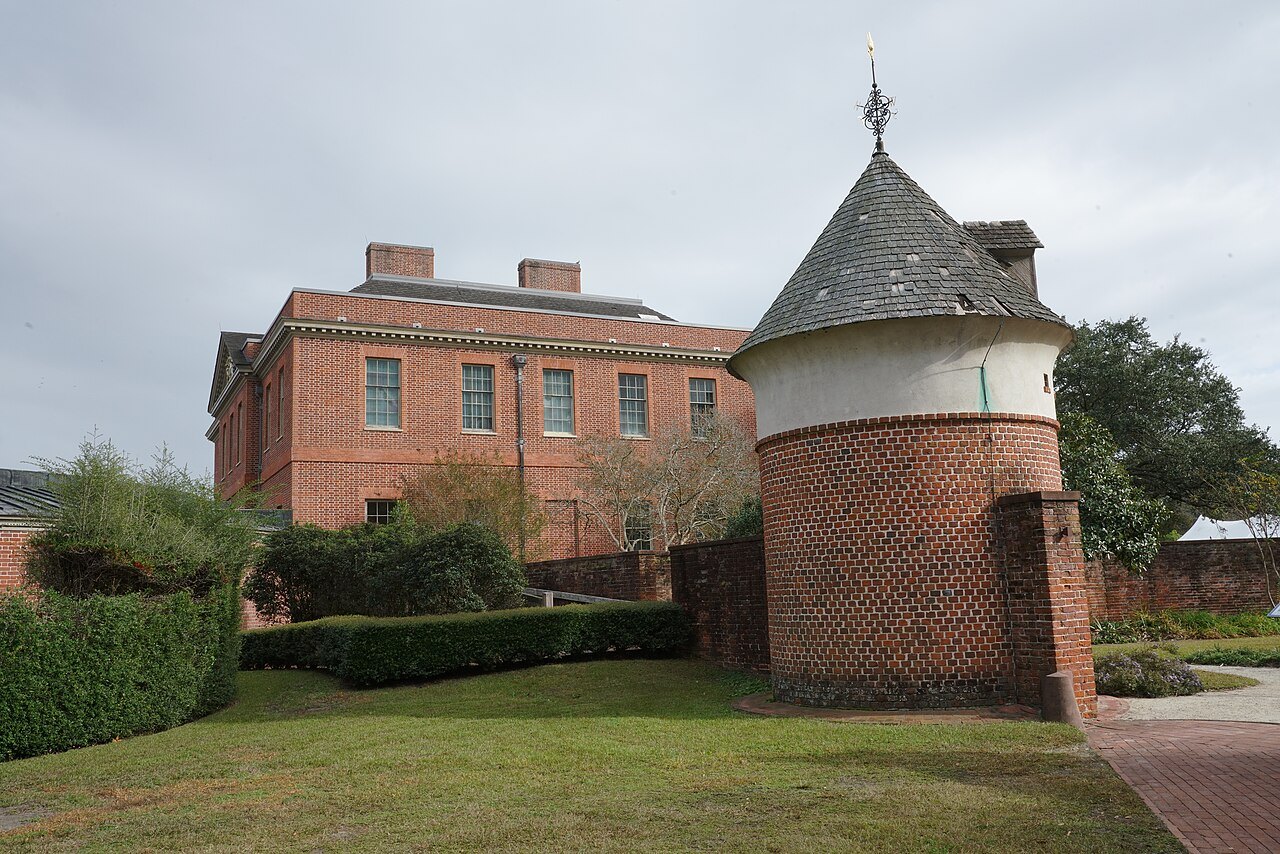
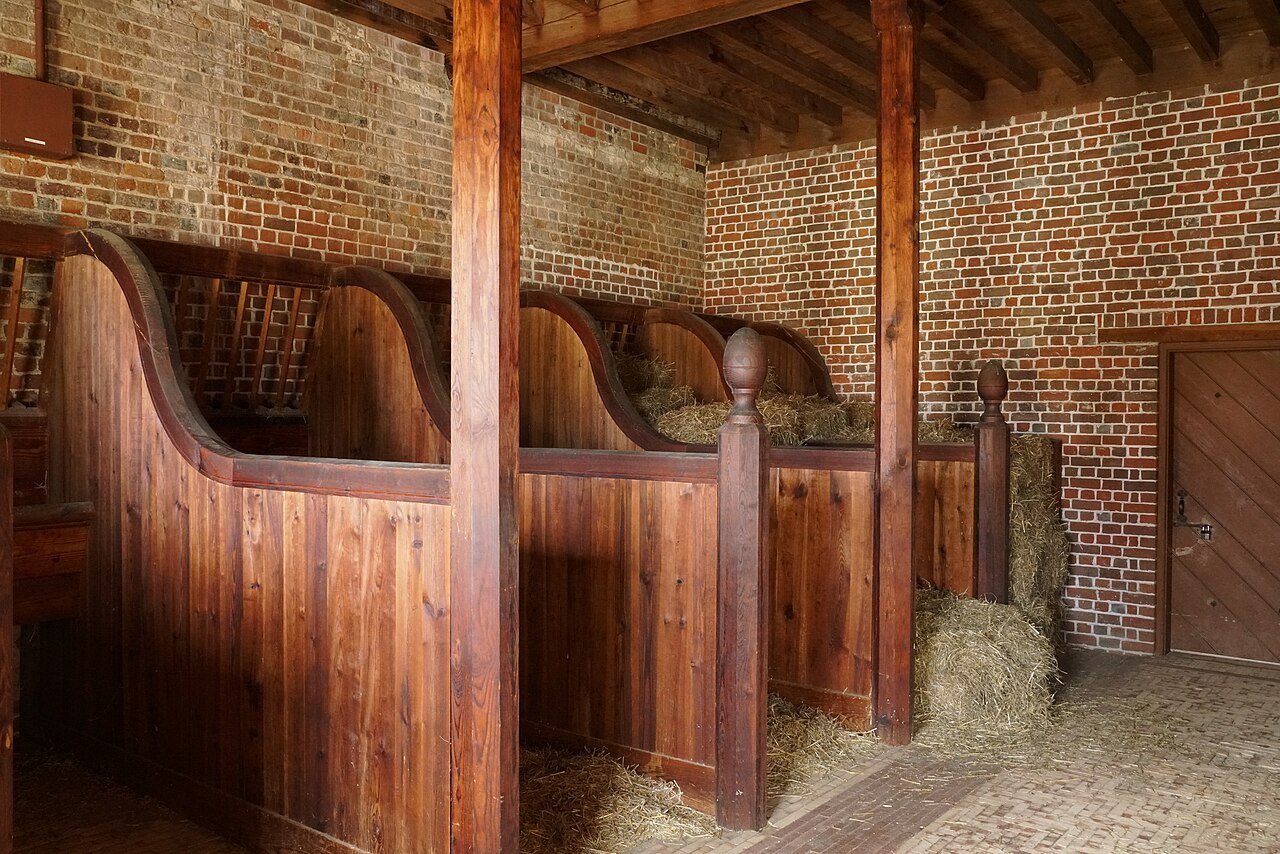
- The Stable OfficesThe only original building left on the site, saved from the fire of 1798.
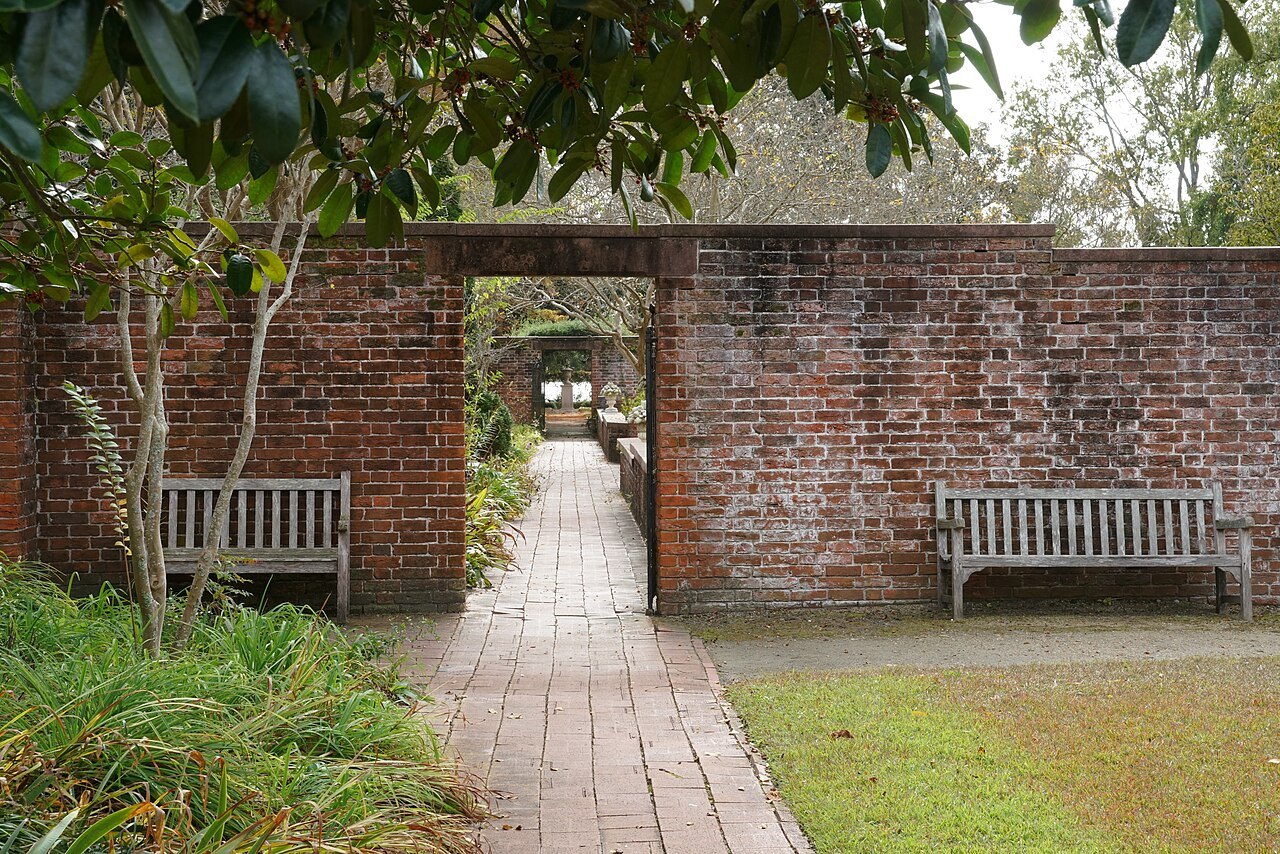
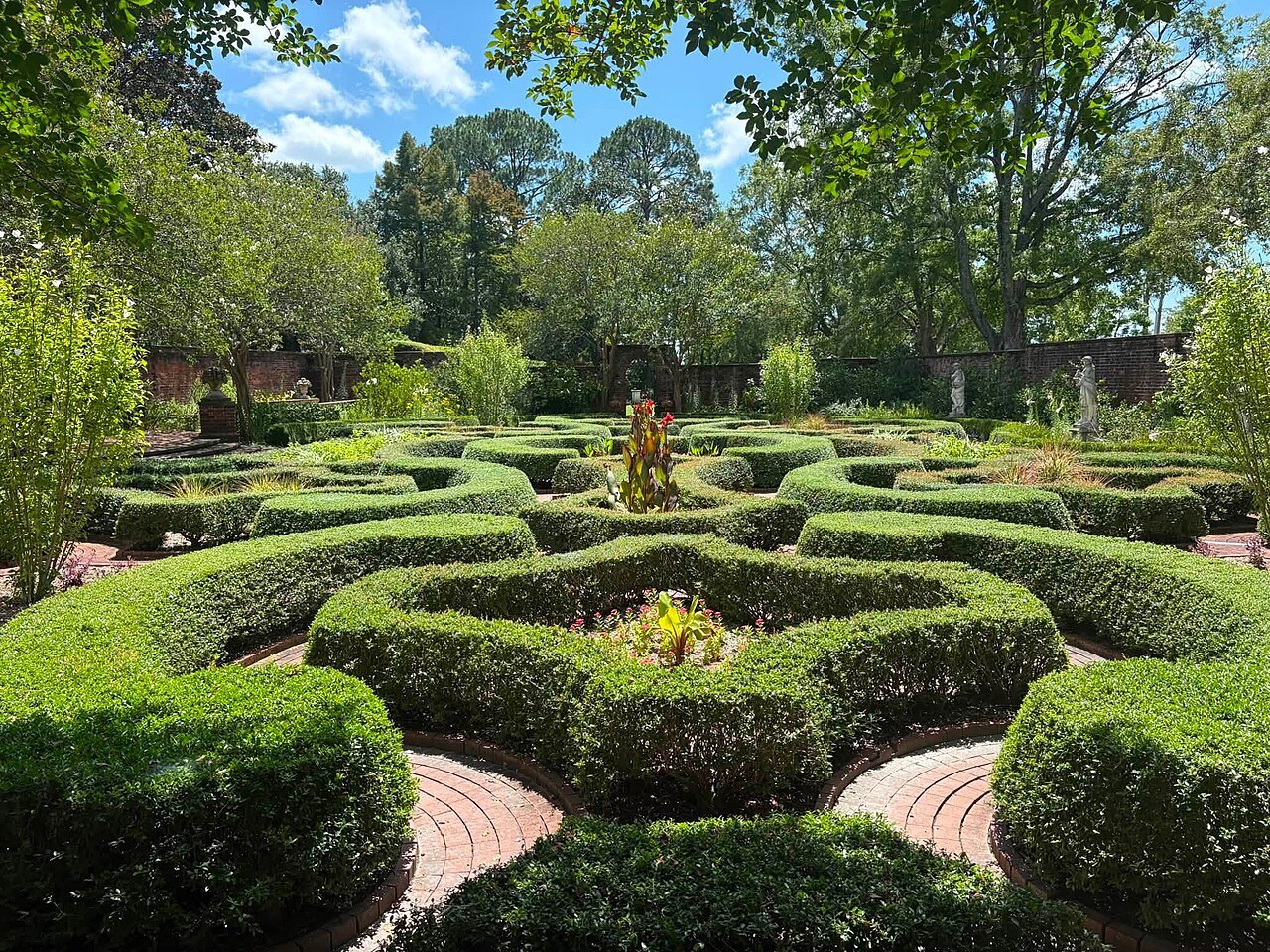
- The gardensSixteen acres spanning three centuries of gardening, from a wilderness garden of native plants to Victorian beds.
- The North Carolina History CenterA green building of 2010 on the river, with an interactive family museum set in 1835.
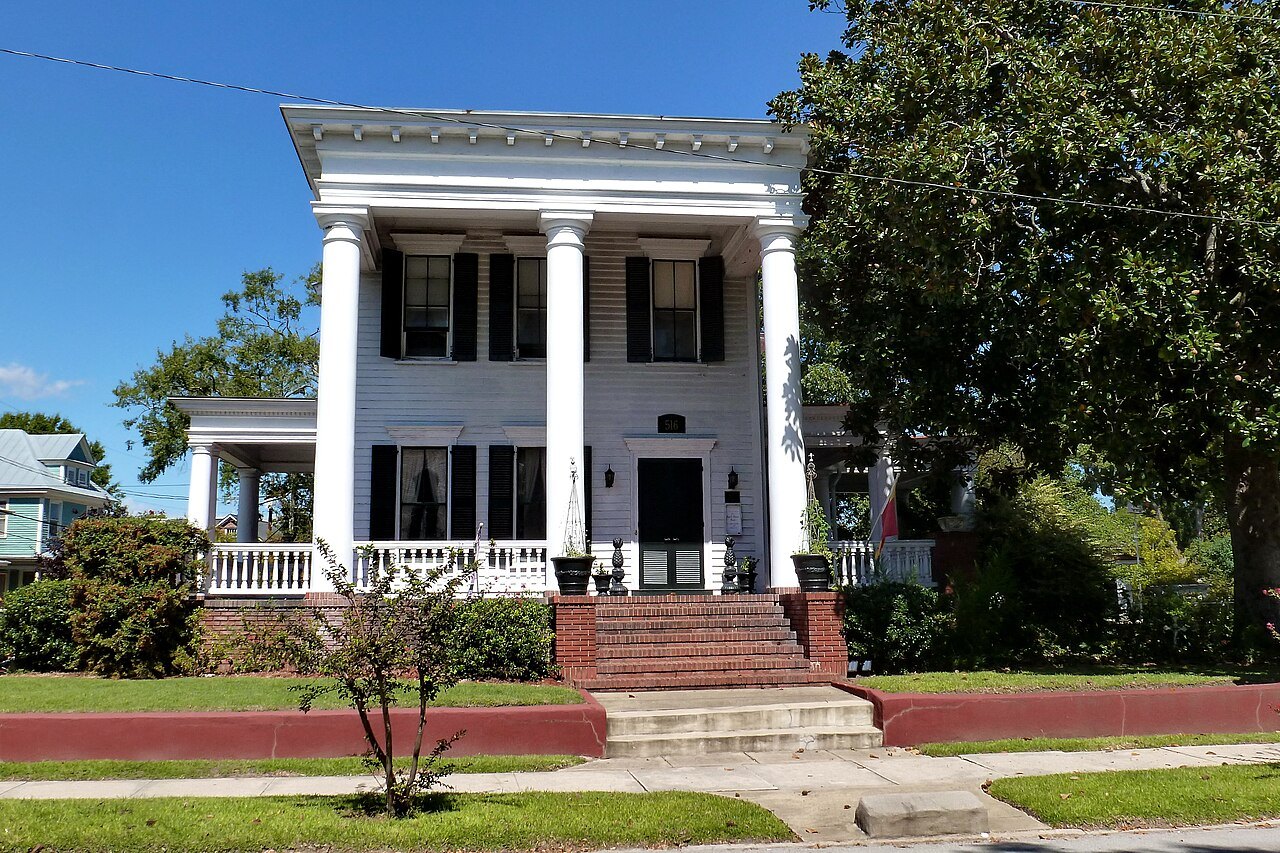
- The John Wright Stanly HouseA fine Georgian house, home to a family prominent from the Revolution to the Civil War.
- The New Bern AcademyThe first school in North Carolina established by law, in 1766, in a building of 1806 to 1809.
Why it matters
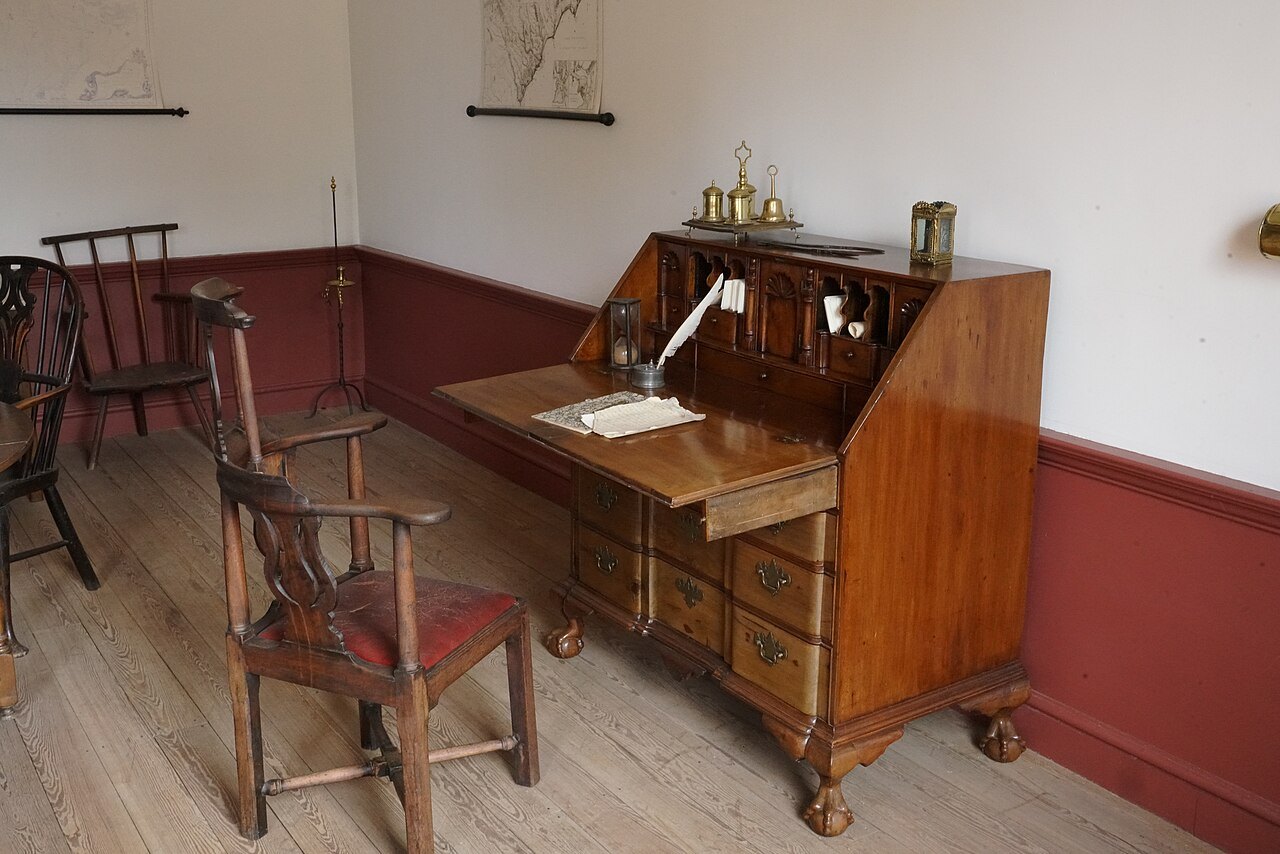
Tryon Palace, also called the Governor's House, stands on the Trent River in the eastern part of New Bern. The original, finished in 1770 to the design of the architect John Hawks, was the residence and office of the British governors of North Carolina, then the seat of the new state's government, and was called at the time "a monument of opulence and elegance extraordinary in the American colonies".
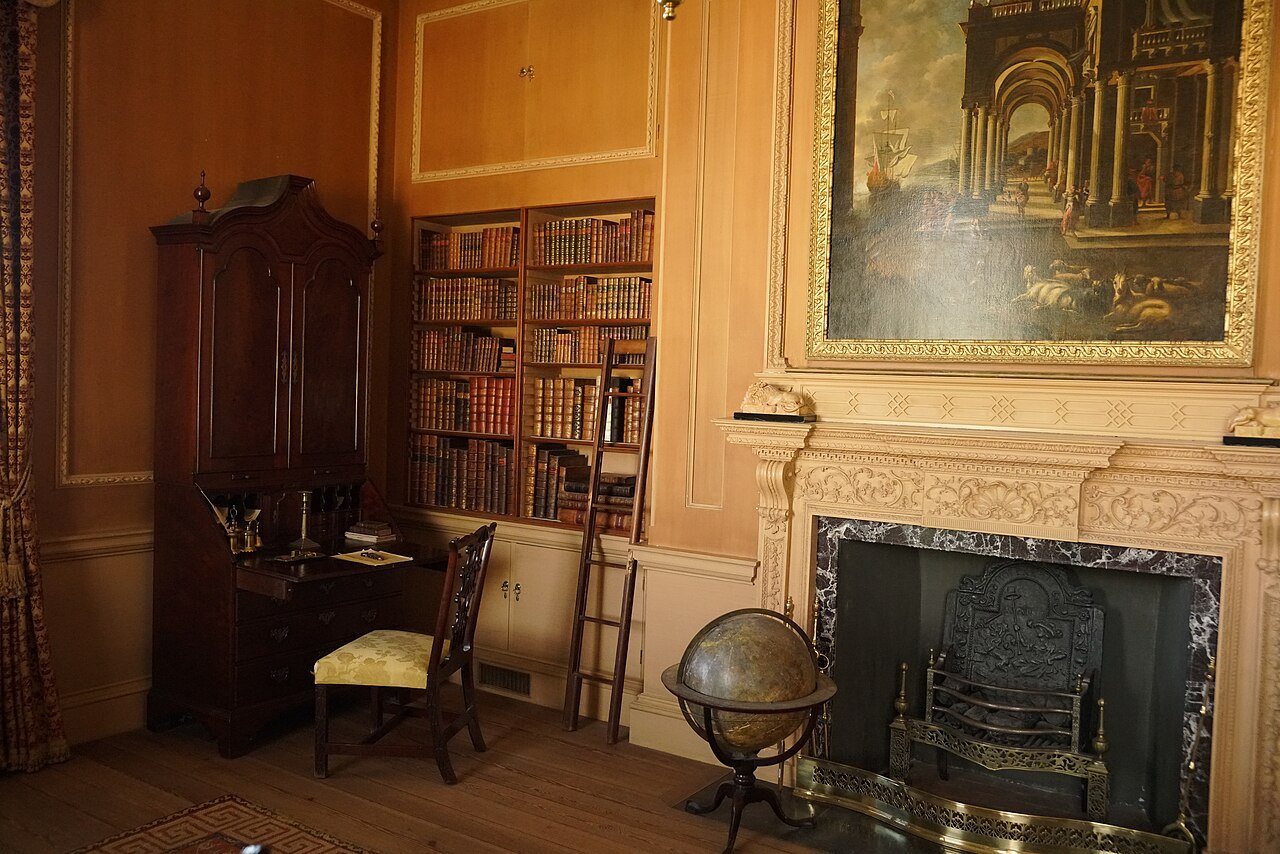
It burned in 1798. What you visit is a faithful reconstruction, raised on the original foundations in the 1950s from Hawks's own plans and opened as a house museum in 1959, with recreated gardens and a cluster of historic houses around it. It is a state-owned historic site.
A governor's palace and a rebellion
William Tryon, a British officer, was governor of North Carolina from 1765 to 1771. Even as lieutenant governor he had seen the need for a centrally placed government house, and with Hawks he drew up plans for a government house like those of other British colonies. Tryon brought workers from Philadelphia, saying local builders would not know how to raise such a building, and persuaded the legislature to raise taxes to pay for it. In 1770 he and his wife, Margaret Wake, moved in; "palace" was then the usual word for any public building of the kind.
The cost caused an uproar in the backcountry, where people already felt overtaxed and saw the house as a needless display of English extravagance. It became a major cause of the War of the Regulation, which ended with the Battle of Alamance on May 16, 1771, and the hanging of seven men. Tryon left the colony that June for a new post, having lived in his palace little more than a year.
Revolution and fire
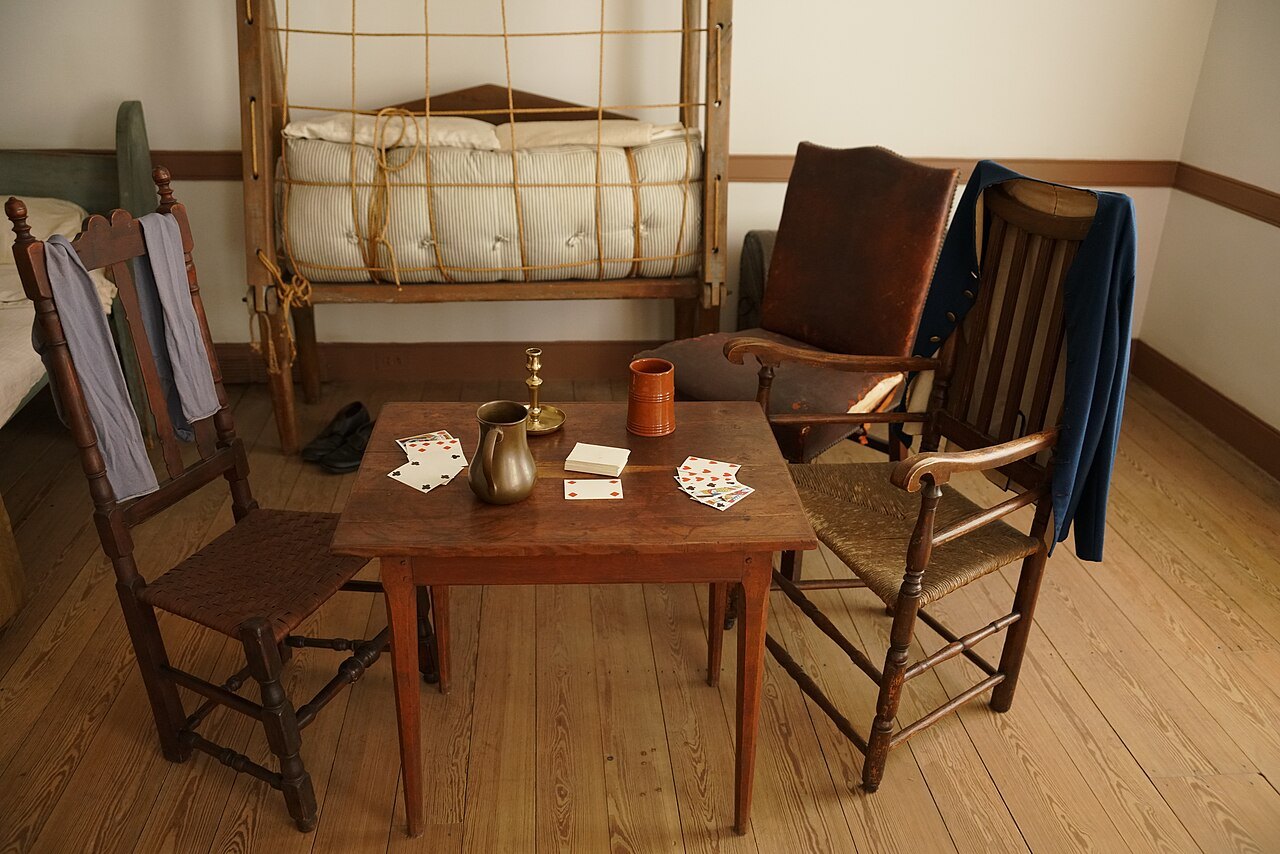
When the Revolution began in 1775, Governor Josiah Martin fled the house, and the rebels made it their seat of government. The new state's first general assemblies met there, many of the furnishings were auctioned to pay for the administration, and four state governors lived in the palace: Richard Caswell, Abner Nash, Alexander Martin and Richard Dobbs Spaight. It served as the state house until 1792, when the capital moved to Raleigh.
Afterward it was a school, a boarding house and a Masonic lodge. In 1798 a fire that started in the cellar consumed the main building, and only the kitchen and stable wings survived; the kitchen was later torn down, and the grounds were cut into lots and sold.
Rebuilding from the plans
In the 1930s a movement to preserve colonial New Bern gained strength when Hawks's original plans were found. In 1944 Mrs. James Edwin Latham, a New Bern native, set up a trust fund to restore the palace and asked the state for help, and in 1945 the General Assembly created a Tryon Palace Commission to rebuild it from the plans; after her death in 1951, her daughter, Mae Gordon Kellenberger, carried the work on.
The task was enormous. More than fifty buildings stood on the site and had to be moved, US 70 had to be rerouted, and a new bridge was built over the Trent. Archaeologists dug the foundations, craftspeople were recruited from across the country, and period furniture was bought in Britain. The palace opened to the public in 1959.
The gardens
The gardens cover sixteen acres and three centuries of gardening. Most were designed at the time of the restoration by Morley Williams, who had worked on the gardens of Mount Vernon and Stratford Hall, in the Colonial Revival style of the mid-twentieth century. They include an eighteenth-century Wilderness Garden of the native plants the first European settlers found here, lush beds of the kind the Victorians loved, and, since 2010, a planting of riparian plants from the river edges of the coast.
In 1991 researchers found another garden plan for the palace in an archive in Venezuela. Hawks had given it to the traveler Francisco de Miranda, who admired the palace when he visited New Bern in 1783; its French style suggests it was drawn by the mapmaker Claude Sauthier. None of the historic plans has ever been planted.
The houses and the History Center
Around the palace stand the Stable Offices, the only original building on the site; the George W. Dixon House of the early 1830s, built for a merchant tailor and mayor; the Robert Hay House, bought in 1816 by Robert Hay, a Scottish wagon maker; the John Wright Stanly House, a fine piece of Georgian architecture; and the New Bern Academy, the first school in the state established by law.
The North Carolina History Center opened in 2010 on the river beside the palace, on a former industrial site that had been cleaned up under the state Superfund program. It holds the Regional History Museum, a performing arts hall, and a family center where visitors enter through a virtual time machine to Craven County in 1835 and try sailing a ship, making naval stores and keeping a dry goods store. Its wetlands filter storm water from fifty acres of the historic district.
How to visit
Start at the History Center for orientation, then tour the palace, the gardens and the houses; the site's own website lists hours, tickets and living history programs. New Bern itself, founded in 1710 by Palatine and Swiss settlers and named for Bern, is worth an afternoon on foot.
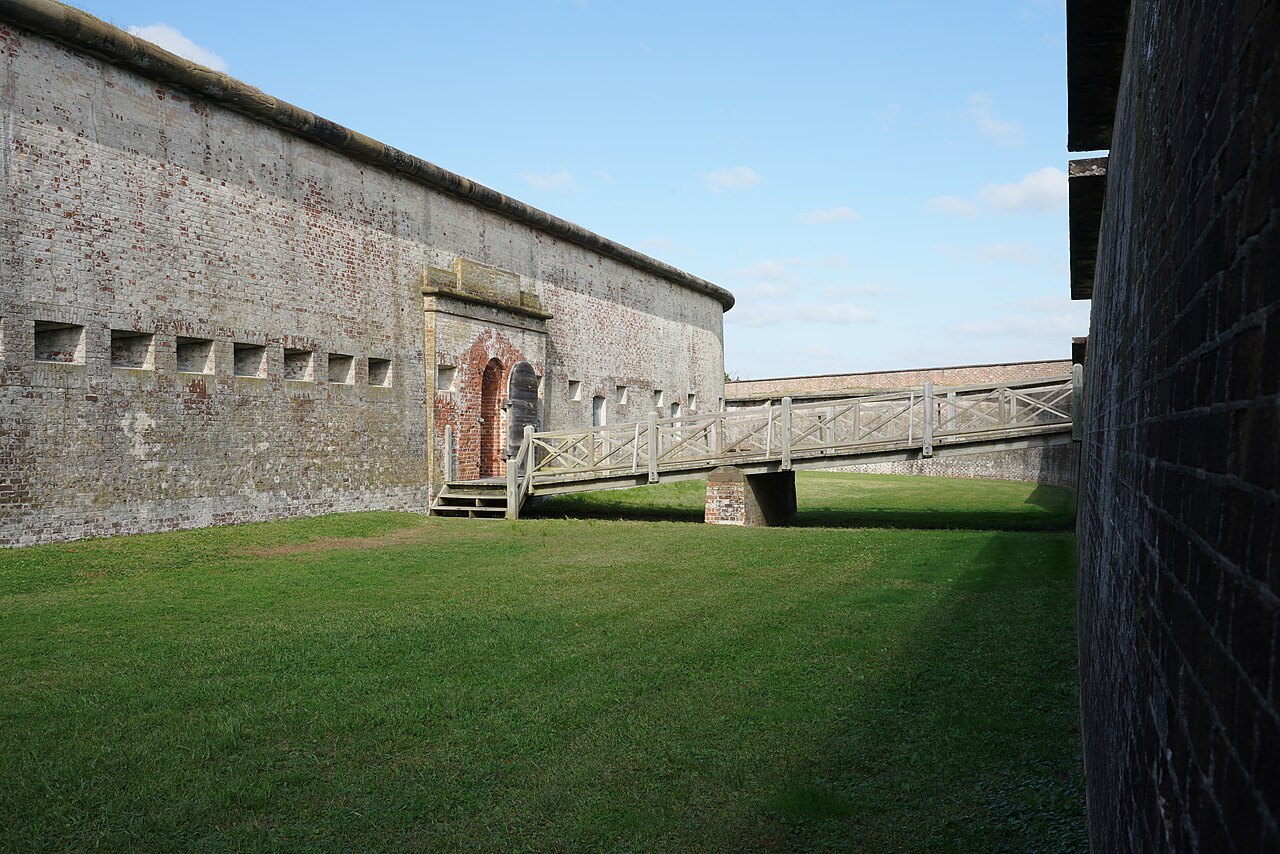
Pair the palace with the forts and islands of the coast, Fort Macon and Cape Lookout, down US 70, which runs 35 miles southeast to Morehead City.
Nearby
Sources read for this page