THE COAST · BOGUE BANKS
Fort Macon, the brick fort on Bogue Banks
Photographs: jjmusgrove, Wikimedia Commons, CC BY 2.0 · jjmusgrove, Wikimedia Commons, CC BY 2.0 · jjmusgrove, Wikimedia Commons, CC BY 2.0
The Coast · landmark 19 of 21
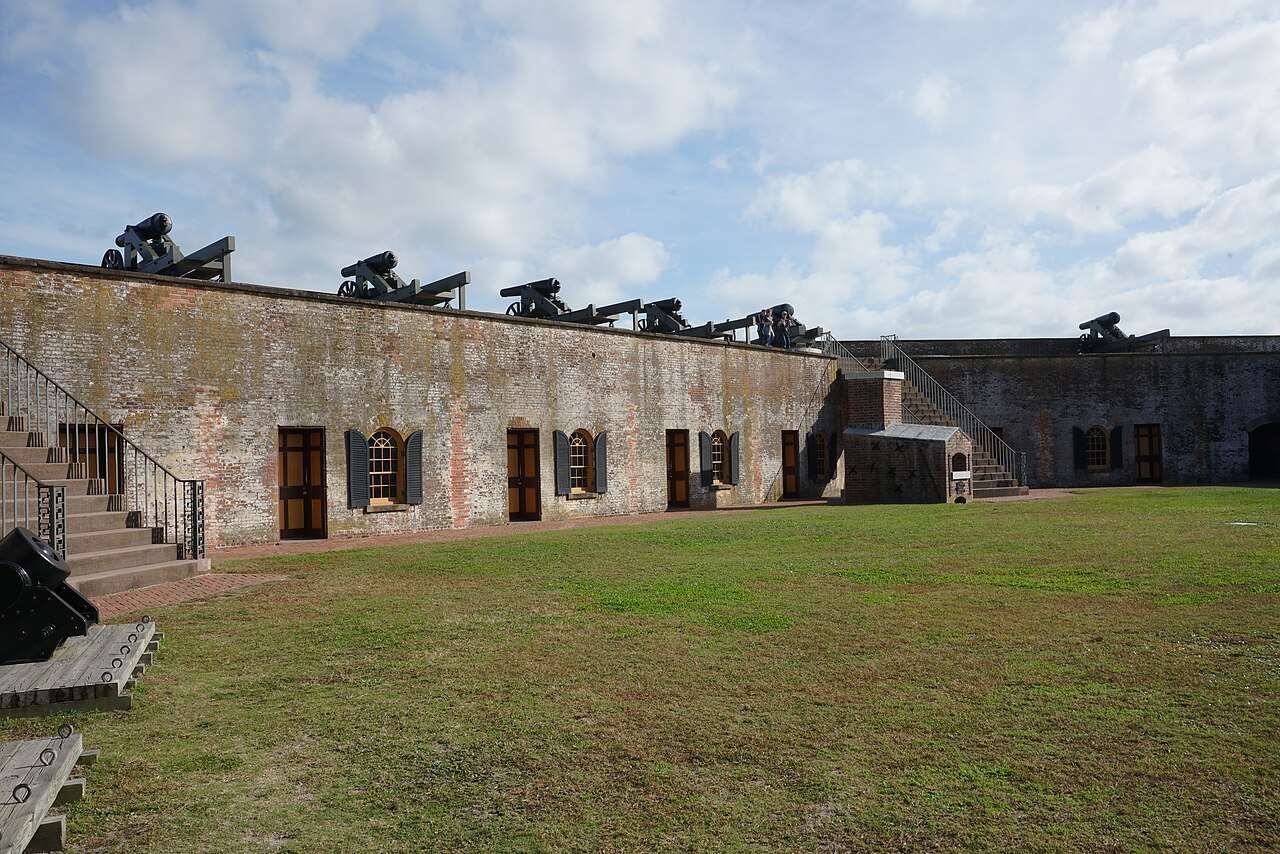
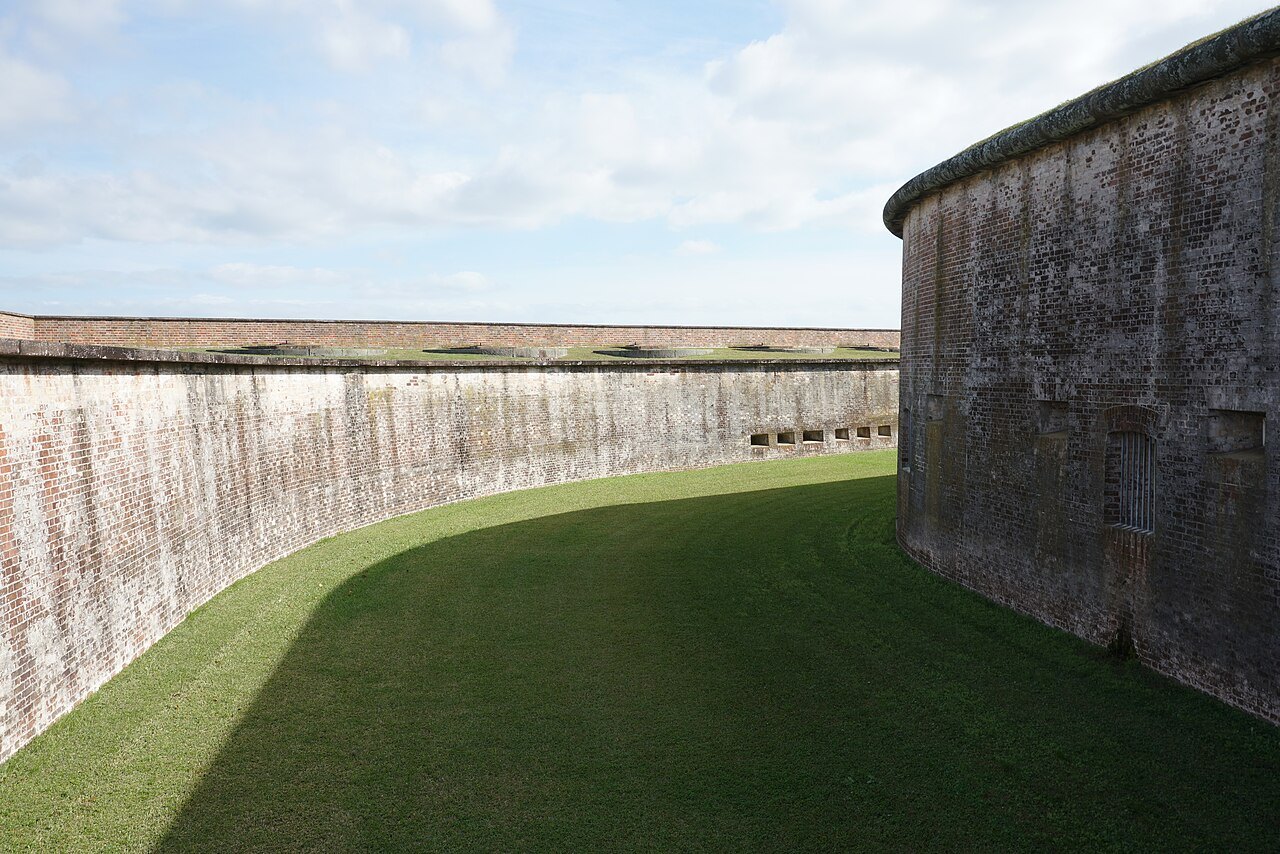
A five-sided fort of brick and stone at the tip of Bogue Banks, built from 1826 to guard Beaufort Inlet, battered into surrender by rifled cannon in 1862 and restored in the 1930s as North Carolina's first working state park, with a beach beside it.
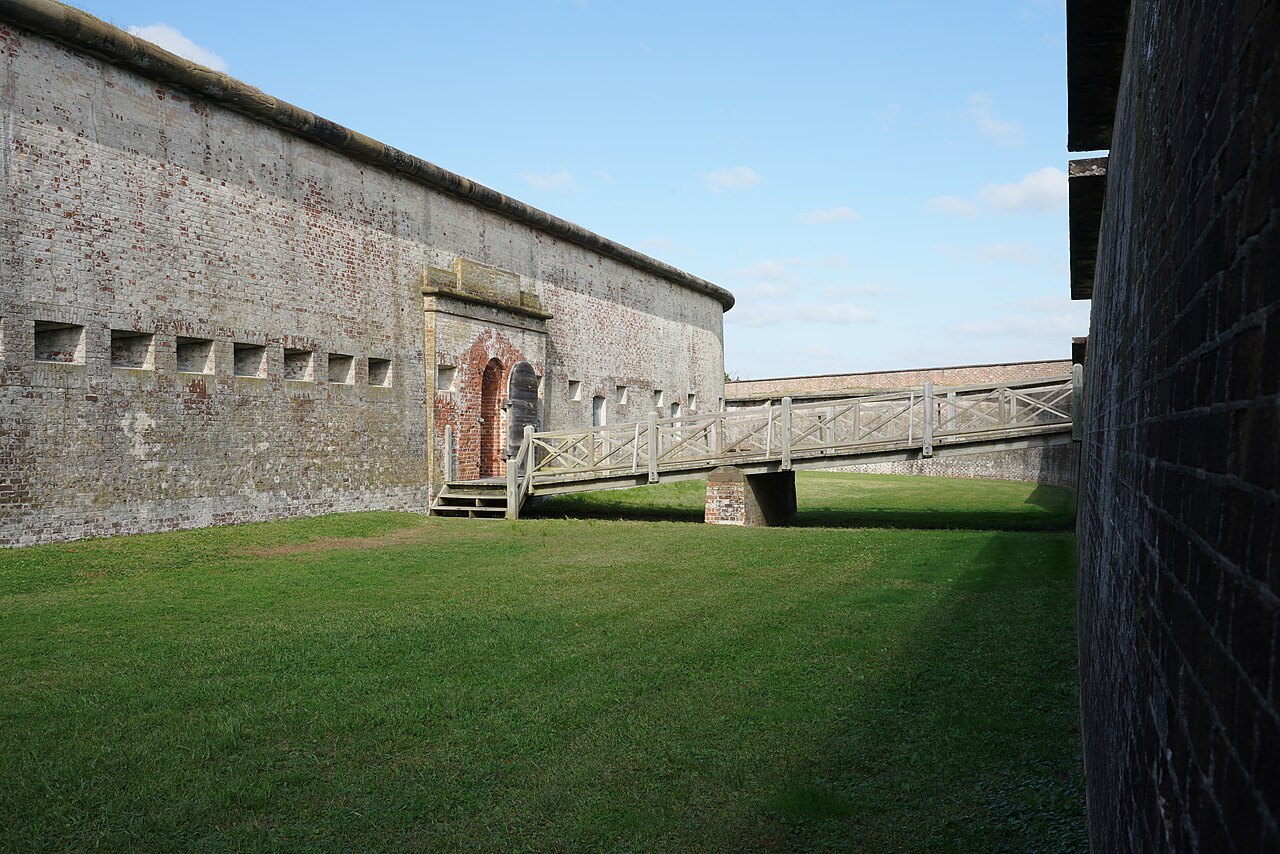
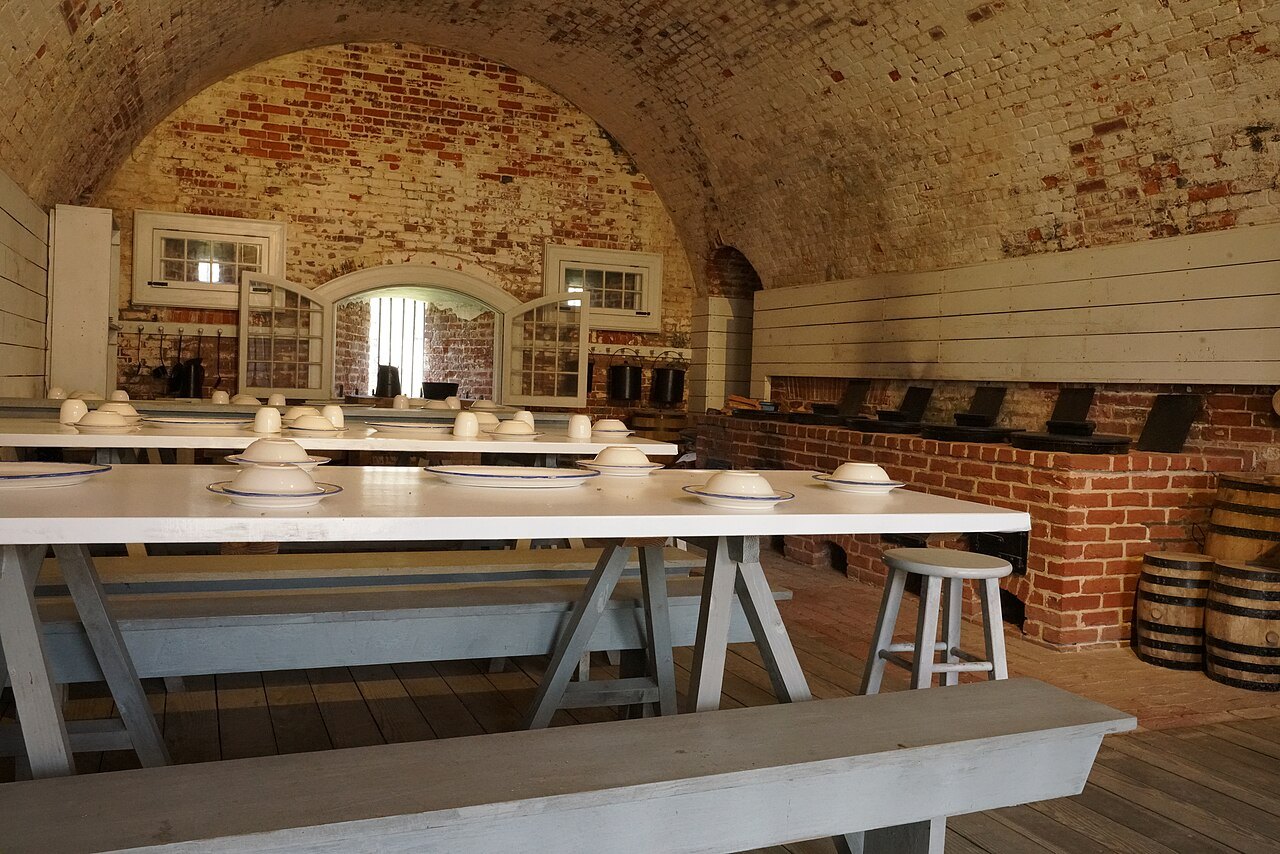
- The casematesTwenty-six vaulted rooms of brick and stone, enclosed by outer walls four and a half feet thick.
- The ranger toursGuided tours of the fort by the park's rangers, who also run programs on the beach.
- The siege storyThe 1862 battle in which rifled cannon hit the fort 560 times in eleven hours.
- The beachSurf and sound fishing, a protected swimming area in summer and nature trails through the dunes.
- Beaufort InletThe deep-water channel the fort was built to guard, where Blackbeard's flagship ran aground.
- The Coast Guard stationStation Fort Macon, still at work inside the park near the main gate.
Why it matters
Fort Macon State Park stands at the eastern tip of Bogue Banks, beside Atlantic Beach in Carteret County. With just 424 acres it is one of the smallest state parks in North Carolina, yet more than a million people visit each year, which makes it the second most visited park in the state.
They come for two things side by side: a restored nineteenth-century fort, one of the best places on the coast to understand how the young United States defended its harbors, and an ocean beach. The park opened in 1936, the first state park in North Carolina to open its gates to the public.
A coast open to raiders
Today an attack from the sea seems remote, but in the eighteenth and nineteenth centuries the harbor at Beaufort was badly exposed. Blackbeard and other pirates passed through Beaufort Inlet at will, and in 1718 his flagship, the Queen Anne's Revenge, ran aground near it; a wreck thought to be hers has been found in shallow water just off the park. The Spanish captured and plundered Beaufort in 1747, and the British did the same in 1782.
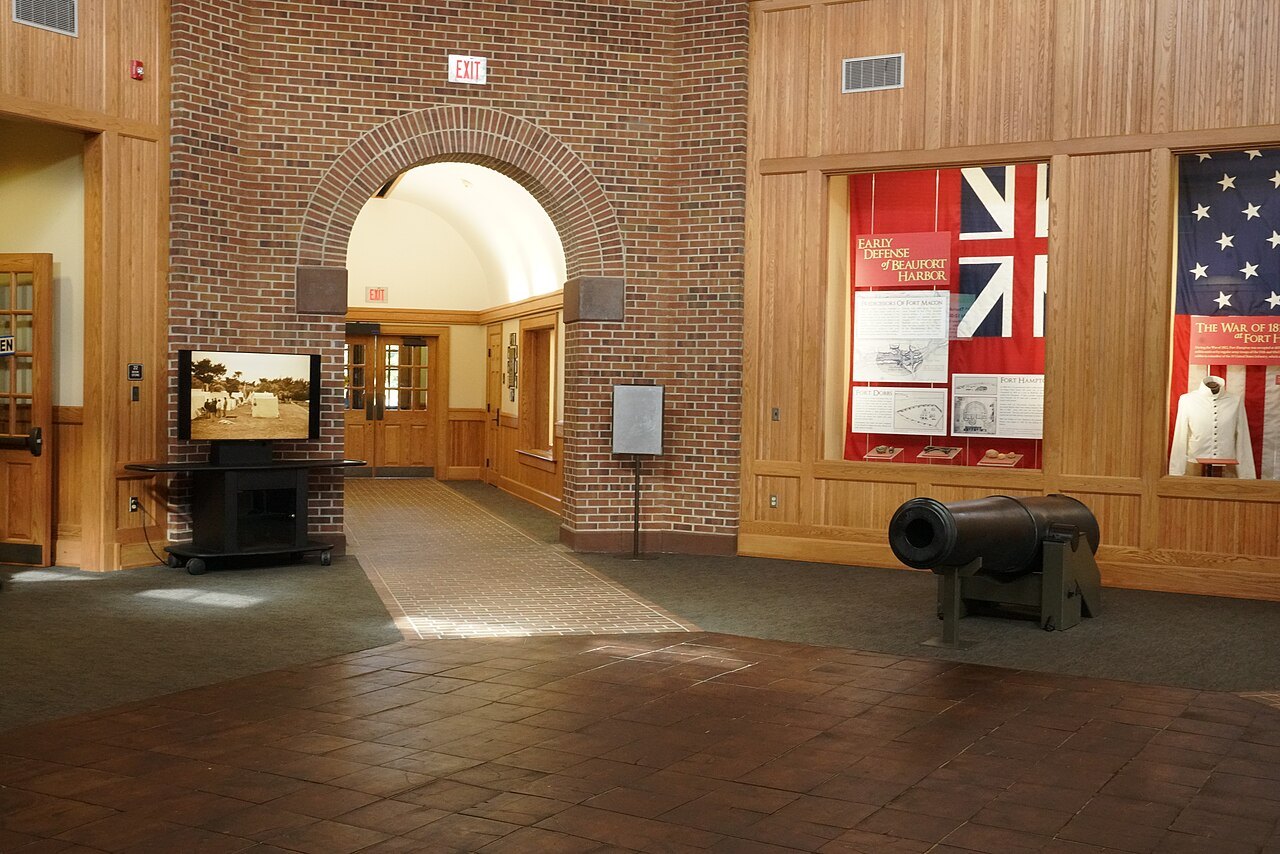
Earlier forts on the point came to little. Fort Dobbs, begun in 1756, was never finished, and Fort Hampton, a small masonry fort of the 1800s built of tabby, an oyster-shell cement, was undermined by the sea; by 1834 its site lay in the ship channel of the inlet.
Building Fort Macon
After the War of 1812 showed how weak the country's coastal defenses were, the government built a chain of permanent forts, the Third System, and Fort Macon was one of them. Its purpose was to guard Beaufort Inlet and Beaufort Harbor, then the state's only major deep-water ocean port. It was named for Nathaniel Macon, the North Carolina senator who won the money to build it.
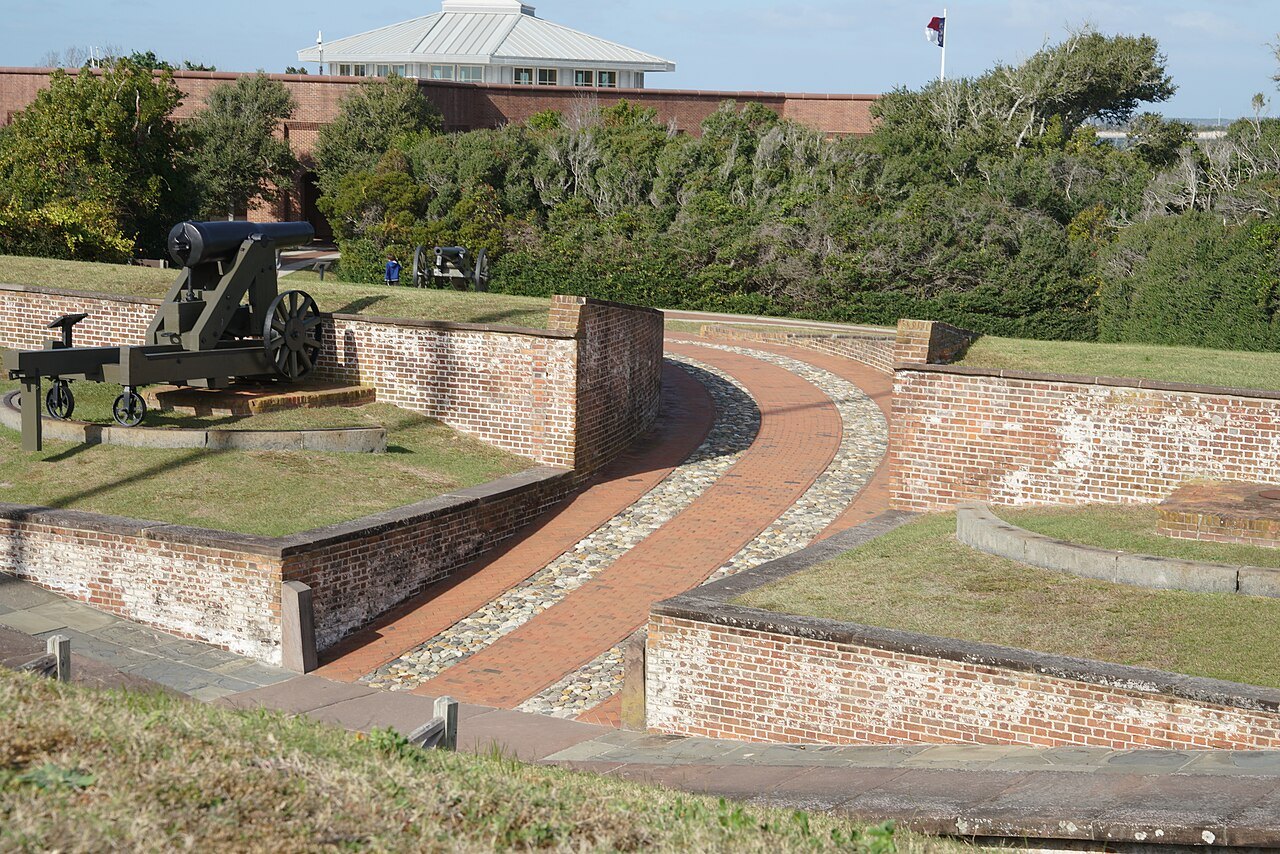
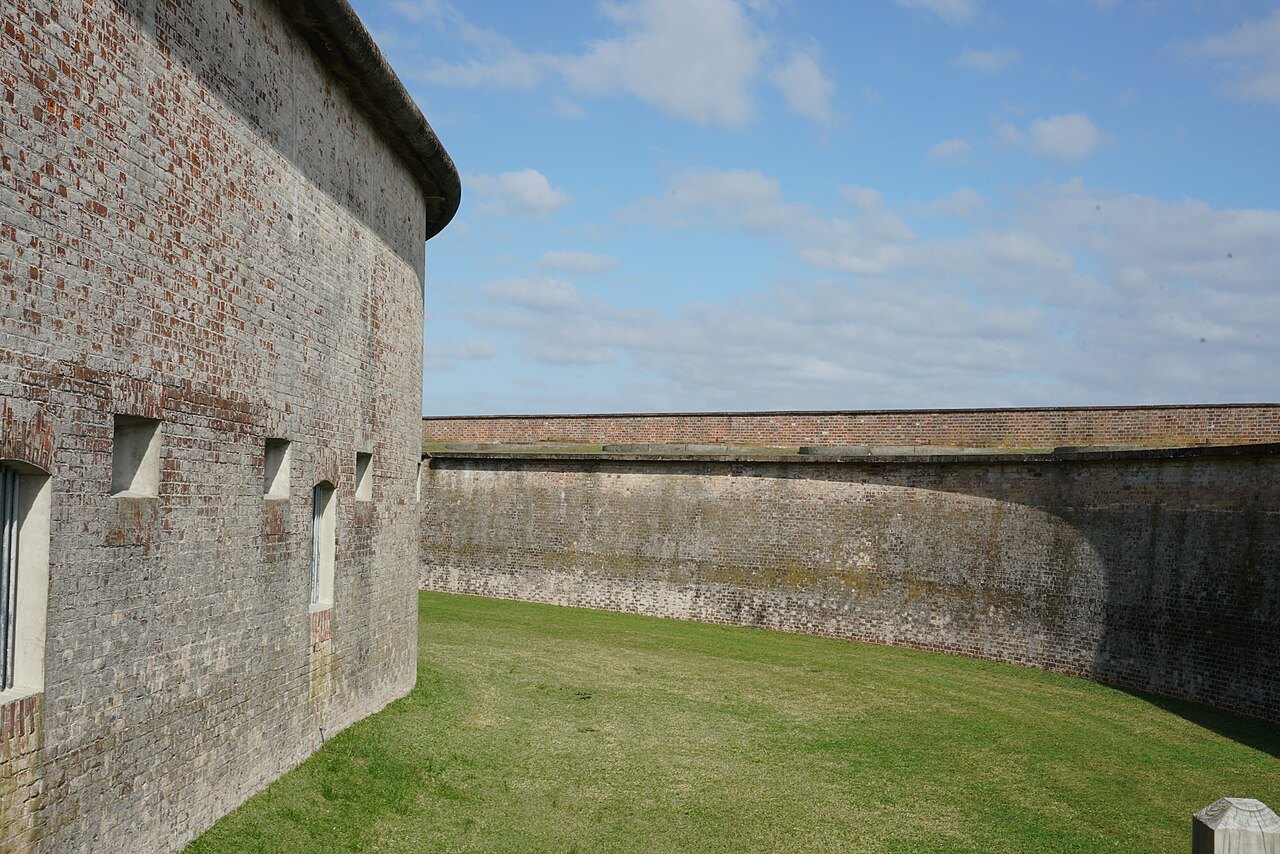
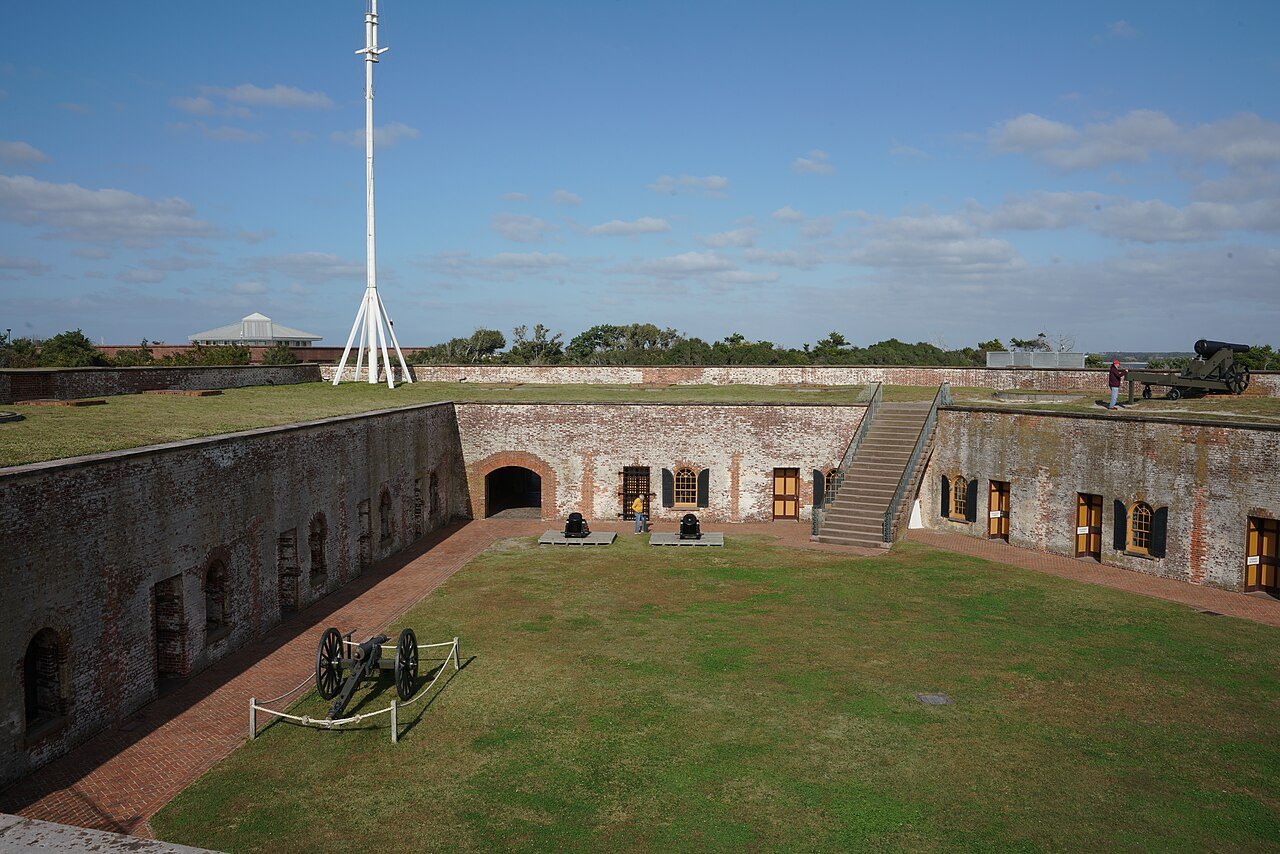
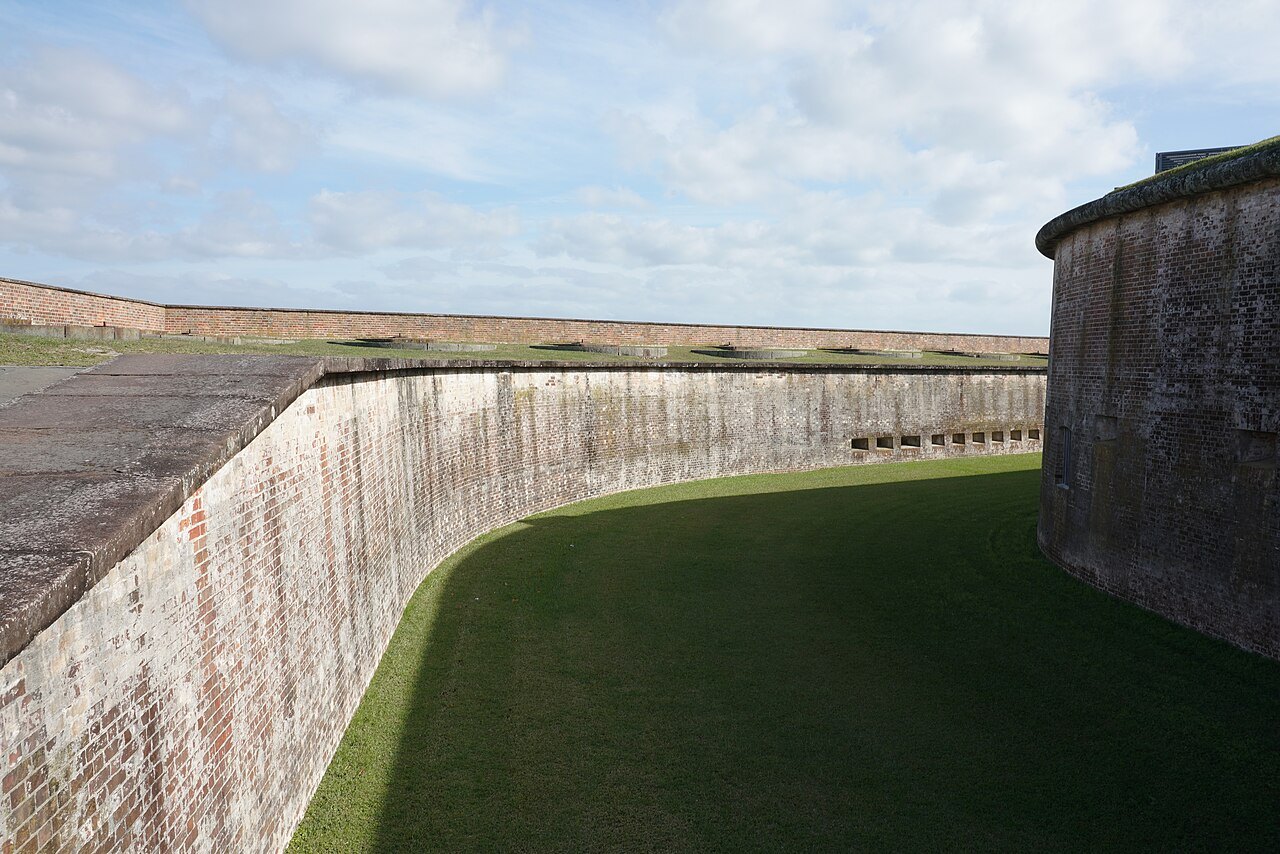
Designed by Brigadier General Simon Bernard and built by the Army Corps of Engineers, the fort took eight years, from 1826 to December 1834, and was improved again in the 1840s. It is five-sided, of brick and stone, with twenty-six vaulted rooms, the casemates, enclosed by outer walls four and a half feet thick. In the 1840s a young engineer officer, Robert E. Lee, designed a system to hold back the erosion on the point.
The siege of 1862
Two days after the Civil War began in April 1861, militia from Beaufort seized the fort from its only occupant, an ordnance sergeant who acted as caretaker. They found it in poor repair, and the Confederates spent a year arming it with 54 heavy guns. Enslaved and free Black laborers were brought in to do the repair work.
In early 1862 Union troops under General Ambrose Burnside swept through eastern North Carolina, and part of his command under General John G. Parke took Morehead City and Beaufort without a fight, then landed on Bogue Banks. Colonel Moses J. White and some 400 Confederates in the fort refused to surrender, though they were hopelessly surrounded.
On April 25, 1862, Parke's siege guns bombarded the fort for eleven hours, joined by gunboats offshore and floating batteries in the sound. The fort drove off the gunboats easily, but the new rifled cannon on land hit it 560 times, and White surrendered the next morning. It was only the second time in history that rifled cannon had been used against a fort, and it showed that masonry forts like this one were obsolete. For the rest of the war Beaufort Harbor was a coaling and repair station for the Union navy.
From prison to park
The Army held the fort until 1877, using it for about eleven years as a civil and military prison, since there was no penitentiary in the military district of the Carolinas. State troops garrisoned it again in the summer of 1898 during the Spanish-American War, and the Army left for good in 1903.
In 1924 Congress sold the fort and its reservation to North Carolina for a token sum to be used as a public park, the second area the state acquired for a park system. The Civilian Conservation Corps restored it in 1934 and 1935, and the park opened on May 1, 1936.
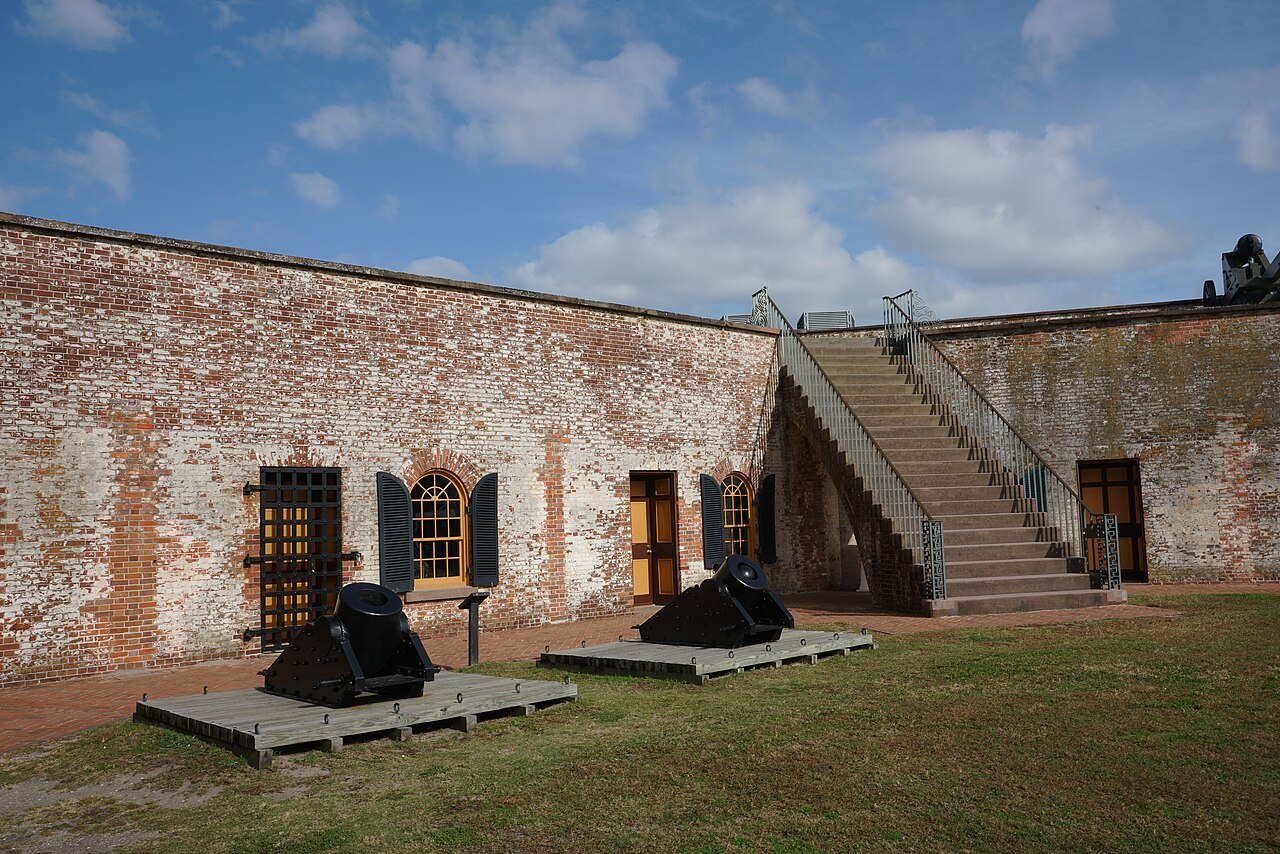
The fort went to war once more. From December 1941 to November 1944 the Army leased it and manned it with coast artillery troops. Some soldiers, taking old cannonballs for solid iron shot, used them as andirons in the fireplaces; the balls were filled with powder, and when they exploded two men were killed, the so-called last shot of the Civil War. The Army returned the fort and the park to the state on October 1, 1946, and in 1950 the park had its first superintendent.
How to visit
Start at the fort: walk through the casemates, and join a ranger-guided tour if one is running. Then go to the beach, which has surf fishing, fishing on the sound side, nature trails, a bathhouse and a protected swimming area in summer; the swimming area, the bathhouse and the refreshment stand are summer facilities, and fishing and the trails carry on through the rest of the year. The park surrounds Coast Guard Station Fort Macon, whose gate faces the park office.
Atlantic Beach and Morehead City are just to the west, and Beaufort, with its boats to Cape Lookout and Shackleford Banks, is across the water. Look at the park's own site for its hours and tour schedule before you go.
Nearby