THE PIEDMONT · RALEIGH
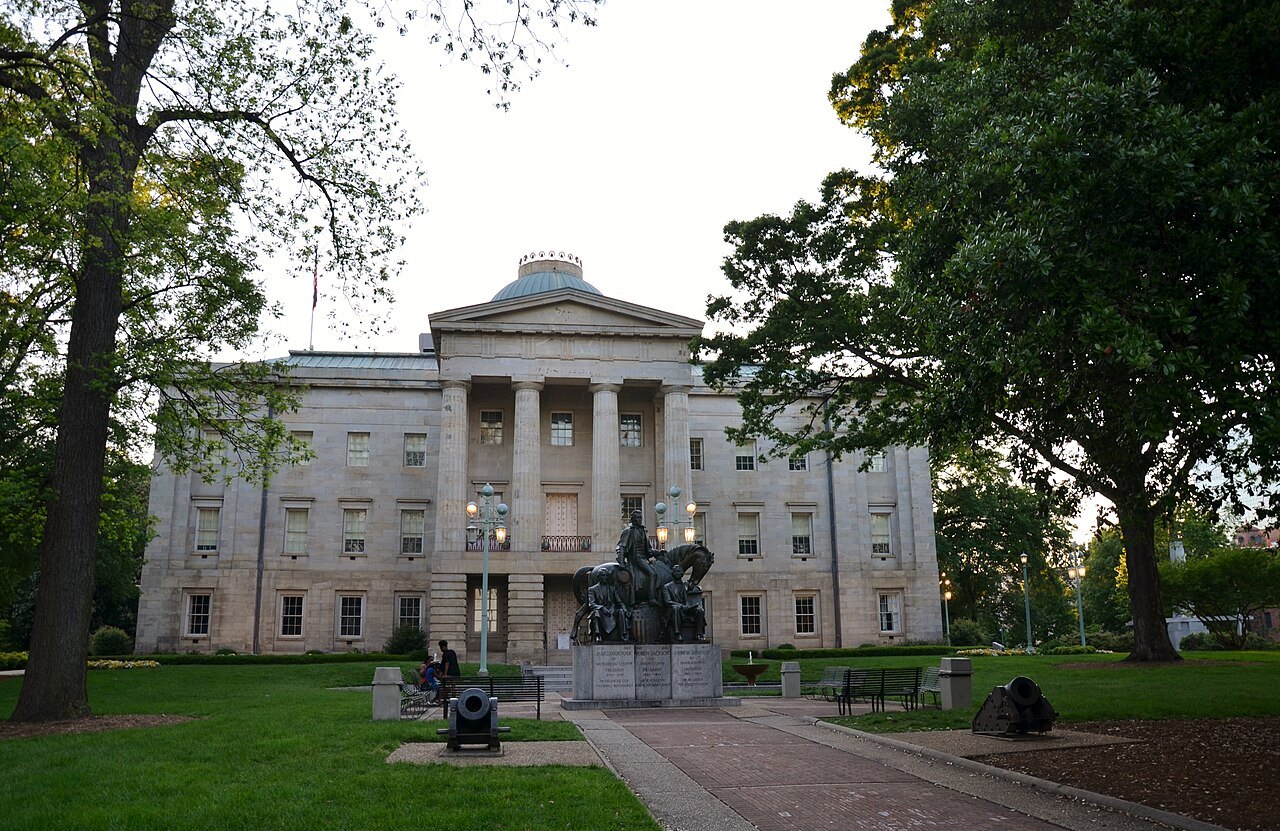
The State Capitol and Raleigh's museums of the state
Photographs: Roman Eugeniusz, Wikimedia Commons, CC BY-SA 3.0 · 2BKNIGHT, Wikimedia Commons, CC BY-SA 4.0 · Daderot, Wikimedia Commons, Public domain
The Piedmont · landmark 11 of 21
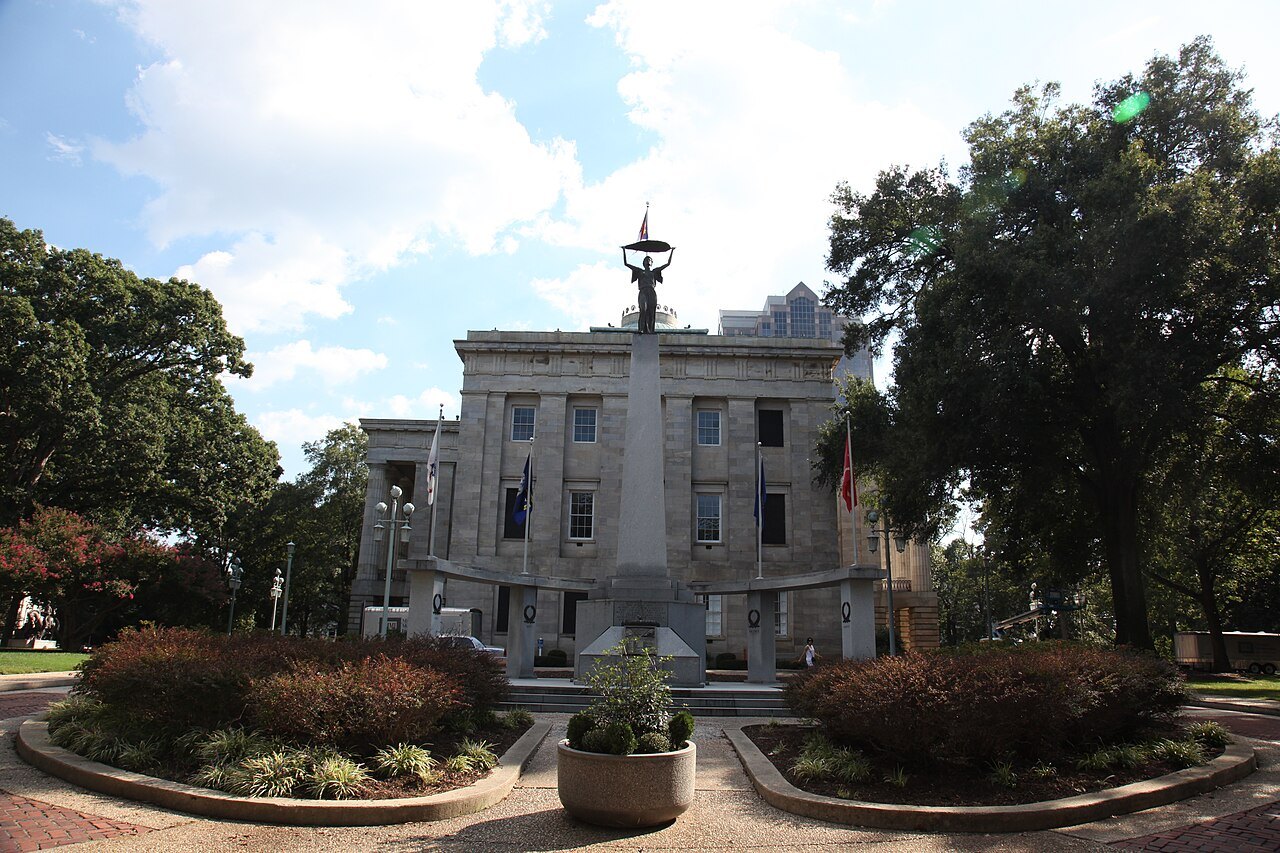
A Greek Revival capitol of 1840 on Union Square that held the whole state government until 1888, and across the street the largest natural history museum in the Southeast, with whale skeletons, a record emerald and a working dinosaur lab.
- The rotundaA copy of Antonio Canova's statue of George Washington, whose original burned with the old State House.
- The chambersThe legislature met in the building from 1840 to 1961; its rooms are largely unaltered.
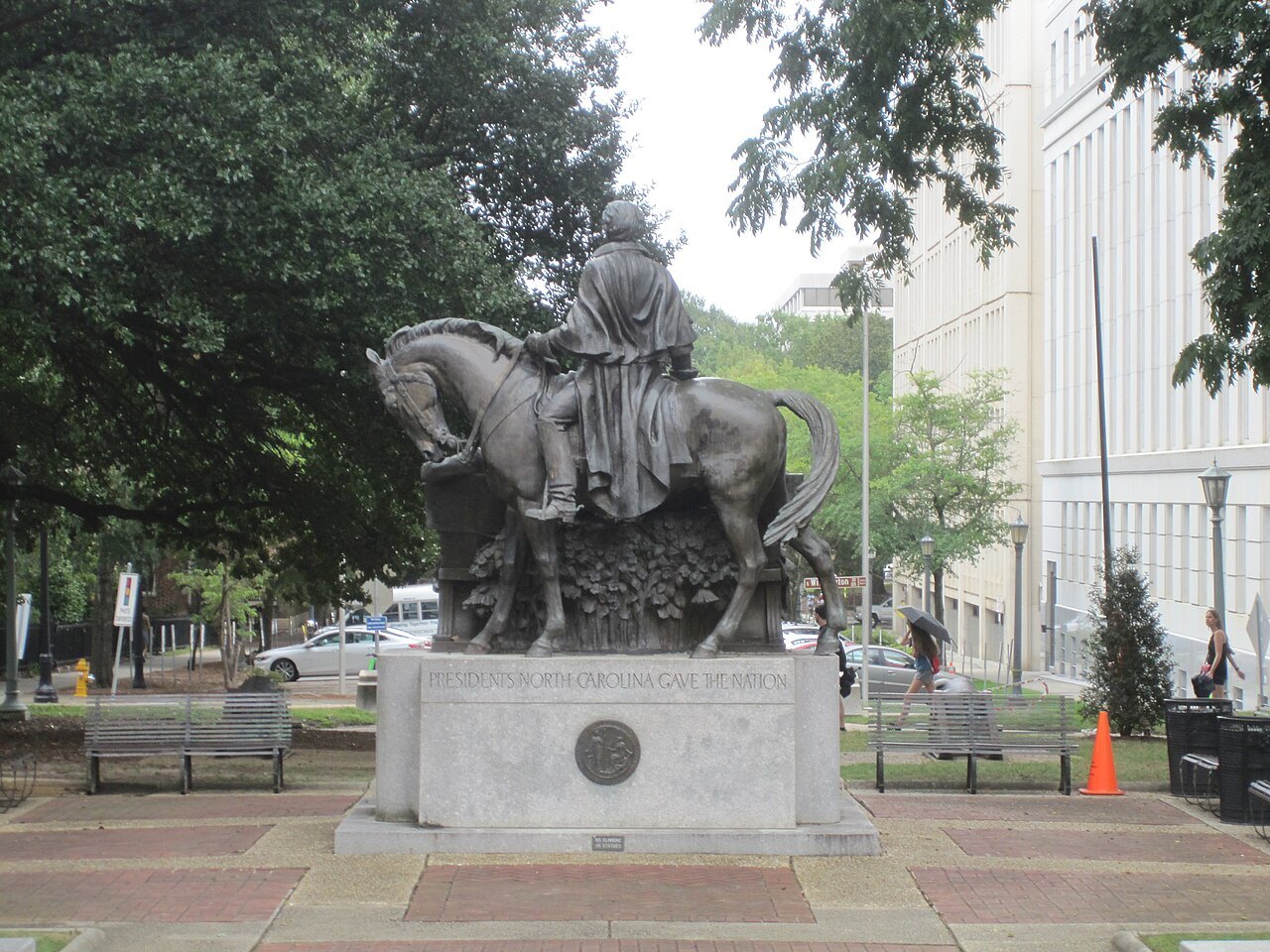
- The Three Presidents statuePolk, Jackson and Johnson, the presidents from North Carolina, on the east side of the grounds.
- The whale hallSkeletons of a blue whale and of Trouble, a sperm whale stranded at Wrightsville Beach in 1928.
- Terror of the SouthThe largest and most complete Acrocanthosaurus skeleton, with the original skull of the specimen, Fran, displayed separately.
- SECU DinoLabA glass-walled lab where scientists prepare the Dueling Dinosaurs fossil in view of visitors.
Why it matters
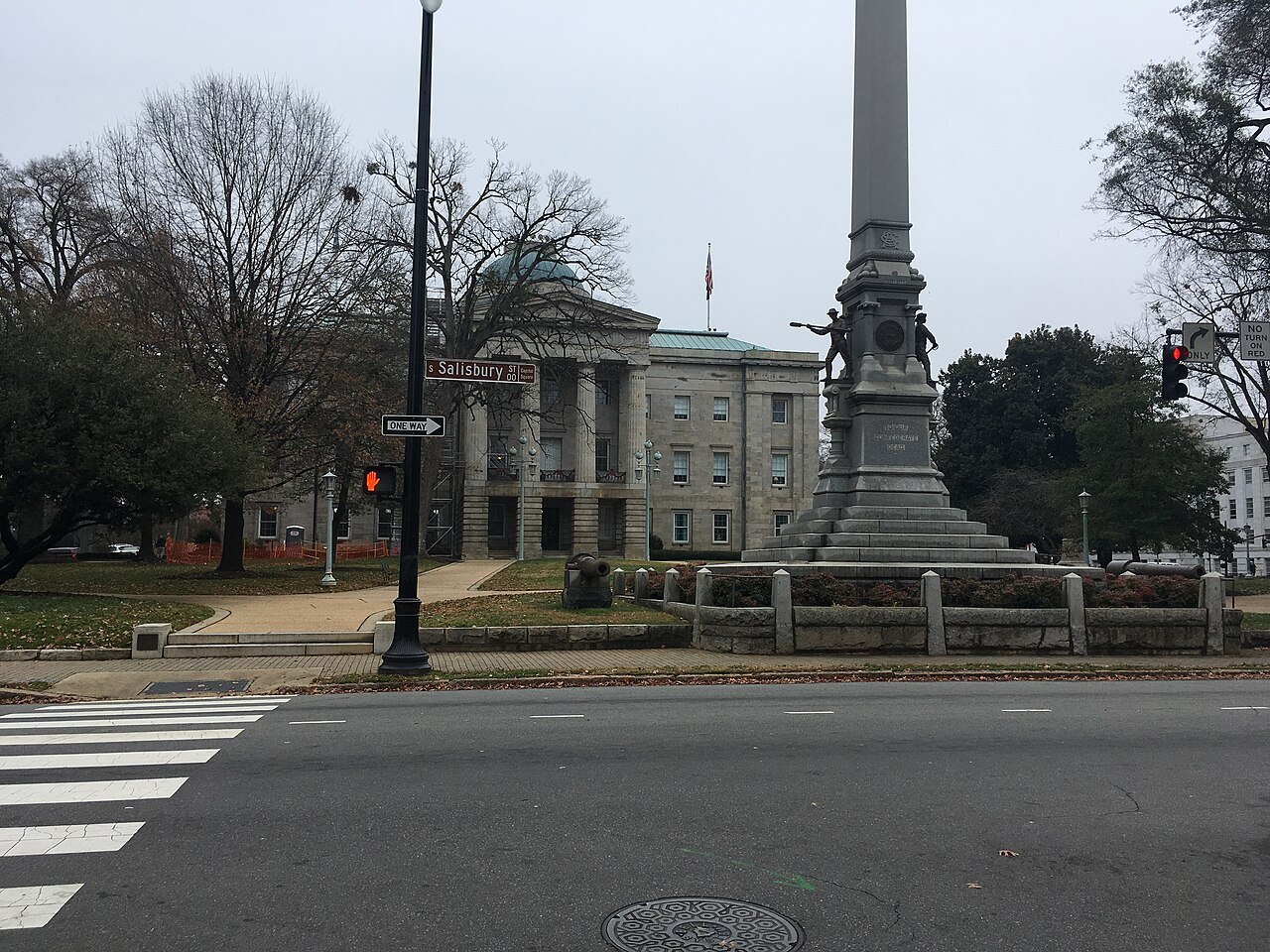
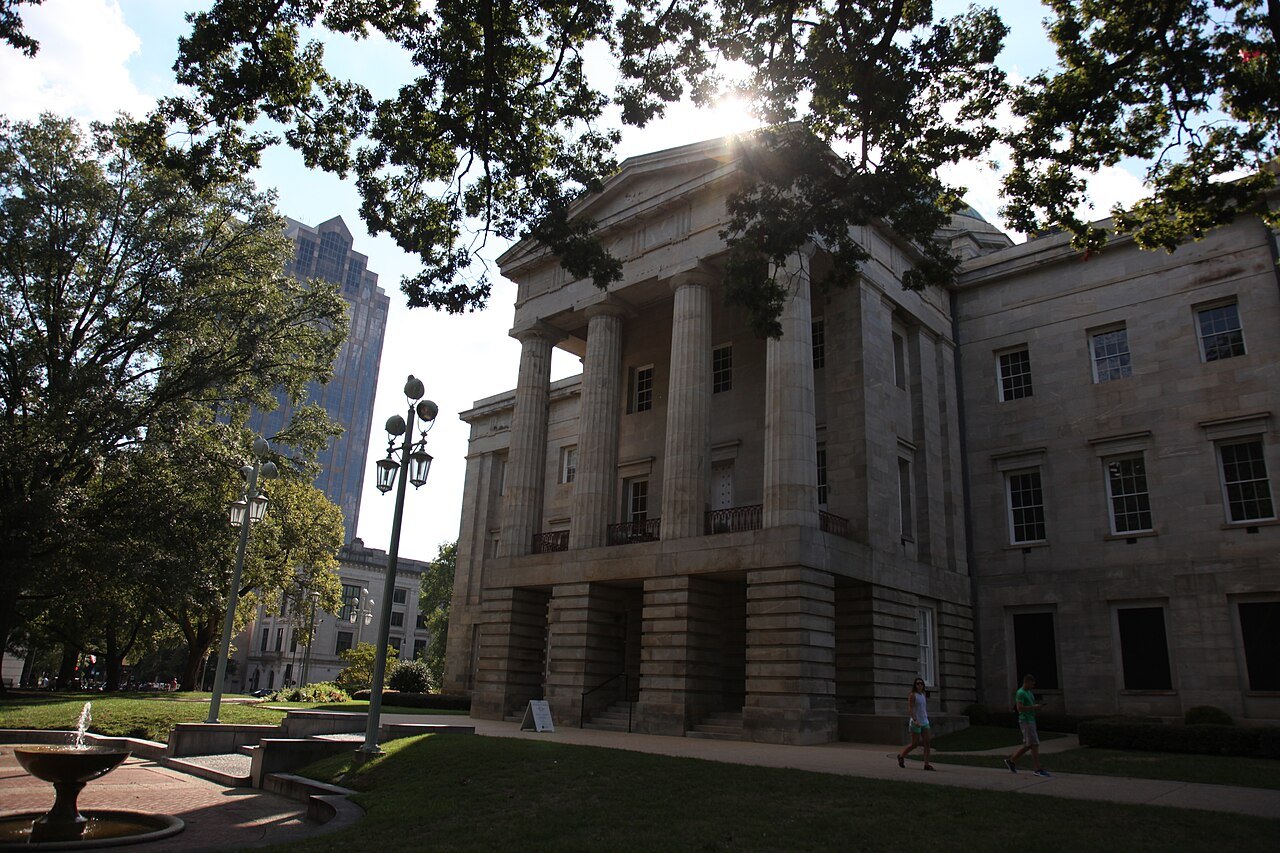
Raleigh has been North Carolina's capital since 1792, and its Capitol, finished in 1840, remains largely unaltered from its 1840 state: only three rooms have been significantly remodeled. It stands in the middle of Union Square, on One East Edenton Street, with the city's grid of streets laid out around it.
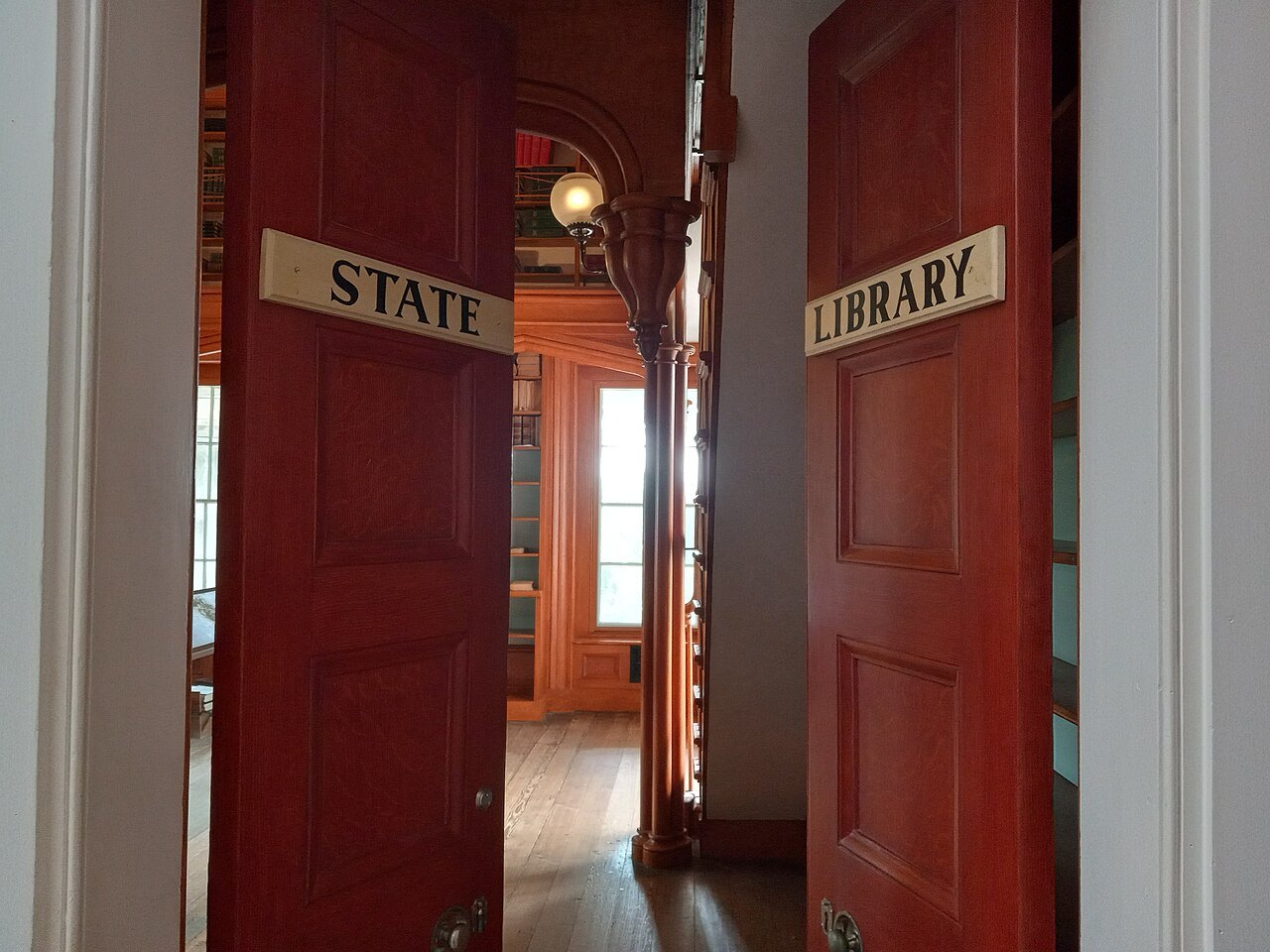
The Capitol housed the whole state government until 1888, and the General Assembly met in it until 1961. The governor and the governor's immediate staff still have their offices on its first floor. A block away are two of the state's own museums, and together they make the heart of downtown Raleigh a good morning's walk.
Fire and a new building
The state's first dedicated capitol in Raleigh, completed in 1794, burned in 1831, and with it a marble statue of George Washington by the Italian sculptor Antonio Canova. Before that, the General Assembly may have first met in Tryon Palace at New Bern after the British governor left in 1776, and then in various towns.
The cornerstone of the new building was laid with Masonic honors on July 4, 1833, and the building was completed in 1840. It is usually credited to the architects Ithiel Town and Alexander Jackson Davis, but the design was the work of a sequence of men: William Nichols and his son, then Town and Davis, then David Paton. A second cornerstone was laid on the centenary, on July 4, 1933.
What you see
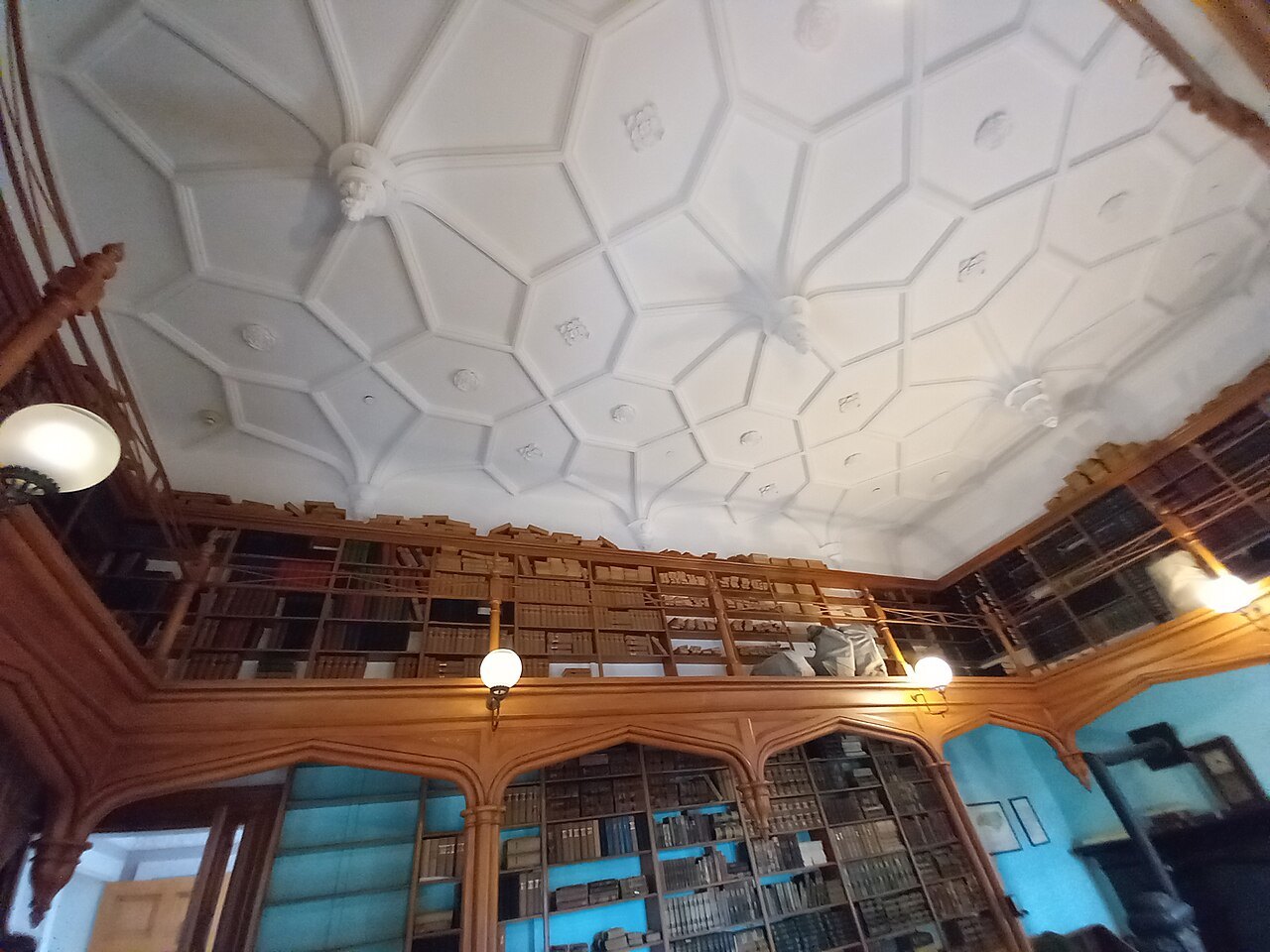
In the rotunda stands a copy of Canova's Washington, replacing the statue lost in the fire, and a bust of John Motley Morehead, governor in the early 1840s. The old legislative chambers and the rooms around them keep their original form; only two committee rooms and part of one office were altered. The state Supreme Court has also convened in the building, most recently in the senate chamber in 2005.
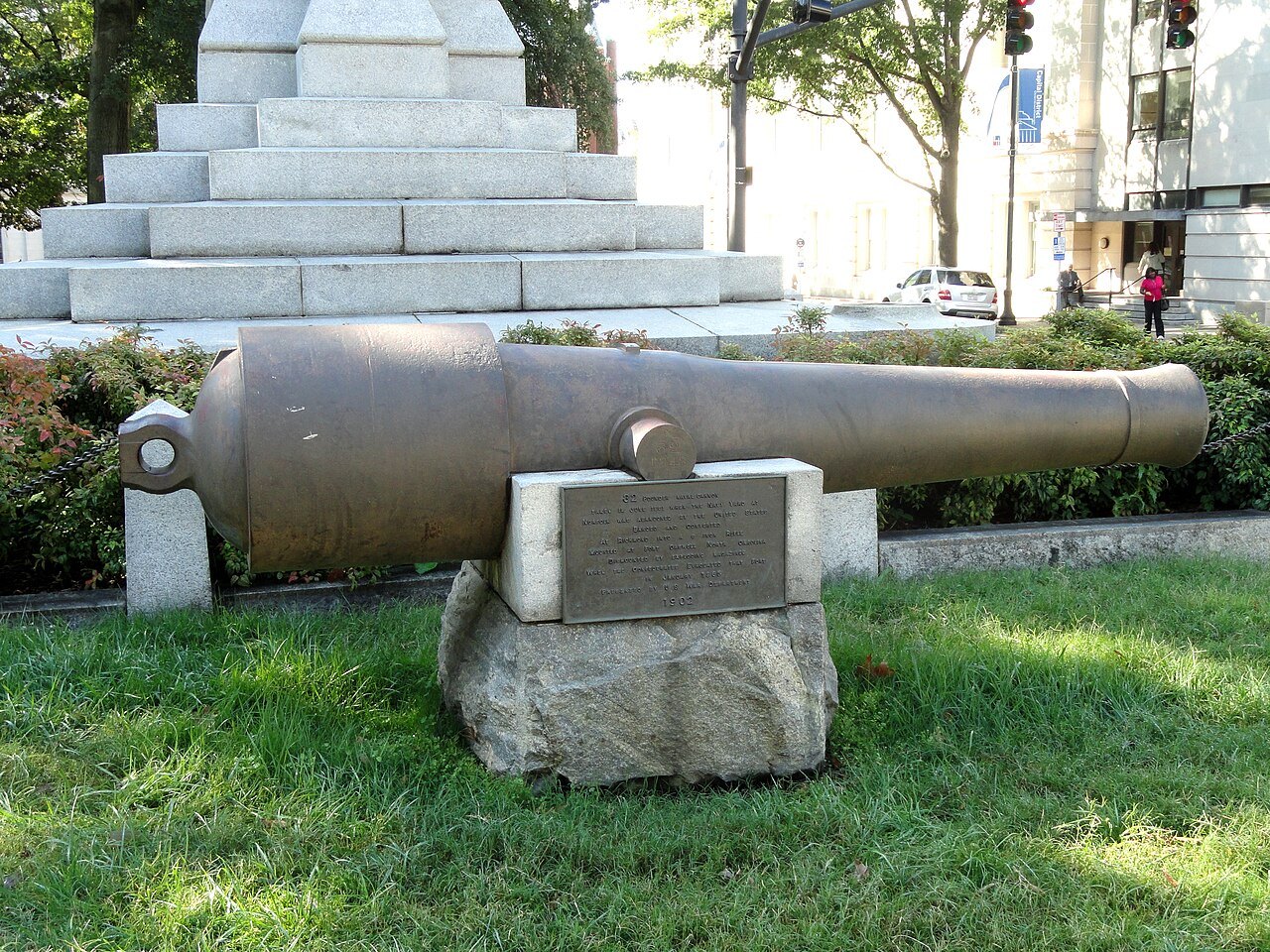
Outside, a statue of Washington stands on the south side, and on the east side a group shows the three presidents from North Carolina, James K. Polk, Andrew Jackson on horseback and Andrew Johnson. The grounds hold memorials to veterans of the Civil War and the Vietnam War; a monument to the women of the Confederacy was removed in 2020.
The Museum of Natural Sciences
The North Carolina Museum of Natural Sciences is the oldest museum in the state and the largest natural history museum in the Southeast. It began in 1879 as the State Museum, when two collections of geological and agricultural specimens were combined; it once occupied a former hotel across from the Capitol, and it now fills two buildings downtown linked by a breezeway.
In the Nature Exploration Center on Jones Street, dioramas show the state's wildlife, from megalodon jaws to a Carolina parakeet, and the coast. Over the coastal hall hang whale skeletons, among them a blue whale and Trouble, a sperm whale that washed ashore at Wrightsville Beach in 1928; Mayflower, a North Atlantic right whale collected in 1874, has been on display for more than a century. Underground North Carolina holds the Carolina Emperor, the largest cut emerald in North America, at nearly 65 carats.
Terror of the South shows the largest and most complete skeleton of Acrocanthosaurus, a predator found in the region, and the Living Conservatory, a dry tropical forest, holds more than 200 tropical butterflies and a two-toed sloth.
The Nature Research Center
Across the street, the Nature Research Center opened in 2012; its first opening ran for 24 hours and drew 70,000 visitors. It is built to let the public watch science happen: researchers work behind glass walls, and a veterinary window shows the staff treating the museum's animals. Its globe-shaped Daily Planet Theater rises through three floors.
The SECU DinoLab, opened in 2024 and entered by timed ticket, lets visitors watch the excavation of the Dueling Dinosaurs, a pair of fossils found together. Stumpy, a North Atlantic right whale killed in a collision with a ship in 2004, whose death led to rules slowing ships in whale migration routes, is in the same building, where visitors can see and touch its skeleton. BugFest, a free festival of insects each September, draws more than 35,000 people.
The Museum of History
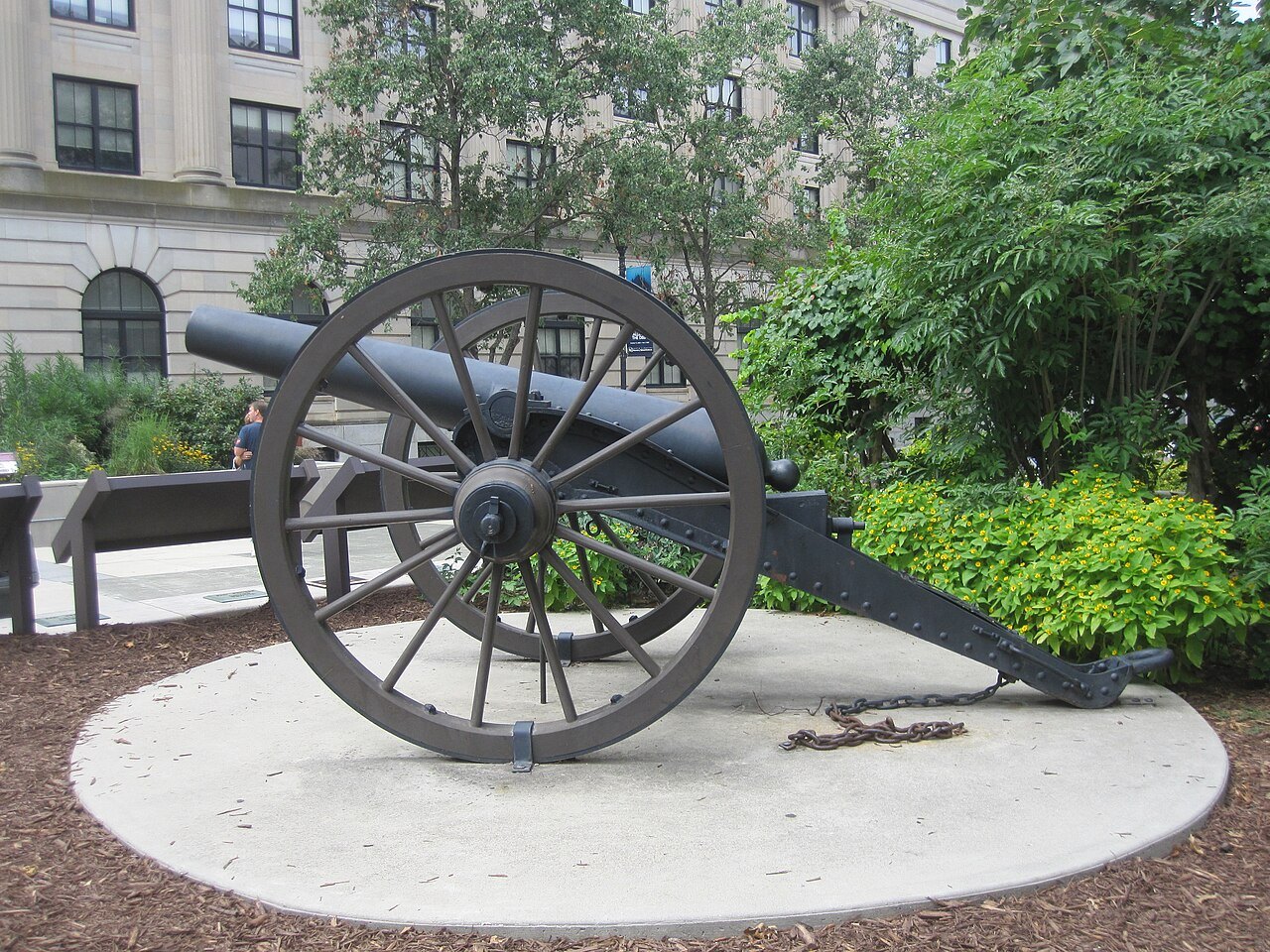
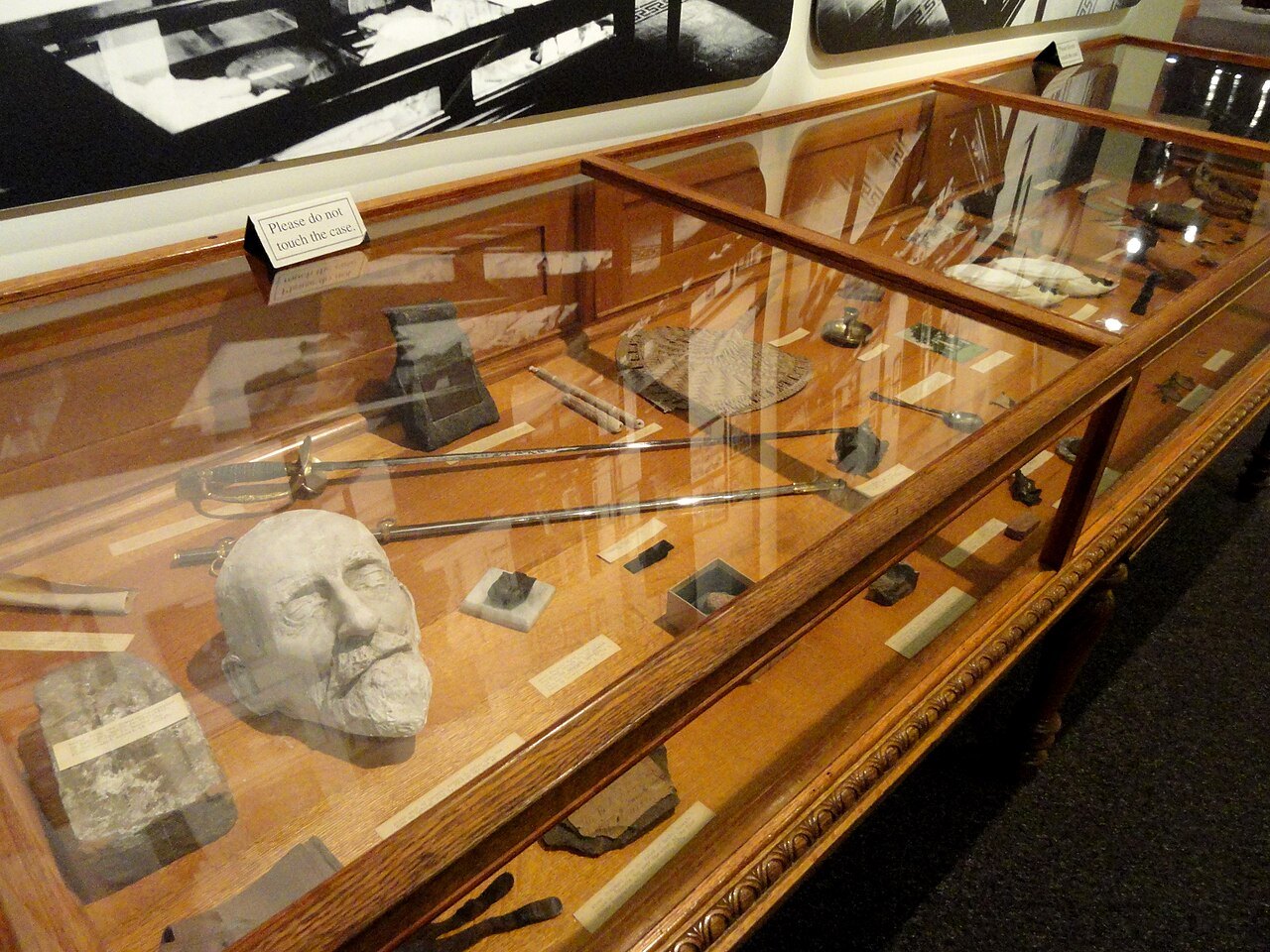
The North Carolina Museum of History, also downtown, grew from the collection of Frederick Augustus Olds, who traveled all 100 counties gathering objects and their stories; in 1902 his collection opened to the public as the Hall of History. The museum is a Smithsonian affiliate and houses the North Carolina Sports Hall of Fame. The hall's first 37 cases held things as different as a shoe buckle of James Iredell and the death mask of a Confederate general. It moved around Union Square as it grew, and since 1994 it has had its own building at 5 East Edenton Street, between the Capitol and the Legislative Building, with exhibits on four floors. Statues of Olds, of the cabinetmaker Thomas Day and of a Saura woman stand on its steps.
In May 2024 the museum closed for a major renovation expected to take about four years, so look at its own site before you plan around it.
How to visit
Walk from Union Square to the museums; they are within a few blocks of each other downtown. The Capitol is a working office of the governor as well as a historic building, so look at its own site for visiting arrangements before you go.
Pair the morning with the North Carolina Museum of Art on the west side of the city, and with Duke Chapel in Durham.
Nearby