WHOLE HOG OR SHOULDER, VINEGAR OR RED DIP
What is the difference between Eastern and Lexington barbecue?
Photographs: Daderot, Wikimedia Commons, CC0 · F Delventhal, Wikimedia Commons, CC BY 2.0 · Lance Cheung, United States Department of Agriculture, Wikimedia Commons, Public domain
The Journal · Eating and Drinking
North Carolina has two native styles of pork barbecue and a long, half-joking feud between them. What separates Eastern from Lexington barbecue, the cut, the sauce and the slaw, where each is eaten, and how the rivalry reached the state legislature.
The short answer
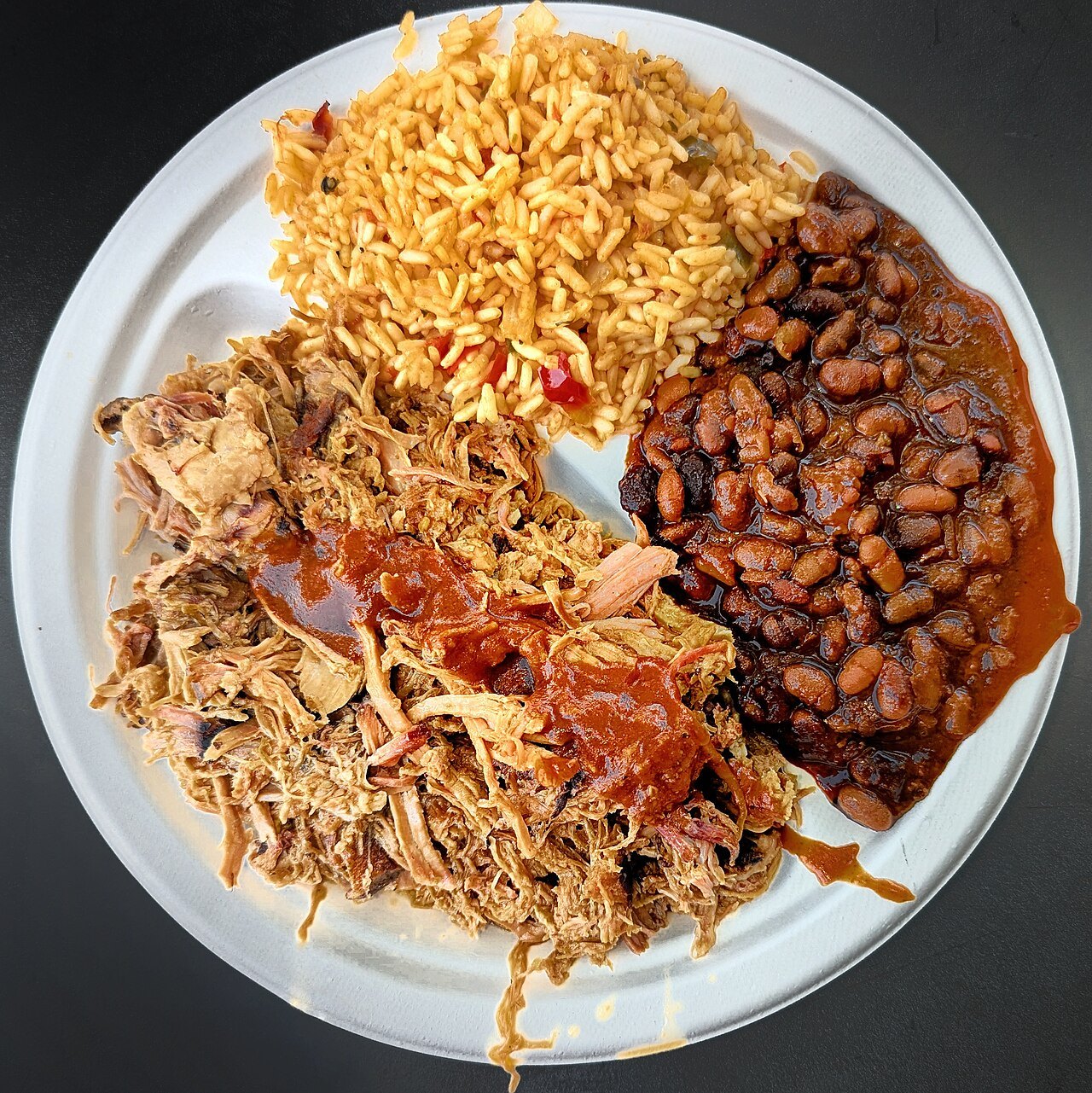
Both are pork, cooked slowly over wood, and both are North Carolina's own. The difference is the cut and the sauce. Eastern barbecue cooks the whole hog, chops the meat fine and seasons it with a thin sauce of vinegar and pepper, with no tomato at all. Lexington barbecue, also called Piedmont or Western style, uses only the pork shoulder, pulls or lightly chops it, and serves it with a red "dip" of vinegar, tomato and pepper flakes.
The slaw follows the sauce. Eastern barbecue comes with coleslaw made with mayonnaise; Lexington barbecue comes with red slaw, made with the barbecue dip in place of mayonnaise. Both come with hushpuppies, and both have their loyalists, who have been arguing for generations.
Eastern style: the whole hog
Eastern-style barbecue is the style of the coastal plain. It is a whole-hog barbecue, often said to use "every part of the hog except the squeal", so the meat is a mix of white and dark. After cooking it is pulled from the bone and chopped fine, which gives it a finer texture and helps it soak up the thin sauce.
That sauce is vinegar and pepper, with no tomato whatsoever, and it is used mostly as a seasoning after the cooking, though it can also be mopped on while the hog cooks. Eaten as a sandwich, Eastern barbecue usually has the mayonnaise coleslaw piled on the bun.
Whole-hog barbecue is also a social institution in the east. Weddings, church events and other celebrations are often built around it, and a whole branch of catering does nothing but cook hogs for them.
Lexington style: the shoulder
Lexington barbecue takes its name from Lexington, a small city in the Piedmont Triad, and it is most common in the Piedmont and the west of the state. It uses only the pork shoulder, the dark meat, and serves it pulled or very lightly chopped, which leaves larger strands of meat than the Eastern chop.
Its sauce, called dip, is made from vinegar, tomatoes and usually red pepper flakes, with other spices that vary from one cook to the next, from slightly sweet to hot. The same dip seasons the red slaw, also called barbecue slaw, that comes on the side, and hushpuppies complete the plate.
What they share
Both are true barbecue in the old sense: slow cooking at low heat, in which the smoke rather than the flame does the work, breaking down the tough connective tissue into tender meat. That is what separates barbecue from grilling, which cooks quickly with direct dry heat, though the two words are often confused. Both are traditionally cooked with hardwood, and in North Carolina the meat is almost always pork.
North Carolina barbecue draws on many influences, from Native Americans to the European settlers, African Americans and the newer equipment and methods of recent times. Other styles are found all over the state, which has a diverse population, and pork ribs are a common alternative, with festivals and competitions every year. But the two native styles are the ones that matter to North Carolinians.
Pits, wood and hushpuppies
Pit barbecue is one of the oldest ways of cooking meat: people around the world have used earth ovens for tens of thousands of years, and in America the method is associated above all with the Eastern Seaboard's barbecue belt. A pit can be dug in the ground or built above it as an enclosed oven; either way the meat cooks slowly over hardwood, and in North Carolina the meat in the pit is nearly always pork.
The hushpuppy that comes with it is a small, savory ball of cornmeal batter, deep-fried, served with barbecue inland and with fried fish on the coast. Ground corn came into Southern cooking from the Cherokee, Chickasaw, Choctaw, Creek and Seminole, and cornbread was a staple of the South through the Civil War. The word hushpuppy is first recorded in 1899, and its origin is unknown; one story says hunters and fishermen tossed the fried balls to their dogs to hush them.

Ribs are the other barbecue you will meet. Baby back ribs, short and well marbled, come from the center of the loin; spare ribs, thicker, longer and more flavorful, come from lower on the rib cage.
The barbecue wars
The rivalry is part joke and part politics. The writer Jerry Bledsoe, calling himself the world's leading barbecue authority, accused a Raleigh newspaper columnist, Dennis Rogers, of ruining the state's chances of being distinguished for its barbecue; both were at least half in jest.
In 2006 two bills in the legislature would have made the Lexington Barbecue Festival the official barbecue festival of North Carolina, which easterners took as declaring one style official. The bills were defeated. In 2007 a compromise passed that made the festival the official food festival of the Piedmont Triad region only, avoiding any official barbecue for the whole state.
Where to try each
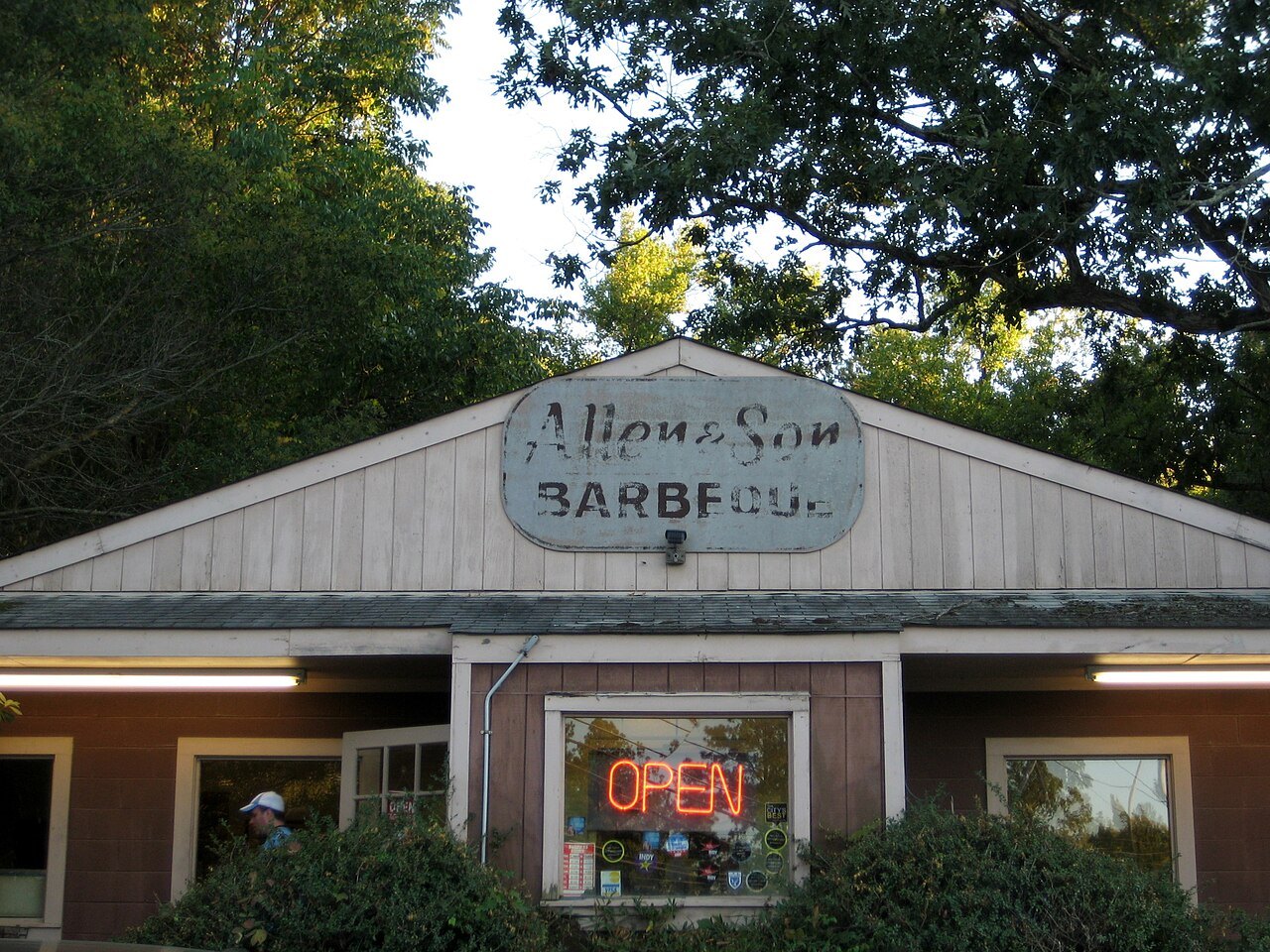
For Lexington barbecue, go to Lexington itself, a city of about 20,000 people. Its barbecue festival, held on one day each October in uptown Lexington, closes several blocks of Main Street and draws more than 100,000 visitors, with a barbecue competition, carnival rides, music on several stages and more than a hundred vendors from all over the region. The festival is listed in the travel book 1000 Places to See in the USA and Canada Before You Die. A national magazine ranked Lexington fourth among American cities for barbecue in 2012.
For Eastern barbecue, look across the coastal plain, where whole-hog barbecue is served in restaurants and at every kind of gathering. A road trip from the mountains to the coast, like those on this site, passes through both regions, so you can taste both in the same trip and decide for yourself; the road trips cross the Piedmont on the way east.
The rest of the table
Barbecue is only the start. On the coast, seafood fried Calabash style is the other great tradition, and hushpuppies come with almost everything. In the mountains, livermush is a breakfast staple, and Winston-Salem is the home of Moravian cookies and Krispy Kreme. Eating and Drinking covers them all, and the old tobacco town of Durham, named the South's tastiest city by Southern Living in 2013, is a good place to start eating in the Piedmont.