THE COAST · WILMINGTON
Battleship North Carolina on the Cape Fear River
Photographs: Idawriter, Wikimedia Commons, CC BY-SA 3.0 · DiscoA340, Wikimedia Commons, CC BY-SA 4.0 · David Wilson, Wikimedia Commons, CC BY 2.0
The Coast · landmark 21 of 21
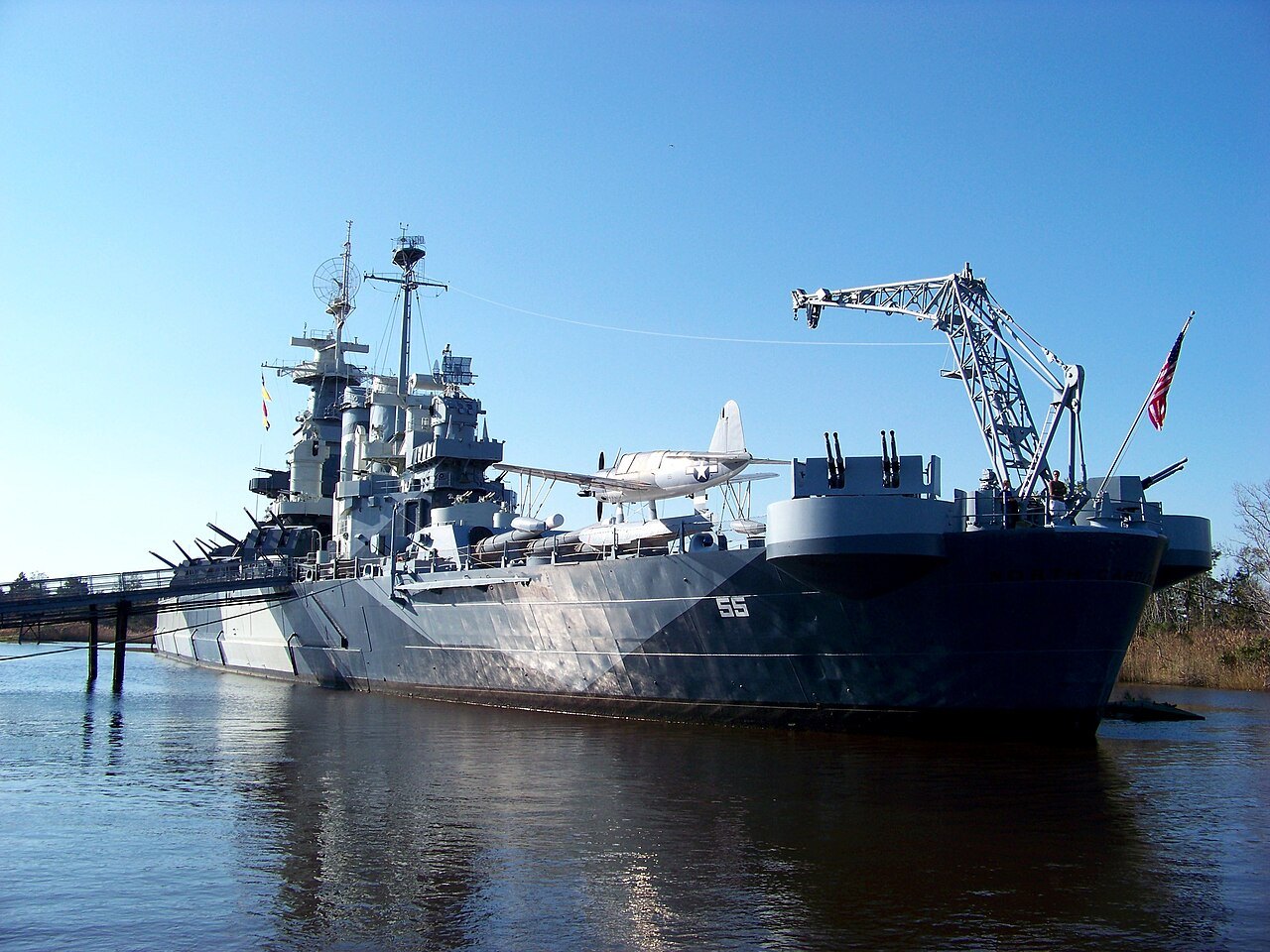
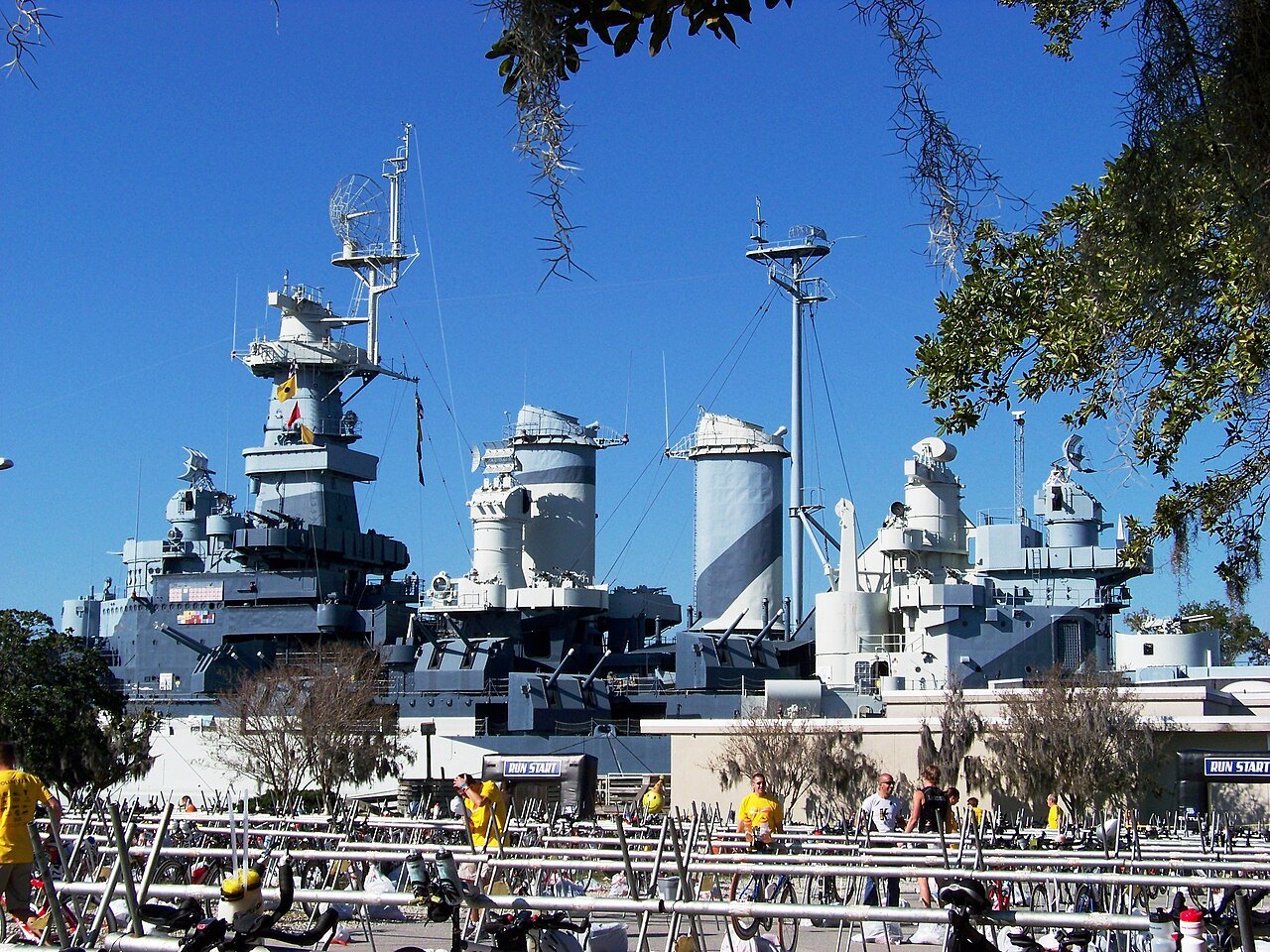
A 728-foot fast battleship of World War II, the most decorated battleship of the American fleet with fifteen battle stars, berthed since 1962 across the river from downtown Wilmington as the state's memorial to the North Carolinians who died in the war.
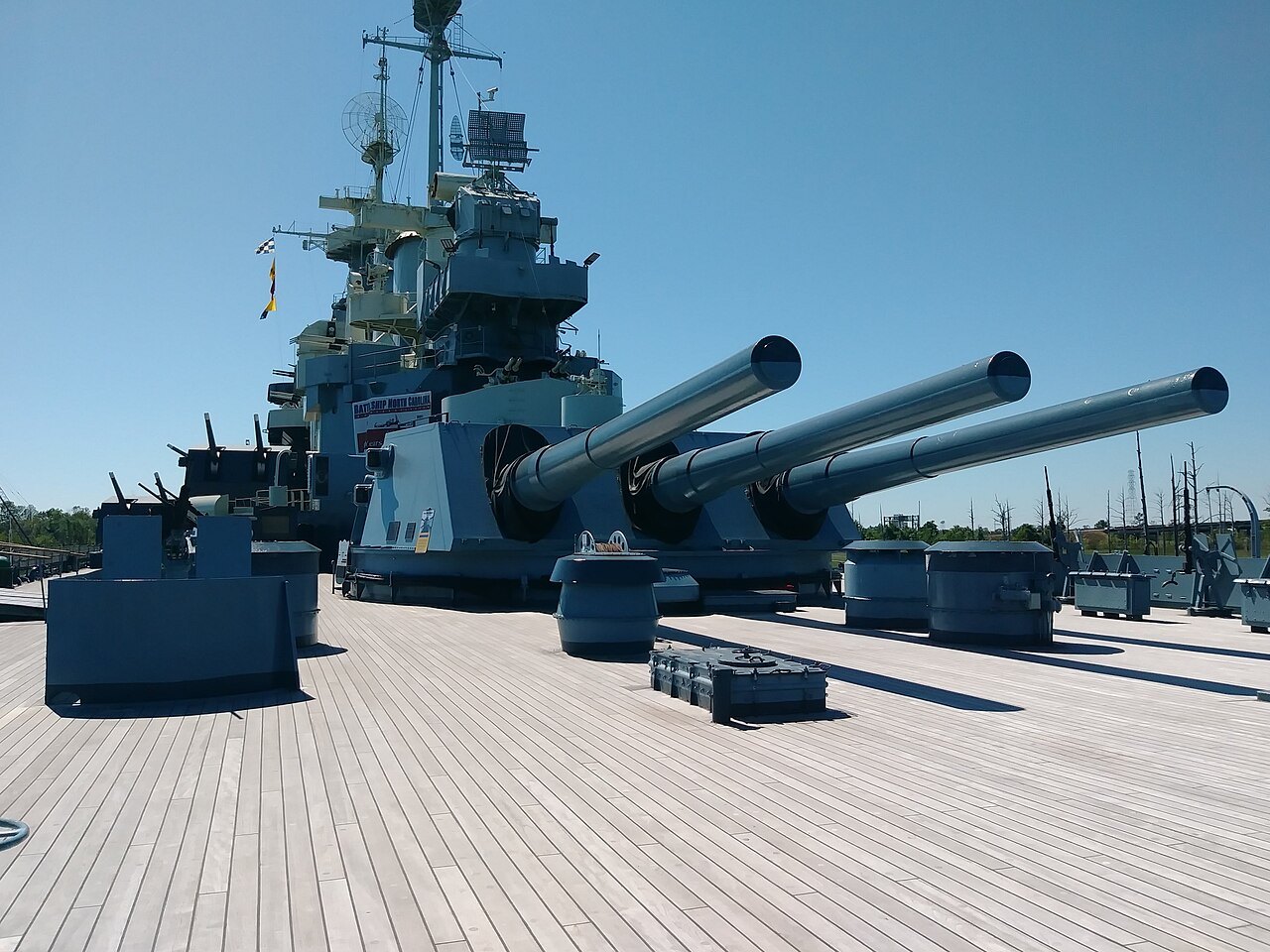
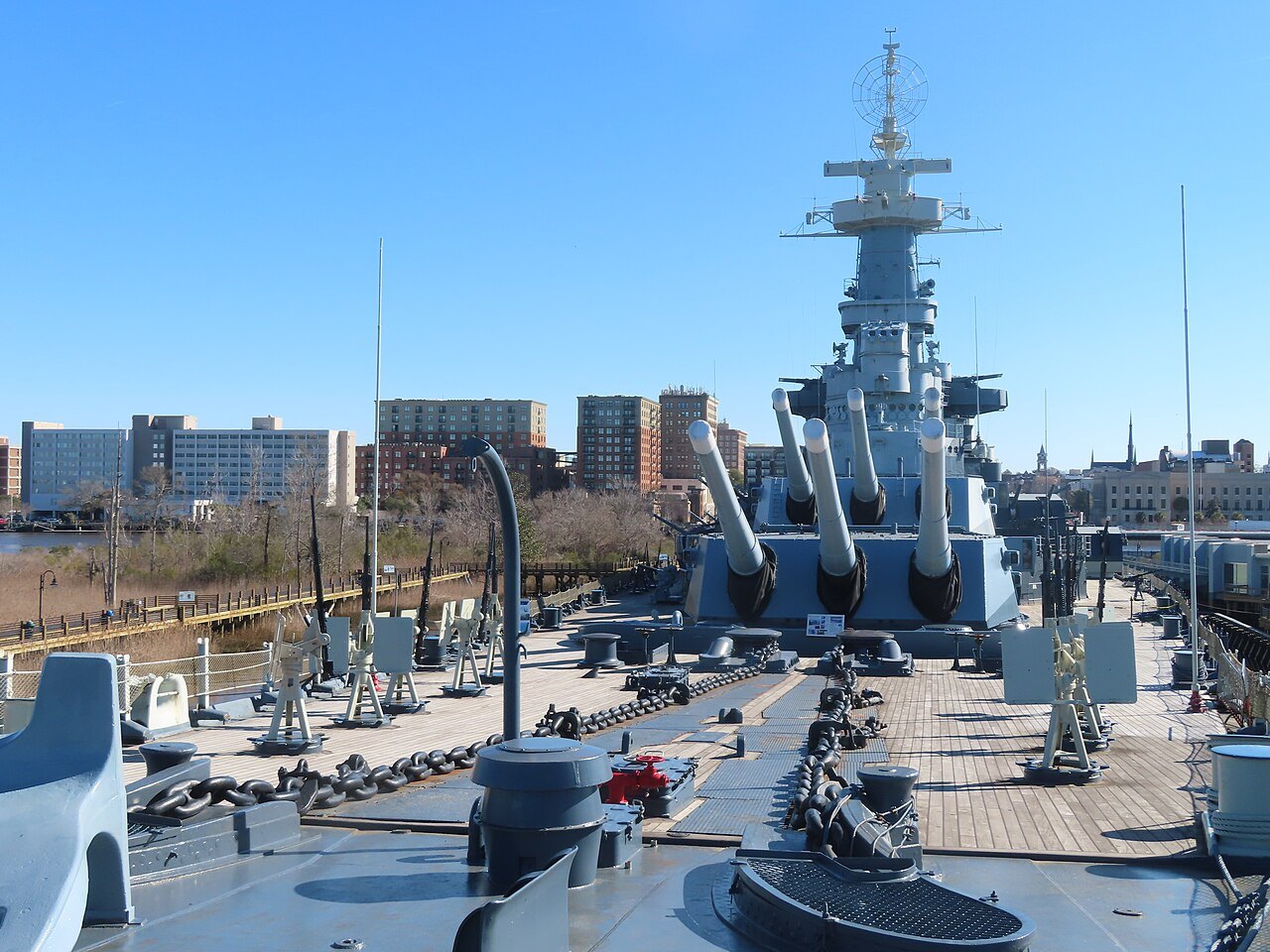
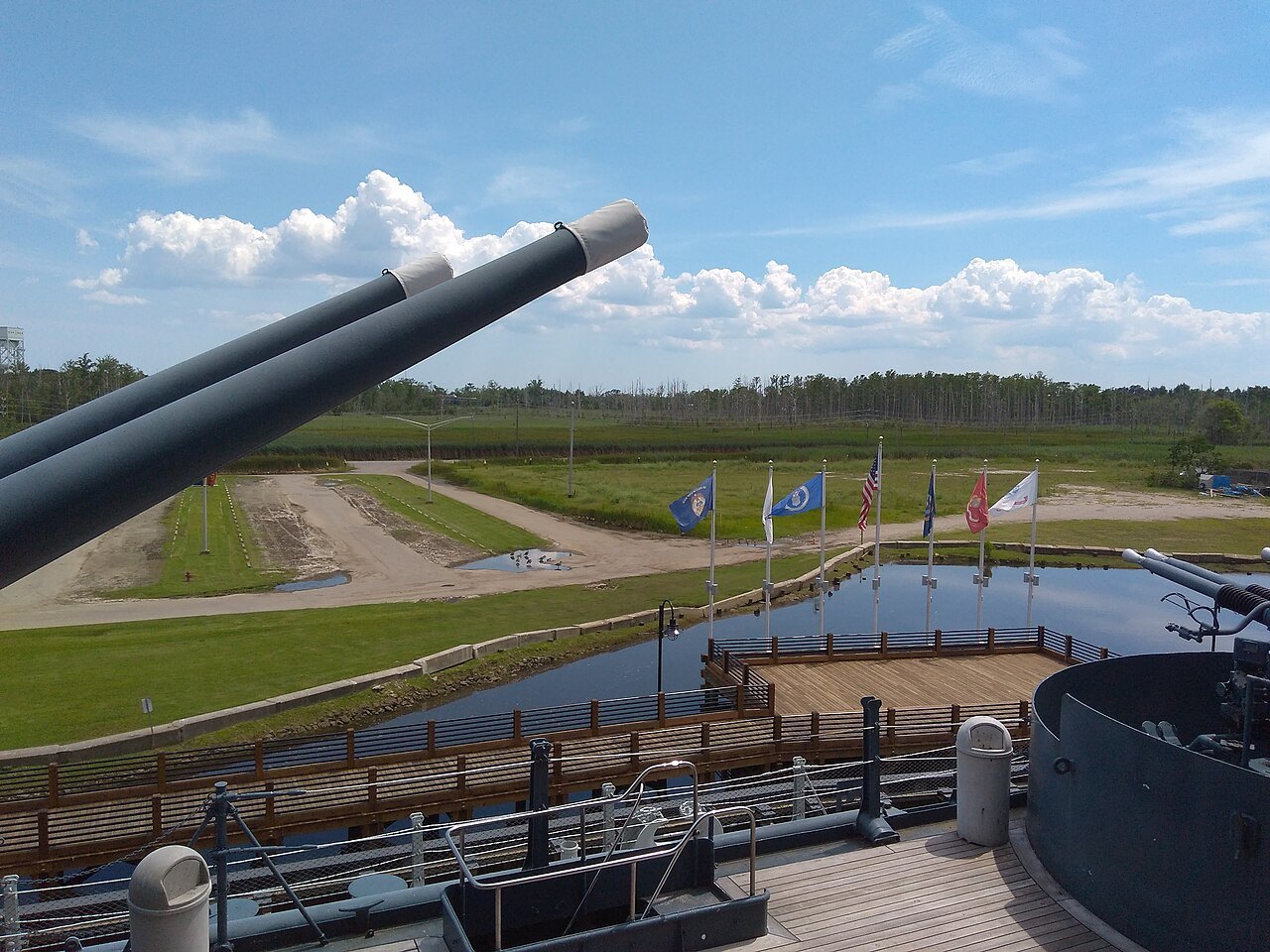
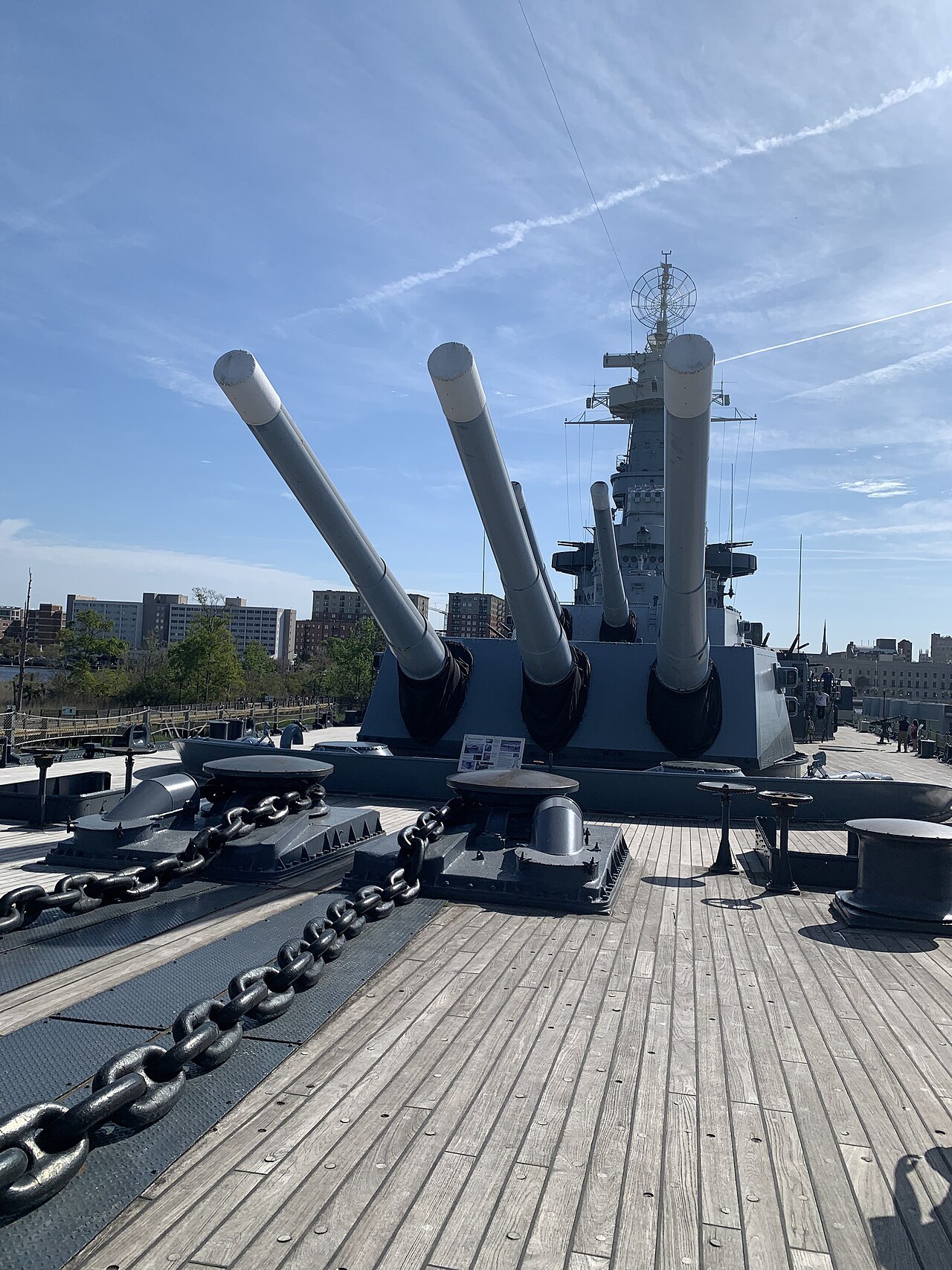
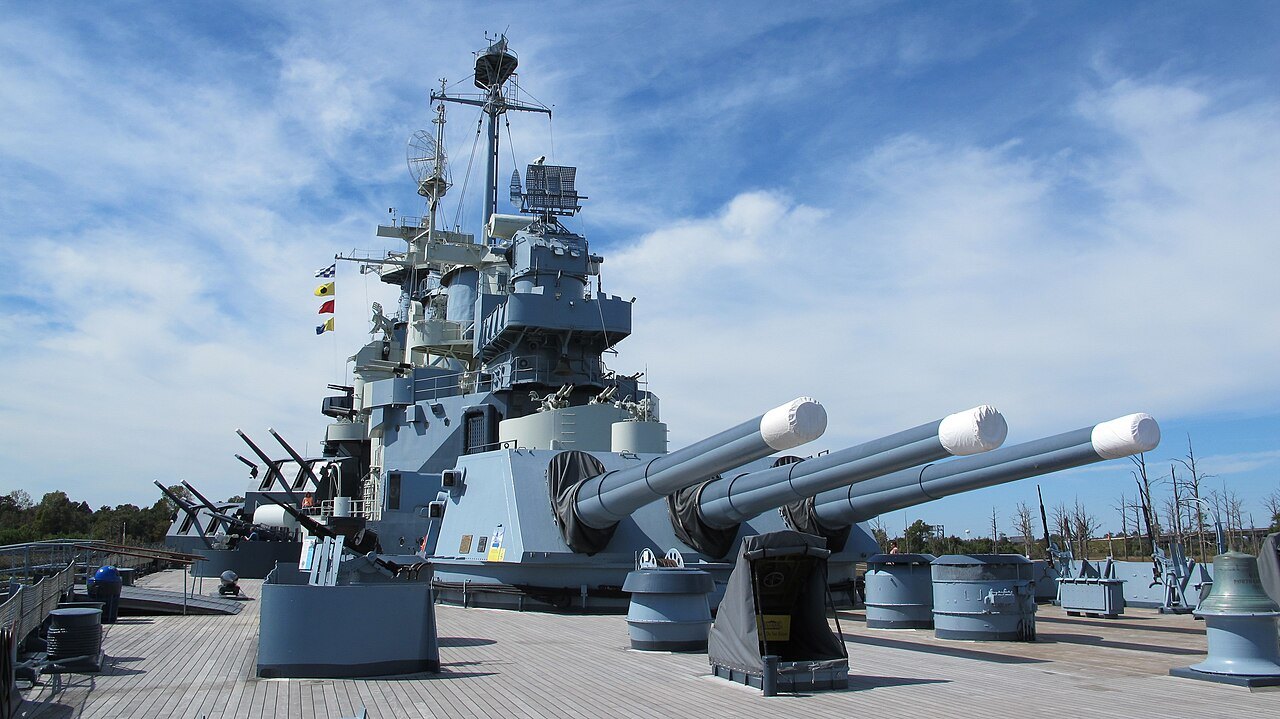
- The main batteryNine sixteen-inch guns in three triple turrets, two forward and one aft.
- The KingfisherOne of the floatplanes the ship launched by catapult from her stern, salvaged and returned in 1964.
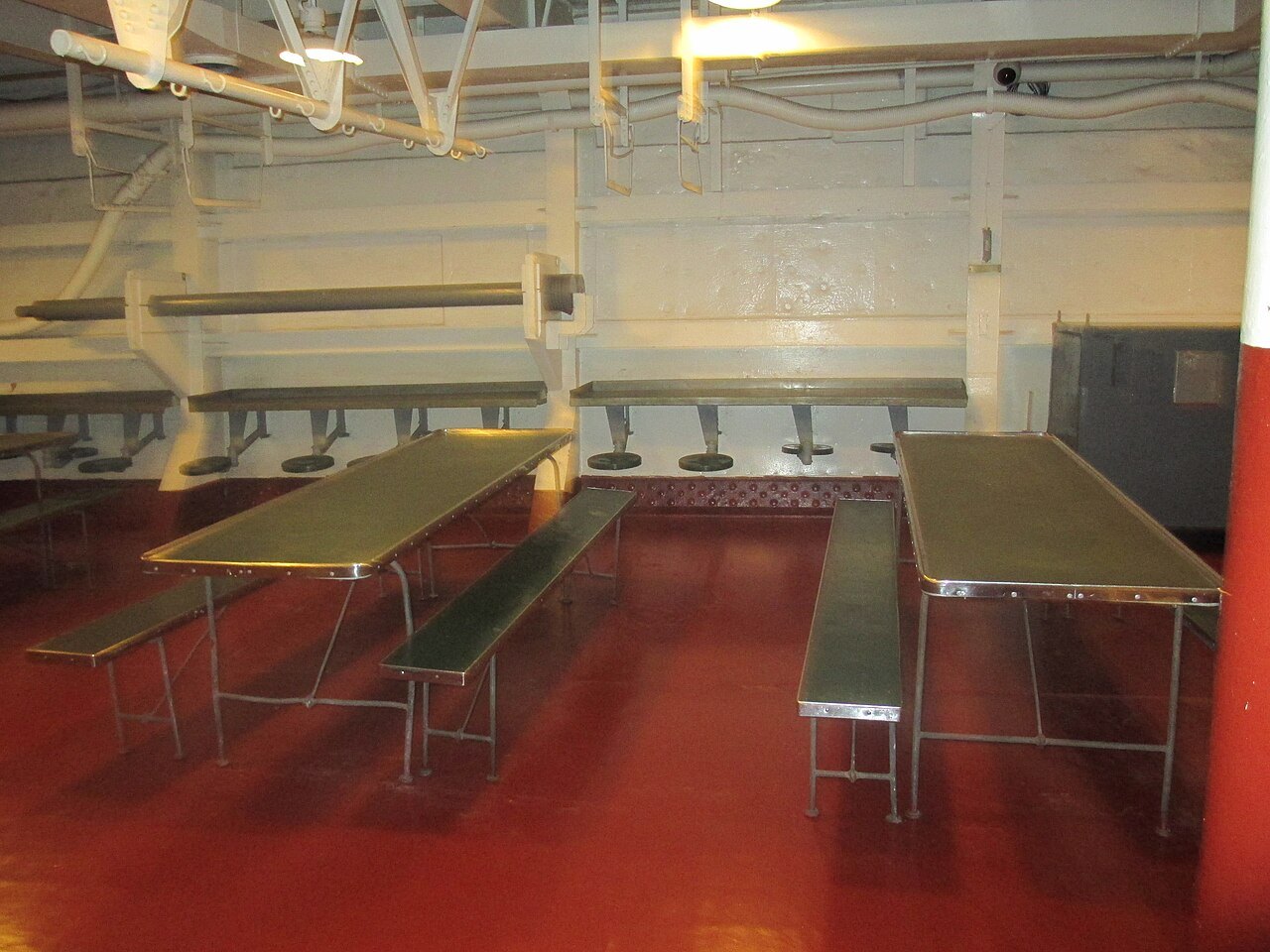
- Below decksThe working spaces of a ship that carried more than two thousand men in wartime.
- The memorialThe ship honors the more than 11,000 North Carolinians who died in the armed forces in World War II.
- The walkwayA path built on the cofferdam in 2018 that lets visitors see the whole hull from outside.
- The river viewDowntown Wilmington's waterfront directly across the Cape Fear River.
Why it matters
USS North Carolina, hull number BB-55, was the first of the fast battleships built for the United States Navy in the years before World War II, the lead ship of her class. Commissioned in April 1941, she fought across the Pacific from Guadalcanal to Okinawa and earned fifteen battle stars, the most of any battleship in the fleet and among the most of any American naval vessel of the war.
Since 1962 she has been moored on the Cape Fear River across from downtown Wilmington, the state's memorial to the more than 11,000 North Carolinians who died serving in the armed forces in World War II. She is a National Historic Landmark and one of the most visited sites in the state.
A treaty battleship
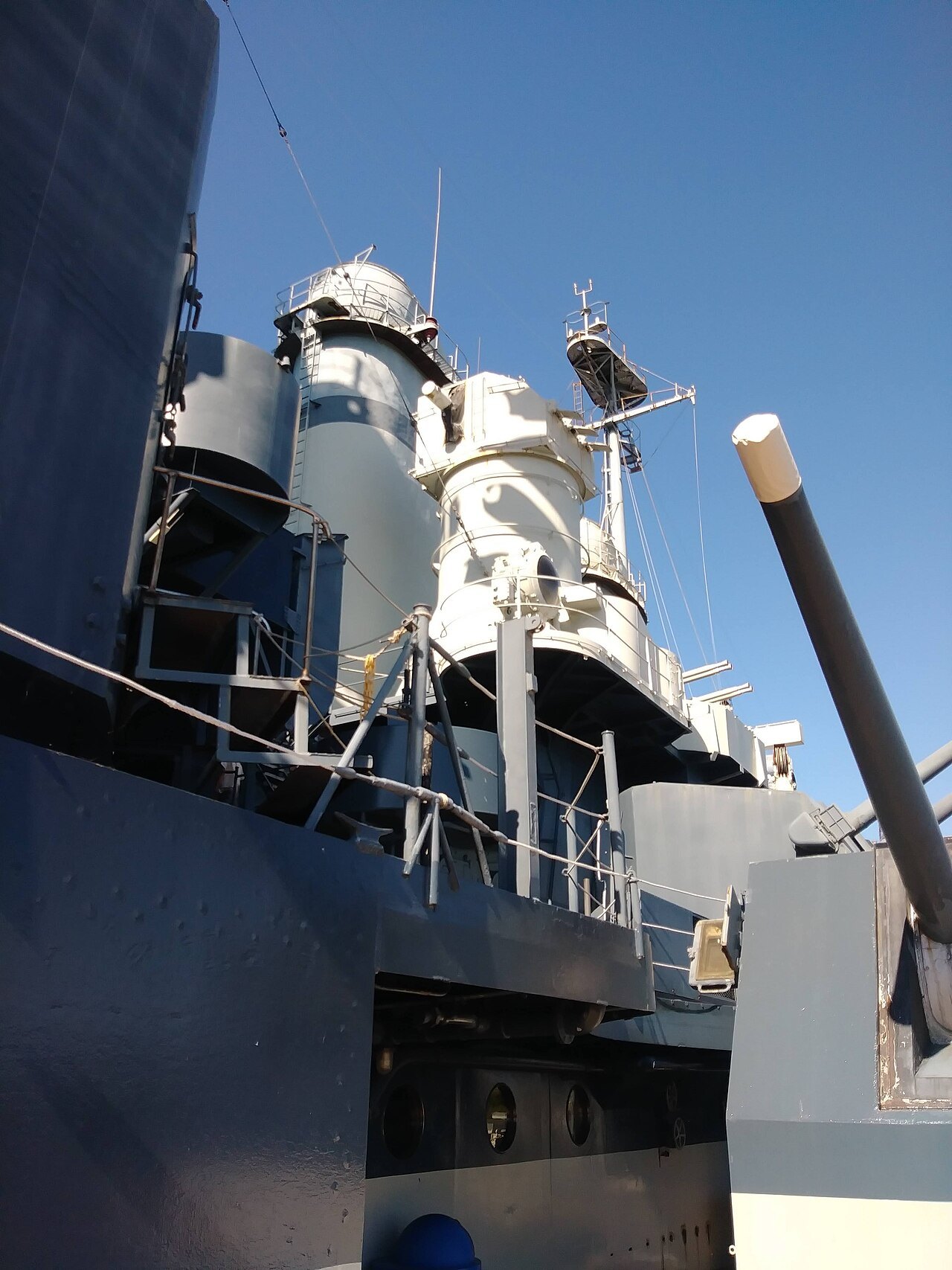
The North Carolina class was the first new battleship design built under the naval treaties of the interwar years, which limited the size and guns of warships. She was designed to carry twelve fourteen-inch guns, but when Japan refused to sign the treaty of 1936, the United States used a clause allowing bigger guns and armed her instead with nine sixteen-inch guns in three triple turrets, with twenty five-inch guns in ten turrets along her sides.
She is 728 feet long and 108 feet wide, driven by four steam turbines at up to 28 knots, and carried three Kingfisher floatplanes launched by catapult from her stern. Her crew of 1,800 in peacetime grew in the war to more than 2,100 men. Her keel was laid in 1937 and she was launched in June 1940, and commissioned in April 1941 with the governor of North Carolina at the ceremony.
The war in the Pacific
In early 1942 she was first sent to the North Atlantic in case the German battleship Tirpitz broke out into the convoy lanes; when it stayed in Norway, she went through the Panama Canal to the Pacific. She covered the carrier Enterprise at the landings on Guadalcanal, and in the Battle of the Eastern Solomons in August 1942 she was the first ship to detect the Japanese air attack by radar, and her gunners defended the carrier as it was bombed.
On September 15, 1942, a Japanese submarine fired a spread of torpedoes at the carrier Wasp, sinking her; one of the torpedoes ran on and struck North Carolina twenty feet below the waterline, tearing a large hole in her side. She was repaired and returned to screen the carriers through the central Pacific in 1943 and 1944, in the Gilbert and Marshall Islands, in the Marianas and at the Battle of the Philippine Sea.
In 1945 she supported the battles of Iwo Jima and Okinawa and took part in raids on Japan itself. Once, off Truk, two of her Kingfishers went to rescue a downed pilot; one capsized landing, the other was too heavy to take off with everyone aboard, and a submarine picked the men up instead. After the surrender she carried servicemen home, and in all the war cost her crew ten men killed and 67 wounded.
Saving the ship
The ship was decommissioned in 1947 and struck from the Navy's list in 1960, slated for scrap. A North Carolina man, James Craig, started a campaign to bring her home, modeled on the one that had saved the battleship Texas. He persuaded Governor Luther Hodges to ask the Navy to wait, and with a television station's "Save Our Ship" appeal and the state's newspapers, the campaign raised the money to prepare a berth, tow her there and ready her for visitors.
Southport, Morehead City and Wilmington were considered, and Wilmington was chosen because it lies inland and is better protected from hurricanes. Nine tugboats towed the ship from Bayonne, and on the way up the Cape Fear River they lost control of her and she ran into a floating seafood restaurant, with only minor damage. She was dedicated on April 29, 1962. Two years later a Kingfisher floatplane that had crashed in British Columbia during the war was salvaged and given to the museum, returning the type of aircraft the ship once carried.
Keeping her afloat
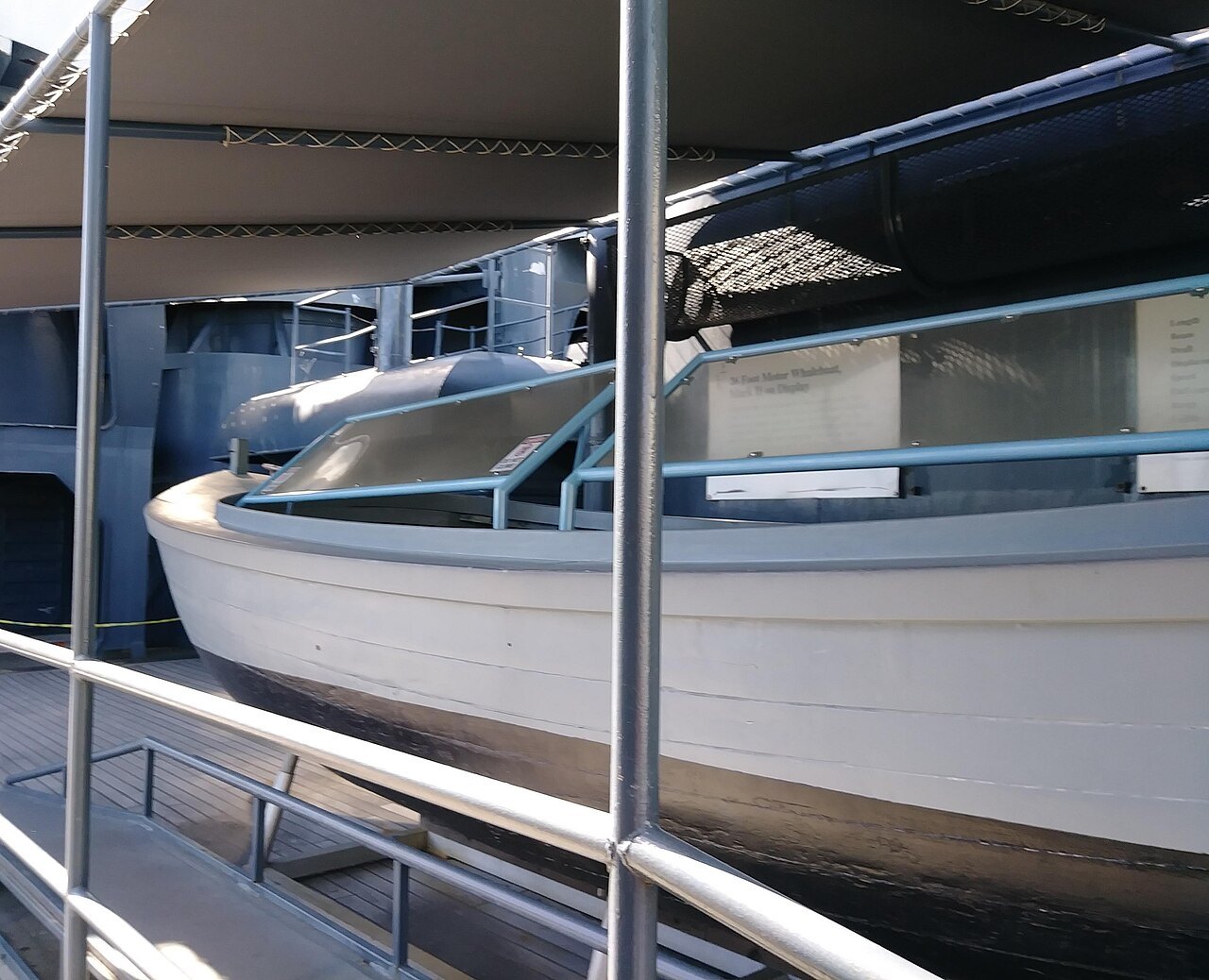
The museum is a continual repair job. In the early 1980s, when the Navy brought the four Iowa-class battleships back into service, parts were taken from North Carolina and other preserved battleships to restore them. Her teak deck was replaced after a donation drive in 1998, and in places corrosion had eaten her hull plating down to a fraction of its thickness. Rather than tow her to a dry dock, her keepers built a cofferdam around the hull and pumped it dry to repair her, finishing the hull work in 2021; the walkway around the ship, opened in 2018, sits on top of it.
The river itself is rising: a tide gauge half a mile from the ship recorded a nine-inch rise in sea level between 1935 and 2023, and flooding of the site has become an increasing problem.
How to visit
The ship lies across the Cape Fear River from downtown Wilmington and some 28 miles upriver from the ocean. When she was named a National Historic Landmark in 1982, she was found in almost excellent condition and still in her wartime configuration, which is what makes a walk through her decks so vivid. In 2022 nearly 250,000 people came aboard. The museum's own site lists hours, tickets and tours.
Wilmington's riverfront is directly across the water, and Fort Macon and the Crystal Coast are a drive to the northeast.
Nearby
Sources read for this page